
Frontier Airlines consistently ranks among the cheapest U.S. carriers for domestic air travel. Travelers often find themselves booking flights with prices that seem too good to be true—$29 one-way tickets, $79 round trips to major cities, or last-minute deals under $50. But what makes these fares possible? Unlike legacy airlines like Delta or United, Frontier operates on a lean, unbundled model designed to minimize base ticket costs while generating revenue through optional add-ons. Understanding this strategy reveals not just how they stay profitable, but also helps travelers make smarter decisions when booking.
The Ultra-Low-Cost Carrier (ULCC) Business Model
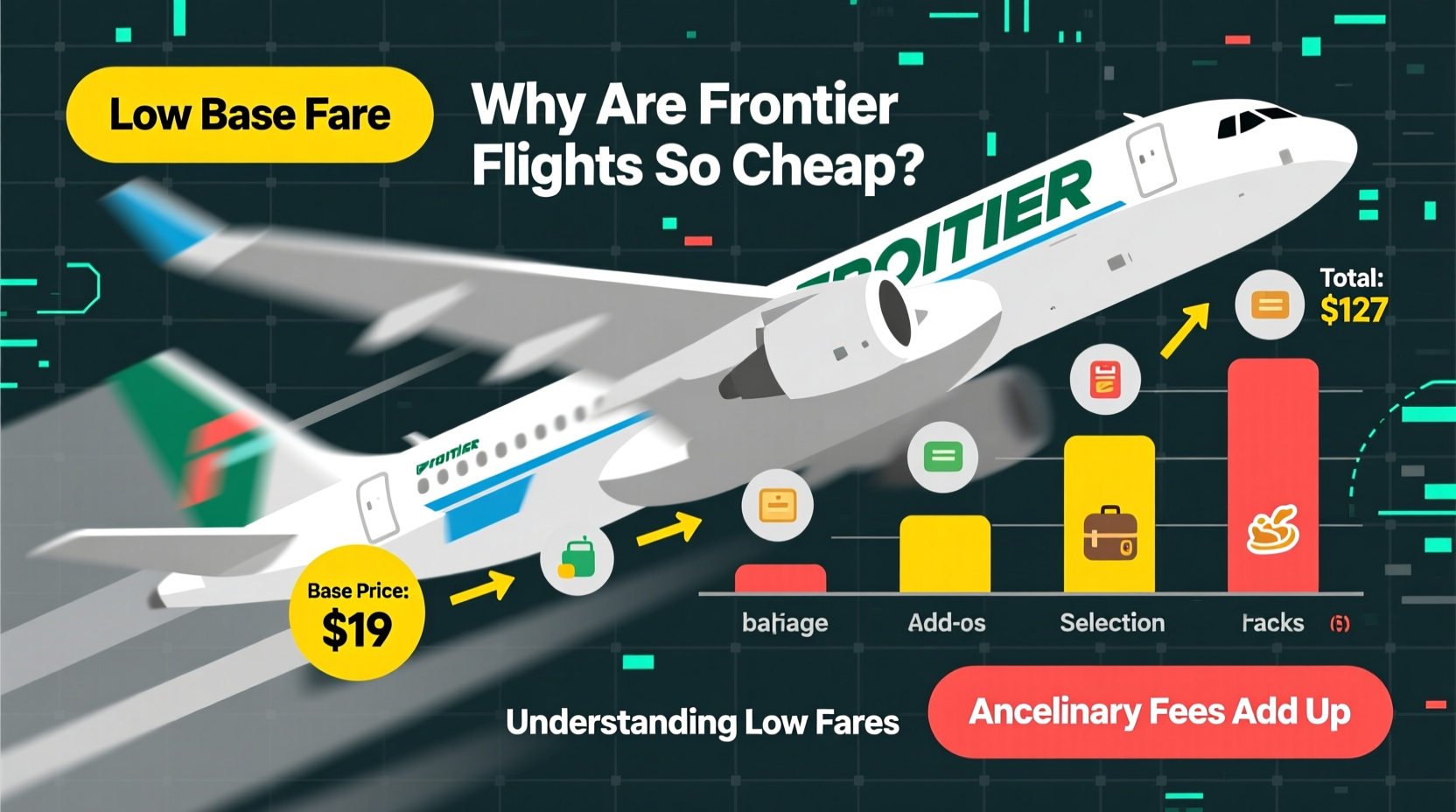
Frontier Airlines is classified as an ultra-low-cost carrier (ULCC), a category it shares with Spirit Airlines and Allegiant Air. These airlines operate differently from traditional full-service carriers by stripping away many standard amenities and charging separately for services that others include in the ticket price. This allows them to advertise extremely low base fares.
The ULCC model focuses on three core principles:
- High aircraft utilization: Planes fly more hours per day, reducing downtime and spreading fixed costs over more flights.
- Point-to-point routes: Avoiding expensive hub operations reduces gate fees and turnaround times.
- Ancillary revenue: Charging extra for everything from carry-ons to seat selection significantly boosts profits beyond the base fare.
“ULCCs don’t compete on comfort—they compete on price. Their entire operation is engineered around minimizing cost at every level.” — Dr. Michael Levine, Aviation Economist, George Mason University
How Frontier Keeps Operating Costs Low
Behind every low fare is a network of cost-saving measures. Frontier doesn’t cut corners on safety, but it does optimize nearly every other aspect of its operation.
Fleet Standardization
Frontier operates almost exclusively with Airbus A320-family aircraft (including A319, A320, and A321neo models). Using a single aircraft type reduces training, maintenance, and parts inventory costs. Mechanics need only one certification, pilots can transition easily between planes, and spare parts are interchangeable across the fleet.
Limited Route Network
Instead of serving dozens of small regional airports, Frontier focuses on secondary or underserved airports near major cities. For example, instead of flying into Chicago O’Hare, Frontier may use Chicago Rockford International Airport. These smaller airports typically charge lower landing and gate fees, which translates into savings passed on to customers.
Lean Staffing and High Efficiency
Frontier maintains a lower employee-to-passenger ratio than legacy carriers. Boarding is faster due to simplified procedures, and ground crews turn planes around in under 30 minutes. Faster turnarounds mean more daily flights per aircraft, increasing revenue potential.
Fuel Hedging and Modern Aircraft
The airline has invested heavily in newer, fuel-efficient Airbus A320neos, which burn up to 15–20% less fuel than older models. Additionally, Frontier has used strategic fuel hedging in the past—locking in fuel prices during periods of low oil—to protect against sudden spikes.
Ancillary Revenue: The Hidden Engine Behind Low Fares
While base fares may start at $29, the real profit comes from what passengers pay afterward. Frontier calls this “customizing your experience,” but in practice, it means charging for nearly everything beyond the seat itself.
| Service | Typical Cost (One-Way) | Included in Base Fare? |
|---|---|---|
| Carry-on Bag (Overhead Bin) | $35–$60 | No |
| Checked Bag (First) | $35–$55 | No |
| Seat Selection | $10–$45 | No (except Stretch seating) |
| Priority Boarding | $20–$30 | No |
| In-Flight Food/Drinks | $5–$15 | No |
This structure allows Frontier to advertise rock-bottom fares while earning substantial income from add-ons. In fact, ancillary revenue accounted for **over 40%** of Frontier’s total passenger revenue in recent fiscal reports—far higher than legacy carriers.
Real Example: A Cross-Country Trip Breakdown
Consider a traveler flying from Orlando to Las Vegas:
- Base fare: $49
- Carry-on bag: $50
- Checked bag: $50
- Preferred seat: $25
- Priority boarding: $25
- Total: $199 (vs. $220 on a legacy carrier with all included)
While the final price isn’t drastically lower, the perception of a $49 flight drives demand. Savvy travelers who pack light and skip extras truly benefit.
Smart Booking Tips to Maximize Value
To actually save money on Frontier, you need to understand how to navigate their pricing structure. Here’s how to book wisely:
- Travel with only a personal item: A backpack or purse under 18 x 14 x 8 inches flies free. Avoid overhead bins entirely to dodge carry-on fees.
- Use the FREE SPIRIT loyalty program: While not as robust as others, signing up gives access to exclusive deals and early sale notifications.
- Bundle services upfront: Adding bags or seats during booking is usually cheaper than paying at the airport.
- Check alternate airports: Flying into or out of nearby secondary airports (e.g., Cincinnati instead of Louisville) can unlock lower fares.
- Monitor fare sales aggressively: Frontier runs frequent “$29 Fare Sale” events. Set price alerts and act fast—seats sell quickly.
FAQ: Common Questions About Frontier’s Low Prices
Are Frontier flights safe despite the low cost?
Absolutely. Frontier meets all FAA safety regulations and operates modern aircraft with rigorous maintenance schedules. Low cost does not mean lower safety standards. The airline has no fatal accidents in its history and adheres to strict federal oversight.
Why do Frontier prices increase as the flight date approaches?
Like most airlines, Frontier uses dynamic pricing. As seats fill and departure nears, remaining tickets are sold at higher rates to capture last-minute demand from business travelers or those with urgent plans.
Can I get a refund if my plans change?
Most basic fares are non-refundable but allow changes for a fee (typically $99 plus any fare difference). Consider purchasing “Work Any Day” tickets if flexibility is important—they cost more upfront but permit free date changes.
Conclusion: Are Frontier’s Low Fares Worth It?
Frontier Airlines delivers on its promise of low base fares by operating efficiently and charging separately for extras. For budget-conscious travelers willing to travel light and skip frills, Frontier can offer exceptional value. However, those needing checked bags, seat selection, or flexibility should calculate the full cost before assuming a deal is unbeatable.
The key is awareness: knowing how the model works turns a potentially frustrating experience into a smart, affordable travel choice. Whether you're planning a weekend getaway or a cross-country visit, understanding why Frontier flights are so cheap empowers you to make better decisions—and keep more money in your pocket.




 浙公网安备
33010002000092号
浙公网安备
33010002000092号 浙B2-20120091-4
Comments
No comments yet. Why don't you start the discussion?