
The jumping jack is a staple of gym classes, military training, and home workouts around the world. It’s simple: jump while spreading your legs and raising your arms overhead, then return to standing. But few people stop to wonder—why is it called a “jumping jack”? The name sounds playful, almost whimsical, for such a physically demanding exercise. Its origins stretch back over a century, rooted in military discipline, gymnastics innovation, and linguistic evolution. Understanding how this movement earned its name reveals more than just etymology—it uncovers a fascinating story of physical culture, global adoption, and naming quirks that stuck.
The Origins of the Exercise
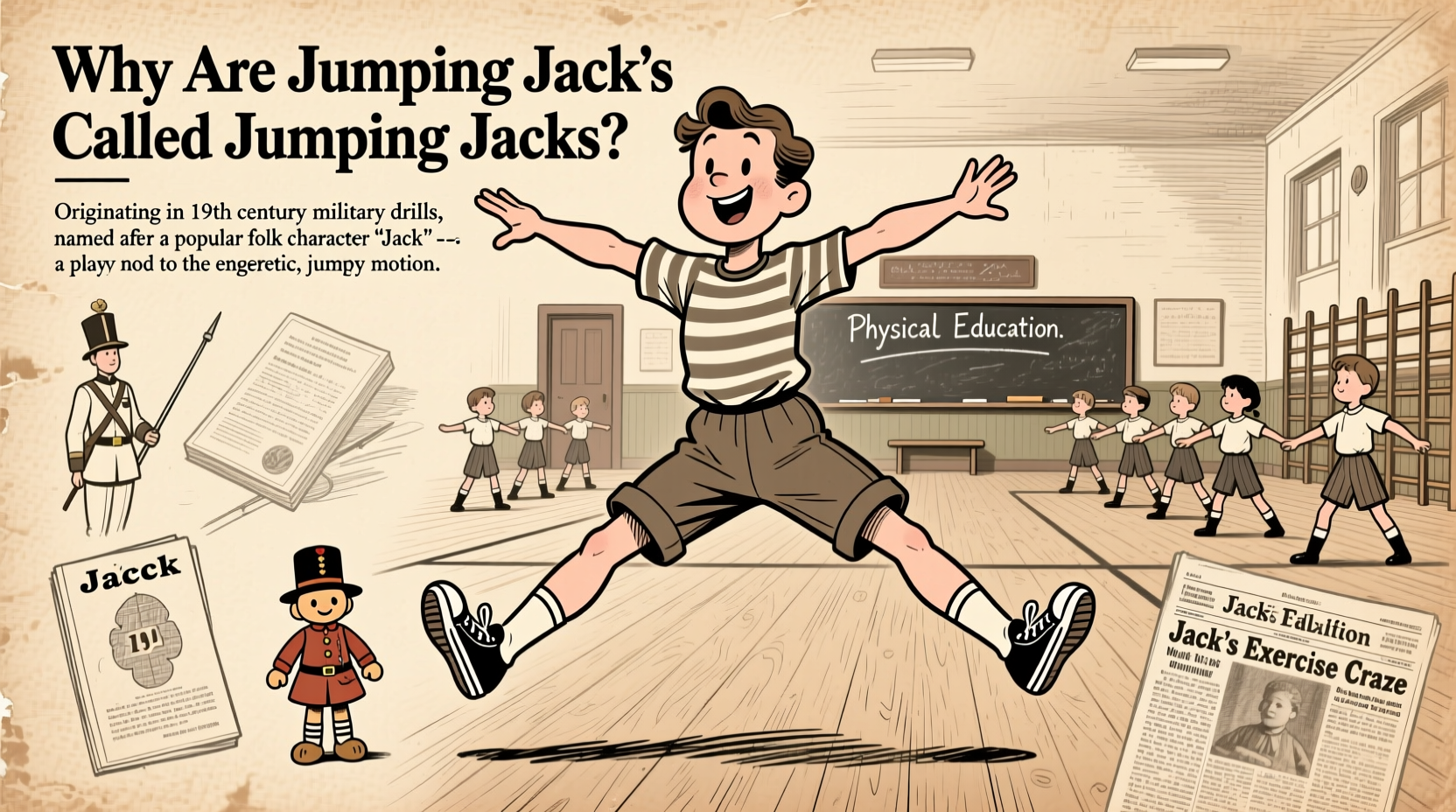
The physical motion now known as the jumping jack existed long before it received its current name. In the late 19th century, calisthenics—systematic exercises using body weight—gained popularity in Europe and North America as part of physical education reform. These routines emphasized coordination, strength, and cardiovascular health, often incorporating rhythmic movements performed in unison.
In Sweden, Per Henrik Ling, a pioneer of medical gymnastics, developed systems of movement that included lateral jumps with arm raises. German Turnverein (gymnastic clubs) also practiced similar drills. However, it was in the United States where the exercise began to take on a standardized form, particularly within military training programs.
By the 1880s, U.S. Army manuals included variations of what we now recognize as jumping jacks. They were used to warm up recruits, improve agility, and promote synchronized group movement. At the time, they weren’t called “jumping jacks”—they were referred to more formally as “side straddle hops” or “squat jumps with arm extension,” depending on the variation.
How the Name \"Jumping Jack\" Emerged
The term “jumping jack” first appeared in written records in the early 20th century. One of the earliest documented uses comes from a 1906 U.S. Army manual, which briefly references “jumping jacks” as part of morning drill routines. However, it wasn’t until the 1940s that the name became widely adopted.
A popular theory attributes the name to cadets at West Point Military Academy. According to anecdotal accounts, new recruits would perform the exercise under the command of drill instructors who shouted orders like “Do it, Private Jack!” or “Move, Jack!” as a generic placeholder for any soldier. Over time, soldiers began referring to the repetitive jumping motion as “doing your jumping jacks,” eventually shortening it to simply “jumping jacks.”
Another explanation ties the name to children's toys. A “jack” can refer to small metal figures on springs that pop up when released—a toy known as a “jumping jack” since the 1800s. These wooden dolls had articulated limbs that flung outward when dropped, mimicking the arm-and-leg motion of the exercise. Given the visual similarity, it’s plausible that fitness instructors or schoolteachers borrowed the name from the toy.
“Physical exercises often acquire colloquial names based on resemblance or rhythm. The ‘jumping jack’ perfectly captures both the motion and the energy of the movement.” — Dr. Alan Pierce, Historian of Physical Education
Evolution in Fitness and Popular Culture
Throughout the 20th century, jumping jacks transitioned from military drills to mainstream fitness. During World War II, they were incorporated into basic training across Allied forces, helping build endurance and coordination. After the war, they entered school gym curricula in the U.S., Canada, and the UK as part of standardized physical education programs.
In the 1950s and 60s, televised exercise shows brought jumping jacks into living rooms. Icons like Jack LaLanne demonstrated them regularly, reinforcing their role as a foundational aerobic move. By the 1980s, aerobics classes turned jumping jacks into a high-energy staple, often performed in rapid succession with music.
Today, they remain a key component of HIIT (high-intensity interval training), CrossFit warm-ups, and military-style boot camps. Their simplicity makes them accessible to nearly all fitness levels, requiring no equipment and minimal space.
Global Variations and Terminology
While “jumping jack” is the dominant term in American English, other countries use different names that reflect local language and culture:
| Country/Region | Term Used | Literal Meaning or Origin |
|---|---|---|
| United Kingdom | Star jump | Refers to the star-like shape formed by arms and legs |
| Australia | Star jump | Same as UK usage |
| France | Saut de grenouille | Frog jump (though sometimes used interchangeably) |
| Germany | Hampelmann | \"Jumping man,\" referencing a puppet-like motion |
| Japan | Kaeru-tobi | Frog leap, though some schools use katakana transliteration of \"jumping jack\" |
This linguistic diversity highlights how the same physical movement can be interpreted through different cultural lenses—one emphasizing symmetry (star), another mechanical mimicry (puppet), and others animal-inspired motion (frog).
Step-by-Step Guide to Proper Form
To get the most benefit—and avoid injury—it’s essential to perform jumping jacks with correct technique. Follow these steps:
- Stand upright with feet together and arms at your sides.
- Engage your core and maintain a neutral spine.
- Jump slightly off the ground while simultaneously spreading your legs shoulder-width apart.
- At the same time, raise your arms overhead in a wide arc until they meet above your head.
- Land softly with knees slightly bent to absorb impact.
- Jump again to return to the starting position: feet together, arms down.
- Repeat for desired duration or repetitions.
For low-impact alternatives, step one foot out at a time instead of jumping, or perform wall angels in place to mimic the arm motion without lower-body strain.
Common Mistakes and How to Avoid Them
- Locking the knees – This increases joint stress. Always keep a micro-bend during landings.
- Overarching the back – Especially when fatigued, people may arch excessively when raising arms. Focus on engaging the core.
- Rushing the movement – Fast reps often sacrifice form. Prioritize control over speed.
- Improper breathing – Exhale on the jump, inhale on return. Rhythmic breathing supports endurance.
Mini Case Study: Reviving Jumping Jacks in Modern PE
In 2018, Lincoln Middle School in Portland, Oregon, faced declining student engagement in physical education. Teachers noticed students dreaded traditional warm-ups, often citing boredom. As part of a curriculum refresh, the PE department introduced “Dynamic Circuits,” which included modified jumping jacks set to music and performed in teams.
They renamed the activity “Power Stars” to align with local terminology and added progress tracking via wearable pedometers. Within one semester, participation rates rose by 37%, and teachers reported improved cardiovascular performance across grade levels. The success demonstrated that even a century-old exercise could feel fresh with creative presentation.
FAQ
Are jumping jacks bad for your knees?
When performed correctly, jumping jacks are safe for most individuals. Those with knee issues can modify the exercise by stepping instead of jumping or reducing range of motion. Consulting a physical therapist is recommended for pre-existing conditions.
Why do some people call them “star jumps”?
The term “star jump” comes from British English and refers to the star-shaped silhouette created when arms and legs extend fully during the jump. It emphasizes the visual form rather than the action.
Can jumping jacks help with weight loss?
Yes. Jumping jacks elevate heart rate quickly and burn approximately 10–16 calories per minute, depending on intensity and body weight. When integrated into a consistent cardio routine, they contribute to calorie deficit and fat loss.
Checklist: Mastering the Jumping Jack
- ✅ Warm up with light marching or arm circles
- ✅ Wear supportive athletic shoes (if on hard surfaces)
- ✅ Keep movements controlled and aligned
- ✅ Land softly to protect joints
- ✅ Breathe rhythmically throughout
- ✅ Modify if needed (step instead of jump)
- ✅ Cool down with stretching afterward
Conclusion
The name “jumping jack” may sound lighthearted, but its roots run deep in military tradition, educational reform, and global fitness culture. Whether you call it a jumping jack, star jump, or Hampelmann, the exercise endures because of its efficiency, accessibility, and adaptability. From West Point drill fields to elementary school gyms, it has remained a symbol of energetic readiness and physical resilience.




 浙公网安备
33010002000092号
浙公网安备
33010002000092号 浙B2-20120091-4
Comments
No comments yet. Why don't you start the discussion?