
Walk across any major university campus in the United States, and you’ll likely encounter a culture that leans left—protest signs advocating for climate action, social justice forums, or student-led movements pushing for systemic change. This isn’t accidental. For decades, higher education institutions have been perceived as strongholds of liberal ideology. But why? The answer lies not in conspiracy or coercion, but in a complex interplay of history, academic values, demographic shifts, and institutional incentives.
Understanding this trend requires moving beyond political stereotypes. It involves examining how universities function as ecosystems shaped by intellectual freedom, evolving societal roles, and long-term educational priorities. This article explores the roots and realities behind the liberal tilt in academia, offering insight into both its causes and consequences.
The Historical Roots of Academic Liberalism
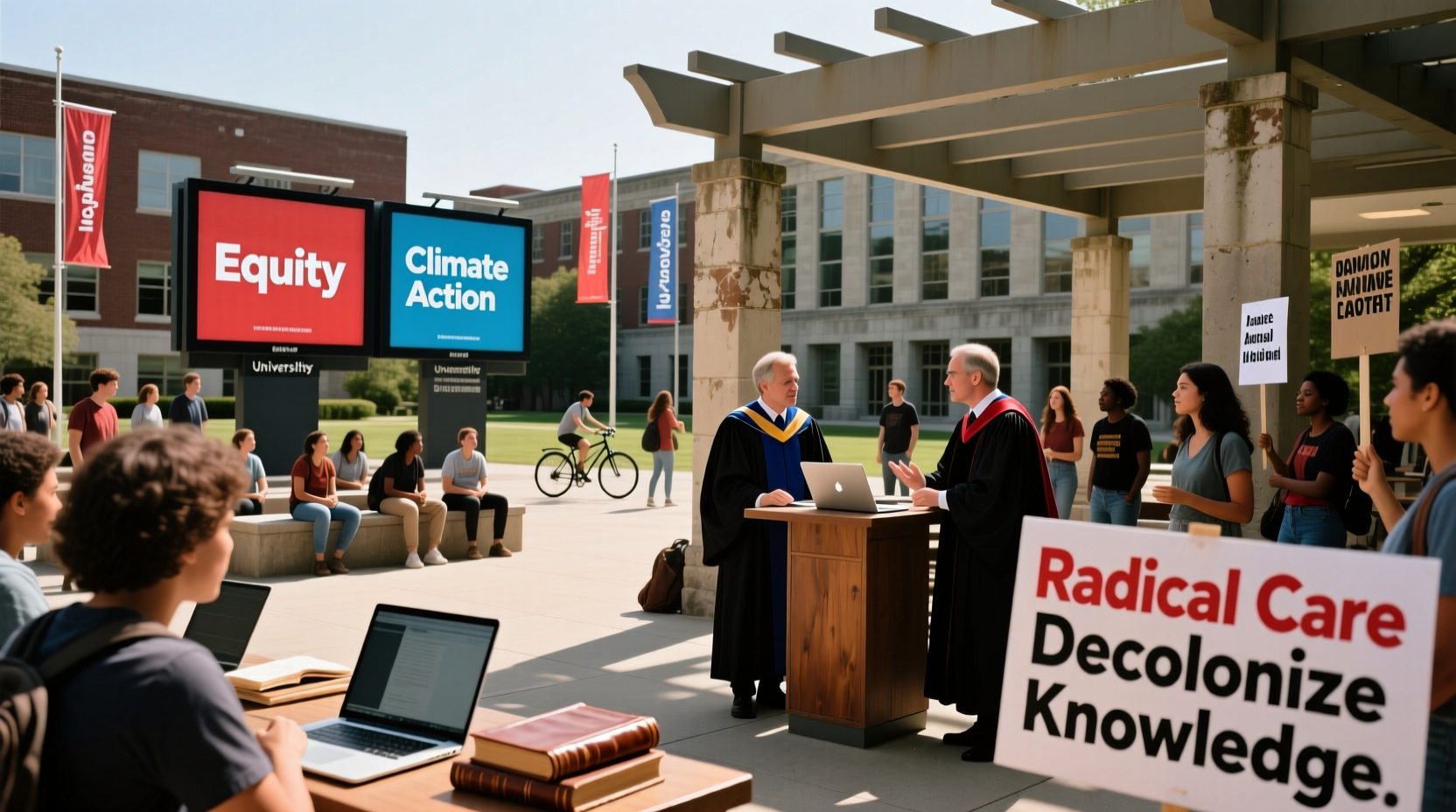
Universities have not always leaned liberal. In the early 20th century, American colleges were often conservative institutions aligned with religious traditions and elite social structures. However, the post-World War II era marked a turning point. The GI Bill expanded access to higher education, introducing a broader, more diverse student body. Simultaneously, the Cold War elevated the importance of research, scientific inquiry, and critical thinking—values that encouraged skepticism toward authority and tradition.
The 1960s catalyzed a cultural shift. Student activism around civil rights, Vietnam, and gender equality transformed campuses into hubs of progressive thought. Faculty began embracing interdisciplinary studies, critical theory, and social sciences—all fields that examine power, inequality, and systemic change. These disciplines naturally attract scholars interested in reform and equity, reinforcing a culture that questions the status quo.
“Academic freedom has always meant challenging dominant narratives. That inherently creates an environment where progressive ideas find fertile ground.” — Dr. Linda Chen, Professor of Sociology at the University of Michigan
Institutional Incentives and Academic Values
At their core, universities prioritize inquiry, evidence-based reasoning, and peer-reviewed scholarship. These principles align more closely with liberal epistemology—the belief that knowledge evolves through debate, data, and revision—than with ideologies that emphasize fixed truths or tradition.
Consider the tenure process: faculty must publish original research, often in specialized journals that value innovation and critique. Work that challenges existing systems or highlights social disparities tends to gain more traction in these circles than research defending entrenched hierarchies. Over time, this shapes departmental cultures, hiring patterns, and curricula.
Moreover, universities serve a mission of inclusion and diversity. As institutions strive to enroll underrepresented students and hire diverse faculty, they adopt policies and frameworks rooted in equity—another hallmark of modern liberalism. This isn’t ideological indoctrination; it’s institutional adaptation to broader social goals.
Demographic and Career Patterns Among Faculty
Data consistently shows that faculty in the humanities, social sciences, and even some STEM fields identify as liberal at higher rates than the general population. A 2021 study by the Pew Research Center found that 63% of college professors identify as liberal or very liberal, compared to 28% of the public.
This gap is partly explained by career selection. Individuals drawn to careers in sociology, education, or environmental science often enter those fields because they care deeply about social issues. Conversely, business, engineering, and agriculture programs tend to have more politically balanced or conservative faculty.
Another factor is generational replacement. Older, more conservative faculty retire, and younger PhDs—many trained in institutions with progressive norms—are hired in their place. Graduate school itself acts as a filter: students who question mainstream assumptions or advocate for change are often rewarded with mentorship, publication opportunities, and job placements.
Political Identification by Academic Discipline (Approximate)
| Discipline | Liberal (%) | Conservative (%) | Moderate (%) |
|---|---|---|---|
| Sociology | 85 | 5 | 10 |
| English | 80 | 7 | 13 |
| Political Science | 70 | 15 | 15 |
| Engineering | 35 | 40 | 25 |
| Business | 40 | 45 | 15 |
The Role of Student Culture and Campus Climate
Students also contribute to the liberal perception of universities. Young adults are historically more open to social change, and college is a time of identity formation and exposure to new ideas. Campuses host events on racial justice, LGBTQ+ rights, and sustainability—not because administrators mandate them, but because student groups organize them.
A real-world example illustrates this dynamic: At the University of Oregon in 2019, student activists successfully lobbied the administration to divest from fossil fuels. The campaign was led by a coalition of environmental science and policy students who used research, petitions, and public demonstrations. While some critics called it political overreach, supporters saw it as civic engagement in action.
This kind of activism reflects a broader norm: universities encourage students to think critically about society. When students apply those skills to issues like income inequality or police reform, their conclusions often align with liberal perspectives. But the goal isn’t to produce liberals—it’s to produce informed citizens.
Addressing the Backlash and Ensuring Balance
The perception of liberal dominance has sparked backlash. Critics argue that ideological homogeneity can stifle debate, discourage conservative students, and lead to groupthink. Some states have passed laws requiring “intellectual diversity” on campuses, while donor-funded centers promoting free-market or conservative thought have emerged at several universities.
To maintain credibility, institutions must ensure that dissenting voices are heard. This doesn’t mean enforcing equal representation of every ideology, but rather protecting academic freedom for all viewpoints. A healthy university allows conservative scholars to research charter schools, libertarian economists to critique regulation, and religious philosophers to defend traditional ethics—without fear of professional penalty.
- Promote viewpoint diversity in hiring committees
- Support speaker series featuring controversial or non-mainstream thinkers
- Train faculty to moderate classroom discussions neutrally
- Encourage interdisciplinary collaboration to break ideological silos
Checklist: Supporting Intellectual Diversity on Campus
- Review departmental hiring practices for implicit bias
- Fund student organizations across the political spectrum equally
- Host annual forums on free speech and academic freedom
- Include diverse ideological perspectives in core curricula
- Protect faculty from political pressure from donors or legislators
FAQ
Does liberal faculty representation mean students are being indoctrinated?
No. While faculty may hold liberal views, academic standards require objectivity in teaching. Most professors separate personal beliefs from course content. Students are taught to analyze arguments, not accept dogma. Critical thinking, not conformity, is the goal.
Are there conservative-friendly programs within universities?
Yes. Many business schools, economics departments, and military ROTC programs maintain center-right orientations. Think tanks like the Federalist Society have active campus chapters. Additionally, online platforms now offer alternative credentialing for those skeptical of traditional academia.
Can universities become more politically balanced?
Balance should be measured by openness to debate, not headcounts. Institutions can foster balance by protecting minority viewpoints, encouraging respectful disagreement, and valuing truth-seeking over ideological alignment. Forced parity risks politicizing scholarship further.
Conclusion: Toward a More Nuanced Understanding
The liberal tilt in universities is real, but it’s not monolithic or malicious. It stems from deep-seated values—curiosity, inclusivity, and progress—that define the modern academic mission. Rather than rejecting this reality, we should engage with it constructively. The goal isn’t to turn universities into political battlegrounds, but to ensure they remain spaces where all ideas can be tested, challenged, and refined.
For students, this means embracing discomfort as part of learning. For faculty, it means modeling intellectual humility. And for the public, it means recognizing that a university’s purpose isn’t to reflect society as it is, but to imagine what it could become.




 浙公网安备
33010002000092号
浙公网安备
33010002000092号 浙B2-20120091-4
Comments
No comments yet. Why don't you start the discussion?