
Small ears can be a source of curiosity or concern for many people—whether noticed in infancy or observed later in life. While ear size is largely determined by genetics and normal variation, unusually small ears may sometimes point to underlying developmental, genetic, or medical conditions. Understanding the reasons behind small ear size, recognizing when it’s part of typical human diversity, and knowing when to consult a healthcare provider can provide clarity and peace of mind.
Understanding Ear Size: What’s Normal?
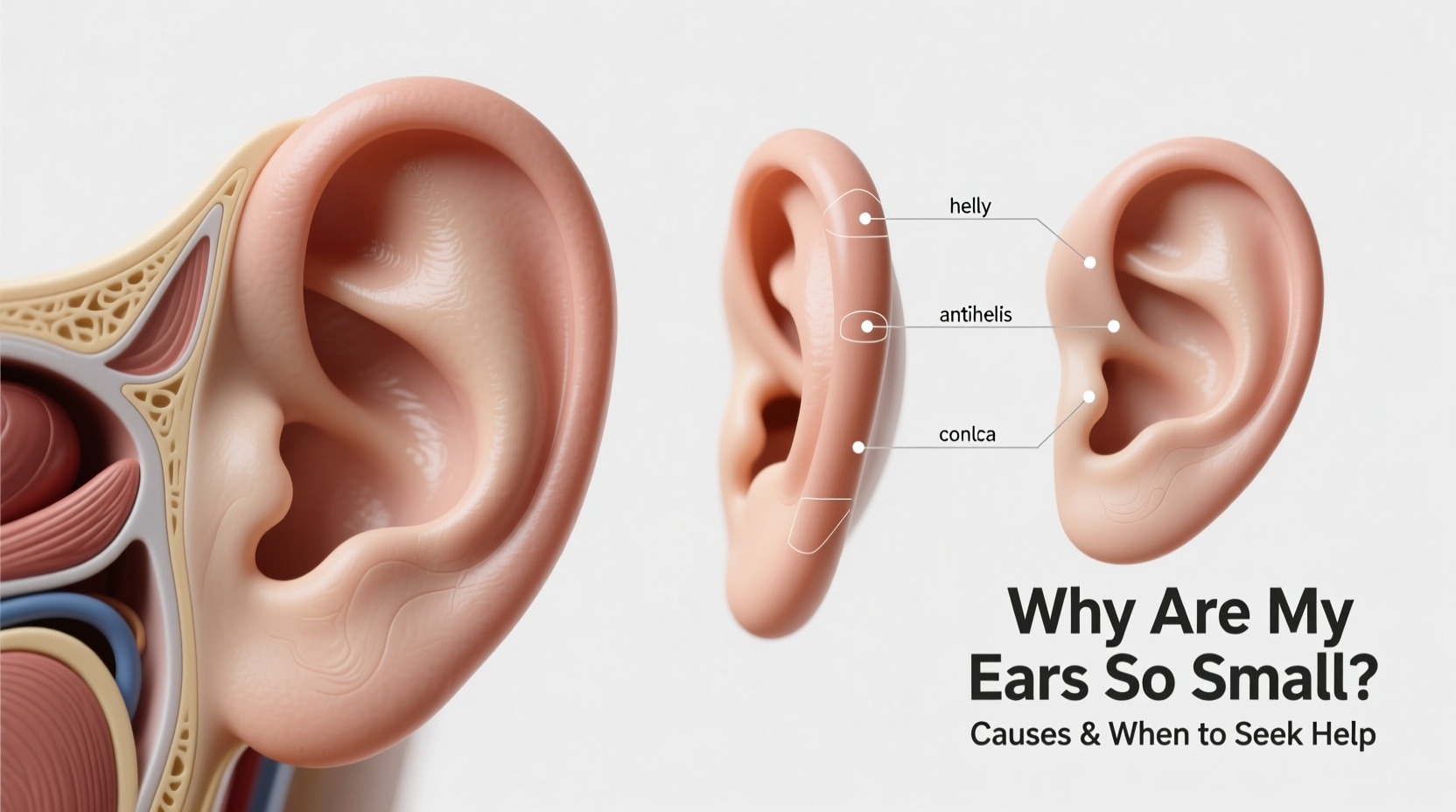
Human ears come in a wide range of sizes and shapes, all falling within the spectrum of normal anatomical variation. On average, adult male ears measure about 6–7 cm in length, while female ears tend to be slightly smaller. However, what constitutes “small” is relative and often influenced by facial proportions rather than absolute measurements.
Ears grow rapidly during early childhood and typically reach about 90% of their adult size by age 6. After that, growth slows significantly. Small ears in proportion to the head and face are usually not a cause for concern unless accompanied by other symptoms or developmental delays.
Genetic and Hereditary Causes of Small Ears
The most common reason for small ears is heredity. If one or both parents have relatively small ears, it's likely their children will inherit similar features. This type of ear size variation is entirely normal and requires no intervention.
Facial proportions are genetically programmed, and ear size often correlates with skull structure, jawline, and overall body build. In some ethnic populations, smaller ear size is a typical trait. For example, studies have shown slight but consistent differences in average ear dimensions across different global populations due to genetic background.
In rare cases, inherited syndromes may include microtia (underdeveloped ears) or other craniofacial abnormalities as part of their presentation. These are usually diagnosed early in life and involve more than just ear size.
Medical and Developmental Conditions Linked to Small Ears
While most cases of small ears are benign, certain medical conditions may present with underdeveloped or unusually small ears. These are typically identified at birth or during early childhood screenings.
- Microtia: A congenital condition where the external ear is underdeveloped. It ranges from mild (slightly small but structured ear) to severe (absence of external ear). Often associated with hearing loss on the affected side.
- Goldenhar Syndrome: A rare disorder affecting ear, eye, and spine development. Children may have small or absent ears, facial asymmetry, and epibulbar dermoids.
- Down Syndrome: Some individuals exhibit smaller ears set lower on the head, along with other characteristic facial features.
- Fetal Alcohol Syndrome (FAS): Prenatal alcohol exposure can lead to a variety of physical anomalies, including small, posteriorly rotated ears.
- CHARGE Syndrome: A complex genetic disorder involving Coloboma, Heart defects, Atresia of the choanae, Retarded growth, Genital abnormalities, and Ear abnormalities—including small or cup-shaped ears.
“Ear morphology can serve as an important clinical clue in diagnosing certain genetic syndromes.” — Dr. Lena Patel, Pediatric Geneticist
Types of Small Ears: Classification and Characteristics
Not all small ears are the same. Medical professionals categorize them based on appearance, structure, and functional impact:
| Type | Description | Associated Concerns |
|---|---|---|
| Proportionate Microsomia | Ears are small but fully formed and symmetrically placed | Usually benign; often familial |
| Microtia (Grade I–IV) | Underdeveloped external ear; may lack ear canal (aural atresia) | Hearing impairment possible; surgical correction options exist |
| Low-set Ears | Positioned lower than typical on the head; may appear smaller | Can indicate chromosomal disorders like Turner syndrome |
| Cupped or Lop Ear | Top of ear folds over; gives appearance of smaller size | Mainly cosmetic; treatable with otoplasty if desired |
| Minor Auricular Anomalies | Slight deviations such as skin tags, pits, or narrow helix | Often harmless; monitored for related kidney issues in infants |
When to Seek Medical Help
In most cases, small ears require no treatment. However, there are specific red flags that warrant evaluation by a pediatrician, audiologist, or genetic specialist:
- Asymmetry: One ear significantly smaller or malformed compared to the other.
- Hearing Difficulties: Delayed speech, frequent ear infections, or failure to respond to sounds in infants.
- Associated Birth Defects: Cleft lip/palate, heart defects, vision problems, or spinal irregularities.
- Renal Abnormalities: Since ear and kidney development occur simultaneously in utero, preauricular pits or tags may signal urinary tract issues.
- Developmental Delays: Global delays in motor skills, cognition, or language alongside unusual ear features.
Newborn hearing screening is standard in most countries and helps detect conductive or sensorineural hearing loss linked to ear malformations. Early diagnosis allows timely intervention, including hearing aids or reconstructive surgery.
Step-by-Step: What to Do If You’re Concerned About Ear Size
- Observe Proportionality: Are the ears in balance with facial features? Take photos from multiple angles.
- Review Family Traits: Ask relatives if similar ear size runs in the family.
- Assess Hearing: Notice any difficulty following conversations, turning up volume excessively, or delayed responses.
- Consult a Doctor: Schedule an appointment with a primary care physician or ENT specialist.
- Request Evaluation: Depending on findings, you may be referred to an audiologist, geneticist, or craniofacial team.
Real-Life Example: A Parent’s Journey with Microtia
Sarah noticed shortly after her son Liam was born that his right ear appeared much smaller and folded oddly. The left ear was normal. Alarmed, she mentioned it during his two-week checkup. The pediatrician performed a hearing test, which showed reduced conduction in the right ear. Liam was referred to an audiologist and later diagnosed with Grade II microtia and aural atresia.
By six months, he received a bone-conduction hearing device. At age 5, after thorough imaging and counseling, Sarah opted for rib-cartilage ear reconstruction surgery. Today, Liam wears his hair short and is proud of his reconstructed ear. His case highlights how early detection and multidisciplinary care can make a significant difference in outcomes.
Tips for Managing Concerns About Ear Appearance
- For children: Encourage open conversations about differences to build resilience.
- Consider otoplasty only if the individual expresses distress about appearance—ideally after age 6 when ears are near full size.
- Avoid negative labeling—phrases like “deformed” or “abnormal” can harm self-esteem.
- Seek support groups for families dealing with craniofacial differences.
Frequently Asked Questions
Can small ears affect hearing?
Not necessarily. Outer ear size has minimal impact on hearing unless structural issues like a missing ear canal (aural atresia) are present. Conductive hearing loss may occur in cases of microtia, but this is due to internal anatomy, not ear size itself.
Is it possible to make ears bigger?
There is no non-surgical way to increase ear size. Surgical options like autologous rib cartilage grafting or prosthetic implants exist for severe microtia. Cosmetic procedures are generally reserved for functional or psychological reasons, not minor size variation.
Do small ears get bigger with age?
Ears grow quickly in early childhood and stabilize around age 6–8. While they don’t grow larger in cartilage size, aging can make ears appear longer due to gravity and loss of skin elasticity, not actual growth.
Final Thoughts: Embracing Natural Variation
Small ears are far more common than many realize and are usually just another expression of human diversity. Whether inherited, incidental, or part of a broader condition, the key is understanding context. When isolated and symmetrical, small ears pose no health risk. But when paired with other developmental concerns, early professional assessment ensures the best outcomes.
If you're a parent noticing unusual ear features in your child, trust your instincts. A quick evaluation can either offer reassurance or initiate helpful interventions. For adults concerned about appearance, remember that uniqueness often becomes a defining strength—not something to hide.




 浙公网安备
33010002000092号
浙公网安备
33010002000092号 浙B2-20120091-4
Comments
No comments yet. Why don't you start the discussion?