
Every year, families gather to set up their Christmas trees with care—fluffing branches, hanging ornaments, and placing the star just right. But within a few days, something unsettling happens: the tree begins to lean. What was once a proud centerpiece now threatens to topple, dragging lights and fragile heirlooms down with it. This common yet frustrating issue affects homes across the country, but it’s not inevitable. Understanding the root causes of tree tilting and knowing how to counteract them can ensure your tree stands tall and safe through the holidays.
The Hidden Forces Behind a Tilting Tree
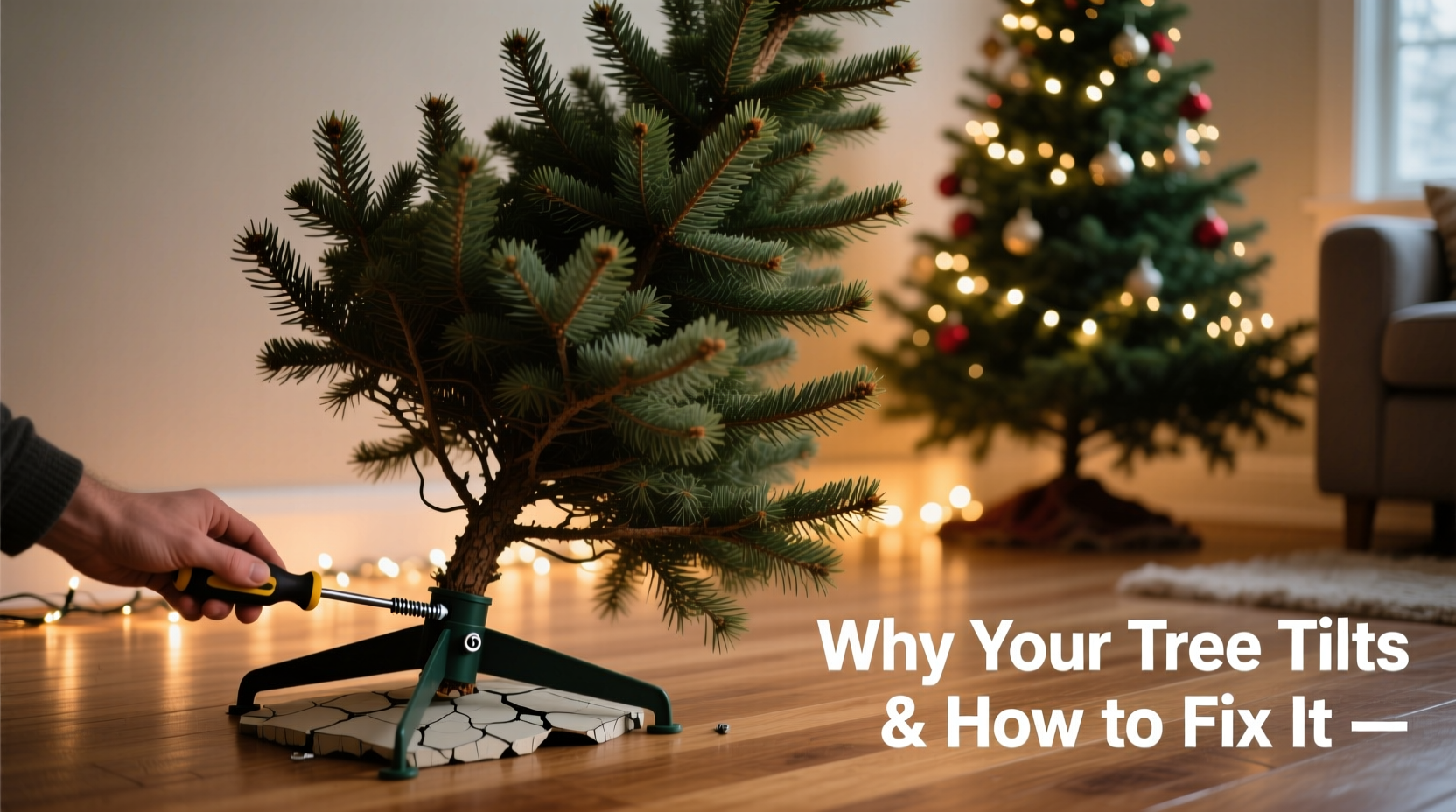
A freshly cut or potted Christmas tree may appear stable at first, especially when securely placed in a stand and watered properly. However, several physical and environmental factors begin working against its stability shortly after setup.
One primary cause is uneven water absorption. Trees drink water through their base, but if the trunk isn’t cut evenly or the stand’s clamps aren’t tightened symmetrically, moisture intake becomes lopsided. This leads to one side of the trunk swelling more than the other, creating internal pressure that gradually shifts the tree’s center of gravity.
Another major contributor is the drying and softening of the trunk’s outer layers. As the cut end sits in water, the wood fibers absorb moisture and expand. Over time, this weakens the structural integrity of the base, especially if the tree has been out of water for too long before being placed in the stand. A softened base compresses unevenly under the tree’s weight, causing it to list.
Environmental influences also play a role. Heat sources such as radiators, fireplaces, or heating vents create temperature imbalances around the tree. The side closest to the heat dries out faster, causing branches to droop and the overall weight distribution to shift. Even strong lighting setups on one side can contribute to asymmetric drying and branch fatigue.
“Trees are dynamic—they continue to react to their environment even after being cut. Stability isn’t just about the stand; it’s about managing moisture, balance, and surroundings.” — Dr. Alan Prescott, Arborist and Holiday Tree Specialist
How to Stabilize Your Tree: A Step-by-Step Guide
Preventing or correcting a tilt requires immediate action and ongoing monitoring. Follow this timeline to keep your tree upright and secure.
- Day 0 – Initial Setup: Make a fresh, straight cut (about ½ inch) off the bottom of the trunk before placing it in the stand. This opens the sap channels for better water absorption and ensures even support.
- Day 0 – Secure Placement: Insert the trunk into the stand and tighten the screws evenly. Use a small level or visual alignment (sighting from two angles) to confirm vertical positioning.
- Day 1 – Water Check: Fill the reservoir completely. Monitor water levels daily—trees can drink over a gallon in the first 24 hours.
- Day 2–3 – Assess for Early Signs: Look for subtle leans. Gently nudge the tree to test stability. If it wobbles, recheck screw tension and water saturation.
- Day 4+ – Reinforcement: If a tilt appears, stop watering temporarily, realign the tree, and consider external stabilization (see below).
Effective Stabilization Techniques
Once a tree starts leaning, simple adjustments may not be enough. Structural reinforcement is often necessary to restore balance and prevent further movement.
Internal Adjustments
- Re-level the stand: Loosen the screws, gently push the tree back into position, and retighten all clamps simultaneously to avoid lateral pressure.
- Check water quality: Replace cloudy water with fresh water every few days to prevent bacterial buildup that can clog water uptake.
- Add support blocks: Place small wooden shims between the trunk and stand interior on the low side to compensate for compression.
External Supports
When internal fixes fail, discreet external bracing can save the tree without ruining aesthetics.
- Use thin, flexible guy lines (like fishing line or clear cord) attached to sturdy hooks in the wall or ceiling.
- Anchor the lines to upper branches on the side opposite the lean.
- Tension gently—over-tightening can snap branches or pull the tree in the wrong direction.
- Camouflage lines with garlands or tinsel if needed.
For freestanding trees without nearby walls, use weighted tripods or corner braces designed for potted plants. These can be adapted to support larger trees when modified with padded clamps.
Do’s and Don’ts of Tree Stability
| Do | Don’t |
|---|---|
| Make a fresh cut before placing in the stand | Let the tree sit unwatered for more than 6 hours |
| Tighten stand screws evenly and check weekly | Over-tighten screws, which can crush the trunk |
| Keep the reservoir full at all times | Add bleach, aspirin, or commercial additives unless recommended by experts |
| Position the tree away from heat sources | Place near radiators, vents, or sunny windows |
| Use clear support lines if needed | Rely solely on the stand without monitoring |
Real Example: The Johnson Family’s Near-Disaster
The Johnsons in Minneapolis set up their 8-foot noble fir on December 5th, proud of their work. By December 7th, they noticed the tree leaning toward the living room window—where the afternoon sun streamed in daily. Initially dismissing it as an optical illusion, they were startled when a gust from the HVAC system caused the tree to sway dangerously.
They drained the water, realigned the trunk, and discovered one clamp had loosened while the opposite side had compressed the bark. After inserting a cedar shim and relocating the tree to a cooler corner, they installed two nearly invisible fishing lines anchored to ceiling joists. They also began rotating the tree 90 degrees every two days to balance sun exposure.
Their proactive steps saved the tree—and dozens of ornaments—from disaster. “We thought it was just bad luck,” said Lisa Johnson. “But it was really about moisture, heat, and not checking it closely enough.”
Expert-Recommended Maintenance Checklist
To prevent tilting before it starts, follow this actionable checklist throughout the season.
- ☐ Make a fresh, horizontal cut before setup
- ☐ Choose a stand rated for trees taller than yours (e.g., use a 9-foot stand for an 8-foot tree)
- ☐ Tighten all screws evenly and verify alignment with a level
- ☐ Fill the reservoir completely on day one and monitor daily
- ☐ Keep the tree at least 3 feet from heat sources
- ☐ Inspect for leaning every 48 hours
- ☐ Rotate the tree slightly every few days for even drying
- ☐ Reinforce with guy lines if a lean exceeds 5 degrees
- ☐ Replace water if it becomes cloudy or develops odor
- ☐ Remove the tree promptly after needles become excessively dry or fall easily
“The most stable tree isn’t always the freshest—it’s the one that’s consistently monitored and adjusted.” — Maria Gonzalez, Professional Holiday Decorator with 15 years of experience
Frequently Asked Questions
Can I fix a severely leaning tree?
Yes, in most cases. Drain the water, gently realign the trunk, and use shims or external supports. If the trunk is cracked or split, however, it may be safer to remove the tree and start over with a new one.
Is it safe to use guy lines indoors?
Yes, when done correctly. Use high-test fishing line or braided nylon cord rated for at least 20 pounds. Anchor to secure points like ceiling joists or wall studs—not drywall anchors. Keep tension moderate to avoid branch damage.
Does adding anything to the water help prevent tilting?
Not directly. While some suggest sugar or floral preservatives, research from agricultural extensions shows plain tap water is just as effective. Additives can sometimes promote bacterial growth, which clogs water uptake and worsens instability.
Conclusion: A Stable Tree for a Safer, More Joyful Holiday
A tilting Christmas tree isn’t just an eyesore—it’s a safety hazard. With the right knowledge, tools, and attention, you can prevent or correct this common problem and enjoy a beautiful, upright centerpiece all season long. Stability starts with proper setup but continues with daily awareness. From making a clean cut to monitoring water levels and using discreet supports when needed, every step contributes to a safer, longer-lasting display.
Your tree is more than decoration; it’s a symbol of tradition, warmth, and celebration. Protect it with the care it deserves. Take a moment today to inspect your tree’s stance, reinforce its base if necessary, and share these tips with others who might be struggling with a slow but steady lean.




 浙公网安备
33010002000092号
浙公网安备
33010002000092号 浙B2-20120091-4
Comments
No comments yet. Why don't you start the discussion?