
It’s a common yet often overlooked concern: your hands appear noticeably darker than your face, despite using the same skincare routine. This discoloration can affect self-confidence and raise questions about sun exposure, lifestyle habits, or underlying health conditions. While skin tone variation across the body is normal, significant darkening of the hands compared to the face warrants attention. The causes range from environmental damage to hormonal shifts, and the solutions vary from preventive care to targeted treatments.
Understanding the root reasons behind this pigmentation difference is the first step toward restoring a more uniform complexion. More importantly, knowing which actions to take—and which to avoid—can make a lasting difference in both appearance and skin health.
Common Causes of Darker Hands
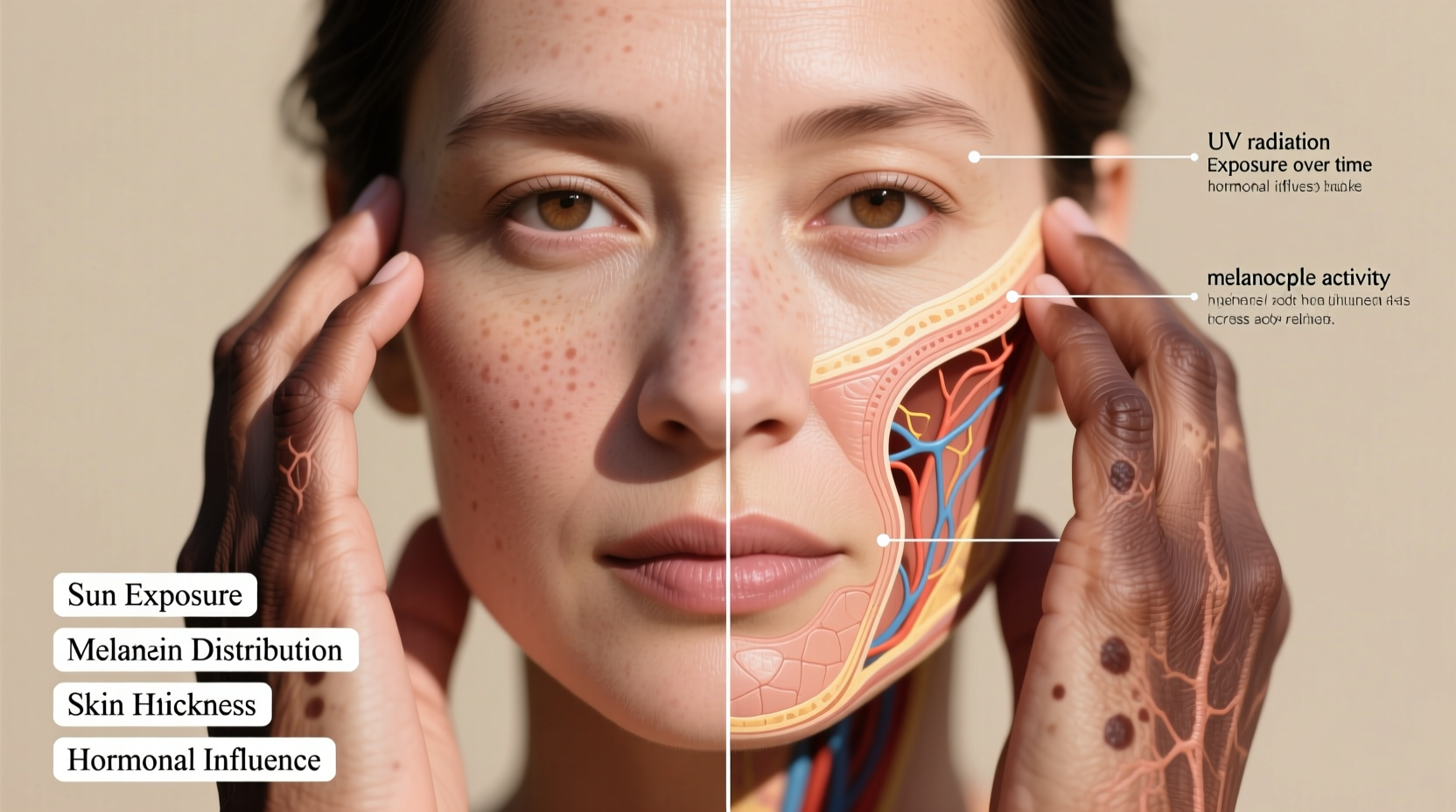
The skin on your hands is structurally different from facial skin. It's thinner, has fewer oil glands, and is exposed to more environmental stressors. These factors contribute to faster aging and increased pigmentation. Several key causes explain why hands may darken more than the face:
- Sun exposure: Hands are rarely protected with sunscreen, making them prone to UV-induced hyperpigmentation.
- Friction and irritation: Frequent handwashing, chemical exposure (cleaning agents, soaps), and manual labor can trigger melanin production.
- Aging: As we age, sun damage accumulates, leading to age spots (liver spots) primarily on the backs of hands.
- Hormonal changes: Conditions like melasma, often linked to pregnancy or birth control, can cause patchy pigmentation that sometimes affects the hands.
- Nutritional deficiencies: Low levels of vitamin B12, folic acid, or iron can manifest as skin discoloration.
- Medical conditions: Acanthosis nigricans, Addison’s disease, or thyroid imbalances may lead to darkened skin on extremities.
Unlike the face, which many people routinely protect with SPF and moisturizers, hands are often neglected in daily skincare, accelerating visible signs of damage.
Effective Solutions for Lighter, Even-Toned Hands
Reversing or managing hand pigmentation requires consistency and a multi-pronged approach. Unlike the face, the skin on hands absorbs topical treatments differently due to lower sebum production, so formulations must be tailored accordingly.
Topical Treatments That Work
Ingredients proven to reduce hyperpigmentation include:
- Vitamin C: A potent antioxidant that inhibits melanin synthesis and brightens skin over time.
- Kojic acid: Derived from fungi, it lightens dark spots by blocking pigment formation.
- Alpha hydroxy acids (AHAs): Glycolic and lactic acids exfoliate dead skin cells, revealing brighter layers underneath.
- Niacinamide: Reduces inflammation and prevents pigment transfer to skin cells.
- Hydroquinone (2–4%): A prescription-strength agent that suppresses melanocytes; best used under dermatological supervision.
For best results, apply these ingredients nightly and always follow with sunscreen during the day, as many actives increase photosensitivity.
Lifestyle Adjustments
Daily habits significantly influence skin tone. Simple changes can prevent further darkening:
- Wear gloves when cleaning or gardening to minimize chemical and physical irritation.
- Use mild, fragrance-free hand soaps to avoid triggering post-inflammatory pigmentation.
- Incorporate foods rich in antioxidants—berries, leafy greens, nuts—into your diet to support skin repair.
“Daily sun protection is non-negotiable for hand rejuvenation. Without it, even the most advanced treatments will fail.” — Dr. Lena Patel, Board-Certified Dermatologist
Step-by-Step Guide to Brighter Hands
Follow this 8-week plan to visibly improve hand tone and texture:
- Week 1–2: Begin daily application of broad-spectrum SPF 50+ on hands after every wash. Introduce a gentle glycolic acid hand cream at night.
- Week 3–4: Add a vitamin C serum before moisturizing in the morning. Continue SPF use. Wear cotton gloves for household chores.
- Week 5–6: Incorporate a weekly exfoliation using a soft scrub or chemical exfoliant (e.g., lactic acid pads).
- Week 7–8: Assess improvement. If spots persist, consult a dermatologist about hydroquinone or professional treatments like chemical peels.
Consistency is critical. Most users report noticeable fading after 4–6 weeks of diligent care.
Professional Treatments Worth Considering
When at-home remedies aren’t enough, clinical options offer faster, more dramatic results:
| Treatment | How It Works | Results Timeline | Risks/Side Effects |
|---|---|---|---|
| Chemical Peels | Uses acids to remove top pigmented layers | 2–4 sessions; visible in 3 weeks | Redness, peeling, temporary sensitivity |
| Laser Therapy | Targets melanin with focused light energy | Improvement in 2–6 weeks | Hyperpigmentation if aftercare fails |
| Cryotherapy | Freezes dark spots with liquid nitrogen | Lesions flake off in 1–2 weeks | Blistering, scarring (rare) |
| Microdermabrasion | Mechanical exfoliation for surface renewal | Gradual over 4–6 sessions | Minimal; slight redness |
These procedures should only be performed by licensed professionals. A patch test is recommended to rule out adverse reactions, especially for individuals with sensitive or darker skin tones.
Mini Case Study: Maria’s Journey to Even-Toned Hands
Maria, a 42-year-old nurse, noticed her hands had become significantly darker than her face over five years. Her job required frequent handwashing with strong antiseptic soaps, and she rarely used sunscreen. Initially, she assumed it was just aging. After developing persistent brown spots, she consulted a dermatologist.
The doctor diagnosed her with irritant-induced hyperpigmentation compounded by chronic UV exposure. Maria began a regimen: applying SPF 50+ after each handwash, using a niacinamide hand cream nightly, and wearing protective gloves at work. Within ten weeks, her skin tone improved markedly. The dark spots faded by over 60%, and her hands felt smoother. She now maintains her results with monthly exfoliation and consistent sun protection.
Do’s and Don’ts Checklist
- ✅ Do apply sunscreen to your hands every morning.
- ✅ Do wear gloves when handling chemicals or detergents.
- ✅ Do use a nourishing hand cream with ceramides or shea butter.
- ✅ Do eat a balanced diet rich in vitamins C and E.
- ❌ Don’t pick at or scratch irritated areas on your hands.
- ❌ Don’t use harsh scrubs daily—they can worsen pigmentation.
- ❌ Don’t skip patch testing new brightening products.
- ❌ Don’t ignore sudden or asymmetrical darkening—it could signal illness.
Frequently Asked Questions
Can liver problems cause dark hands?
Yes, certain liver conditions like cirrhosis can lead to generalized skin darkening (hyperpigmentation), particularly in sun-exposed areas including the hands. This is often accompanied by other symptoms such as fatigue, jaundice, or abdominal swelling. Consult a healthcare provider if pigmentation changes are sudden or systemic.
Is it safe to use face serums on hands?
Generally, yes. Most facial brightening serums (e.g., vitamin C, niacinamide) are safe for hands. However, hand skin may be more prone to irritation due to frequent washing and friction. Start with lower concentrations and monitor for dryness or redness.
Why do my hands tan more easily than my face?
This can happen if you apply sunscreen diligently to your face but neglect your hands. The skin on the back of the hands is thin and contains melanocytes that respond strongly to UV radiation. Without protection, they produce more melanin, leading to faster tanning and spot formation.
Take Control of Your Skin Health Today
Your hands are one of the first things people notice—they deserve the same care as your face. Whether the cause is sun damage, irritation, or an underlying condition, addressing darker hands begins with awareness and action. From daily sunscreen use to considering professional treatments, every step you take brings you closer to healthier, more even-toned skin.




 浙公网安备
33010002000092号
浙公网安备
33010002000092号 浙B2-20120091-4
Comments
No comments yet. Why don't you start the discussion?