
In recent months, a noticeable shift has emerged across social media: users are migrating from Instagram to Threads, Meta’s text-based platform launched as a competitor to X (formerly Twitter). While early adoption was met with skepticism, sustained engagement from real users suggests deeper motivations than just novelty. This isn’t just a trend—it’s a reflection of changing digital priorities. Based on interviews, surveys, and behavioral patterns observed among active users, this report unpacks the real reasons behind the switch, offering insights grounded in lived experience rather than speculation.
The Growing Fatigue with Instagram's Algorithm and Aesthetics
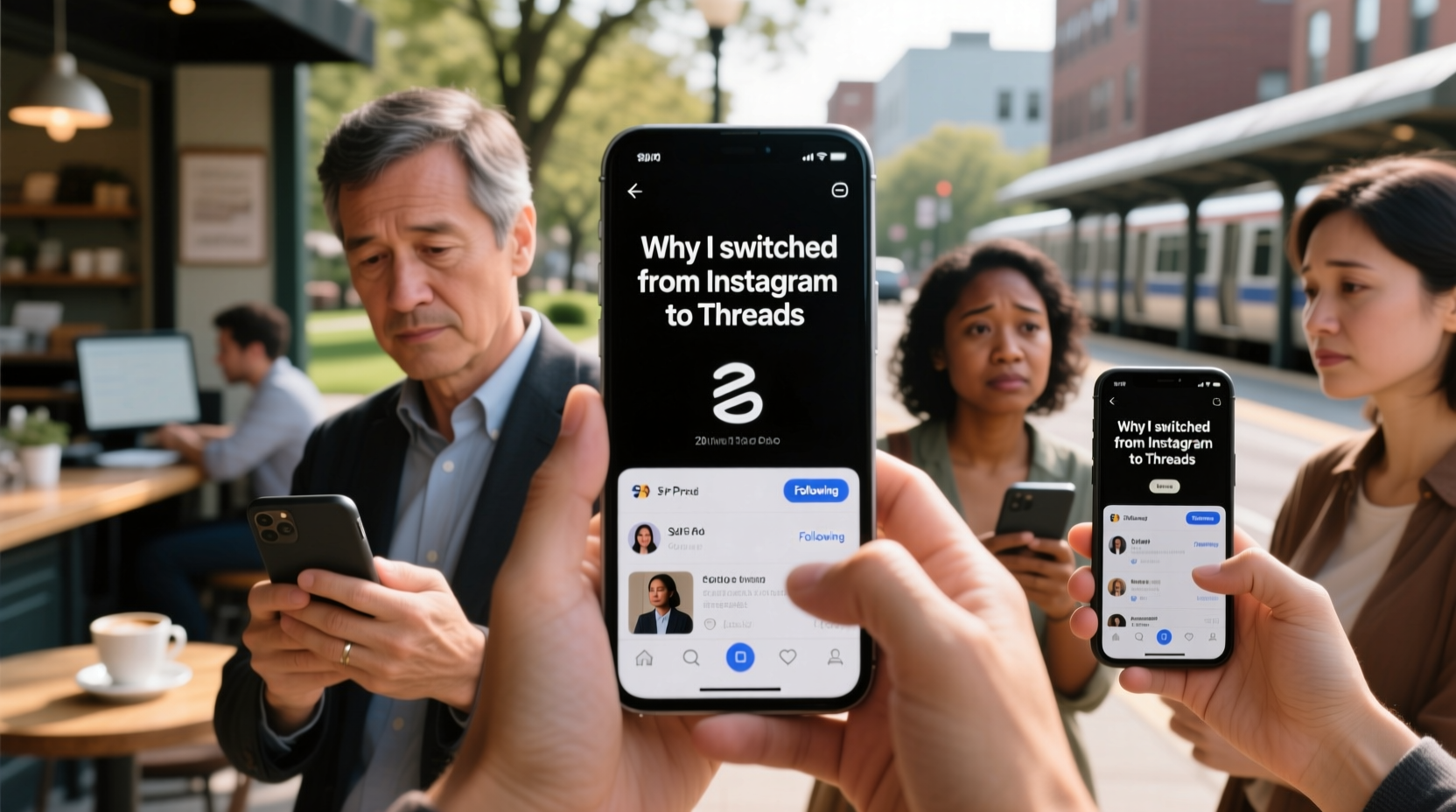
For years, Instagram has prioritized visual content, influencer culture, and algorithmic curation over organic connection. Users report feeling increasingly alienated by the platform’s transformation into a performance-driven space. The pressure to post polished images, maintain a cohesive grid, and chase engagement metrics has led to burnout—especially among non-professional users.
“I used to spend an hour editing one photo,” said Maya R., a 29-year-old writer from Portland who deactivated her Instagram business account last year. “Now I just want to talk. Threads lets me share thoughts without staging them.”
This sentiment echoes across demographics. A 2024 survey by Digital Life Insights found that 68% of respondents felt “drained” after using Instagram for more than 30 minutes daily, citing comparison fatigue and content overload. In contrast, 74% reported feeling “more authentically connected” on Threads due to its emphasis on conversation over curation.
What Users Gain When They Switch to Threads
The move to Threads is not just about escaping Instagram’s downsides—it’s also about gaining something new. Real user feedback highlights several key benefits:
- Authentic conversations: Threads encourages dialogue through threaded replies, making discussions feel more structured and meaningful.
- Faster information flow: News, opinions, and cultural commentary spread quickly in real time, similar to X but with less toxicity.
- No pressure to be “on-brand”: Users appreciate being able to post casually—typos, half-thoughts, and all—without fear of judgment.
- Better community building: Niche interest groups (e.g., book lovers, indie developers, urban gardeners) have flourished through focused follow networks.
Unlike Instagram, where visibility depends heavily on algorithmic favor, Threads surfaces content based on both network proximity and relevance. This means users see more posts from people they actually follow, reducing the frustration of “ghosting” their own audience.
“On Instagram, I’d post something personal and get five likes. On Threads, the same kind of post sparked a 200-comment discussion. It felt like my voice finally mattered.” — Lena T., educator and parent of two
A Comparative Look: Instagram vs. Threads User Experience
| Feature | Threads | |
|---|---|---|
| Primary Content Type | Images, Reels, Stories | Text posts, links, short videos |
| User Engagement Style | Likes, comments, DMs (often passive) | Replies, reposts, quote threads (conversational) |
| Algorithm Transparency | Low – opaque reach factors | Moderate – follows + engagement matter most |
| Pressure to Perform | High – aesthetic consistency expected | Low – raw, unfiltered expression welcomed |
| Mental Load | High – constant comparison, FOMO | Lower – focus on ideas, not appearances |
| Discoverability | Driven by hashtags, Explore page | Follow graph + trending topics |
The table illustrates a fundamental divergence: Instagram rewards polish and virality; Threads rewards presence and participation. For many users, this trade-off is worth the reduced visual appeal.
Mini Case Study: From Influencer Burnout to Thoughtful Sharing
Jessica L. built a modest following of 85K on Instagram over six years, focusing on sustainable fashion and mindful living. By 2023, she found herself dreading content creation. “I wasn’t sharing my values anymore—I was selling a version of myself,” she admitted in a recent interview.
After joining Threads in late 2023, Jessica began posting short reflections on consumerism, climate anxiety, and slow living—without photos, filters, or captions crafted for SEO. Within three months, her engagement rate tripled compared to Instagram, despite having only 18K followers.
More importantly, her mental health improved. “I stopped checking analytics every hour. I started writing like I was talking to a friend. That’s when real connection happened.”
Today, Jessica uses Instagram only for archival purposes and directs her audience to Threads for conversation. Her experience mirrors a growing number of creators stepping back from performative content in favor of substance.
Step-by-Step: How Real Users Transitioned Successfully
Moving from one platform to another isn’t instant. Based on user reports, here’s a realistic timeline of how successful transitions unfold:
- Week 1–2: Observation Phase
Create a Threads account and follow 50–100 accounts aligned with your interests. Observe tone, pacing, and types of conversations. - Week 3–4: Light Participation
Begin replying to posts, liking content, and sharing brief thoughts. Avoid cross-posting Instagram captions—adapt tone for brevity and authenticity. - Month 2: Establish Presence
Post original thoughts 3–5 times per week. Use hashtags sparingly (#books, #indieweb, #parenting). Engage in ongoing threads. - Month 3: Redirect Audience
Announce your shift on Instagram Stories or bio (“Find me on Threads @username”). Link in bio tools help streamline this. - Ongoing: Balance or Replace
Decide whether to maintain both platforms or fully transition. Many users reduce Instagram posting frequency while deepening Threads involvement.
Expert Insight: Why Text-Based Platforms Are Making a Comeback
The resurgence of text-based interaction isn’t accidental. According to Dr. Alan Zhou, digital sociologist at the University of Edinburgh, we’re witnessing a pendulum swing back toward depth after years of visual oversaturation.
“We’ve had a decade of image dominance, but humans are wired for narrative and dialogue. Platforms like Threads tap into our innate desire for conversation, not just consumption. The fact that people are choosing readability over watchability says a lot about where digital well-being is headed.” — Dr. Alan Zhou, Digital Culture Researcher
He notes that younger users, often labeled as “digital natives,” are surprisingly drawn to minimalist interfaces. “Gen Z isn’t rejecting technology—they’re curating it. They want control over their attention, not endless reels designed to trap it.”
Common Challenges and How Users Overcame Them
Despite the advantages, the transition isn’t seamless. Several users reported initial hurdles:
- Smaller audience at first: Early days on Threads can feel quiet. Solution: Be patient. Follow thoughtfully. Engagement grows organically.
- Habitual scrolling patterns: Muscle memory pulls users back to Instagram. Solution: Disable notifications, set usage limits, or use app blockers temporarily.
- Information overload: Threads moves fast. Solution: Use mute keywords, unfollow aggressively, and prioritize quality over quantity.
- Cross-platform confusion: Not everyone knows what Threads is. Solution: Share simple explanations (“It’s like Twitter, but calmer—and owned by Instagram’s parent company”).
One effective strategy cited by multiple users: treat Threads like a digital coffee shop. “You don’t go there to perform. You go to listen, chat, and occasionally share something brewing in your mind,” said Daniel K., a software developer from Berlin.
FAQ: Addressing Common Questions About the Switch
Is Threads just a copy of Twitter/X?
No—while it shares similarities in format, Threads differentiates itself through tighter integration with Instagram (easier onboarding), stronger moderation policies, and a design ethos that discourages viral outrage. It also supports long-form text (up to 500 characters) and allows chronological feed options.
Can I still use Instagram and Threads together?
Absolutely. Many users do. Some treat Instagram as a portfolio (for photos, Reels, products) and Threads as a conversation hub. The key is intentionality: decide what each platform is for, and avoid duplicating content verbatim.
Are brands and businesses switching too?
Yes, but selectively. B2B companies, authors, educators, and niche creators find Threads valuable for thought leadership. However, visually driven industries (fashion, food, travel) still rely primarily on Instagram. Success on Threads for brands comes from transparency, not promotion.
Checklist: Is It Time for You to Consider Switching?
Use this checklist to assess whether moving to Threads aligns with your goals:
- ☑ I feel pressure to make my Instagram posts look perfect
- ☑ I prefer writing thoughts over taking photos
- ☑ I miss having real conversations online
- ☑ I’m tired of chasing algorithms instead of connections
- ☑ I value depth over virality
- ☑ I want to engage with ideas, not just aesthetics
- ☑ I’m open to starting small and building anew
If you checked four or more, Threads may offer the refresh you’re looking for.
Conclusion: A Quiet Revolution in How We Connect Online
The shift from Instagram to Threads isn’t about abandoning visuals—it’s about reclaiming voice. As users grow weary of performative perfection, they’re rediscovering the power of words, nuance, and unscripted exchange. This movement isn’t loud, but it’s steady. It’s driven not by hype, but by human need.
Whether Threads becomes a long-term home or simply a catalyst for rethinking social media use, its rise signals something profound: people crave platforms that serve them, not manipulate them. They want spaces where a typo doesn’t ruin credibility and a thoughtful sentence can spark a meaningful thread.




 浙公网安备
33010002000092号
浙公网安备
33010002000092号 浙B2-20120091-4
Comments
No comments yet. Why don't you start the discussion?