
In an era dominated by high-definition graphics and photorealistic rendering, a quiet revolution is unfolding in the world of independent game development. Pixel art—a visual style rooted in the 8-bit and 16-bit eras of gaming—is not only surviving but thriving. From breakout hits like *Stardew Valley* and *Celeste* to critically acclaimed titles such as *Undertale* and *Hollow Knight*, pixel art has become a hallmark of indie creativity. But why? What makes this seemingly outdated aesthetic so compelling to modern developers and players alike?
The answer lies not in nostalgia alone, but in a confluence of practical, artistic, and cultural factors that make pixel art uniquely suited to the constraints and ambitions of indie studios. It’s a medium that empowers small teams to create rich, emotionally resonant experiences without requiring massive budgets or technical infrastructure. More than just a stylistic choice, pixel art has evolved into a language of expression—one that speaks directly to the heart of what indie development stands for: authenticity, accessibility, and creative freedom.
The Accessibility of Creation
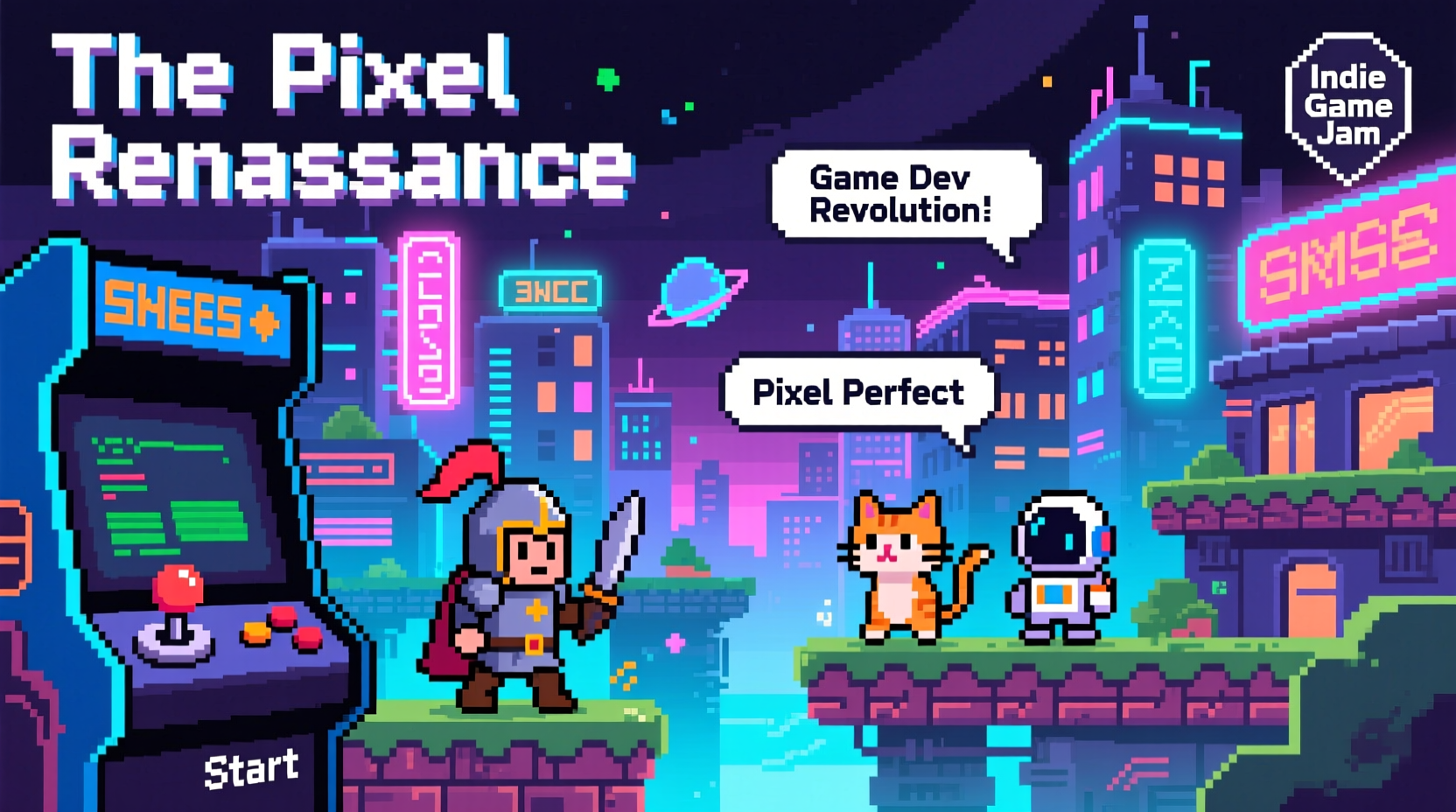
One of the most compelling reasons pixel art dominates the indie landscape is its low barrier to entry. Unlike 3D modeling or high-resolution texture creation, which demand specialized software, hardware, and expertise, pixel art can be produced with minimal tools. A simple graphics editor like Aseprite, Piskel, or even Paint.NET is enough to begin crafting sprites and environments. This democratization of art production allows solo developers or tiny teams to handle both programming and visual design without outsourcing or hiring full-time artists.
Moreover, the limited color palettes and small canvas sizes inherent to pixel art reduce complexity. Each sprite might only require a few dozen pixels, making it feasible to animate characters frame by frame, even for those without formal animation training. This scalability enables rapid prototyping—developers can iterate on character designs, enemy behaviors, and level layouts quickly and efficiently.
This accessibility also fosters collaboration. Many indie developers find pixel artists through online communities like itch.io, Reddit’s r/pixelart, or Twitter/X. The shared understanding of limitations and techniques creates a cohesive workflow, where artists and programmers speak a common visual language grounded in simplicity and clarity.
Nostalgia with a Modern Twist
Nostalgia plays a significant role in the appeal of pixel art, but it's not merely about recreating the past. Instead, modern pixel art games often reinterpret classic aesthetics through contemporary design sensibilities. They evoke memories of childhood gaming while delivering mature narratives, refined mechanics, and emotional depth that were rarely possible in the original NES or SNES era.
Games like *Shovel Knight* masterfully blend retro visuals with tight platforming gameplay and a heartfelt story, creating an experience that feels both familiar and fresh. Similarly, *Undertale* uses minimalist pixel graphics to contrast its subversive themes and complex moral choices, proving that visual simplicity does not equate to shallow content.
“We didn’t choose pixel art because we wanted to look old. We chose it because it let us focus on what mattered: emotion, pacing, and player connection.” — Toby Fox, Creator of *Undertale*
This duality—retro appearance paired with modern storytelling—creates a powerful resonance with audiences. Players recognize the visual cues of their youth but are surprised by the depth and innovation beneath the surface. It’s a form of emotional shorthand: the pixelated smile of a character carries weight because it recalls simpler times, yet it exists within a narrative framework that challenges expectations.
Economic and Technical Advantages
Indie development is inherently constrained by budget, time, and manpower. Pixel art aligns perfectly with these limitations. Rendering 2D sprites requires significantly less processing power than 3D models, meaning games can run smoothly on lower-end hardware—including older PCs, mobile devices, and handheld consoles like the Nintendo Switch in portable mode.
Beyond performance, pixel art reduces asset creation costs. A single 3D character model might take days or weeks to sculpt, texture, rig, and animate. In contrast, a pixel artist can produce a fully animated protagonist in hours. This efficiency translates directly into faster development cycles and lower overhead, allowing indie studios to bring games to market quicker and with fewer financial risks.
| Aspect | Pixel Art Game | 3D AAA Game |
|---|---|---|
| Asset Creation Time | Hours to days per character | Weeks to months per character |
| Hardware Requirements | Low (runs on most devices) | High (requires GPU acceleration) |
| Team Size Needed | 1–5 people | 50+ |
| Development Cost (approx.) | $5,000–$100,000 | $50 million+ |
The technical advantages extend to optimization and portability. Smaller file sizes mean easier distribution via digital platforms, faster downloads, and better compatibility across operating systems. For developers targeting multiple storefronts—from Steam to mobile app stores—this flexibility is invaluable.
Aesthetic Identity and Creative Freedom
Far from being a limitation, the constraints of pixel art often fuel creativity. When every pixel counts, developers must think deliberately about composition, color theory, and visual communication. This precision encourages strong design discipline, resulting in cleaner interfaces, more readable gameplay, and intentional artistic direction.
Pixel art also allows for distinctive visual identities. While many AAA titles converge toward a homogenized realism, pixel art offers infinite stylistic variation. Some games embrace stark monochrome palettes (*Cave Story+*), others use vibrant, exaggerated colors (*Hyper Light Drifter*), and still others play with scale and perspective (*Tunic*). This diversity helps indie titles stand out in crowded marketplaces.
Additionally, the abstract nature of pixel art invites player imagination. A blocky tree isn’t just a tree—it becomes whatever the player envisions within the context of the world. This participatory quality deepens engagement, turning players into co-creators of the game’s atmosphere.
Mini Case Study: The Rise of Stardew Valley
When Eric Barone began developing *Stardew Valley*, he was a recent graduate with no industry experience and no team. He handled all aspects of the game—programming, music, writing, and pixel art—over four years of solo development. The pixel aesthetic wasn’t just a nostalgic nod; it was a necessity. With limited resources, Barone used pixel art to build a vast, living world filled with characters, seasons, and ecosystems.
The result? A game that sold over 20 million copies and became a cultural phenomenon. Critics praised its charm, depth, and emotional authenticity—all amplified by the hand-crafted feel of its pixel visuals. Barone’s journey exemplifies how pixel art enables singular visions to flourish without institutional backing. It proved that one person, armed with determination and a retro-inspired palette, could rival the output of major studios.
Community and Cultural Momentum
The resurgence of pixel art is also driven by a vibrant global community. Online forums, Discord servers, and social media groups provide spaces for artists and developers to share tools, tutorials, and feedback. Open-source engines like Godot and frameworks like Pyxel have further lowered technical barriers, enabling creators to focus on gameplay and story rather than engine development.
Festivals like Pixel Jam and events such as Ludum Dare regularly feature pixel art games, reinforcing their legitimacy within the broader indie ecosystem. These gatherings foster mentorship, collaboration, and visibility—key ingredients for sustainable creative growth.
Furthermore, streaming platforms like Twitch and YouTube have helped popularize pixel art games. Their clear visuals and readable UIs translate well to video, making them ideal for Let’s Plays and speedruns. Viewers can easily follow action on screen, enhancing engagement and discoverability.
Checklist: Launching a Pixel Art Game Successfully
- Define your core gameplay loop before investing in art assets
- Establish a consistent color palette and grid size early
- Use tile-based level design for efficient map creation
- Optimize animations for readability (e.g., clear jump arcs, attack frames)
- Leverage free or affordable tools (Aseprite, Tiled, Bosca Ceoil for music)
- Playtest frequently to ensure visual clarity at different resolutions
- Promote your game in pixel art and indie dev communities
FAQ
Isn’t pixel art just a trend? Will it fade?
While trends come and go, pixel art has demonstrated staying power beyond mere fashion. Its functional benefits—low cost, fast iteration, broad compatibility—ensure continued relevance. As long as indie developers seek efficient, expressive ways to tell stories, pixel art will remain a vital tool.
Can pixel art work for genres other than platformers or RPGs?
Absolutely. Pixel art has been successfully used in puzzle games (*Baba Is You*), horror (*Cocoon*), racing (*Windjammers 2*), and even rhythm games (*Crypt of the NecroDancer*). The style is genre-agnostic; its effectiveness depends on execution, not category.
Do players care if a game looks “old-school”?
Surveys and sales data suggest the opposite. Many players actively seek out pixel art games for their charm, performance, and perceived craftsmanship. As long as the gameplay is engaging and the visuals are polished, the aesthetic enhances rather than detracts from the experience.
Conclusion: The Enduring Power of Simplicity
The rise of pixel art in indie development is not a rejection of progress, but a reclamation of intentionality. In a world where technological advancement often equates to complexity, pixel art reminds us that meaning emerges not from graphical fidelity, but from design clarity, emotional resonance, and creative courage.
For aspiring developers, pixel art offers a path forward—one that doesn’t require expensive software, large teams, or corporate backing. It rewards vision, patience, and attention to detail. And for players, it delivers experiences that feel personal, handmade, and deeply human.




 浙公网安备
33010002000092号
浙公网安备
33010002000092号 浙B2-20120091-4
Comments
No comments yet. Why don't you start the discussion?