
In an era dominated by high-budget, graphically intense video games and endlessly scrolling social media feeds, a simple five-letter word game continues to captivate millions every day. Since its viral rise in early 2022, Wordle—and the wave of minimalist puzzle games it inspired—has defied expectations by maintaining widespread popularity well into 2025. Despite shifting trends and an oversaturated digital entertainment market, these games retain their magnetic pull. The question isn’t whether they’re popular, but why they continue to be so compelling years after their debut.
The staying power of Wordle and similar puzzles lies not in flashy visuals or complex mechanics, but in deeply rooted psychological triggers, clever design principles, and evolving social dynamics. As attention spans shorten and digital fatigue grows, people increasingly seek experiences that offer mental stimulation without emotional exhaustion. Puzzle games like Wordle deliver precisely that: a brief, satisfying cognitive workout wrapped in simplicity and ritual.
The Psychology of Daily Puzzles
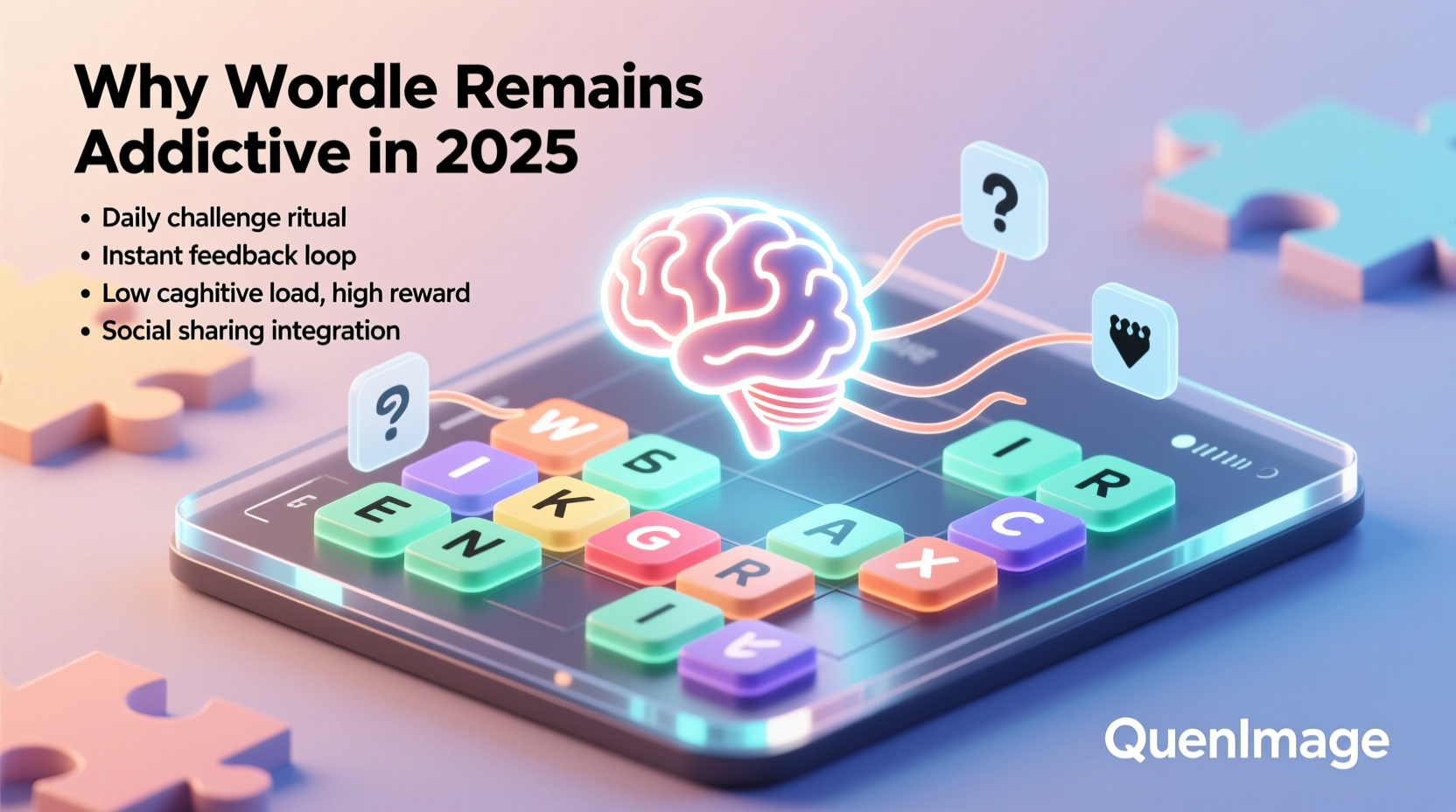
At the core of Wordle’s enduring appeal is its alignment with fundamental human motivations: mastery, progress, and closure. Each puzzle presents a finite challenge with a single correct solution, offering a clear beginning, middle, and end. This structure provides what psychologists call “task completion satisfaction”—a small but meaningful dopamine hit when the final row turns green.
Unlike open-ended games where goals shift or expand indefinitely, Wordle resets daily with one fixed puzzle for all players. This creates a shared experience while preserving personal achievement. Solving the puzzle feels like earning a private win within a collective moment. The brain registers this as both autonomous (“I did it myself”) and socially connected (“Everyone else is doing it too”).
“Games that provide micro-doses of accomplishment help regulate mood and reduce anxiety. They act as cognitive anchors in chaotic routines.” — Dr. Lena Patel, Cognitive Psychologist at Stanford University
This psychological rhythm mirrors habits like morning coffee or checking the weather—it becomes part of a daily ritual. Because the game takes only a few minutes, it avoids decision fatigue and guilt associated with prolonged screen time. In 2025, where digital detoxing is more common than ever, Wordle occupies a rare niche: a screen-based activity that feels productive rather than draining.
Design Simplicity Meets Strategic Depth
Wordle’s interface is almost ascetic: a blank 5x6 grid, minimal color coding (gray, yellow, green), and no advertisements or in-app purchases. Yet beneath this simplicity lies surprising strategic depth. Players must balance probability, vocabulary recall, pattern recognition, and risk management—all within six guesses.
The game’s constraints foster creativity. With only six attempts, each guess carries weight. Should you start with vowel-heavy words? Do double letters increase your odds? Over time, players develop personalized strategies, turning a casual pastime into a refined skill. This blend of accessibility and nuance makes the game easy to learn but difficult to master consistently.
Moreover, the absence of timers or leaderboards removes performance pressure. There’s no penalty for taking ten minutes instead of two. This low-stakes environment encourages experimentation and learning over time, making it especially appealing to adults who associate gaming with competitiveness or frustration.
The Rise of the Puzzle Community
If Wordle were merely a solitary challenge, its longevity might have faded by now. What sustains it is the vibrant ecosystem that has grown around it. Millions share their results daily on social media using emoji grids—a visual shorthand that sparks conversation without spoilers. This format turns individual play into public expression, creating subtle social accountability.
In 2025, online communities centered around word puzzles are more active than ever. Reddit threads dissect optimal starting words, Twitter bots generate rhyming clues, and TikTok creators post “Wordle strategy shorts” under hashtags like #WordleTips and #PuzzleOfTheDay. These platforms don’t just promote the game—they deepen engagement by transforming players into contributors.
A mini case study illustrates this phenomenon: Sarah M., a 34-year-old teacher in Portland, began playing Wordle casually during lockdown. By 2025, she co-runs a local “Wordle & Wine” meetup where participants solve puzzles together and discuss linguistic quirks. “It started as a way to stay sharp,” she says, “but now it’s my favorite weekly social event.” Her story reflects a broader trend: puzzle games are becoming communal rituals, bridging generational and cultural gaps through shared problem-solving.
Why Wordle Survived When Others Faded
Many viral games explode overnight and vanish months later. Flappy Bird, Cookie Clicker, and even early mobile sensations like Angry Birds saw rapid declines. Wordle’s sustained relevance suggests something different is at work. A comparison reveals key distinctions:
| Feature | Typical Viral Game | Wordle (and Similar Puzzles) |
|---|---|---|
| Play Frequency | Spurts of intense use | Daily, scheduled habit |
| Session Length | Variable, often long | Consistently short (2–5 min) |
| Social Sharing | Scores or achievements | Process-based (emoji grids) |
| Monetization | Ads, in-app purchases | Ad-free, donation-supported |
| Learning Curve | Steep or repetitive | Gentle, with hidden depth |
This table highlights how Wordle avoids common pitfalls. It doesn’t rely on addictive loops driven by rewards or loss aversion. Instead, it leverages intrinsic motivation—curiosity, logic, and self-expression. Its monetization model, acquired by The New York Times with a promise of remaining free and ad-free, reinforced trust. In contrast, games that bombard users with ads or paywalls often trigger resentment and abandonment.
How to Maximize Your Puzzle Experience in 2025
To truly benefit from games like Wordle—not just enjoy them but integrate them into a healthier digital lifestyle—consider adopting a structured approach. The following checklist helps optimize both performance and enjoyment:
- Set a consistent time to play – Align it with a daily routine (e.g., morning coffee or lunch break).
- Limits sharing if it causes stress – If comparing results leads to competition anxiety, opt out.
- Vary your puzzle types – Try crosswords, Sudoku, or logic grids to engage different cognitive skills.
- Track streaks mindfully – Use them as motivation, not punishment; allow grace days when needed.
- Engage with communities selectively – Join discussions that inspire, not those that shame slow solving.
A Step-by-Step Guide to Building a Sustainable Puzzle Habit
- Choose 1–2 core puzzle games – Focus on ones you genuinely enjoy, not just what’s trending.
- Schedule daily playtime – Attach it to an existing habit (e.g., after checking email).
- Start tracking progress – Note guess counts, patterns, or new words learned.
- Join a low-pressure group – Find a Discord server or local club focused on fun, not speed.
- Review monthly – Ask: Is this still enjoyable? Does it add value to my day?
This method transforms passive play into intentional practice. Over time, players report improved focus, better spelling, and increased patience in other areas of life. The benefits extend beyond the grid.
Frequently Asked Questions
Is playing Wordle every day bad for my productivity?
No—in fact, research suggests that brief, focused mental tasks like Wordle can enhance alertness and transition you into a productive mindset. As long as it remains a short ritual (under 5 minutes) and doesn’t displace important tasks, it can serve as a healthy cognitive warm-up.
Why do some people hate spoilers, while others don’t care?
This comes down to motivation. Players who value the process of deduction tend to avoid spoilers, seeing them as undermining the experience. Others treat Wordle more like a daily trivia question—knowing the answer doesn’t diminish the fun of participation. Neither approach is wrong; it depends on personal goals.
Are there cognitive benefits to regular puzzle play?
Yes. Studies show that consistent engagement with word and logic puzzles supports verbal fluency, working memory, and problem-solving agility, particularly in adults over 40. While puzzles aren’t a cure for cognitive decline, they contribute to overall brain resilience when combined with other healthy habits.
Conclusion: More Than Just a Game
By 2025, puzzle games like Wordle have evolved from internet fads into modern cultural touchstones. Their endurance stems from a rare balance: intellectually stimulating yet emotionally light, social without being invasive, challenging without being punishing. In a world of endless choice and constant demands, they offer something increasingly precious—clarity, closure, and a moment of calm focus.
These games endure not because they’re revolutionary, but because they respect the player’s time, mind, and autonomy. They remind us that joy can come from simplicity, connection from silence, and satisfaction from solving something small, once a day.




 浙公网安备
33010002000092号
浙公网安备
33010002000092号 浙B2-20120091-4
Comments
No comments yet. Why don't you start the discussion?