
Sibling relationships are among the most enduring bonds in human life—often lasting longer than friendships, marriages, or even parent-child connections. Yet, for something so permanent, they can also be incredibly frustrating. From childhood squabbles over toys to adult disagreements about family roles, many people find themselves asking: Why are siblings so annoying? The answer isn’t simple. It’s woven from psychology, birth order, personality clashes, and the complex emotional ecosystem of family life.
Understanding why siblings push our buttons requires more than blaming “annoying behavior.” It demands insight into shared history, unspoken competition, and the ways early family dynamics shape lifelong interactions. This article explores the roots of sibling friction, offers practical strategies for reducing conflict, and highlights how these challenging relationships can ultimately become sources of strength and support.
The Psychology Behind Sibling Annoyance
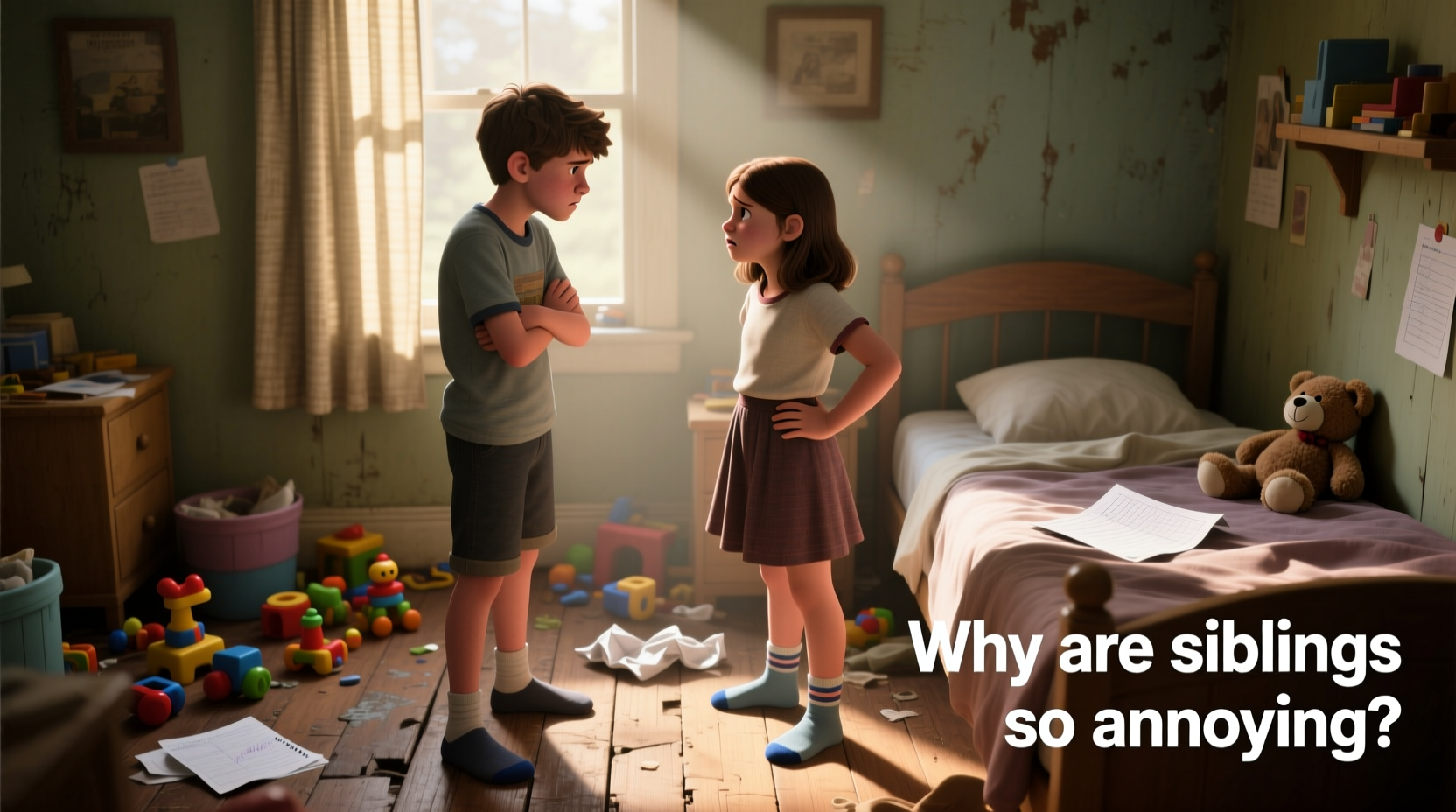
Siblings often serve as our first social laboratory. From infancy, we learn about power, fairness, loyalty, and rivalry through interactions with brothers and sisters. According to developmental psychologist Dr. Laurie Kramer, “Siblings are not just playmates—they’re emotional mirrors. They reflect back how we’re perceived, which can be both validating and threatening.”
This mirroring effect becomes especially potent during childhood, when resources like parental attention, praise, and material goods are limited. Even subtle differences in treatment—such as one child being praised more for academics or another receiving extra help due to a disability—can spark long-term resentment. These imbalances don’t always stem from favoritism; they may result from differing needs or temperaments. But to a child, they feel deeply personal.
Moreover, siblings often occupy distinct roles within the family system. One may be labeled “the responsible one,” another “the funny one,” and another “the sensitive one.” While these roles help families function, they can also trap individuals in narrow identities that persist into adulthood. When an older sibling continues to treat a younger one like a child, for example, it triggers irritation—not because the advice is wrong, but because it reinforces outdated power dynamics.
“Sibling rivalry isn't just about fighting over toys. It's about identity, autonomy, and the need to be seen as an individual within the family.” — Dr. Susan Newman, Social Psychologist and Author of *Little Secrets: How Siblings Shape Our Lives*
Common Sources of Sibling Conflict
While every sibling relationship is unique, certain patterns emerge across families. Recognizing these common triggers can reduce blame and open pathways to resolution.
- Competition for Attention: Especially in families where parents are stretched thin, children may act out or exaggerate behaviors to gain recognition.
- Different Parenting Approaches: Parents may adapt their style based on birth order, leading to perceptions of unfairness (e.g., stricter rules for the eldest).
- Personality Clashes: A highly organized sibling may view a laid-back brother as lazy; a free-spirited sister may see her meticulous sibling as controlling.
- Unresolved Childhood Wounds: Past betrayals—like tattling, exclusion, or sabotage—can resurface during holidays or family events.
- Life Stage Differences: One sibling may be married with kids while another is single and career-focused, creating tension around priorities and values.
Birth Order and Its Impact on Behavior
Alfred Adler, one of the founders of individual psychology, argued that birth order significantly influences personality development. While not deterministic, these patterns offer useful context for understanding sibling dynamics.
| Birth Position | Typical Traits | Potential Friction Points |
|---|---|---|
| Firstborn | Responsible, achievement-oriented, natural leader | May come across as bossy or perfectionistic; struggles with sharing spotlight |
| Middle Child | Diplomatic, adaptable, sometimes feels overlooked | Can harbor resentment; may play peacemaker or withdraw |
| Youngest | Charming, risk-taking, attention-seeking | May be seen as immature; provokes older siblings intentionally |
| Only Child | Independent, comfortable with adults, self-reliant | May struggle with compromise; less experience negotiating with peers |
It’s important to note that these are tendencies, not destinies. Factors like gender, age gaps, health issues, and family structure (e.g., blended families) all modify these patterns. However, recognizing how birth order shapes expectations can help siblings reframe annoyances as predictable, rather than personal.
Step-by-Step Guide to Reducing Sibling Tension
Improving sibling relationships doesn’t require grand gestures. Small, consistent actions can gradually rebuild trust and respect. Follow this timeline to foster healthier interactions:
- Reflect on Your Role (Week 1–2): Journal about past conflicts. Ask: What part did I play? When do I tend to escalate things?
- Initiate Neutral Contact (Week 3): Send a low-pressure message—comment on a shared memory or recent event without addressing conflict.
- Practice Active Listening (Ongoing): In conversations, focus on understanding, not rebutting. Use phrases like “So what you’re saying is…”
- Set Boundaries (Week 4–5): If certain topics trigger arguments (e.g., politics, parenting), agree to avoid them—or set time limits for discussion.
- Plan Shared Activities (Month 2+): Engage in neutral territory activities (e.g., hiking, cooking) that don’t involve family gatherings.
- Seek Mediation if Needed (Anytime): For deep-seated conflict, consider family therapy or a neutral third party.
Real Example: Healing After Years of Distance
Mark and his younger sister, Lena, hadn’t spoken in nearly seven years. Their rift began after their father’s funeral, when Lena accused Mark of manipulating decisions about the estate. Hurt and defensive, Mark cut off contact. Over time, loneliness and regret set in.
At the urging of their mother, they agreed to meet at a quiet café—no family, no pressure. They started by talking about their childhood dog, then slowly moved to memories of their dad. Neither apologized outright, but both expressed sadness over the lost time. They committed to monthly phone calls. Two years later, they co-hosted a birthday dinner for their mother—the first family event they’d attended together in a decade.
Their story illustrates that reconciliation doesn’t require sweeping forgiveness. Sometimes, it begins with a single conversation outside the shadow of old grievances.
Checklist: Building Healthier Sibling Relationships
- ☑ Acknowledge your own contribution to past conflicts
- ☑ Avoid bringing up old grudges during current disagreements
- ☑ Communicate directly, not through parents or other relatives
- ☑ Respect differing lifestyles without judgment
- ☑ Celebrate each other’s successes, even small ones
- ☑ Accept that some issues may never be fully resolved—and that’s okay
Frequently Asked Questions
Can sibling relationships improve in adulthood?
Yes. Many siblings report closer bonds in midlife, especially after leaving the family home, starting their own families, or experiencing major life events like illness or loss. Maturity often brings perspective and reduced competition.
What if my sibling refuses to reconcile?
You can only control your own actions. Continue setting healthy boundaries, express willingness to connect when they’re ready, and focus on your peace of mind. Some relationships remain distant—and that can still be a valid choice.
Is constant arguing normal in sibling relationships?
Occasional conflict is normal, but persistent hostility may indicate deeper issues like unresolved trauma, jealousy, or enmeshment. If arguments leave you feeling drained or disrespected, it may be time to reassess the relationship dynamic.
Conclusion: Turning Annoyance Into Understanding
Siblings can be maddening because they know exactly how to press our oldest emotional buttons. But those same connections—with their messy histories and shared roots—can evolve into some of the most meaningful relationships of our lives. Rather than asking why siblings are so annoying, perhaps the better question is: How can we transform that irritation into empathy?
By recognizing the psychological undercurrents, respecting individuality, and committing to small acts of connection, it’s possible to move beyond resentment toward mutual respect—even affection. Not every sibling pair will become best friends, and that’s alright. The goal isn’t perfection, but progress.




 浙公网安备
33010002000092号
浙公网安备
33010002000092号 浙B2-20120091-4
Comments
No comments yet. Why don't you start the discussion?