
Every holiday season, millions of homes across the world light up with strings of festive Christmas lights. From delicate fairy lights wrapped around trees to bold displays adorning rooftops, these decorations bring warmth and cheer. But behind the sparkle lies an important electrical question: why are many of these lights ungrounded, and could that pose a danger?
This isn’t just a technical curiosity—it’s a real safety concern. Ungrounded plugs are common on indoor and outdoor light sets, especially on newer, mass-produced strands. Understanding why they exist, how they work, and when they might be risky can help you enjoy your holiday décor without compromising safety.
The Basics of Grounding in Electrical Systems
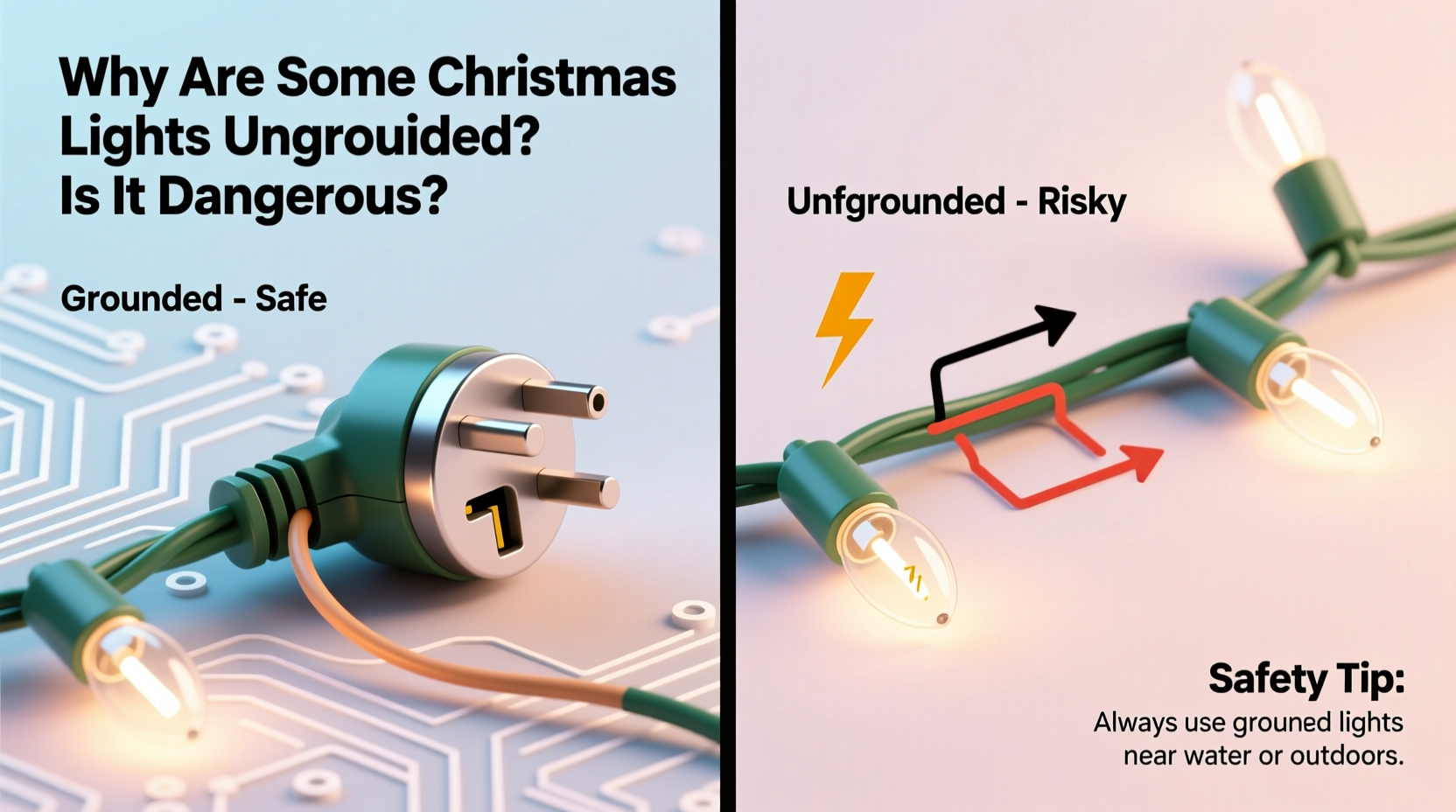
Electrical grounding is a fundamental safety mechanism in modern wiring systems. In simple terms, grounding provides a safe path for excess electricity to travel in the event of a fault—such as a short circuit or insulation failure. This prevents electric shock, reduces fire risk, and protects both people and devices.
A standard grounded plug has three prongs: hot (carries current), neutral (returns current), and ground (safety path). The ground wire connects directly to the earth via your home’s electrical panel, ensuring that stray voltage doesn’t build up on appliance surfaces.
However, not all devices require grounding. The National Electrical Code (NEC) allows certain low-power or double-insulated appliances to operate safely without a ground connection. Many Christmas light sets fall into this category—especially those labeled “Class II” or marked with a “double square” symbol, indicating reinforced insulation.
Why Are Some Christmas Lights Not Grounded?
The absence of a ground pin on Christmas light plugs is intentional and often compliant with safety regulations. Here’s why manufacturers design them this way:
- Lower power draw: Most decorative light strings consume very little power—typically under 100 watts. Because of their low energy usage, they generate less heat and pose a reduced risk of electrical faults.
- Double insulation: Modern light sets are built with extra layers of insulation between live parts and the user. This design eliminates the need for a ground wire by preventing contact with energized components even if internal wiring fails.
- Cost and convenience: Two-prong plugs are cheaper to manufacture and easier to plug into older outlets that lack grounding slots. This makes the product more accessible and compatible with a wider range of homes.
- Portability: Light strings are meant to be flexible and repositioned frequently. A three-prong plug would be bulkier and harder to route through tight spaces like gutters or tree branches.
According to the Underwriters Laboratories (UL), which certifies most consumer electrical products in the U.S., double-insulated devices like many LED Christmas lights do not require grounding as long as they meet strict safety testing standards.
“Not all electrical devices need grounding. For low-voltage, double-insulated lighting, proper construction and certification provide equivalent protection.” — UL Consumer Safety Division
Are Ungrounded Christmas Lights Dangerous?
The short answer: not inherently—but context matters.
When used correctly, ungrounded Christmas lights that are UL-listed and in good condition are generally safe. However, the lack of a grounding path means there’s no backup safety net if something goes wrong internally. That increases the importance of proper handling, inspection, and installation.
Risks arise when:
- Lights are damaged (frayed wires, cracked sockets, exposed conductors).
- They’re used outdoors without being rated for outdoor use.
- They’re plugged into wet or damp locations without GFCI (Ground Fault Circuit Interrupter) protection.
- Multiple strands are daisy-chained beyond the manufacturer’s limit, overloading the circuit.
In particular, outdoor setups are where ungrounded lights become more concerning. Moisture, temperature swings, and physical stress increase the chance of insulation breakdown. Without grounding, a fault could electrify the entire string—posing shock hazards to anyone touching it.
Indoor use is typically lower risk, but old or poorly made lights can still overheat or spark, especially if covered by fabric or tucked behind furniture with poor airflow.
Real Example: A Holiday Incident in Ohio
In December 2021, a homeowner in Columbus, Ohio, experienced a minor electrical fire caused by a strand of ungrounded mini-lights draped over a wooden mantel. The lights had been stored in an attic for years and showed signs of brittle insulation. When plugged in, one section overheated due to a partial short, igniting nearby dry pine needles from the tree.
Though no one was injured, the fire department cited improper storage and use of degraded, ungrounded lights as contributing factors. The outlet lacked GFCI protection, and the lights were not rated for extended use. This case highlights how multiple small oversights—even with seemingly harmless decorations—can combine into serious hazards.
Safety Checklist for Using Ungrounded Christmas Lights
To minimize risk when using ungrounded holiday lights, follow this practical checklist before plugging anything in:
- ✅ Check for UL or ETL certification label on packaging or plug.
- ✅ Inspect every inch of the strand for fraying, cracked bulbs, or bent connectors.
- ✅ Confirm whether the lights are rated for indoor, outdoor, or both uses.
- ✅ Use a GFCI-protected outlet for any outdoor or bathroom-area installations.
- ✅ Avoid daisy-chaining more than three standard strands (or as specified by manufacturer).
- ✅ Plug lights into surge protectors, not overloaded power strips.
- ✅ Turn off lights when leaving home or going to sleep.
- ✅ Store lights properly after use—coiled loosely in a dry container, away from rodents.
Grounded vs. Ungrounded: A Practical Comparison
| Feature | Ungrounded (2-Prong) | Grounded (3-Prong) |
|---|---|---|
| Typical Use | Indoor decor, small outdoor accents | Heavy-duty outdoor displays, commercial installations |
| Voltage/Power | Low (under 100W per strand) | Higher (often multi-circuit or commercial-grade) |
| Insulation Type | Double-insulated (Class II) | Single or reinforced with ground backup |
| GFCI Requirement | Strongly recommended for outdoor use | Required by NEC for outdoor circuits |
| Outlet Compatibility | Works in all outlets | Requires grounded outlet; adapter use discouraged |
| Safety Redundancy | Relies on design and condition | Includes ground path + GFCI compatibility |
While grounded lights offer an added layer of protection, they are not commonly found in consumer holiday sets due to cost and complexity. Most residential users rely on ungrounded, double-insulated models—but must compensate with vigilance.
How to Use Christmas Lights Safely—Step by Step
Whether your lights are grounded or not, following a structured safety routine dramatically reduces risk. Here’s a step-by-step guide to safe installation:
- Unpack and inspect: Lay out each strand and examine wires, plugs, and sockets. Discard any with visible damage.
- Test before installing: Plug each strand into a working outlet to ensure all bulbs light and flickering is minimal.
- Select the right location: Use only outdoor-rated lights outside. Never place indoor-only sets near moisture or weather exposure.
- Check your outlet: Outdoor outlets should be GFCI-protected. Press the “Test” and “Reset” buttons to confirm function.
- Limit connections: Follow manufacturer instructions—most recommend no more than 3–5 connected strands.
- Secure wiring safely: Use plastic clips or hooks, not nails or staples, to avoid piercing insulation.
- Avoid overloading circuits: Christmas lights add up. A single 15-amp circuit can handle about 1,440 watts (80% load). Track total wattage.
- Set a timer: Use an outdoor-rated timer to automatically turn lights off at night, reducing fire risk and energy use.
“The safest holiday display is one that’s inspected annually, used within limits, and turned off when unattended.” — National Fire Protection Association (NFPA)
Frequently Asked Questions
Can I use an adapter to ground a two-prong Christmas light plug?
No. Adapters that lift the ground pin do not create a real ground connection. Using one gives a false sense of security and violates electrical code. Only use lights as designed.
Are LED Christmas lights safer than incandescent?
Yes, generally. LEDs run cooler, use less power, and are less likely to overheat. Combined with double insulation, they make ungrounded operation much safer—though physical damage still poses risks.
How often should I replace my Christmas lights?
Inspect annually. Replace any strand showing wear, discoloration, or inconsistent lighting. Even high-quality lights should be replaced every 5–7 years due to material degradation from storage and use.
Conclusion: Enjoy the Glow, Not the Risk
Ungrounded Christmas lights are a common and often safe part of holiday decorating—when used responsibly. Their design follows recognized safety standards, relying on insulation and low power rather than a physical ground wire. But that convenience comes with responsibility: careful inspection, correct usage, and respect for electrical limits.
You don’t need to avoid ungrounded lights altogether. Instead, focus on smart practices—checking certifications, using GFCIs outdoors, avoiding overloads, and retiring old sets. A little attention goes a long way toward preventing shocks, fires, and holiday disruptions.




 浙公网安备
33010002000092号
浙公网安备
33010002000092号 浙B2-20120091-4
Comments
No comments yet. Why don't you start the discussion?