
At first glance, a domain name is just a web address — a string of characters followed by .com or another extension. But some domain names sell for hundreds of thousands, even millions of dollars. How can that be? The answer lies not in technology, but in perception, branding, scarcity, and long-term business strategy. Understanding why certain domains command such high prices reveals the hidden economy of digital real estate.
The Core Drivers Behind High Domain Prices
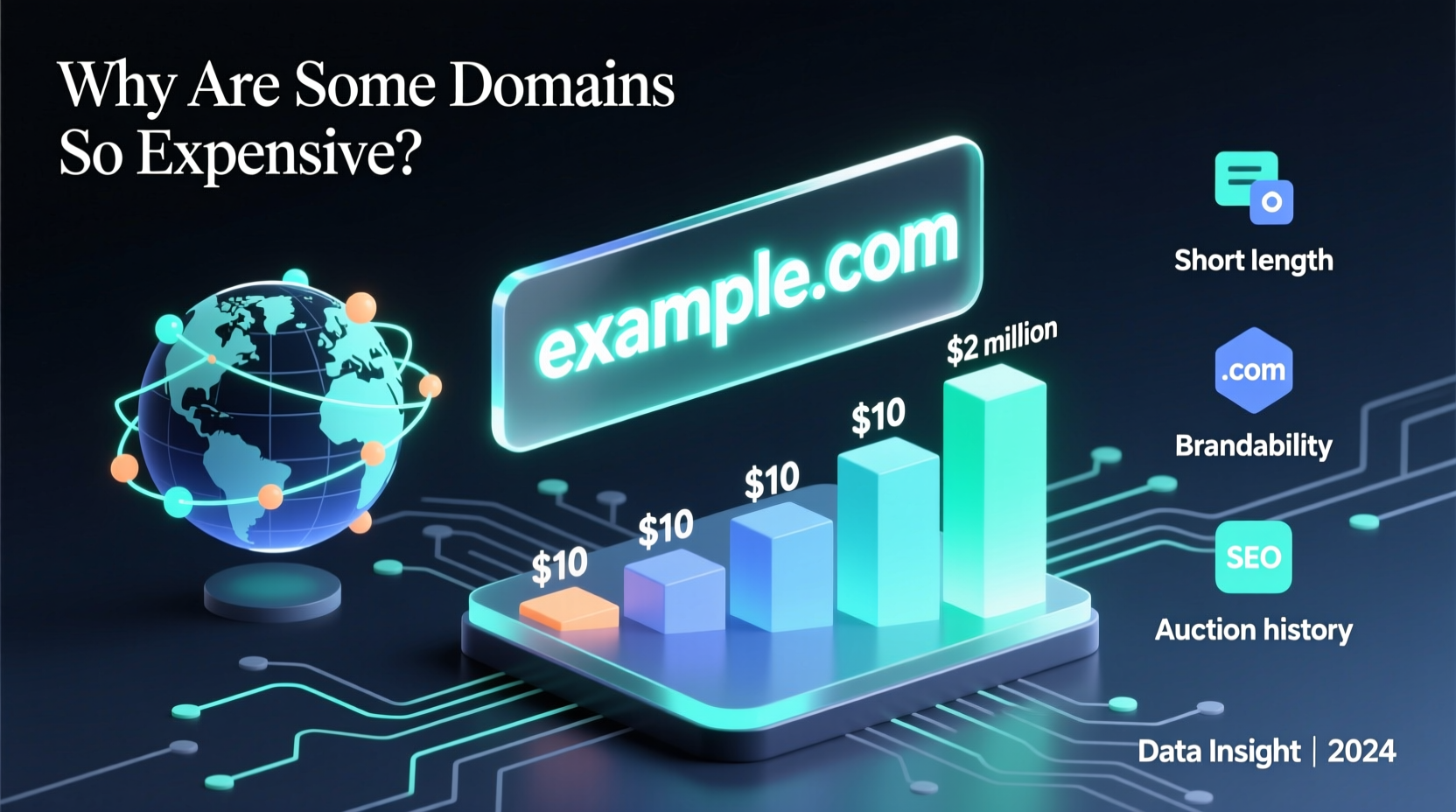
Domain pricing isn’t regulated like physical goods. Instead, it’s governed by supply, demand, and perceived value. While registering a new domain might cost $10–$20 per year, premium domains — especially short, memorable, keyword-rich .coms — often trade hands for life-changing sums.
Several key factors influence these price disparities:
- Length and Simplicity: Shorter domains (e.g., \"car.com\") are easier to remember, type, and brand. A one-word domain with broad relevance is inherently more valuable.
- Keyword Relevance: Domains containing high-volume search terms (like \"insurance,\" \"loans,\" or \"travel\") attract businesses competing in those niches due to SEO and direct traffic potential.
- Extension Matters: While newer extensions like .io or .ai have gained traction, .com remains the gold standard. A .com version of a keyword will nearly always be worth more than its counterparts.
- Traffic Potential: Some domains generate organic traffic simply because they match common searches. For example, someone typing \"usedcars.com\" directly into a browser may land on a parked page — which advertisers can monetize immediately.
- Brandability: Names that sound professional, unique, and scalable (e.g., \"Zoom.com\") carry inherent equity. Even if unused today, their future resale value can be enormous.
“Domain names are the modern equivalent of corner lots in Manhattan. Location, visibility, and accessibility define their worth.” — Mike Mann, serial domain investor and former GoDaddy executive
Market Forces That Inflate Domain Values
The secondary domain market operates much like real estate auctions: competitive bidding drives up prices when multiple parties want the same asset.
Consider this: If two fintech startups are launching and both see value in owning “PayApp.com,” the resulting negotiation could push the price far beyond typical registration costs. In such cases, the domain isn't just an address — it's a strategic advantage.
Other market dynamics include:
- Speculative Investing: Just as people buy undeveloped land hoping its value will rise, domain investors register promising names early, waiting for the right buyer.
- Limited Supply: There are only so many pronounceable, two- or three-letter combinations, real words, or clear phrases available under .com. Once taken, they’re gone unless resold.
- Global Reach: A strong domain works across borders. This international usability increases demand from global entrepreneurs and corporations.
Real-World Examples of Expensive Domain Sales
Some domain sales have become legendary in tech circles, illustrating just how high prices can go.
| Domain | Sale Price | Year | Purpose / Buyer Use Case |
|---|---|---|---|
| CarInsurance.com | $49.7 million | 2010 | High-value insurance lead generation site |
| Insure.com | $16 million | 2010 | Insurance comparison platform |
| VPN.com | $500,000+ | 2017 | Direct navigation to virtual private network services |
| NFT.com | $5 million+ | 2022 | Crypto/NFT marketplace branding play |
| Business.com | $345 million (reported) | 1999 | One of the earliest major domain deals; later confirmed at lower figure (~$7.5M), still record-setting at the time |
The sale of NFT.com in 2022 highlights how emerging trends instantly impact domain valuations. Within weeks of the crypto boom, previously overlooked domains became six- or seven-figure assets.
Mini Case Study: The Rise of Voice.com
In 2019, Voice.com sold for $30 million — one of the highest publicly reported domain transactions. Originally registered in the late 1990s, the domain sat unused for years. As voice-activated technology (like Alexa and Siri) grew, companies sought names reflecting this shift. A blockchain startup aiming to build a decentralized social media platform saw the branding power in owning Voice.com and made the acquisition.
This wasn’t about immediate traffic. It was about messaging: the name signaled innovation, clarity, and leadership in a new space. The purchase paid off in media coverage alone — putting the company on the map overnight.
How to Evaluate a Domain’s Worth: A Practical Checklist
Whether you're buying, selling, or building a brand, use this checklist to assess a domain’s true value:
- Is it a .com? Prioritize .com over other TLDs unless targeting a niche audience (e.g., .ai for AI startups).
- Is it easy to spell and pronounce? Avoid hyphens, numbers, and ambiguous spellings.
- Does it contain a high-value keyword? Think about search volume and commercial intent.
- Is it brandable? Could it grow into a trusted company name?
- Are there trademark conflicts? Owning Insurance.com doesn’t help if you’ll be sued by an existing insurer.
- What does comparable data say? Research recent sales using tools like DNJournal or NameBio.
- Who is the target buyer? A domain valuable to a specific industry (e.g., HealthCareJobs.com) may have limited but deep appeal.
Common Misconceptions About Domain Pricing
Many assume domain prices reflect technical hosting costs or development effort. They don’t. Here’s what people often get wrong:
- Myth: “All domains cost the same.” Reality: While registration fees are standardized, resale values vary wildly based on desirability.
- Myth: “You need a domain broker to sell.” Reality: Brokers help with high-end deals, but many sales happen directly via landing pages or marketplaces.
- Myth: “Newer extensions (.app, .store) will replace .com.” Reality: While useful for specific uses, none have matched .com’s universal recognition and trust.
Frequently Asked Questions
Can I negotiate the price of a premium domain?
Yes, most premium domains are open to offers. Many owners list “Make Offer” options on their parking pages. Be respectful and research fair market value before proposing.
Are expensive domains worth the investment?
For the right business, absolutely. A strong domain can reduce marketing spend, improve click-through rates, enhance credibility, and increase exit valuation during acquisitions.
How do I find out who owns a domain?
Use WHOIS lookup tools (like whois.domaintools.com). Note: Privacy protection services may hide the owner’s identity, requiring contact through designated forms.
Step-by-Step Guide to Buying or Selling a Premium Domain
- Research Availability: Use registrars like GoDaddy, Namecheap, or Sedo to check if the domain is taken.
- Analyze Comparable Sales: Visit DNJournal or NameBio to see what similar domains have sold for.
- Contact the Owner: If listed for sale, follow the process. If not, send a polite inquiry via WHOIS or a contact form.
- Negotiate Terms: Discuss price, payment method (escrow recommended), and transfer timeline.
- Secure Funds in Escrow: Use trusted services like Escrow.com to protect both parties.
- Initiate Transfer: The seller releases the domain via authorization code or account transfer.
- Verify Ownership: Confirm receipt and update DNS settings as needed.
Final Thoughts: Domains as Digital Assets
A domain name is more than an entry point to a website — it's a cornerstone of online identity. In an age where attention is scarce and trust is hard-won, owning a clear, credible, and concise web address provides tangible advantages.
The most expensive domains aren’t overpriced; they’re strategically positioned. Their cost reflects not past effort, but future potential. Whether you're an entrepreneur, investor, or marketer, recognizing this value changes how you approach naming, branding, and digital presence.




 浙公网安备
33010002000092号
浙公网安备
33010002000092号 浙B2-20120091-4
Comments
No comments yet. Why don't you start the discussion?