
Across different regions of the world, drivers and pedestrians may notice something unusual: stretches of road that aren’t the typical gray or black, but distinctly red. Whether it’s a bike lane painted crimson, an entire avenue paved with rust-colored asphalt, or country roads that seem naturally tinted, red pavement stands out—literally and figuratively. While it might first appear to be a design choice or temporary paint job, the reality is more complex. The color often stems from natural materials, regional geology, or deliberate engineering decisions aimed at safety, durability, or aesthetics.
This article explores the science and strategy behind red roads, examining how geology, construction materials, traffic management, and environmental factors contribute to their presence. From the iron-rich soils of Australia to high-visibility bike lanes in urban centers, red pavement tells a story about place, purpose, and practicality.
The Role of Iron Oxide in Road Color
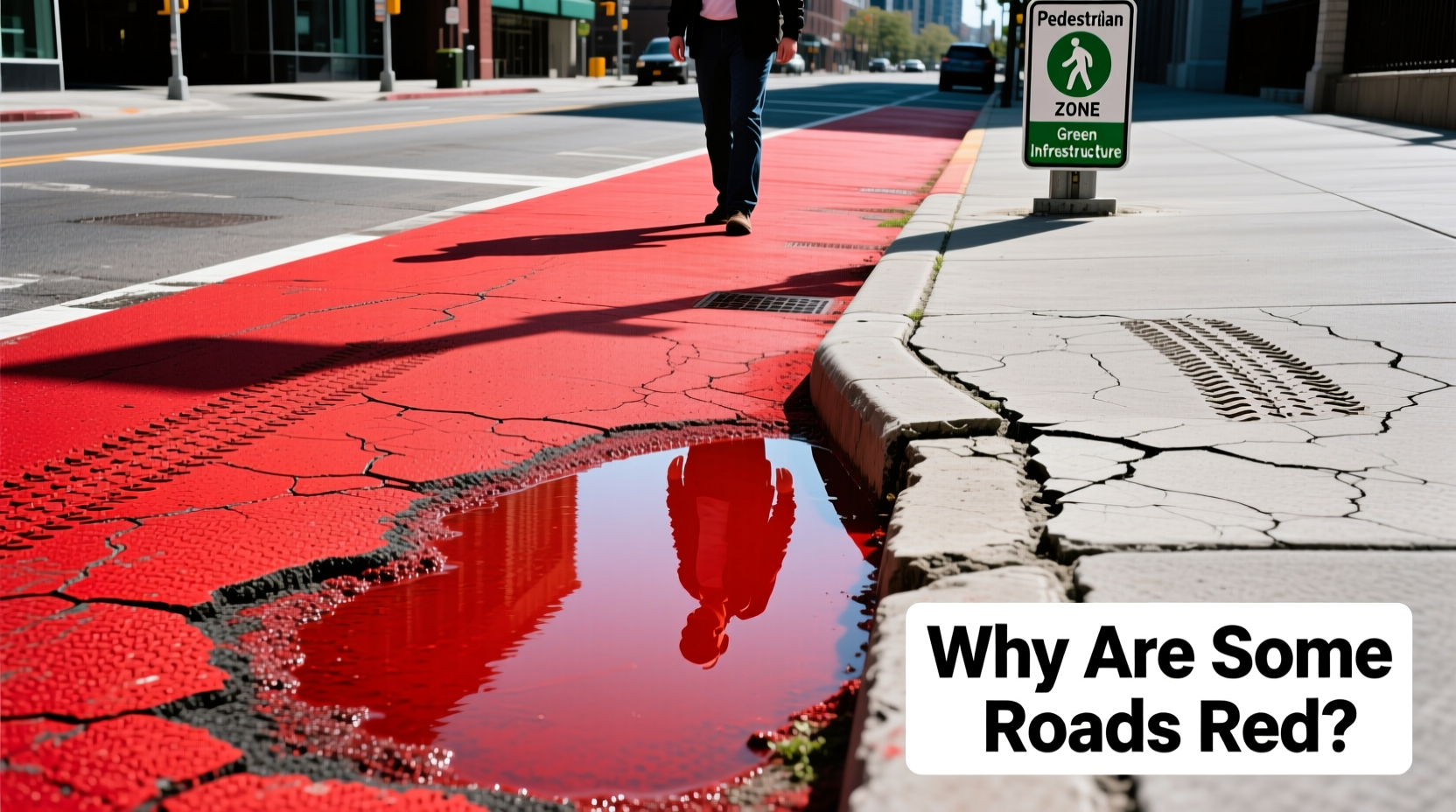
The most common reason for naturally red roads lies beneath the surface—literally. Many red-hued pavements owe their color to iron oxide, commonly known as rust. When iron in soil or aggregate materials reacts with oxygen and water, it forms hematite (Fe₂O₃), a mineral with a deep red pigment. Regions with lateritic soils—common in tropical and subtropical climates—often have abundant iron oxides, which give local building materials, including road aggregates, a reddish tint.
In countries like India, Nigeria, and parts of Southeast Asia, road base materials are frequently sourced locally to reduce costs. If the quarried stone contains high levels of iron, the resulting asphalt mix will carry a warm, reddish hue. Even when traditional bitumen is used as a binder, the underlying stone can influence the final appearance, especially as the surface wears over time.
“Geology doesn’t just shape landscapes—it shapes infrastructure. Where iron-rich bedrock dominates, you’ll often see it reflected in the color of the roads.” — Dr. Lena Torres, Civil Materials Geologist, University of Queensland
Engineered Red Asphalt: Purpose Beyond Aesthetics
Beyond natural causes, many red roads are intentionally constructed using colored asphalt. This involves adding iron oxide pigments or synthetic colorants to the asphalt mix during production. Colored pavements are increasingly used in urban planning for functional reasons:
- Traffic calming: Unusual colors draw driver attention, reducing speed in sensitive zones like school areas or pedestrian crossings.
- Lane differentiation: Red is widely adopted for dedicated bus lanes and bicycle paths to prevent encroachment by other vehicles.
- Urban identity: Cities use color to enhance public spaces, such as plazas, shared streets, or cultural districts.
In cities like Portland, Oregon, and Utrecht, Netherlands, red thermoplastic or resin-based surfacing is applied over existing asphalt to create high-contrast cycle tracks. These surfaces are not only visually distinct but also offer improved skid resistance, increasing cyclist safety.
How Colored Asphalt Is Made
To produce red asphalt, contractors typically follow one of two methods:
- Pigmented Binder Method: Replace standard bitumen with a red-tinted binder made by mixing iron oxide powder into the liquid asphalt before combining it with aggregate.
- Surface Coating: Apply a thin layer of red polymer-modified resin or epoxy over a cured asphalt base. This method is faster and cheaper but less durable over time.
The choice depends on budget, expected traffic load, and desired lifespan. High-traffic zones usually require fully pigmented mixes, while low-speed areas may use coatings for visual effect.
Red Roads in Traffic Management Systems
Transportation authorities increasingly rely on color-coded infrastructure to improve road safety and efficiency. Red pavement plays a key role in modern traffic design due to its high visibility and psychological impact—red is universally associated with caution, stopping, and priority.
| Application | Purpose | Example Locations |
|---|---|---|
| Bus Lanes | Prevent unauthorized vehicle use | New York City, London, Bogotá |
| Bike Lanes | Enhance cyclist visibility and protection | Copenhagen, San Francisco, Tokyo |
| Intersection Zones | Highlight conflict areas for drivers | Melbourne, Berlin, Vancouver |
| Pedestrian Crossings | Improve walkability and reduce accidents | Barcelona, Seoul, Austin |
In New York City, the Department of Transportation has installed over 200 miles of red-painted bike lanes since 2010. Studies show these lanes experience up to 50% fewer violations by motor vehicles compared to standard white-marked lanes.
Mini Case Study: Melbourne’s Red Tram Tracks
Melbourne, Australia, is renowned for its extensive tram network. To reduce collisions between trams, cyclists, and turning vehicles, the city began painting tram tracks and adjacent lanes in bright red epoxy resin. The initiative started in 2015 following a series of accidents at intersections where cars failed to yield.
Within two years, reported incidents at treated intersections dropped by 37%. Drivers were more likely to notice the red zones and yield appropriately. The success prompted expansion across the metropolitan area, proving that even small changes in road color can yield significant safety improvements.
Environmental and Longevity Considerations
While red pavement offers benefits, it also presents challenges. Pigmented asphalt and resin coatings can degrade faster under UV exposure and heavy wear. Additionally, some synthetic colorants may leach chemicals during rainfall, raising environmental concerns.
Natural red roads, however, often prove more sustainable. Because they rely on locally available iron-rich aggregates, they minimize transportation emissions and support regional supply chains. Moreover, these materials tend to weather uniformly and maintain structural integrity comparable to conventional asphalt.
Checklist: Planning a Red Pavement Project
- ✅ Assess local aggregate composition for natural color potential
- ✅ Define the functional goal (safety, signage, aesthetics)
- ✅ Choose between full-color mix or surface coating based on traffic volume
- ✅ Use non-toxic, environmentally certified pigments
- ✅ Include maintenance plans for reapplication every 3–7 years (for coatings)
- ✅ Coordinate with traffic engineers to ensure compliance with local regulations
Frequently Asked Questions
Is red pavement more expensive than regular asphalt?
It depends. Using naturally red aggregates adds little to no cost. However, pigmented binders or resin coatings can increase project expenses by 15–30%, depending on the scale and materials used.
Does red asphalt fade over time?
Yes, especially surface-applied coatings. Exposure to sunlight, rain, and tire abrasion gradually diminishes color intensity. Full-depth colored asphalt retains its hue longer—typically 5–10 years—before noticeable fading occurs.
Are there any downsides to using red roads?
Potential drawbacks include higher initial costs for synthetic systems, increased maintenance needs, and rare instances of color inconsistency due to batch variations. However, these are generally outweighed by safety and operational benefits in targeted applications.
Conclusion: More Than Just a Color Statement
Red roads are far more than aesthetic quirks—they are strategic tools in modern transportation design. Whether born from the earth’s iron-rich crust or engineered for urban clarity, red pavement serves functional roles in safety, navigation, and sustainability. As cities grow denser and multimodal transport becomes the norm, visual cues like color will play an ever-larger role in keeping traffic flowing smoothly and safely.
Understanding why some roads are red reveals a deeper truth: infrastructure is not neutral. Every shade, texture, and material choice reflects decisions shaped by geology, economics, and human behavior. By paying attention to these details, planners, engineers, and citizens alike can build smarter, safer, and more resilient communities.




 浙公网安备
33010002000092号
浙公网安备
33010002000092号 浙B2-20120091-4
Comments
No comments yet. Why don't you start the discussion?