
Replacing a leather watch strap is one of the simplest yet most effective ways to refresh your timepiece. Whether you're upgrading for style, comfort, or wear-and-tear reasons, doing it yourself saves money and gives you full control over quality and fit. With the right tools and technique, even beginners can complete the swap in under ten minutes. This guide walks you through every stage—from selecting the correct replacement strap to securing it flawlessly—so you achieve a professional result every time.
Choosing the Right Leather Strap
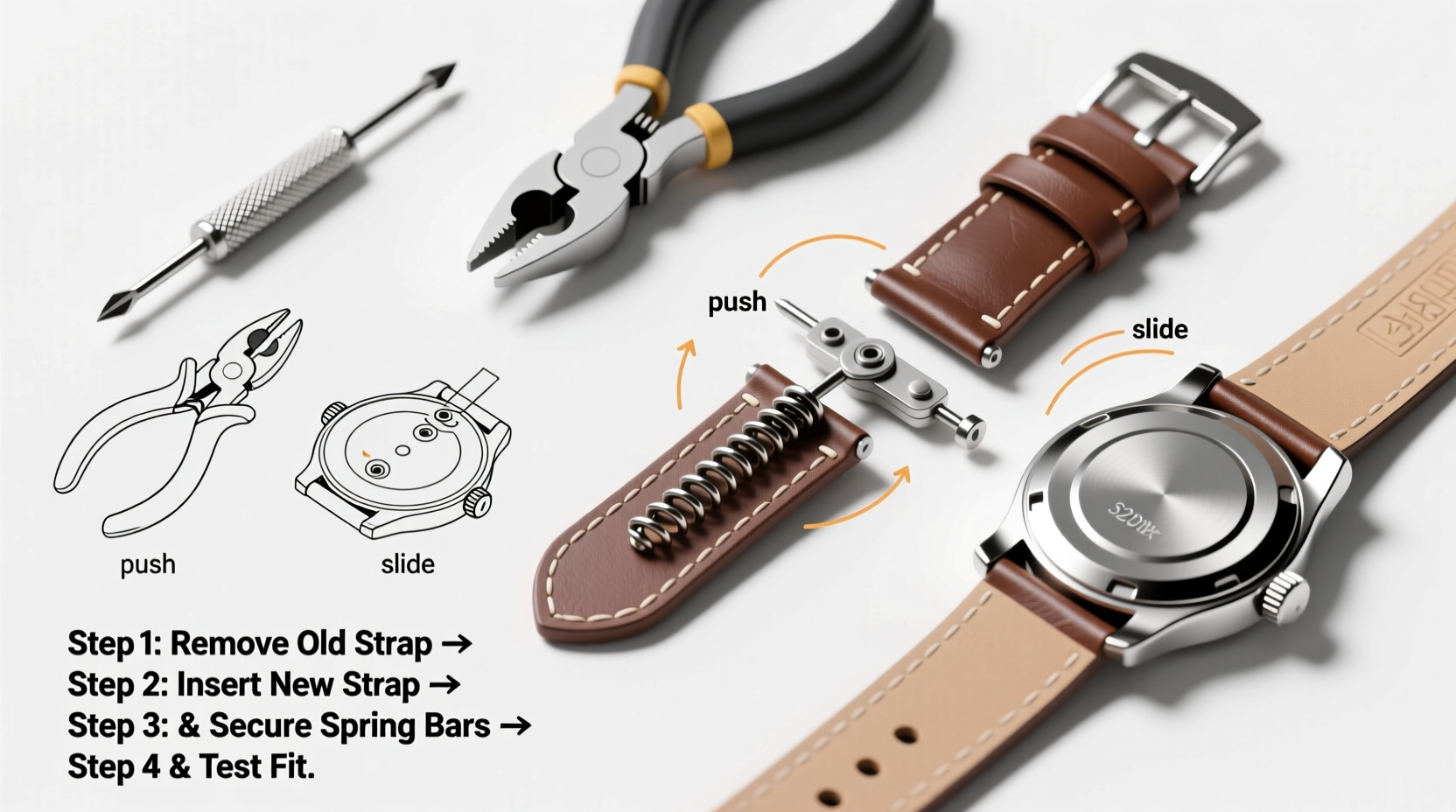
Not all straps are interchangeable. Before removing your current band, verify the lug width—the distance between the lugs on your watch case where the strap attaches. This measurement, typically between 16mm and 24mm, is often printed on the back of the existing strap or inside its packaging. If not, use a ruler or caliper to measure from the inside edge of one lug to the inside edge of the opposite lug.
Leather type also matters. Full-grain leather ages beautifully and develops a patina, while top-grain offers durability at a lower cost. Suede provides a casual look but absorbs moisture more readily. Consider your lifestyle: if you frequently wash hands or live in humid climates, opt for water-resistant finishes or consider changing straps seasonally.
Essential Tools You’ll Need
You don’t need a full toolkit, but having the right instruments makes the job faster and safer for your watch. Here’s what to gather before starting:
- Spring bar removal tool – A small, forked or pin-style tool designed to compress spring bars.
- Fine-tipped tweezers or nylon gloves – For handling tiny parts without dropping them.
- Soft cloth or mat – Protects the watch face and case during work.
- New leather strap with matching spring bars – Ensure they’re the correct length (standard sizes: 18/16mm, 20/18mm, etc.).
A magnifying glass helps if you have difficulty seeing small mechanisms. Avoid using sharp objects like paperclips or knives; they can scratch the case or slip and damage the watch crystal.
“Precision tools aren’t just for professionals. They prevent unnecessary stress on delicate components.” — Daniel Reeves, Watchmaker & Restoration Specialist
Step-by-Step Guide to Removing the Old Strap
- Lay your watch face-down on a soft microfiber cloth to protect the crystal and finish.
- Locate the spring bar—a thin metal rod running through the hollow lugs of the watch case.
- Insert the forked end of the spring bar tool into the gap between the strap end and the watch case, aligning it with the spring bar.
- Gently press inward to compress the spring bar. As it retracts, the strap end will loosen.
- While maintaining pressure, slide the strap away from the lug until the spring bar clears the hole.
- Repeat on the other side, then carefully remove the entire strap.
- Set aside the old strap and inspect the spring bars. If corroded or bent, replace them.
Take care not to push too hard—excessive force can deform the spring bar or damage the lug holes. If resistance feels unusual, double-check that the tool is properly seated before applying more pressure.
Installing the New Leather Strap
Now comes the satisfying part: fitting your fresh leather band. Follow these steps to ensure a snug, secure fit.
- Align one end of the new strap with a set of lugs. Insert one end of the spring bar into the lug hole from the outside.
- Compress the other end of the spring bar and guide it into the second hole while holding the strap steady.
- Release the pressure slowly. You should feel a slight snap as the bar expands and locks into place.
- Repeat on the opposite side, making sure the taper (wider at the watch, narrower at the buckle) faces forward correctly.
- Gently tug both ends to confirm the strap is fully seated and doesn’t wobble.
Ensure the leather sits flush against the case with no gaps. Misalignment often results from inserting the spring bar at an angle or failing to fully seat one end.
| Action | Do | Don't |
|---|---|---|
| Removing Strap | Use proper spring bar tool; work on soft surface | Use pliers or screwdrivers near lugs |
| Handling Spring Bars | Keep them clean and lightly lubricated | Force them if stuck—check alignment first |
| Installing New Strap | Verify taper direction and buckle position | Over-compress the spring bar beyond necessity |
Maintaining Your New Leather Strap
A new strap enhances your watch, but longevity depends on maintenance. Leather is organic and reacts to moisture, oils, and UV exposure. To extend its life:
- Wipe the strap weekly with a dry, soft cloth to remove sweat and dust.
- Avoid prolonged contact with water—even “water-resistant” leather degrades over time.
- Rotate straps monthly if worn daily. This allows each band to rest and air out.
- Condition sparingly with a leather balm formulated for watches—once every 3–4 months.
- Store the watch in a cool, dry place away from direct sunlight when not in use.
Mini Case Study: Reviving a Heirloom Timepiece
James inherited his grandfather’s vintage Omega from the 1970s. The original leather strap had dried, cracked, and emitted a musty smell. Rather than sending it to a costly restoration service, he measured the lug width (19mm), sourced a hand-stitched Horween leather strap with camel tone and contrast stitching, and replaced it using a $12 spring bar tool. After cleaning the case with a silver polishing cloth and fitting the new band, the watch looked decades younger. He now rotates between two straps—one dressy, one casual—and reports both lasting over 18 months with minimal wear.
This example shows how a simple strap change can breathe new life into a sentimental piece without altering its authenticity.
Frequently Asked Questions
Can I reuse the old spring bars?
You can—if they’re undamaged and still provide tension. However, after multiple removals, spring bars lose elasticity and may loosen over time. It’s wise to replace them every 2–3 strap changes or purchase straps that include new ones.
What if my watch has curved horns or integrated lugs?
Some modern watches (like certain Grand Seiko or Audemars Piguet models) have integrated or curved lugs requiring specific strap shapes. In these cases, standard straight-end straps won’t fit properly. Look for “H-shaped,” “curved,” or “integrated-fit” straps designed for your model.
How tight should the strap be on my wrist?
The ideal fit allows one finger to slide comfortably between the strap and your skin. Too tight restricts circulation; too loose risks snagging or sliding around. Adjust using the buckle holes, and consider drilling an extra hole if needed.
Final Checklist Before You Begin
- ✔ Measure lug width
- Ensure compatibility with the new strap.
- ✔ Gather tools
- Spring bar tool, soft cloth, tweezers.
- ✔ Inspect spring bars
- Replace if bent, rusted, or weak.
- ✔ Confirm strap orientation
- Tapered end toward the buckle, logo (if any) facing outward.
- ✔ Test fit and security
- Gently pull on both ends to verify firm attachment.
Conclusion
Replacing a leather watch strap is more than a repair—it’s a ritual of ownership. When done correctly, it deepens your connection to your timepiece and reflects attention to detail others notice. With the right tools, a little patience, and this guide as your reference, you’re equipped to handle future swaps confidently and professionally. Whether restoring a classic or customizing a daily wearer, take pride in knowing you’ve maintained your watch exactly how you want it.




 浙公网安备
33010002000092号
浙公网安备
33010002000092号 浙B2-20120091-4
Comments
No comments yet. Why don't you start the discussion?