
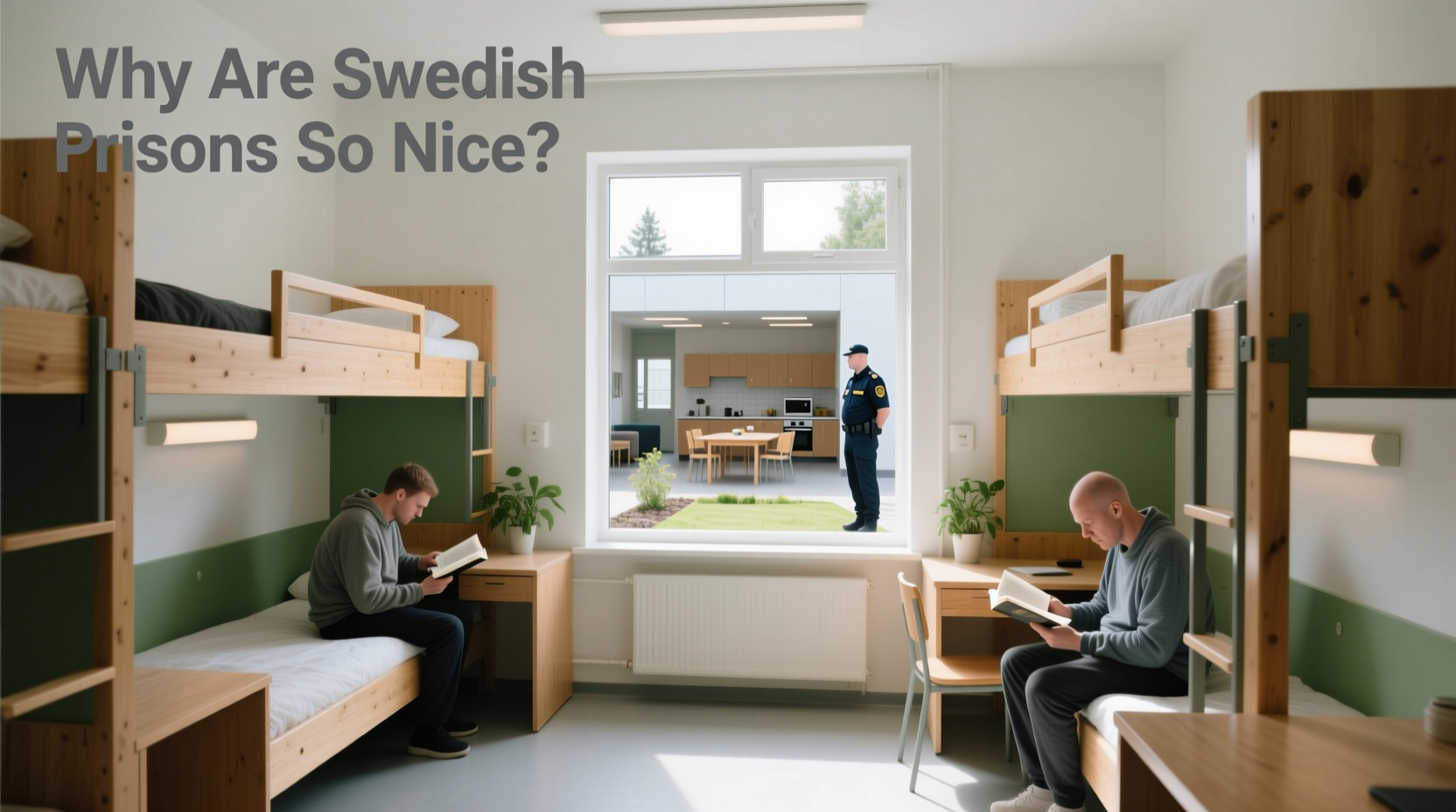
When most people think of prison, they imagine cold concrete cells, iron bars, and a punitive atmosphere designed to deter crime through fear. In Sweden, the approach is strikingly different. Swedish prisons often resemble quiet dormitories or small communities, with private rooms, shared kitchens, and access to education and therapy. To outsiders, this may seem too lenient — even controversial. But beneath the surface lies a deeply intentional philosophy rooted in rehabilitation, human dignity, and long-term public safety.
The Swedish correctional model isn’t about being “soft” on crime. It’s about being smart. By treating inmates as individuals capable of change, Sweden has achieved one of the lowest recidivism rates in the world — around 40%, compared to over 60% in the United States. This article explores the core principles behind Sweden’s humane prison system, how it works in practice, and why other nations might benefit from rethinking their own approaches to incarceration.
The Philosophy: Punishment vs. Rehabilitation
In Sweden, imprisonment serves two primary purposes: to enforce the law and to prepare the individual for successful reintegration into society. Unlike systems that emphasize punishment as a deterrent, Sweden prioritizes rehabilitation as the key to reducing future crime.
This mindset stems from the concept of *normalization* — the idea that life inside prison should mirror life outside as closely as possible, within reasonable limits. This includes access to work, education, healthcare, and social interaction. The goal is not comfort for comfort’s sake, but to maintain an inmate’s sense of responsibility, identity, and hope.
“We don’t release prisoners on parole. We release them back into society. They must be ready to live as law-abiding citizens.” — Martin Sjöstedt, Former Director General of the Swedish Prison and Probation Service
This principle shapes every aspect of the system, from architecture to staff training. Guards are not just enforcers; they are trained in psychology and conflict resolution. Inmates are addressed by name, not number. Violence is rare, not because of heavy surveillance, but because trust and structure reduce tension.
How Swedish Prisons Operate Differently
Swedish prisons differ significantly from those in many other countries in both design and daily operations. Here’s a breakdown of key features:
- Private Rooms: Most inmates have their own room with a bed, desk, and sometimes a private bathroom.
- Open Prisons: Low-security facilities allow inmates to leave during the day for work or study, returning at night.
- Work and Education: Inmates can earn wages working in prison workshops or external jobs. Educational programs, including university courses, are widely available.
- Mental Health Support: Therapy and psychiatric care are integrated into daily routines, especially for those with substance abuse or trauma histories.
- Staff Involvement: Officers engage in regular dialogue with inmates, fostering accountability and personal growth.
Open vs. Closed Prisons: A Tiered System
Sweden operates a tiered system based on risk and behavior. As inmates progress, they move toward greater freedom.
| Prison Type | Security Level | Key Features |
|---|---|---|
| Closed Prisons | High | Locked cells, limited movement, intensive supervision |
| Semi-Open Prisons | Medium | Structured schedule, group living, vocational training |
| Open Prisons | Low | No perimeter fences, work/study outside, self-governance |
Eligibility for transfer depends on behavior, participation in programs, and demonstrated readiness. About 70% of inmates eventually serve time in open prisons before release.
Real Example: From Incarceration to Integration
Take the case of Elias M., who served a three-year sentence for drug-related offenses. Initially placed in a closed facility in southern Sweden, he struggled with addiction and anger. Through mandatory cognitive behavioral therapy and vocational training in carpentry, he began to rebuild his self-worth.
After 18 months, he was transferred to an open prison where he worked part-time at a local furniture workshop. He saved money, maintained contact with his family, and enrolled in a distance learning course in construction management. Upon release, he was hired full-time by the same employer and now runs his own small business.
Elias’s story is not unique. While not every outcome is this successful, Sweden’s system creates pathways that make such transformations possible. The focus is not on whether someone deserves a second chance, but on whether society benefits when they get one.
Step-by-Step: The Swedish Path to Reintegration
The journey from arrest to reintegration follows a structured yet flexible process:
- Sentence Imposition: Courts determine length based on severity, but all sentences assume eventual return to society.
- Initial Assessment: Psychologists and case managers evaluate risks, needs, and goals.
- Individual Plan: A customized rehabilitation plan is created, including therapy, education, and job training.
- Progressive Placement: Movement through prison levels based on behavior and milestones.
- Release Preparation: Assistance with housing, employment, and continued counseling.
- Post-Release Supervision: Probation officers provide support for up to two years.
This continuity ensures that the transition from prison to freedom is managed, not abrupt. It reduces the shock and isolation that often trigger relapse into crime.
Common Misconceptions and Criticisms
Critics argue that Sweden’s system is too forgiving, especially for serious crimes. Some point to high-profile cases where released offenders reoffended. Others question the cost — Swedish prisons spend more per inmate than many countries.
However, data shows that higher upfront investment leads to lower long-term costs. Fewer repeat offenders mean fewer victims, less strain on courts and police, and reduced need for future incarceration. Moreover, Sweden’s violent crime rate remains low and stable.
Another misconception is that “nice” prisons lack consequences. In reality, losing freedom is seen as the punishment — not poor living conditions. Deprivation of liberty is deemed sufficient; additional hardship is unnecessary and counterproductive.
Expert Insight: What Works in Corrections
“The evidence is clear: environments that promote dignity, purpose, and connection produce better behavioral outcomes. Sweden proves that humane treatment isn’t weakness — it’s strategic foresight.” — Dr. Lena Andersson, Criminologist at Uppsala University
Frequently Asked Questions
Do Swedish prisoners really have TVs and kitchens?
Yes, most inmates have access to shared kitchens and common areas with televisions. Personal electronics like laptops are allowed under supervision for educational use. These amenities support normalcy and skill-building, not luxury.
How does Sweden prevent violence in low-security prisons?
Through careful screening, staffing ratios, and a culture of mutual respect. Staff are trained in de-escalation, and inmates participate in conflict resolution programs. The absence of weapons and drugs also contributes to safety.
Has the Swedish model been adopted elsewhere?
Elements of it have influenced reforms in Norway, Germany, and the Netherlands. Canada and some U.S. states have piloted similar rehabilitation-focused units, though systemic change remains limited.
Conclusion: Rethinking Justice Through Humanity
The Swedish prison system challenges the global assumption that harsh conditions deter crime. Instead, it demonstrates that treating people with dignity, offering meaningful opportunities, and preparing them for life after prison leads to safer communities. It’s not about coddling offenders — it’s about creating a justice system that actually works.
While no model is perfect, Sweden’s emphasis on rehabilitation offers valuable lessons. Reducing recidivism isn’t just a moral imperative; it’s a practical strategy for building a more secure and equitable society. As more countries grapple with overcrowded prisons and rising crime, perhaps it’s time to ask not how we can punish harder — but how we can heal better.




 浙公网安备
33010002000092号
浙公网安备
33010002000092号 浙B2-20120091-4
Comments
No comments yet. Why don't you start the discussion?