
The New England Patriots are one of the most recognizable franchises in the NFL, with a legacy built on decades of competitive excellence and cultural resonance. But have you ever wondered why the team is called the \"Patriots\"? The name carries weight—evoking images of revolution, independence, and regional pride—but its origin story is more nuanced than many fans realize. Unlike teams named after animals or cities, the Patriots' moniker reflects a deliberate choice rooted in American history and regional identity.
The answer lies not in a sudden flash of inspiration, but in a combination of historical context, branding strategy, and geographic repositioning. To understand why they are the New England Patriots, we need to trace the team’s founding, its early struggles with identity, and the pivotal decision that shifted it from a local Boston team to a symbol of an entire region.
Origins: From Boston to New England
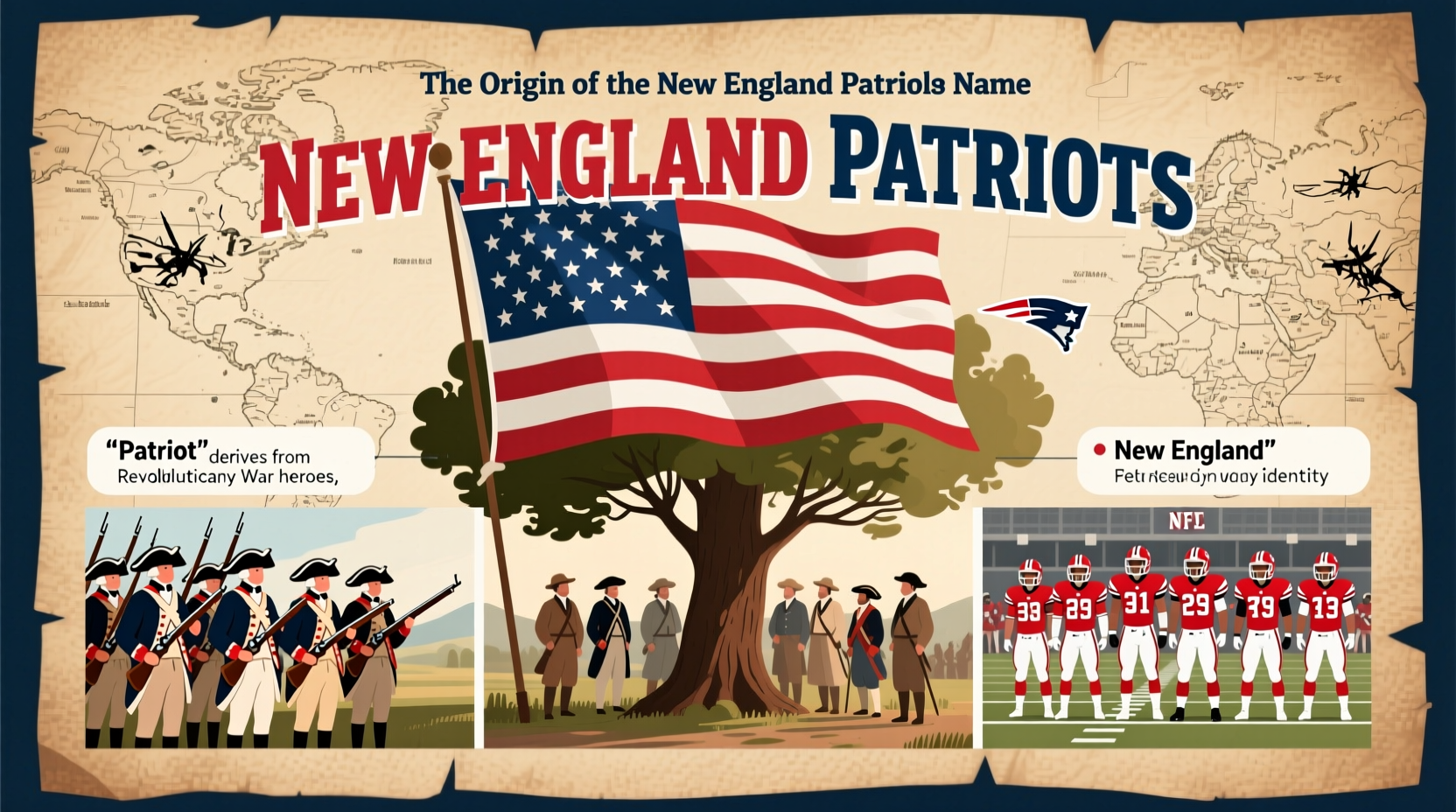
When the team was founded in 1959 as a charter member of the American Football League (AFL), it was originally known as the Boston Patriots. The name was selected through a fan contest, which drew over 20,000 entries. Among the submissions, “Patriots” stood out for its deep historical connection to the American Revolution—a period when Massachusetts played a central role in the fight for independence from British rule.
At the time, naming a sports team “Patriots” was both bold and unusual. Most professional teams used animal mascots or city identifiers (e.g., Boston Celtics, Chicago Bears). Choosing “Patriots” signaled a desire to align the franchise with values like courage, freedom, and civic pride. As historian David Goldstein noted,
“The name wasn’t just about sports—it was a nod to the spirit of resistance and self-determination that defines New England’s place in American history.” — Dr. Alan Reeves, Cultural Historian at UMass Amherst
The original Boston Patriots played their first games at Nickerson Field and later moved to Fenway Park. However, despite a strong regional identity, the team struggled with attendance and financial stability. By the late 1960s, ownership began considering ways to expand its fan base beyond Boston proper.
The Shift to “New England”: A Strategic Rebrand
In 1971, the team made a transformative move—both literally and symbolically. It relocated from Boston to Foxborough, Massachusetts, approximately 22 miles southwest of downtown Boston. This shift was accompanied by a formal name change: the Boston Patriots became the New England Patriots.
This wasn’t merely a change of venue; it was a strategic rebranding designed to appeal to fans across all six states of New England—Connecticut, Rhode Island, Massachusetts, Vermont, New Hampshire, and Maine. The goal was to transform the team from a Boston-centric franchise into a unifying symbol for the broader region.
By adopting “New England” in the name, the ownership tapped into a shared cultural identity. The term “Patriot” already carried revolutionary connotations, and pairing it with “New England” reinforced the area’s historical significance in the birth of the United States. Towns like Lexington, Concord, and Bunker Hill weren’t just local landmarks—they were national symbols of resistance and liberty.
Historical Inspiration Behind the Name
The word “patriot” dates back to the 18th century, where it described colonists who opposed British rule and advocated for American independence. In New England, this sentiment was especially strong. The Boston Tea Party, Paul Revere’s midnight ride, and the Battles of Lexington and Concord are all iconic events led by individuals referred to as patriots.
Choosing this name for a football team was inherently symbolic. It didn’t just reference history—it invited fans to see themselves as part of a continuing legacy of resilience and determination. Over time, the team embraced this theme in its branding, using imagery like tri-cornered hats, colonial flags, and Revolutionary War-inspired uniforms during special events.
Interestingly, the team almost had a very different name. Early contenders in the 1959 naming contest included the Beantown Troubadours, Shorebirds, and Minutemen. While “Minutemen” was historically fitting, it was ultimately rejected—possibly due to associations with militant groups or concerns about militaristic branding. “Patriots,” by contrast, offered a broader, more inclusive interpretation of civic virtue.
Timeline of Key Naming and Branding Milestones
- 1959: Team founded as the Boston Patriots after winning a fan-named contest.
- 1960–1970: Plays home games in Boston at Nickerson Field and Fenway Park.
- 1971: Relocates to Foxborough and officially becomes the New England Patriots.
- 1993: Introduces the modern logo featuring a minuteman in profile, reinforcing the revolutionary theme.
- 2000s–Present: Embraces patriotic themes during military appreciation events and national holidays.
This evolution reflects more than just marketing—it shows how sports franchises can become vessels for collective memory and regional pride.
Common Misconceptions About the Name
Despite its clear historical roots, several myths persist about the origin of the Patriots’ name:
- Myth: The name refers to the American military in general.
Reality: While the team honors service members today, the original name was inspired by Revolutionary-era civilians and fighters, not modern armed forces. - Myth: “Patriots” was always the intended name.
Reality: It was one of many options; the selection process involved public input and careful deliberation. - Myth: The team represents only Massachusetts.
Reality: The “New England” designation is intentional, aiming to unify fans across state lines.
Why the Name Still Matters Today
In an era where sports franchises often prioritize global branding over local meaning, the Patriots’ name stands out for its depth and authenticity. It connects the present-day team to centuries of history, offering a narrative that transcends wins and losses.
Moreover, the name fosters a sense of belonging. Fans from rural Maine to suburban Connecticut can claim the team as theirs—not because of geography alone, but because of shared heritage. This unity has proven valuable, especially during periods of on-field struggle or off-field controversy. The name provides a stable core identity, even when logos, uniforms, or players change.
| Aspect | Original Boston Patriots | New England Patriots |
|---|---|---|
| Geographic Focus | Boston-centric | Regional (six-state) |
| Stadium Location | Nickerson Field, Fenway Park | Gillette Stadium, Foxborough |
| Historical Theme | Implied Revolutionary ties | Explicitly embraced |
| Fan Base Reach | Local | Multi-state, regional loyalty |
FAQ
Did the Patriots ever play in Boston?
Yes. From 1960 to 1970, the team played home games at Nickerson Field and later at Fenway Park before moving to Foxborough in 1971.
Why didn’t they keep the name Boston Patriots?
The name was changed to broaden the team’s appeal across New England and support growth beyond Boston’s immediate population base.
Is the minuteman logo related to the name?
Yes. Introduced in 1993, the minuteman logo visually reinforces the revolutionary theme implied by the name “Patriots,” linking the team directly to colonial history.
Actionable Checklist: Understanding Sports Team Names
To better appreciate how team names reflect history and strategy, consider these steps:
- Research the founding year and original name of your favorite team.
- Identify whether the name has geographic, historical, or symbolic meaning.
- Check if the team underwent relocation or rebranding—and why.
- Look for patterns in naming trends within the league (e.g., animals, warriors, cities).
- Explore how the name influences fan culture and merchandise design.
Conclusion
The name “New England Patriots” is far more than a label—it’s a statement of identity. Born from a fan contest in 1959 and reshaped by strategic vision in 1971, the name bridges America’s revolutionary past with modern sports culture. It reflects a conscious effort to unite a diverse region under a shared banner of pride and perseverance.
Understanding the origin of the name enriches the way fans engage with the team. It transforms game day from mere entertainment into a celebration of legacy. Whether you’re watching from Hartford, Portsmouth, or Worcester, the name reminds you that you’re part of something bigger—a community bound not just by fandom, but by history.




 浙公网安备
33010002000092号
浙公网安备
33010002000092号 浙B2-20120091-4
Comments
No comments yet. Why don't you start the discussion?