
If you've noticed that you're unable to send messages to certain people on Facebook while others remain accessible, you're not alone. This limitation affects millions of users worldwide and often comes without warning or explanation. The reasons range from privacy settings and account restrictions to technical glitches and platform updates. Understanding the root causes is the first step toward restoring full functionality.
Facebook’s messaging system, powered by Messenger, operates under a complex set of rules designed to reduce spam, protect user privacy, and maintain platform integrity. While these safeguards are necessary, they can sometimes restrict legitimate communication. Whether you’re trying to reconnect with an old friend, reach out to a business contact, or simply stay in touch, being blocked from sending messages can be frustrating — especially when the cause isn’t immediately clear.
How Facebook Messaging Works: A Behind-the-Scenes Look
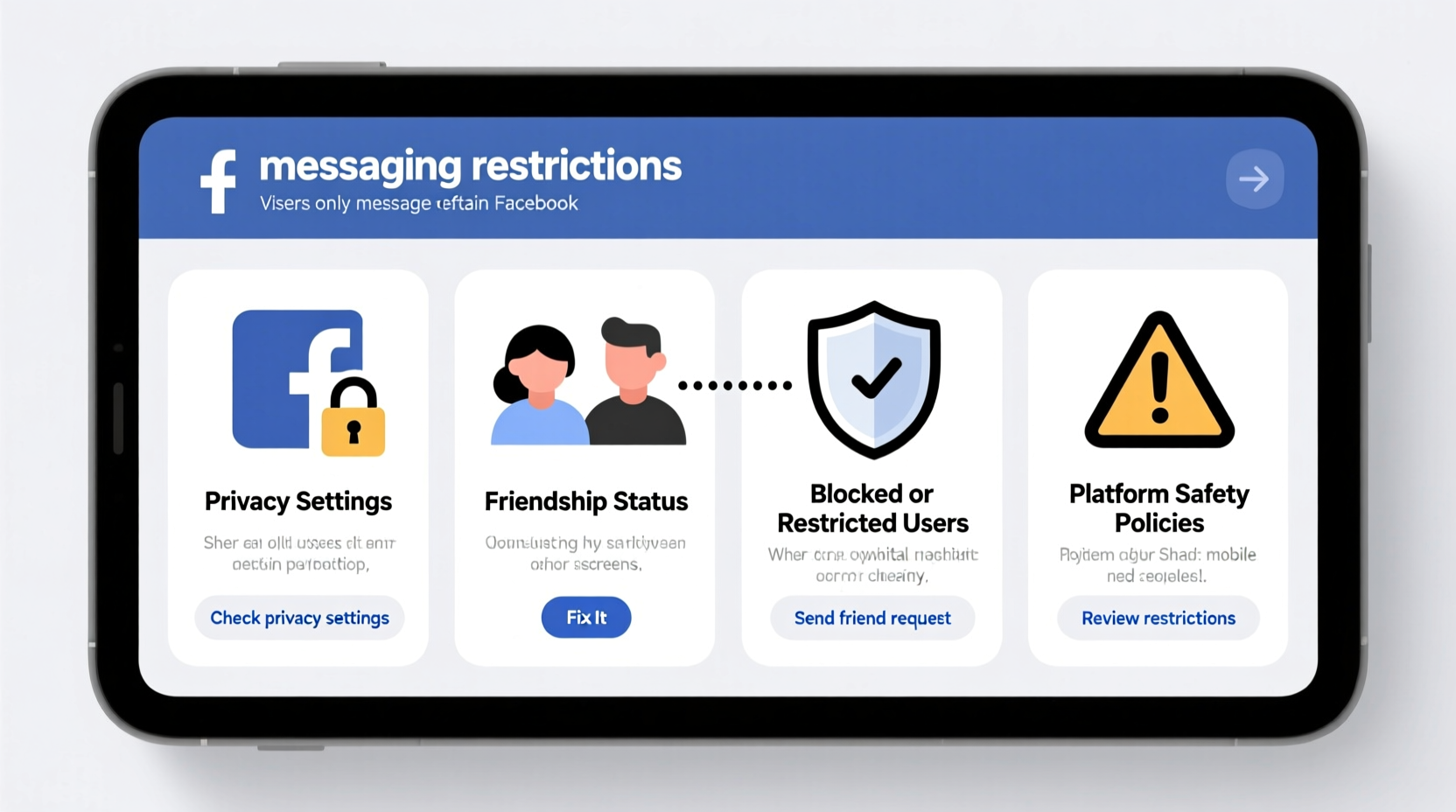
Facebook's messaging ecosystem allows users to communicate across personal profiles, groups, and pages. However, access isn't universal. Your ability to message someone depends on several layers of configuration:
- Your own account status and history
- The recipient’s privacy and filtering preferences
- Facebook’s automated anti-spam systems
- Device and app-specific limitations
Messaging on Facebook is governed by two primary filters: Message Requests and Spam Detection. If you’re not friends with someone, your message may go into their Message Requests folder rather than their main inbox. In more restrictive cases, the message might not be delivered at all — especially if Facebook flags your behavior as potentially spammy.
“Messaging restrictions on social platforms are increasingly driven by AI models trained to detect patterns associated with harassment, automation, and unsolicited outreach.” — Dr. Lena Patel, Digital Communication Researcher at Stanford University
Common Reasons You Can Only Message Some People
Several factors can limit who you can message. Below are the most frequent causes:
1. Recipient Privacy Settings
Many users adjust their Messenger settings to accept messages only from friends or specific networks. If you’re outside their trusted circle, your message may be blocked entirely or filtered into a separate requests folder.
2. Your Account Has Been Flagged for Suspicious Activity
Sending too many messages in a short time, especially to non-friends, can trigger Facebook’s spam detection algorithms. Once flagged, your account may face temporary or permanent restrictions on messaging capabilities.
3. You’ve Been Blocked or Restricted
If someone has blocked you, you won’t be able to send them messages, view their profile, or interact in any way. A restriction is less severe — you may still see their posts, but messaging is disabled.
4. Incomplete or Unverified Profile
Profiles without a confirmed email, phone number, or recent activity are often limited in functionality. Facebook may treat such accounts as low-trust, restricting messaging to prevent abuse.
5. App or Browser Glitches
Sometimes, the issue isn’t policy-related but technical. Outdated apps, cached data, or syncing errors can create the illusion of restricted access even when no real block exists.
Step-by-Step Guide to Fix Messaging Limitations
Follow this structured approach to diagnose and resolve your messaging issues:
- Check Your Internet Connection – Ensure you’re online and using a stable network. Test other features to rule out connectivity problems.
- Update the Facebook or Messenger App – Older versions may have bugs affecting functionality. Visit your device’s app store to install updates.
- Log Out and Back In – This refreshes your session and clears temporary glitches. Go to Settings > Log Out, then log back in.
- Clear Cache (Mobile Devices) – On Android, go to Settings > Apps > Facebook > Storage > Clear Cache. On iOS, delete and reinstall the app.
- Review Your Account Status – Visit Facebook Support Inbox to see if you’ve received any notifications about restrictions.
- Test Messaging Different Users – Try sending messages to friends, non-friends, and page admins to identify patterns.
- Adjust Your Privacy Settings – Go to Settings & Privacy > Privacy Shortcuts > Who Can Contact You, and ensure your settings aren’t overly restrictive.
Do’s and Don’ts When Troubleshooting Messaging Issues
| Do’s | Don’ts |
|---|---|
| Verify your email and phone number | Send repetitive messages to the same person |
| Add a profile photo and fill out basic info | Use automated tools or bots to send messages |
| Wait 24–48 hours after heavy messaging activity | Create multiple accounts to bypass restrictions |
| Contact Facebook support if locked out | Ignore warnings or error messages from Facebook |
Real Example: Recovering Messaging Access After Being Flagged
Jamal, a small business owner, used Facebook to follow up with potential clients after networking events. Over one weekend, he sent around 40 introductory messages to new connections. By Monday, he found he could no longer message anyone outside his existing friend list.
After reviewing Facebook’s help center, Jamal realized his bulk messaging had triggered spam filters. He waited 72 hours without logging in, updated his app, and gradually resumed communication — this time limiting himself to 5–10 messages per day. Within a week, his access was restored. He now uses Facebook Pages and Instagram DMs for outreach to avoid similar issues.
Expert Tips to Maintain Healthy Messaging Privileges
- Build genuine connections first: Engage with posts before sending a message.
- Limit mass outreach: Sending more than 10–15 non-friend messages per day increases risk.
- Use alternative channels: Consider connecting via Instagram or LinkedIn for professional outreach.
- Keep your profile active: Regular logins, photo uploads, and friend interactions signal authenticity.
Frequently Asked Questions
Can I message someone who isn’t my friend on Facebook?
Yes, but only if their privacy settings allow it. Non-friend messages often go to the Message Requests folder unless the sender is within the recipient’s network (e.g., same school or workplace).
How long do Facebook messaging restrictions last?
Temporary blocks typically last between 24 hours and 7 days. Permanent restrictions require appeal through Facebook’s support forms and may take weeks to resolve.
Why does the “Message” button disappear on some profiles?
This usually means the person has tightened their privacy settings, blocked you, or disabled messaging entirely. It can also occur if your account is restricted.
Conclusion: Regain Control of Your Facebook Communication
Being able to message only select people on Facebook is rarely arbitrary — it’s usually the result of deliberate privacy controls, algorithmic enforcement, or account-specific issues. By understanding how the system works and adjusting your behavior accordingly, you can restore and maintain full messaging access.
Start by auditing your own account: update your profile, clean your app cache, and reflect on recent messaging habits. If needed, reach out to Facebook support with specific details. Most importantly, prioritize authentic interaction over volume. Social media thrives on connection, not automation.




 浙公网安备
33010002000092号
浙公网安备
33010002000092号 浙B2-20120091-4
Comments
No comments yet. Why don't you start the discussion?