
In an era defined by digital transformation, computer networking has become the backbone of nearly every aspect of modern life. From sending an email to streaming high-definition video, from remote work to global financial transactions—none of these would be possible without robust, reliable networks. At its core, computer networking connects devices to share resources, communicate efficiently, and support scalable systems. But beyond technical functionality, understanding why computer networking is important reveals deeper implications for productivity, innovation, security, and societal advancement.
Enhanced Communication and Collaboration
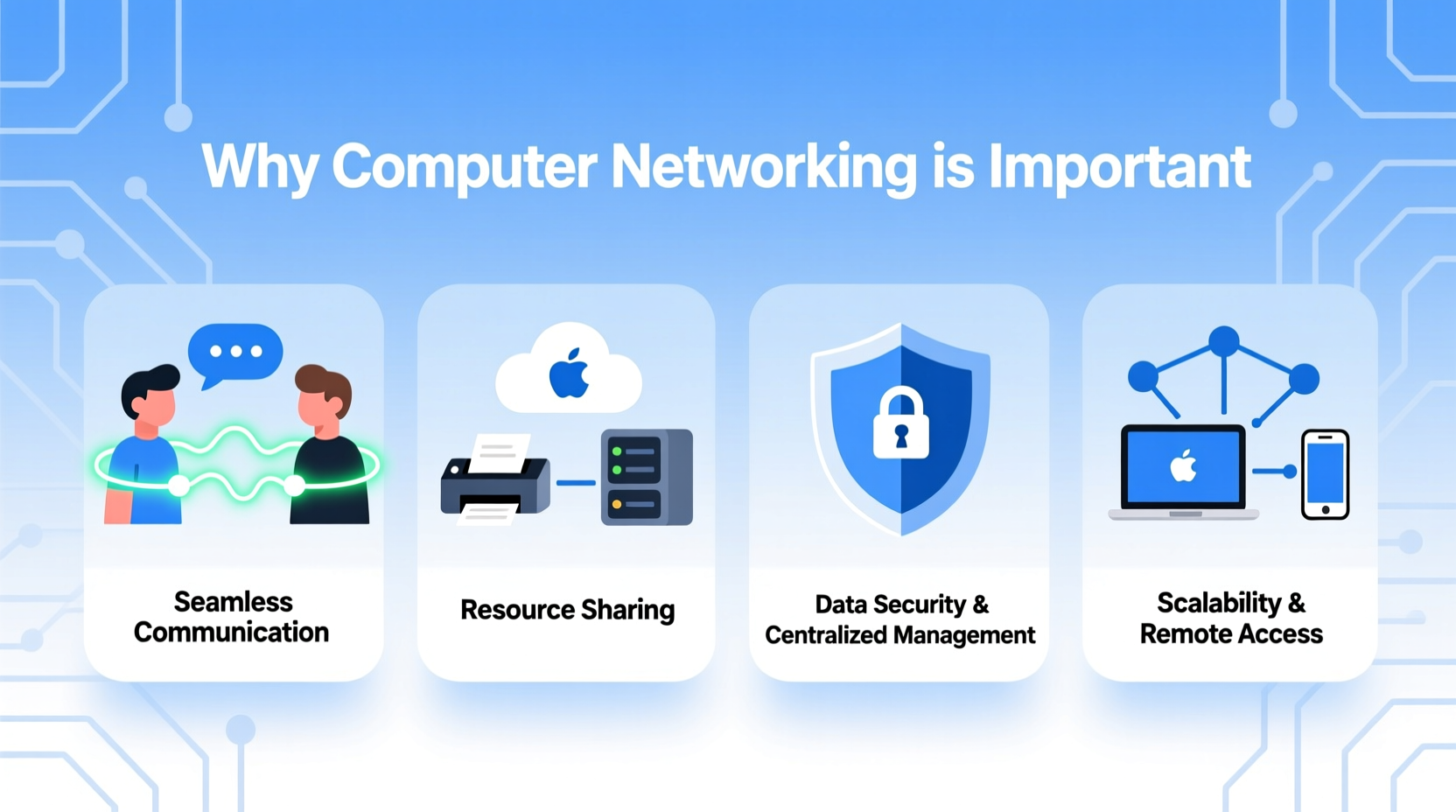
One of the most immediate and visible benefits of computer networking is the dramatic improvement in communication speed and quality. Networks enable instant messaging, voice over IP (VoIP), video conferencing, and real-time document collaboration across continents. Teams no longer need to be physically present in the same office to function as a cohesive unit. Cloud-based platforms like Google Workspace and Microsoft 365 rely on network infrastructure to synchronize data in real time, allowing multiple users to edit documents simultaneously with minimal latency.
For educational institutions, networking allows students and instructors to engage through learning management systems (LMS), access digital libraries, and participate in virtual classrooms. In healthcare, doctors can consult specialists remotely using secure networks, improving diagnosis accuracy and patient outcomes.
Resource Sharing and Cost Efficiency
Computer networks allow organizations to optimize resource usage by enabling shared access to hardware, software, and data. Instead of equipping every employee with a dedicated printer, scanner, or storage device, companies can deploy centralized peripherals accessible across the network. This reduces equipment costs, maintenance overhead, and physical space requirements.
Similarly, software licensing becomes more efficient when deployed over a network. Organizations can use server-based applications or cloud services where only one license serves multiple users, reducing per-seat expenses. Centralized file servers eliminate redundant copies of documents, minimizing storage waste and version control issues.
| Resource Type | Standalone Use | Networked Use |
|---|---|---|
| Printers | One per user | Shared among departments |
| Data Storage | Distributed, unsecured | Centralized, backed up regularly |
| Software Licenses | Per-device cost | Concurrent user model |
| Internet Connection | Duplicate subscriptions | Single high-speed line shared securely |
Improved Data Management and Security
With data being one of the most valuable assets today, managing it securely and efficiently is critical. Computer networks provide structured environments for organizing, backing up, and protecting data. Administrators can enforce access controls, ensuring that only authorized personnel view or modify sensitive files. Role-based permissions prevent unauthorized access while maintaining operational efficiency.
Modern networks integrate firewalls, intrusion detection systems (IDS), and encryption standards to defend against cyber threats. Regular backups over the network ensure business continuity in case of hardware failure or ransomware attacks. According to the National Institute of Standards and Technology (NIST), “A well-designed network architecture significantly reduces the attack surface and improves incident response times.”
“Networks are not just about connectivity—they're about controlled, secure access to critical information.” — Dr. Alan Reyes, Cybersecurity Architect at MIT Lincoln Laboratory
Scalability and Business Growth
As businesses grow, their IT needs evolve. A scalable network infrastructure allows seamless integration of new users, devices, and locations without disrupting existing operations. Whether expanding from a small office to a multi-site enterprise or adding remote workers globally, networks built on modular designs accommodate change efficiently.
Cloud computing further enhances scalability. By connecting internal systems to public or private clouds, organizations can dynamically allocate computing power, storage, and bandwidth based on demand. This flexibility supports innovation, such as launching e-commerce platforms during peak seasons or rapidly deploying AI-driven analytics tools.
A real-world example is a mid-sized logistics company that transitioned from isolated desktops to a unified network system integrated with GPS tracking and inventory databases. Within six months, delivery accuracy improved by 37%, fuel costs dropped due to optimized routing, and customer satisfaction scores rose significantly—all enabled by real-time data flow across the network.
Support for Emerging Technologies
The rise of artificial intelligence, Internet of Things (IoT), and edge computing depends fundamentally on strong networking foundations. Smart homes use local networks to connect thermostats, lights, and security cameras. Industrial IoT sensors in manufacturing plants transmit performance data over networks to predict maintenance needs. Autonomous vehicles rely on low-latency, high-bandwidth connections to process environmental data instantly.
Without reliable networking, these technologies cannot function effectively. For instance, a delay of even 50 milliseconds in transmitting sensor data from a self-driving car could result in a safety hazard. Similarly, AI models trained in data centers require fast, stable network links to receive training datasets and deliver inference results.
Step-by-Step Guide to Building a Basic Office Network
- Assess Needs: Determine number of users, devices, and required applications.
- Choose Topology: Decide between star, mesh, or hybrid layout based on reliability and budget.
- Select Hardware: Purchase routers, switches, access points, and cabling (preferably Cat6 or fiber).
- Configure IP Scheme: Assign static or dynamic IPs using DHCP; segment network via VLANs if needed.
- Implement Security: Enable WPA3 encryption, set up firewall rules, and update firmware regularly.
- Test & Monitor: Run speed tests, check device connectivity, and install monitoring tools like PRTG or Nagios.
- Scale Gradually: Add redundancy, cloud integrations, or backup lines as the organization grows.
Common Challenges and How to Address Them
- Network Congestion: Caused by excessive traffic. Solution: Upgrade bandwidth, prioritize critical traffic using QoS settings.
- Security Breaches: Weak passwords or outdated software. Solution: Enforce multi-factor authentication and regular patching.
- Downtime: Hardware failure or misconfigurations. Solution: Implement redundant links and automated failover systems.
- Remote Access Issues: Poor performance for offsite workers. Solution: Deploy a secure VPN or zero-trust network access (ZTNA).
FAQ
Why is computer networking essential for remote work?
Remote work relies entirely on computer networks to connect employees to corporate systems, cloud applications, and team communication tools. Without secure and stable networking, remote access to files, emails, and collaboration platforms would be impossible or highly inefficient.
Can small businesses benefit from networking too?
Absolutely. Even a simple local area network (LAN) helps small businesses share internet, printers, and customer databases efficiently. It also lays the foundation for growth, cybersecurity, and integration with online sales channels.
Is wireless networking as reliable as wired?
Modern Wi-Fi standards (Wi-Fi 6 and above) offer speeds and reliability close to wired connections, especially in well-designed setups. However, for mission-critical applications like video conferencing or large data transfers, wired Ethernet remains more stable and secure.
Conclusion
Understanding why computer networking is important goes beyond recognizing its technical role—it's about seeing how it empowers individuals, drives innovation, and sustains modern economies. From streamlining daily tasks to enabling breakthrough technologies, networks form the invisible infrastructure that keeps the digital world running smoothly. As connectivity becomes increasingly central to success in business, education, and personal development, investing in a smart, secure, and scalable network is no longer optional—it's essential.




 浙公网安备
33010002000092号
浙公网安备
33010002000092号 浙B2-20120091-4
Comments
No comments yet. Why don't you start the discussion?