
Every year, thousands of people around the world choose to embrace Islam as their faith. Conversion to Islam is not merely a change in religious identity—it often represents a profound transformation in worldview, lifestyle, and personal values. Whether drawn by spiritual clarity, moral structure, or intellectual conviction, those who convert frequently describe a sense of peace and purpose they hadn’t found before. Understanding why people convert and how the process unfolds can provide insight into one of the most significant decisions a person may make.
Spiritual Fulfillment and Inner Peace
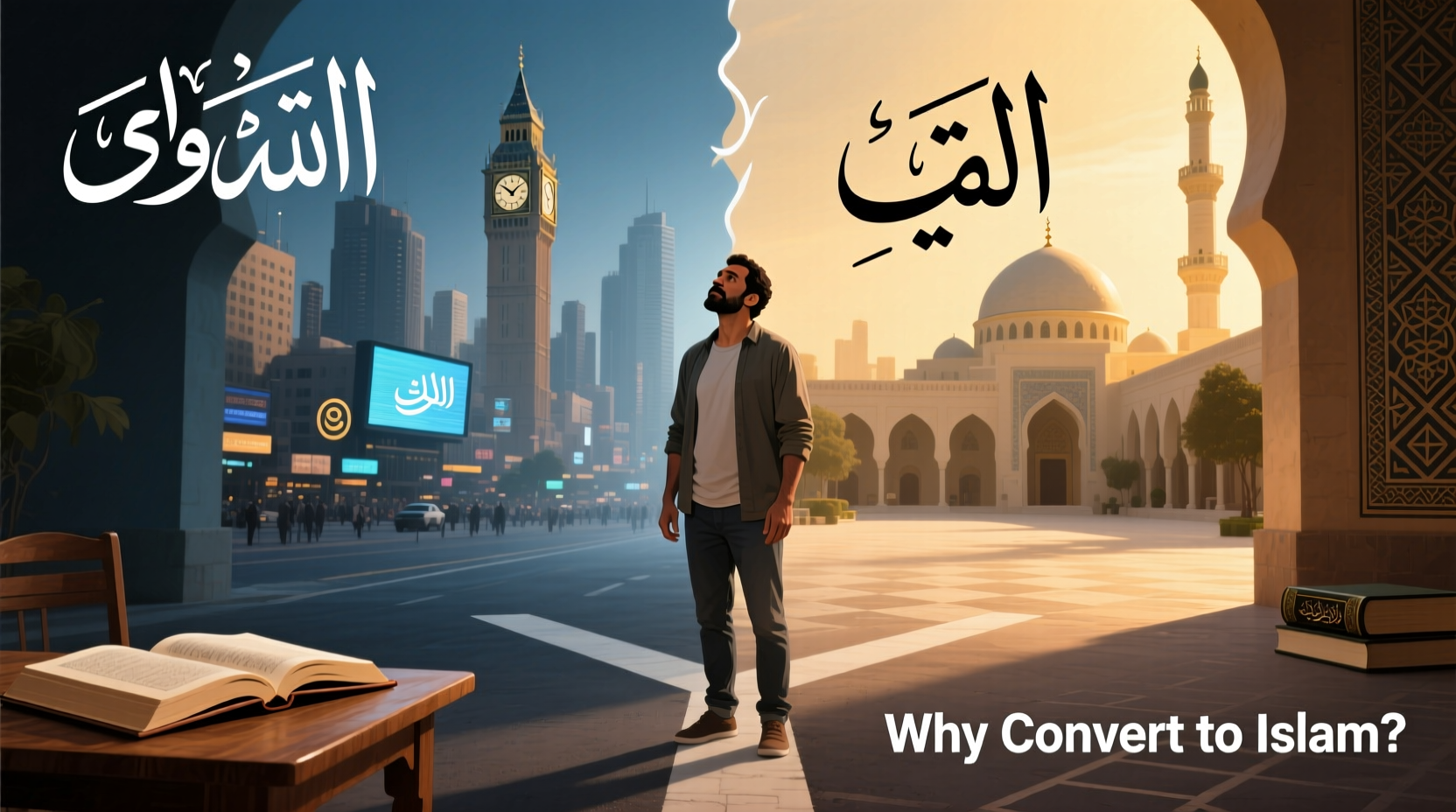
One of the most commonly cited reasons for converting to Islam is the pursuit of spiritual fulfillment. Many converts report feeling a deep sense of tranquility after embracing the faith. The Islamic concept of *tawhid*—the oneness of God—offers a clear, uncomplicated understanding of divinity that resonates with individuals seeking authenticity in belief.
Daily prayers (*salah*), fasting during Ramadan, and regular recitation of the Quran are practices that ground believers in mindfulness and devotion. For many, these acts are not rituals but meaningful connections with the Divine. Unlike more abstract theological frameworks, Islam emphasizes direct, personal accountability to God without intermediaries, which fosters a powerful sense of intimacy and responsibility.
Moral Clarity and Ethical Framework
In an age of moral relativism, Islam offers a comprehensive ethical system grounded in divine guidance. From honesty in business to kindness toward parents and neighbors, Islamic teachings provide detailed directives for daily conduct. Converts often appreciate the balance between personal freedom and societal responsibility that the faith promotes.
The emphasis on justice, charity (*zakat*), and modesty appeals to those disillusioned with materialism or social inequity. The prohibition of interest (*riba*), alcohol, gambling, and exploitative behavior reinforces a lifestyle focused on integrity and long-term well-being rather than instant gratification.
“After years of searching, I found in Islam a moral compass that made sense—not just culturally, but universally.” — Amina, convert from Canada
Intellectual Conviction and Rational Inquiry
Contrary to popular misconceptions, many people come to Islam through rigorous intellectual exploration. The Quran repeatedly invites reflection, asking readers to contemplate the natural world, human consciousness, and historical patterns. Scientific references in the Quran, linguistic precision, and fulfilled prophecies have led numerous academics and scientists to reevaluate their beliefs.
For example, Dr. Maurice Bucaille, a French physician, initially studied the Quran to critique it but ended up writing *The Bible, the Qur'an and Science*, concluding that the Quran’s scientific statements were remarkably consistent with modern findings. His journey exemplifies how rational inquiry can lead to faith.
Islam also encourages questioning and dialogue. Prospective converts are advised to research, ask questions, and engage with knowledgeable Muslims before making a decision.
The Conversion Process: A Step-by-Step Guide
Becoming Muslim is both simple and sacred. There is no formal application, clergy approval, or waiting period. The act of conversion centers on a declaration of faith known as the *Shahada*.
- Learn the basics: Study core beliefs—belief in one God, the prophets, the revealed books, angels, the Day of Judgment, and divine decree.
- Reflect deeply: Ensure your decision is based on understanding, not emotion or external pressure.
- Recite the Shahada: In front of witnesses (preferably two Muslims), say: “Ashhadu an la ilaha illa Allah, wa ashhadu anna Muhammadan rasul Allah” (“I bear witness that there is no god but Allah, and I bear witness that Muhammad is the Messenger of Allah”).
- Begin practicing: Start learning how to perform ablution (*wudu*) and prayer (*salah*).
- Register (optional): Some communities maintain records of new Muslims for support purposes, though this is not required.
No ritual bath or ceremony is mandatory, though many choose to perform *ghusl* (ritual purification) as a symbolic fresh start.
What Happens After Conversion?
New Muslims are welcomed into a global community (*ummah*). Mosques often offer mentorship programs, Arabic classes, and introductory courses on Islamic teachings. The first few months are typically focused on building foundational knowledge and habits.
Cultural Misconceptions vs. Religious Reality
Many hesitate to convert due to misconceptions about Islam being tied to a specific culture, ethnicity, or political ideology. However, Islam is inherently universal. Over 1.8 billion Muslims span every continent, speaking hundreds of languages and representing diverse traditions—from Indonesian to Senegalese to Swedish Muslims.
Islam distinguishes between cultural practices and religious obligations. Wearing the hijab, for instance, is a religious requirement for Muslim women, but styles vary widely across cultures. Similarly, dietary laws apply universally, but cuisine differs by region.
| Misconception | Islamic Reality |
|---|---|
| Islam oppresses women | Islam granted women inheritance, divorce rights, and education over 1,400 years ago; cultural abuse does not reflect religious teaching |
| Converts must change their names | Only names with meanings contrary to Islamic belief (e.g., “servant of Zeus”) require change; otherwise, names are kept |
| Conversion requires leaving family | Islam commands kindness to parents and relatives, even if they are non-Muslims |
Mini Case Study: James’ Journey to Islam
James, a former atheist and philosophy student from Chicago, began studying world religions after reading about Sufi poets like Rumi. Initially skeptical of organized religion, he was struck by the Quran’s challenge to produce a single chapter like it—a claim unmatched in other scriptures. He spent six months attending Friday sermons, reading translations, and discussing theology with local imams.
What convinced him most was the consistency between Islamic ethics and human nature (*fitrah*). “I realized I already believed in accountability, purpose, and the existence of good and evil,” he said. “Islam didn’t impose new ideas—it named and structured what I already knew.” He converted at a small mosque in Hyde Park, describing the moment of reciting the Shahada as “like coming home.”
Checklist for Those Considering Conversion
- ✔️ Research core Islamic beliefs and practices
- ✔️ Visit a mosque and speak with practicing Muslims
- ✔️ Read a reliable English translation of the Quran (e.g., Sahih International)
- ✔️ Reflect on your motivations and ensure clarity of intention
- ✔️ Learn how to pronounce and understand the Shahada
- ✔️ Find a supportive community or mentor (local or online)
- ✔️ Begin incorporating prayer and remembrance of God into your day
Frequently Asked Questions
Do I need to tell my family immediately after converting?
That depends on your situation. While honesty is valued, safety and emotional readiness matter. Some choose to inform loved ones gradually, especially in environments where religious conversion may be met with resistance.
Can I still celebrate my cultural traditions after becoming Muslim?
Yes, as long as they don’t contradict Islamic principles. Celebrating birthdays, maintaining family customs, and enjoying cultural food are all permissible and common among Muslims worldwide.
Will I be expected to become an activist or preacher?
No. While sharing the message of Islam is encouraged, it must be done wisely and respectfully. Most converts focus first on personal growth and practice before engaging in outreach.
Conclusion: A Personal and Profound Decision
Converting to Islam is a deeply personal journey shaped by spiritual longing, intellectual inquiry, and moral aspiration. It is neither a rejection of one’s past nor an adoption of foreignness, but a return to what many describe as innate truth. The process itself is accessible, dignified, and rooted in sincerity.
If you’re exploring Islam, take your time. Seek knowledge, ask questions, and connect with sincere believers. When the heart recognizes truth, the path becomes clear. For those ready to take the step, know that millions before you have found in Islam not just a religion, but a way of life defined by peace, purpose, and proximity to God.




 浙公网安备
33010002000092号
浙公网安备
33010002000092号 浙B2-20120091-4
Comments
No comments yet. Why don't you start the discussion?