
Alcatraz Island, once a symbol of inescapable justice and maximum-security incarceration, looms in the public imagination as one of the most notorious prisons in American history. Located in the chilly waters of San Francisco Bay, the fortress-like penitentiary housed some of the country’s most dangerous criminals, including Al Capone and Robert Stroud, the “Birdman of Alcatraz.” Despite its fearsome reputation, Alcatraz operated for less than 30 years before abruptly closing in 1963. The official explanation cited high operating costs, but the reality is far more complex. Behind the scenes, a combination of logistical challenges, deteriorating infrastructure, evolving penal philosophies, and political pressures led to its demise.
The Financial Burden of Isolation
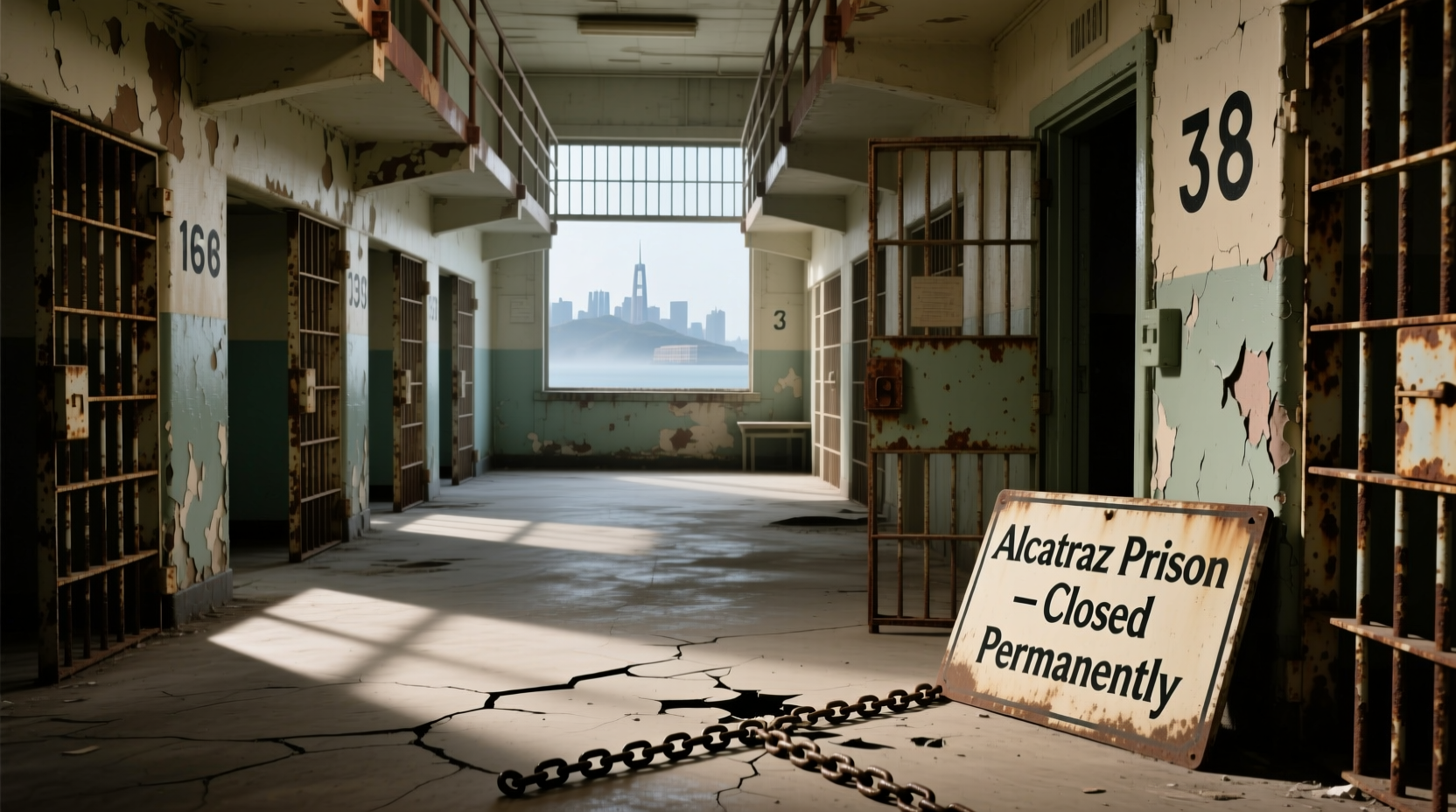
One of the primary reasons Alcatraz was shut down was its exorbitant cost of operation. Unlike mainland prisons, Alcatraz required all resources—food, water, fuel, medical supplies, and personnel—to be transported by boat. Fresh water had to be shipped in because the island lacked a natural freshwater source. This logistical challenge dramatically increased daily expenses.
According to Bureau of Prisons records, maintaining Alcatraz cost nearly three times as much per inmate as other federal facilities at the time. In 1959, annual expenditures exceeded $7 million (over $65 million today), with each prisoner costing roughly $10,000 per year—compared to an average of $3,000 elsewhere. As federal budgets tightened during the postwar era, such inefficiencies became increasingly difficult to justify.
Deteriorating Infrastructure and Environmental Damage
Constructed in the early 20th century, Alcatraz’s buildings were never designed for long-term habitation under harsh marine conditions. Constant exposure to saltwater, fog, and wind led to severe structural decay. By the 1950s, pipes corroded, electrical systems failed, and masonry crumbled. Repairs were not only costly but temporary—the environment simply accelerated deterioration faster than maintenance crews could respond.
In 1959, a report from the Department of the Interior described the facility as “a firetrap” due to outdated wiring and inadequate emergency exits. Plumbing failures meant inmates sometimes went days without hot water or functional toilets. These conditions violated emerging standards for humane treatment, even within a maximum-security context.
“Alcatraz wasn’t just expensive—it was falling apart. You can’t run a modern prison on a crumbling rock.” — Dr. James Holloway, Historian of U.S. Penal Institutions
Evolving Views on Rehabilitation vs. Punishment
The mid-20th century marked a shift in correctional philosophy across the United States. The idea that prisons should serve rehabilitative purposes—not just punitive isolation—gained traction among policymakers and criminologists. Alcatraz, however, stood in stark contrast to this trend.
The prison offered no vocational training, limited educational programs, and minimal psychological support. Inmates spent up to 23 hours a day in their cells, with little human contact. While intended to suppress violence and escape attempts, this extreme isolation drew criticism from mental health experts who warned of long-term psychological damage.
A 1954 study by the National Institute of Mental Health concluded that prolonged solitary confinement at Alcatraz caused irreversible cognitive decline in many prisoners. As public opinion turned against purely punitive models, Alcatraz began to look like an outdated relic rather than a model institution.
Operational Challenges and Escapes
Despite its reputation as “escape-proof,” Alcatraz experienced several high-profile escape attempts that undermined its credibility. The most famous occurred in June 1962, when Frank Morris and the Anglin brothers tunneled out using stolen tools, left behind dummy heads in their beds, and vanished into the bay. Though officially presumed drowned, their disappearance sparked national headlines and raised serious questions about security protocols.
Prior to that, multiple other attempts—including one involving a homemade raft and another where inmates nearly scaled the outer wall—highlighted vulnerabilities. Each incident required costly investigations and reinforced doubts about whether the prison could truly contain its population.
Moreover, staffing Alcatraz was a persistent issue. Guards lived off-island and commuted daily, leading to low morale and high turnover. The remote location made recruitment difficult, especially as better-equipped mainland facilities offered improved working conditions.
Political Pressures and the Final Decision
By the early 1960s, pressure mounted from multiple directions. Environmentalists objected to the pollution caused by sewage discharge into the bay. Civil rights advocates criticized the lack of due process and humane treatment. Even within the Department of Justice, officials questioned the necessity of maintaining a single-purpose prison for fewer than 300 inmates.
In December 1962, Attorney General Robert F. Kennedy approved the closure plan. On March 21, 1963, the last inmates were transferred to other federal prisons, and Alcatraz officially ceased operations. The final report cited “the high cost of maintenance, the impossibility of upgrading the facility, and the changing mission of the Federal Bureau of Prisons” as decisive factors.
| Factor | Description | Impact on Closure |
|---|---|---|
| Operating Costs | Triple the national average per inmate | Unsustainable long-term funding |
| Infrastructure Decay | Corroded plumbing, electrical hazards, structural weakness | Unsafe living conditions |
| Changing Penal Philosophy | Shift toward rehabilitation over punishment | Made Alcatraz ideologically obsolete |
| Escape Attempts | Multiple incidents, including 1962 mass escape | Undermined security reputation |
| Environmental & Political Pressure | Sewage pollution, civil rights concerns | Increased scrutiny and opposition |
Timeline of Key Events Leading to Closure
- 1934: Alcatraz opens as a federal penitentiary.
- 1940s–1950s: Structural issues become apparent; repair costs rise.
- 1954: Mental health study highlights psychological harm from isolation.
- 1959: Interior Department report declares facility unsafe.
- 1962: Morris and Anglin brothers escape; media frenzy ensues.
- Dec 1962: Robert F. Kennedy authorizes closure.
- Mar 1963: Final inmates removed; prison officially closed.
Mini Case Study: The 1962 Escape That Sealed Its Fate
The escape of Frank Morris and John and Clarence Anglin in 1962 didn’t cause the closure directly—but it acted as the final catalyst. The trio spent months meticulously planning their exit: enlarging ventilation ducts with spoons, constructing fake walls from cardboard and paint, and crafting life vests from stolen raincoats. Their disappearance prompted a massive manhunt and dominated news cycles for weeks.
Though the FBI concluded they likely died in the cold currents, the fact that they vanished without definitive proof damaged the myth of Alcatraz’s infallibility. Internally, prison administrators admitted that overcrowding and understaffing contributed to the breach. Within months, feasibility studies for closure were fast-tracked. The escape became symbolic of a failing system—one too rigid, too isolated, and too outdated to function effectively.
Frequently Asked Questions
Was Alcatraz really inescapable?
No prison is truly inescapable. While Alcatraz had no confirmed successful escapes during its operation, the 1962 disappearance of three inmates remains unresolved. At least 14 escape attempts were recorded, with five men dying during attempts and two believed drowned. The combination of strong currents, cold water, and distance made survival unlikely—but not impossible.
What happened to Alcatraz after it closed?
After closure, the island sat abandoned until 1969, when a group of Native American activists occupied it for 19 months, citing broken treaties and indigenous land rights. Today, Alcatraz is part of the Golden Gate National Recreation Area and operated by the National Park Service. It welcomes over 1.5 million visitors annually.
Could Alcatraz have been renovated instead of closed?
Technically yes—but economically and politically, no. Estimates in 1960 suggested a full renovation would cost over $5 million (equivalent to $50+ million today), with ongoing maintenance still problematic. Given the shift in correctional priorities, investing in a new prison aligned with rehabilitation goals was deemed more practical.
Conclusion: A Symbol Ahead of Its Time—And Behind Its Era
Alcatraz closed not because of one single failure, but because it failed on multiple fronts: financially, structurally, ethically, and strategically. What began as a bold experiment in incorruptible incarceration ultimately proved unsustainable in a modernizing penal system. Its isolation, once seen as a strength, became its greatest liability.
Today, Alcatraz endures as a cultural icon—a reminder of a time when justice was equated with severity. But its closure also reflects progress: a growing recognition that even the most hardened institutions must adapt to human, environmental, and economic realities.




 浙公网安备
33010002000092号
浙公网安备
33010002000092号 浙B2-20120091-4
Comments
No comments yet. Why don't you start the discussion?