
Dr. Ben Carson's transition from a world-renowned pediatric neurosurgeon to a public figure and political leader remains one of the most discussed career shifts in modern American history. Known for pioneering complex surgical procedures and leading groundbreaking medical teams, Carson shocked many when he stepped away from active surgery to focus on writing, speaking, and eventually serving as U.S. Secretary of Housing and Urban Development under President Donald Trump. His journey reflects not just personal evolution but also a broader narrative about purpose, legacy, and the intersection of expertise and public service.
The Peak of a Medical Career
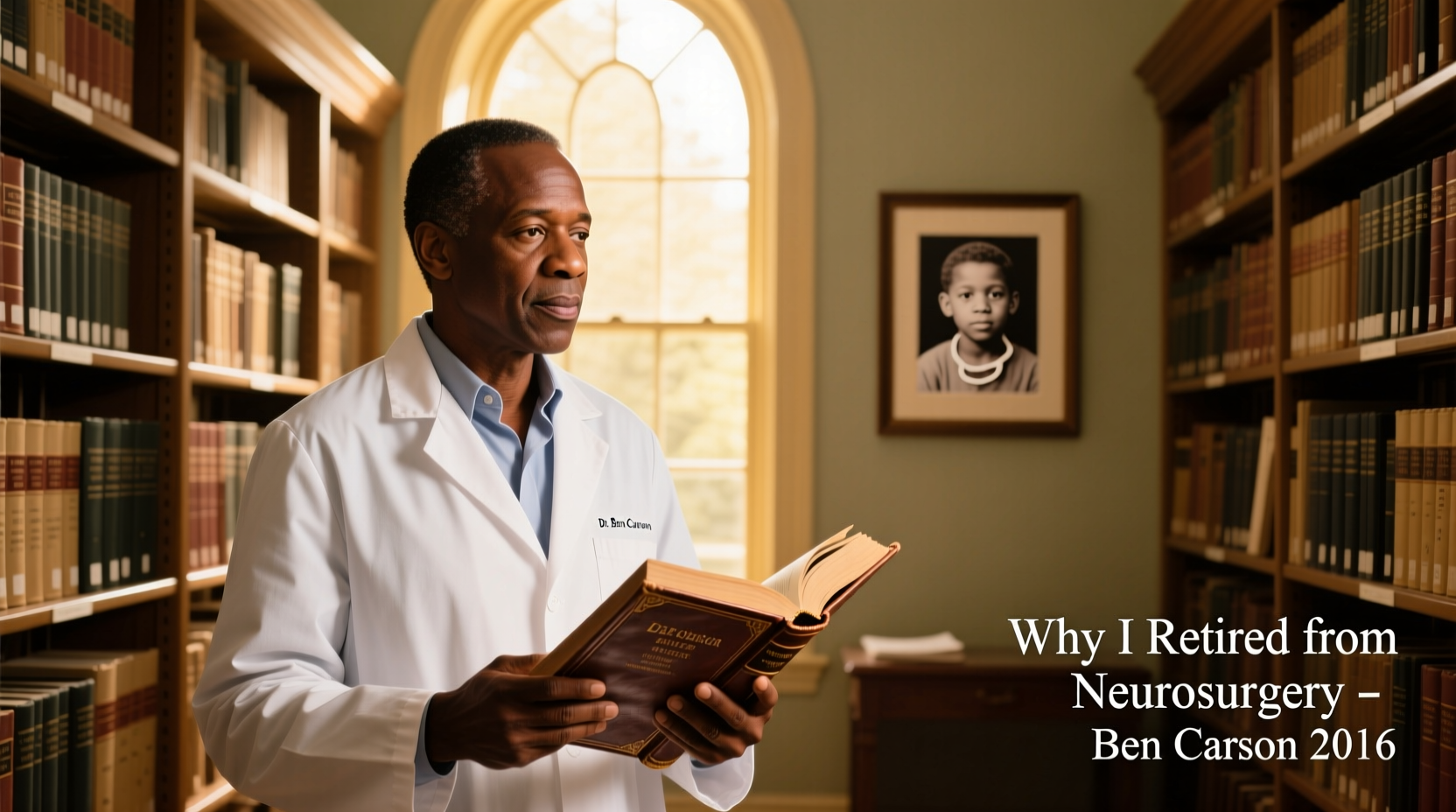
By the time Ben Carson considered retirement from neurosurgery, he had already achieved what few physicians ever do. As director of pediatric neurosurgery at Johns Hopkins Hospital for over 30 years, he performed more than 400 operations annually during his peak and led the first successful separation of conjoined twins joined at the back of the head in 1987. His innovations in hemispherectomy procedures, intraoperative monitoring, and tissue adhesion prevention earned him international acclaim.
Carson received numerous honors, including the Presidential Medal of Freedom in 2008, and was widely regarded as one of the top neurosurgeons in the world. Yet despite being at the height of his clinical powers, he began scaling back surgical duties in the early 2010s, officially retiring from surgery in 2013.
Why Did He Retire from Neurosurgery?
Carson has stated that his decision to step away from the operating room was driven by a combination of factors—personal reflection, physical demands, and a growing sense of calling beyond medicine.
- Physical strain: Neurosurgery is an intensely demanding field, requiring long hours, precision under pressure, and sustained mental focus. After decades in the OR, Carson acknowledged the toll it took on his body and energy levels.
- Desire for broader impact: He expressed a belief that his influence could extend further through education, mentorship, and public discourse than through individual surgeries alone.
- Writing and speaking commitments: Following the publication of his autobiography Gifted Hands, which became a bestseller and later a television movie, demand for his voice increased significantly. Speaking engagements, media appearances, and book tours pulled his attention toward national conversations on education, morality, and leadership.
“After spending years trying to fix damaged brains, I realized that what this country really needs are healed hearts and minds.” — Ben Carson
From Medicine to Public Service: The Career Shift Timeline
Carson’s move from medicine to politics wasn’t abrupt. It unfolded over several years, marked by key milestones:
- 2008: Awarded the Presidential Medal of Freedom by President George W. Bush, increasing his visibility on the national stage.
- 2013: Officially retires from neurosurgery at Johns Hopkins, though retains emeritus status and continues involvement in academic medicine.
- 2015: Announces candidacy for President of the United States as a Republican, citing concerns about national direction and moral decline.
- 2016: Withdraws from presidential race and endorses Donald Trump; gains prominence as a surrogate speaker.
- 2017–2021: Serves as the 17th U.S. Secretary of Housing and Urban Development (HUD), overseeing a federal agency with over 8,000 employees and a $50+ billion annual budget.
This progression shows a deliberate pivot—not a rejection of medicine, but a rechanneling of his credibility, communication skills, and ethical framework into policy and governance.
Expert Insight: When Should Professionals Consider a Major Career Change?
Dr. Laura Chang, organizational psychologist and author of Second Acts, notes that high-achieving professionals like Carson often face a unique crossroads in mid-to-late career.
“Individuals who’ve reached elite status in their field may feel both empowered and constrained by their reputation. The question becomes: Do I continue refining mastery within my domain, or do I leverage that mastery elsewhere? Carson chose the latter—not because he failed in medicine, but because he succeeded so profoundly that other doors opened.” — Dr. Laura Chang, Organizational Psychologist
Her research suggests that successful career changers share common traits: clarity of values, confidence in transferable skills, and a tolerance for public scrutiny—qualities evident in Carson’s path.
Comparative Overview: Medical Expertise vs. Government Leadership
| Area | Neurosurgery | Public Office (HUD Secretary) |
|---|---|---|
| Primary Focus | Patient care, surgical innovation, medical training | Housing policy, urban development, federal program oversight |
| Decision-Making Scope | Individual patient outcomes | National systems affecting millions |
| Skill Transfer | Analytical thinking, crisis management, precision | Budgeting, interagency coordination, public communication |
| Accountability | Medical boards, hospital standards, peer review | Congress, taxpayers, media scrutiny |
| Impact Measurement | Survival rates, recovery metrics | Homeownership trends, homelessness reduction, grant effectiveness |
Real Example: A Surgeon’s Dilemma
Consider Dr. Alicia Torres, a vascular surgeon at a major Midwest hospital. By age 52, she had built a respected practice, trained dozens of residents, and published influential papers. But like Carson, she began feeling that her work, while meaningful, touched only hundreds each year. Inspired by Carson’s example, she applied for a fellowship in health policy at a Washington think tank. Within two years, she was advising state legislators on rural healthcare access.
“Ben Carson showed me that leaving the OR doesn’t mean abandoning your mission,” she said. “It means expanding it.”
Frequently Asked Questions
Did Ben Carson face criticism for leaving medicine for politics?
Yes. Some medical colleagues questioned whether someone without prior government experience should lead a major federal department. Critics pointed to limited housing policy background, while supporters emphasized leadership, ethics, and administrative acumen developed over decades in high-stakes environments.
Is Ben Carson still involved in medicine today?
While no longer practicing clinically, Carson remains affiliated with the medical community through advisory roles, speeches at medical schools, and advocacy for healthcare innovation. He occasionally contributes commentary on medical ethics and physician leadership.
What lessons can professionals learn from Carson’s career change?
His journey underscores that expertise in one domain can be powerfully applied in another. Success in a second act often depends less on technical knowledge and more on core competencies like problem-solving, resilience, and communication.
Actionable Checklist: Planning Your Own Career Transition
If you're considering a significant career shift—especially from a specialized field into broader leadership—consider this checklist:
- ✔ Assess your core values and long-term goals beyond financial success
- ✔ Identify transferable skills (e.g., decision-making under pressure, team leadership)
- ✔ Build visibility through writing, speaking, or volunteering in your target area
- ✔ Seek mentorship from others who’ve made similar moves
- ✔ Test the waters with part-time roles or advisory positions before full transition
- ✔ Prepare for public scrutiny—especially if moving into visible or political roles
Conclusion: Legacy Beyond the Operating Room
Ben Carson didn’t retire from neurosurgery because he lost passion for healing—he retired because he saw healing as extending beyond the individual patient. His career change wasn’t an abandonment of medicine, but an expansion of its principles into society at large. Whether one agrees with his political views or policy outcomes, his story challenges professionals to ask: What is the fullest expression of my expertise? How can my experience serve not just a specialty, but a nation?




 浙公网安备
33010002000092号
浙公网安备
33010002000092号 浙B2-20120091-4
Comments
No comments yet. Why don't you start the discussion?