
Kuzan, better known as Aokiji, was once one of the three Admirals of the Marines, a symbol of justice and order within the One Piece world. His laid-back demeanor masked a deep sense of personal ethics and a skepticism toward the World Government’s definition of absolute justice. After the Marineford War and his defeat by Sakazuki (now Admiral Akainu), Kuzan vanished from public view. Years later, he resurfaced not as a Marine or an independent force for good—but as a member of the Blackbeard Pirates. This shocking turn of events has sparked intense debate among fans and analysts alike. Why would a man who valued freedom and questioned authority align himself with one of the most chaotic and power-hungry crews in the series? Below are the most credible and well-supported theories that attempt to explain this pivotal shift.
The Disagreement with Akainu’s Leadership
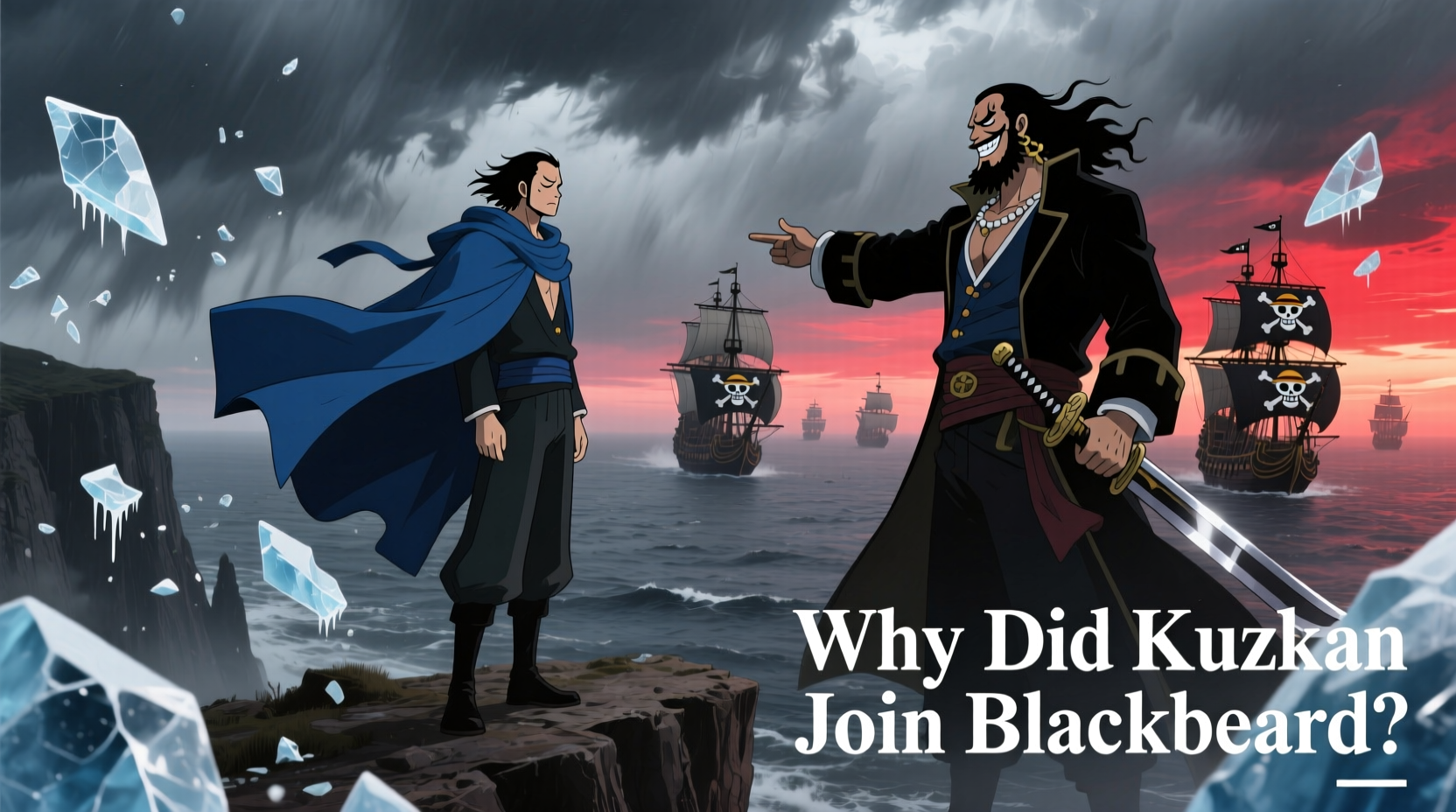
The most immediate catalyst for Kuzan’s departure from the Marines was his ideological clash with Sakazuki. After the death of Fleet Admiral Sengoku, a succession conflict arose between Kuzan and Akainu. Both represented opposing philosophies: Kuzan believed in “lazy justice,” allowing some evil to exist if it meant preserving peace without unnecessary violence. Akainu, on the other hand, upheld “absolute justice”—a brutal, zero-tolerance policy even at the cost of civilian lives.
Their battle lasted for ten days, ending with Kuzan’s narrow defeat. Rather than accept a subordinate role under Akainu, Kuzan chose to leave the Marines entirely. This wasn’t just a professional resignation; it was a moral rejection of the direction the organization was taking.
Potential Long-Term Infiltration Plan
One of the most popular and plausible theories is that Kuzan joined Blackbeard not out of loyalty, but as a deep-cover operative. Given his history of working independently (such as his time investigating Vegapunk and the Ohara incident), it’s conceivable that he operates on a longer strategic timeline than others.
By embedding himself within Blackbeard’s crew, Kuzan could be gathering intelligence on their movements, weaknesses, and connections to the Ancient Weapons or the Void Century. Blackbeard has already acquired two Devil Fruits and assembled a crew of former Impel Down prisoners—many of whom possess rare abilities. Monitoring this group from the inside offers unparalleled insight into emerging threats to global stability.
“In stories where honor clashes with institutional corruption, the truest form of justice often operates in the shadows.” — Dr. Lina Torres, Narrative Analyst, Pop Culture Quarterly
This theory aligns with Kuzan’s past behavior. He allowed Nico Robin to escape during the Ohara incident, defying direct orders because he believed killing a child was unjust. His actions have consistently prioritized conscience over protocol. Joining Blackbeard might be another morally gray move justified by a greater purpose.
Shared Goals Against the World Government
Another compelling explanation lies in mutual opposition to the World Government. While Kuzan was once part of the system, his experiences—particularly witnessing the destruction at Marineford and the government’s manipulation of events—may have led him to conclude that the institution itself is irredeemable.
Blackbeard, despite his villainy, openly seeks to dismantle the current world order. He doesn’t aim merely for conquest but for systemic upheaval. Kuzan may see value in accelerating the collapse of a corrupt regime, even if it means temporarily aligning with a destructive force. As he once said, “If justice is going to be served, sometimes you have to get your hands dirty.”
This perspective reframes Kuzan not as a traitor, but as a revolutionary pragmatist—one who understands that tearing down a flawed system requires unconventional allies.
A Strategic Alliance for Power and Protection
Survival is also a key factor. After losing to Akainu, Kuzan was severely injured. Rebuilding his strength and influence would require resources, protection, and access to information—all of which the Blackbeard Pirates can provide. Blackbeard has shown a tendency to recruit powerful individuals, not just for combat utility but for their knowledge and networks.
Kuzan brings immense tactical experience, Haki mastery, and intimate knowledge of Marine operations. For Blackbeard, having a former Admiral on his side is both a psychological weapon and a strategic asset. From this angle, the alliance is transactional: Kuzan gains shelter and freedom of movement, while Blackbeard gains legitimacy and military expertise.
| Motive | Evidence | Plausibility |
|---|---|---|
| Infiltration | Kuzan’s history of rogue operations; selective morality | High |
| Rejection of Marines | Defeat by Akainu; ideological differences | Very High |
| Shared Anti-Government Goals | Blackbeard’s open rebellion; Kuzan’s disillusionment | Moderate |
| Personal Survival | Severe injury post-Marineford; need for refuge | Moderate |
| Desire for Chaos | No evidence of malicious intent from Kuzan | Low |
Mini Case Study: The Ohara Incident and Moral Consistency
During the Ohara incident, Kuzan had the opportunity—and the order—to eliminate all survivors, including the young Nico Robin. Instead, he falsified her death report and allowed her to escape. This act wasn’t heroic in the traditional sense; it was subversive. He broke the law to uphold what he saw as a higher moral truth.
His decision to join Blackbeard may follow the same pattern. If he believes the World Government is beyond reform, then aiding its destabilization—even through association with pirates—could be consistent with his principles. Just as he spared Robin to preserve knowledge and potential, he may now be positioning himself to prevent a larger catastrophe orchestrated by the Celestial Dragons or the Five Elders.
Step-by-Step: How Kuzan’s Path Led to Blackbeard
- Marine Career: Rises through the ranks, developing a personal code of justice distinct from mainstream Marine doctrine.
- Ohara Incident: Spares Nico Robin, showing willingness to defy orders for moral reasons.
- Marineford War: Witnesses extreme violence and political manipulation, deepening distrust in the system.
- Admiral Succession: Loses to Akainu in a battle representing ideological defeat, not just physical.
- Resignation: Leaves the Marines rather than serve under a leader whose methods he condemns.
- Disappearance: Vanishes for two years, possibly recovering and assessing the geopolitical landscape.
- Joining Blackbeard: Resurfaces as a pirate, likely using the role to pursue long-term objectives outside official channels.
Frequently Asked Questions
Did Kuzan really lose to Akainu, or was it staged?
While some fans speculate the fight was faked, there is strong visual and narrative evidence that Kuzan was genuinely defeated. His injuries were severe, and he required extensive recovery. However, his choice to leave rather than continue serving suggests the loss was less about strength and more about ideological surrender.
Can Kuzan still be considered a hero after joining Blackbeard?
Heroism in One Piece is rarely binary. Characters like Crocodile and Jinbe have complex arcs that transcend simple labels. Kuzan’s alignment with Blackbeard doesn’t erase his past actions. He may still operate according to a personal moral compass, even if his methods have become ambiguous.
Will Kuzan eventually betray Blackbeard?
It’s highly probable. Given Oda’s storytelling patterns, characters who infiltrate antagonist groups often play pivotal roles in their downfall. Kuzan may wait for the right moment—perhaps when Blackbeard threatens innocent lives or unlocks dangerous ancient powers—before making his move.
Checklist: Signs That Kuzan Is Still a Force for Justice
- He has never harmed civilians or acted out of greed.
- His dialogue often reflects skepticism toward authority.
- He maintains contact with figures like Sentomaru, suggesting ongoing covert ties.
- He hasn’t used his full power against former allies.
- His body language around Blackbeard lacks genuine camaraderie.
Conclusion: A Calculated Move in a Larger Game
Kuzan’s decision to join Blackbeard cannot be understood through surface-level assumptions. It is not a fall from grace, nor a sudden embrace of piracy. Instead, it appears to be a calculated maneuver by a man who has long operated outside conventional boundaries. Whether he is gathering intelligence, waiting for the right moment to strike, or simply navigating a world where no institution remains pure, his presence in the Blackbeard Pirates adds a layer of intrigue that will likely shape the final arc of One Piece.




 浙公网安备
33010002000092号
浙公网安备
33010002000092号 浙B2-20120091-4
Comments
No comments yet. Why don't you start the discussion?