
In May 2023, Limestone University, a small private liberal arts college in Gaffney, South Carolina, announced it would cease operations after nearly 150 years. The closure sent shockwaves through the academic community and raised urgent questions about the sustainability of small institutions in an era of shifting demographics, rising costs, and economic volatility. While many initially attributed the shutdown solely to the aftermath of the 2008 financial crisis, the reality is far more complex. A combination of long-term enrollment decline, structural underfunding, and evolving student expectations converged to make continued operation unsustainable.
Limestone’s story is not isolated. It reflects broader trends threatening hundreds of small colleges across the United States. Understanding why Limestone closed—and how the financial crisis played a role—offers critical insights for educators, policymakers, and families navigating the future of higher education.
The Role of the 2008 Financial Crisis
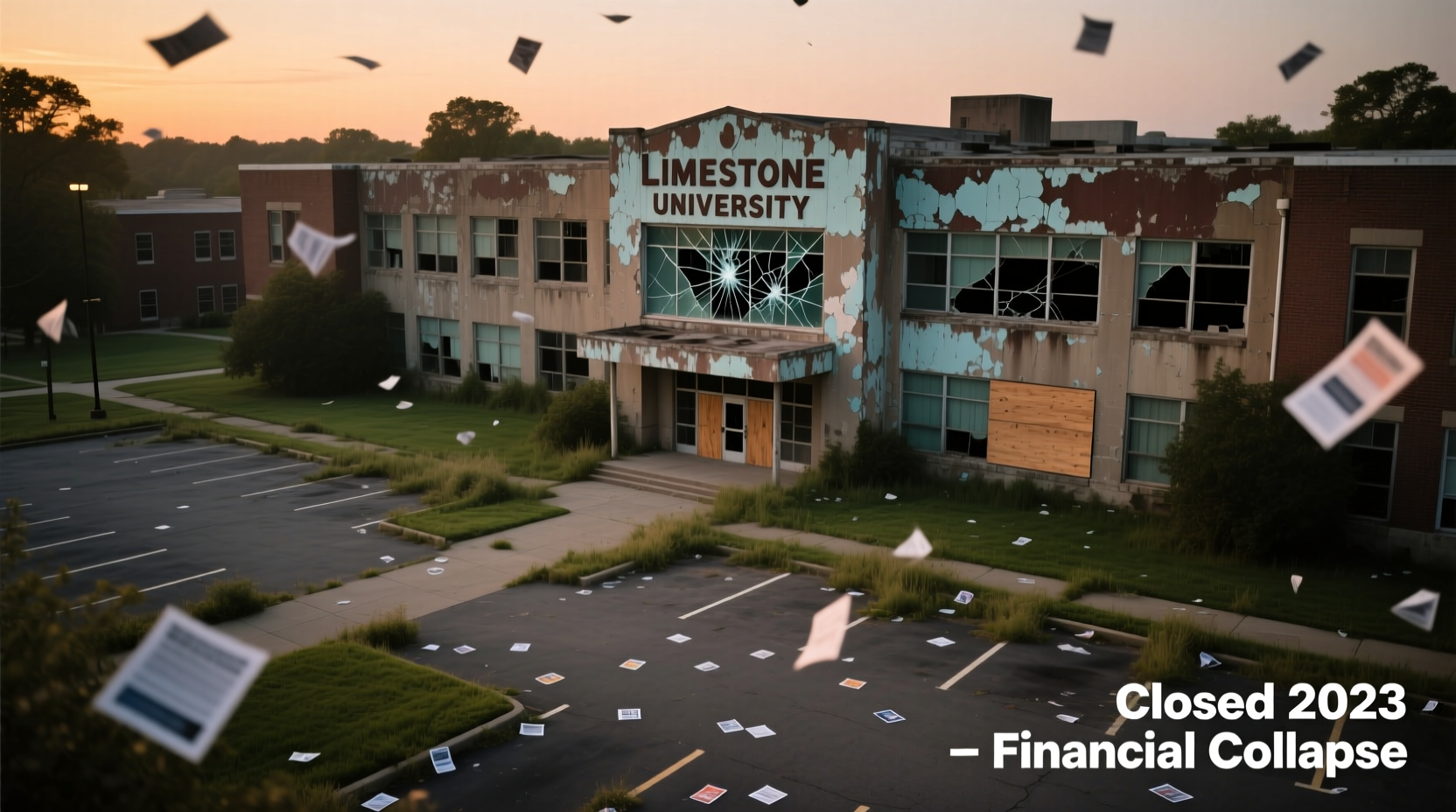
The Great Recession of 2007–2009 dealt a lasting blow to higher education funding and family affordability. For Limestone University, the impact was indirect but profound. Endowment values dropped sharply during the downturn, limiting the institution’s ability to subsidize tuition or invest in infrastructure. At the same time, middle-class families—Limestone’s core demographic—saw reduced incomes and tightened credit, making private college tuition harder to justify.
Even as the economy recovered, Limestone struggled to regain momentum. Federal student aid policies shifted, and competition from online programs intensified. The financial crisis didn’t trigger the closure directly, but it set in motion a decade-long erosion of financial stability that the university never fully recovered from.
“Colleges like Limestone were hit with a double whammy: declining revenues just as demand for financial aid increased. That squeeze became existential over time.” — Dr. Karen Thompson, Higher Education Economist at the Urban Institute
Enrollment Decline: The Silent Killer
Perhaps the most decisive factor in Limestone’s closure was its inability to maintain consistent enrollment. Between 2010 and 2022, undergraduate enrollment dropped by over 40%. Graduate and adult education programs, once a growth engine, also saw declining participation as competitors offered more flexible online options.
This trend mirrored national patterns. The U.S. birthrate peaked in 2007, meaning the pool of traditional college-aged students began shrinking by the mid-2020s. Small private colleges without strong brand recognition or specialized programs found themselves at a disadvantage.
Financial Structure and Dependency on Tuition
Limestone University relied heavily on tuition revenue—over 85% of its operating budget came directly from student payments. Unlike larger universities with substantial endowments, research grants, or auxiliary income (such as hospitals or stadiums), Limestone lacked diversified funding streams.
This made the institution highly vulnerable to market shifts. When fewer students enrolled, revenue fell immediately, forcing cuts to faculty, staff, and academic programs. These cuts, in turn, diminished educational quality and further discouraged prospective students—a downward spiral that proved difficult to reverse.
| Revenue Source | Limestone University | National Average (Private Nonprofit Colleges) |
|---|---|---|
| Tuition & Fees | 86% | 44% |
| Endowment Income | 3% | 12% |
| Grants & Contracts | 2% | 15% |
| Private Gifts & Donations | 5% | 10% |
| Auxiliary Enterprises (Housing, Dining, etc.) | 4% | 19% |
The data reveals a stark imbalance. While peer institutions could absorb enrollment dips using alternative revenue, Limestone had little cushion.
A Timeline of Decline: Key Events Leading to Closure
Limestone’s closure was not sudden. It was the result of years of mounting pressure. Here is a timeline highlighting pivotal moments:
- 2008–2009: The financial crisis reduces family disposable income; Limestone sees first-year enrollment drop by 12%.
- 2013: The university begins offering more online programs to attract non-traditional students.
- 2016: Announces merger talks with another regional college; discussions fail due to cultural and financial misalignment.
- 2019: Cuts three academic departments and lays off 15% of faculty.
- 2021: Launches a $20 million fundraising campaign; raises only $6.2 million.
- 2022: Enrollment falls below 1,000 full-time undergraduates—the lowest since the 1950s.
- May 2023: Board of Trustees votes to cease academic operations after the spring semester.
This progression illustrates how delayed intervention and limited strategic options narrowed the path to survival.
Mini Case Study: Comparing Limestone to Successful Peers
Consider the case of Converse University, also located in South Carolina. Facing similar pressures, Converse transitioned to coeducation in 2020, expanded graduate offerings, and rebranded as a university focused on career outcomes. By contrast, Limestone maintained a traditional model longer, hesitating on structural reforms.
Converse’s leadership pursued partnerships with local businesses for internships and launched competency-based degree programs. These moves attracted new student segments and improved retention. Limestone attempted similar initiatives, but implementation was slower and underfunded.
The lesson? Adaptation speed matters. Institutions that proactively reshaped their value proposition survived; those that reacted too late did not.
Broader Systemic Challenges in Higher Education
Limestone’s closure must be viewed within a larger context. Several interrelated forces are reshaping American higher education:
- Demographic Shifts: Fewer high school graduates mean fiercer competition for students.
- Rising Student Expectations: Learners now demand clear ROI, flexible formats, and career alignment.
- Regulatory Pressure: Increased scrutiny on graduation rates, loan defaults, and program viability limits institutional flexibility.
- Digital Disruption: Low-cost online degrees from major universities undercut traditional models.
Small colleges without niche strengths—such as religious affiliation, elite athletics, or specialized accreditation—are particularly exposed.
Checklist: Warning Signs of Institutional Instability
For administrators, trustees, or concerned stakeholders, here are key indicators that a college may be at risk:
- 📉 Sustained enrollment decline over three or more years
- 💼 Heavy reliance on adjunct faculty due to budget constraints
- 🔧 Postponement of essential facility maintenance
- 📉 Declining donor contributions year-over-year
- 🚫 Inability to launch new programs or adapt curriculum quickly
- 📉 Credit rating downgrades or bond issues
- 📉 Faculty or staff layoffs without strategic restructuring
Early recognition of these signs allows for proactive measures such as mergers, program consolidation, or reaccreditation under a new mission.
Frequently Asked Questions
Did the 2008 financial crisis directly cause Limestone University’s closure?
No single event caused the closure. However, the 2008 crisis initiated a chain reaction—reduced family income, lower endowment returns, and tighter lending—that weakened Limestone’s financial foundation. Recovery efforts were insufficient to offset long-term structural issues.
Could Limestone have survived with better management?
Possible, but unlikely without transformative change. Even well-managed small colleges face headwinds. Survival would have required earlier digital transformation, aggressive marketing, or a successful merger—options that became less viable as financial health declined.
What happened to students and faculty after the closure?
Most students were able to transfer credits to partner institutions through teach-out agreements. Faculty received severance packages, though many had to seek positions elsewhere. The campus was sold to a regional technical college in 2024.
Conclusion: Lessons for the Future of Higher Education
Limestone University’s closure is more than a local tragedy—it’s a cautionary tale for an entire sector. The financial crisis of 2008 acted as a catalyst, but deeper issues around enrollment, funding models, and institutional agility determined the outcome. As the number of college-age Americans continues to shrink and student preferences evolve, more institutions will face similar crossroads.
The path forward requires bold thinking: reimagining program delivery, embracing hybrid learning, pursuing strategic alliances, and focusing relentlessly on student outcomes. For leaders in education, the question is no longer whether change is needed, but how quickly it can be implemented.




 浙公网安备
33010002000092号
浙公网安备
33010002000092号 浙B2-20120091-4
Comments
No comments yet. Why don't you start the discussion?