
If you recently opened your property tax bill and were shocked by a sharp increase, you're not alone. Across the U.S., homeowners are seeing higher assessments and steeper tax bills—even when they haven't made major changes to their homes. The reasons vary from local market trends to policy decisions, but understanding them is the first step toward taking control of your finances.
Property taxes fund essential services like schools, emergency response, and infrastructure. While these taxes are necessary, sudden increases can strain household budgets. This guide breaks down the most common causes of rising property taxes and provides actionable strategies to respond—whether through appeals, exemptions, or long-term planning.
What Causes Property Taxes to Increase?
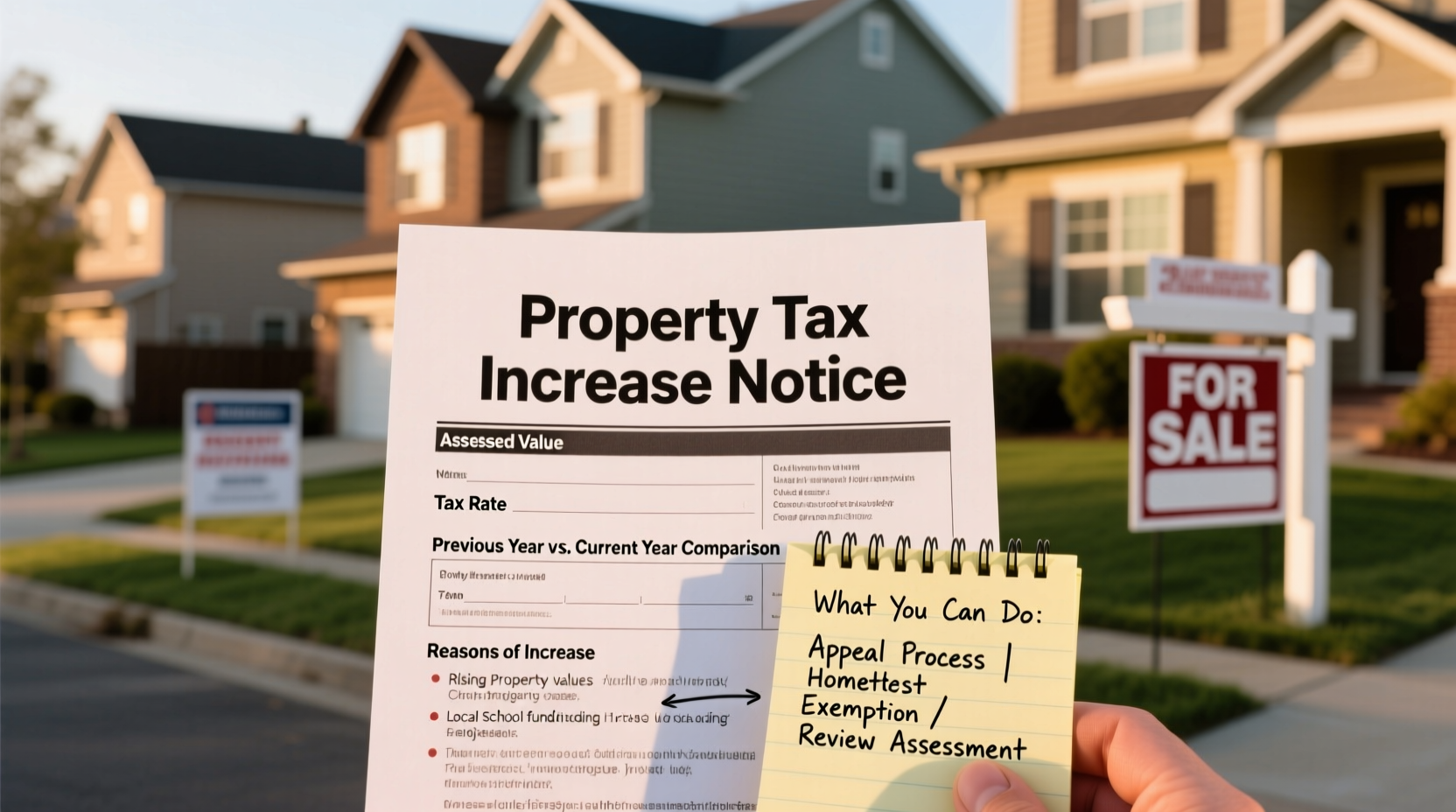
Property taxes are calculated using two primary components: your home’s assessed value and the local tax rate (also known as the millage rate). When either of these goes up, so does your bill. Here are the most frequent drivers:
- Reassessment cycles: Many counties reassess property values every 1–5 years. If home prices in your area have risen, your assessment likely followed—even if you didn’t renovate.
- Strong real estate markets: In competitive housing markets, rising sale prices for comparable homes can push your assessed value upward.
- Local government budget needs: Municipalities may raise tax rates to cover increased spending on public services or debt obligations.
- Home improvements: Adding a deck, finishing a basement, or expanding square footage typically triggers a reevaluation and higher valuation.
- Changes in tax policy: New levies, bond measures, or elimination of tax freezes (like California’s Prop 19 updates) can directly impact liability.
How Assessments Work: A Closer Look
Local assessors estimate your property’s market value based on recent sales of similar homes (comps), condition, location, and size. They don’t visit every home annually; instead, they rely on data models and periodic inspections.
For example, if three homes on your block sold for 15% more than last year, the assessor may apply that trend across the neighborhood—even if your home hasn’t changed. This “mass appraisal” method ensures efficiency but can lead to overestimations.
“Assessments aren’t always accurate reflections of individual property conditions. Homeowners should review theirs carefully and question discrepancies.” — Linda Chen, Municipal Tax Analyst, National Association of Counties
Key Factors Influencing Assessed Value
| Factor | Impact on Assessment | Can You Challenge It? |
|---|---|---|
| Sale prices of nearby homes | High – drives area-wide increases | Limited, unless comps are flawed |
| Recent renovations | Direct – adds measurable value | No, but ensure proper valuation |
| Property condition | Moderate – poor upkeep may lower value | Yes, if inaccurately rated |
| Lot size and zoning | Stable – rarely changes unless subdivided | Yes, if records are incorrect |
| Errors in public records | Potentially significant | Yes – common grounds for appeal |
Real Example: How One Homeowner Reduced Their Tax Bill
In 2023, Maria R., a homeowner in Travis County, Texas, saw her property tax jump by 22% despite making no upgrades. She reviewed her assessment notice and discovered the assessor had listed her home as having a full basement—something she didn’t have.
Maria filed a formal appeal with the Appraisal Review Board, submitting photos and her original blueprints. After a hearing, the error was corrected, and her assessed value dropped by $18,000. Her annual tax bill was reduced by nearly $400.
This case highlights how small errors can lead to large overpayments—and why reviewing your notice isn’t just prudent, it’s financially smart.
What You Can Do: A Step-by-Step Action Plan
You’re not powerless against rising taxes. Follow this timeline to protect your rights and potentially save hundreds per year.
- Review your assessment notice (as soon as it arrives): Compare your home’s details (square footage, bedrooms, lot size) to actual specs. Look for discrepancies.
- Research comparable sales: Find 3–5 recently sold homes similar to yours in size, age, and location. Use sites like Zillow, Redfin, or your county’s property database.
- Determine if an appeal is justified: If your assessed value exceeds recent comps by more than 10–15%, you have strong grounds.
- File a protest or appeal: Most jurisdictions allow 30–45 days from mailing date. Submit evidence such as photos, repair estimates, or comp analyses.
- Attend the hearing (if required): Present your case calmly and factually. Avoid emotional arguments; focus on data.
- Explore exemptions: Seniors, veterans, disabled individuals, and homestead owners may qualify for reductions. These are often overlooked.
Checklist: Responding to a Higher Property Tax Bill
- ☐ Received and read your full assessment notice
- ☐ Verified property details (beds, baths, sq ft, land size)
- ☐ Compared assessed value to recent local sale prices
- ☐ Checked for available tax exemptions or relief programs
- ☐ Determined filing deadline for appeal
- ☐ Gathered supporting documents (photos, blueprints, appraisals)
- ☐ Submitted formal appeal or protest
- ☐ Scheduled reminder for next reassessment cycle
Frequently Asked Questions
Can I appeal my property tax if I haven’t renovated?
Yes. Most appeals are based on market comparisons or data errors, not homeowner actions. If surrounding homes sold at lower prices or your property has unique drawbacks (e.g., poor access, structural issues), you can still challenge the assessment.
Do property tax increases affect my mortgage?
Indirectly. If you escrow taxes through your lender, a higher bill means your monthly payment will rise to cover the difference. Lenders typically adjust escrow amounts after receiving the new tax notice.
Are there limits on how much my taxes can increase?
It depends on your state. Some, like California (Proposition 13) and Florida (Save Our Homes), cap annual assessment increases for primary residences. Others, including Texas and Illinois, allow larger jumps, especially after reassessments.
Long-Term Strategies to Manage Future Increases
Beyond appealing a single year’s bill, consider proactive steps to minimize future hikes:
- Track local development plans: New schools, transit lines, or commercial zones can boost property values—and taxes. Stay informed through city council meetings or neighborhood associations.
- Preserve historical status (if applicable): Some historic districts offer tax incentives or slower reassessment schedules.
- Consider a homestead exemption: Available in most states, this reduces taxable value for owner-occupied homes. In Texas, it cuts school taxes by $40,000 of value.
- Monitor bond elections: Voters approving new bonds often lead to temporary tax rate increases. Participate in local elections to influence outcomes.
“Homeowners who engage early—with assessors, deadlines, and data—typically achieve better results than those who wait until taxes are due.” — James Reed, Director of Property Valuation, Lincoln Institute of Land Policy
Final Thoughts: Take Control of Your Tax Responsibility
A rising property tax bill doesn’t have to be accepted as inevitable. By understanding the forces behind the increase—market trends, reassessments, or administrative errors—you gain the power to respond effectively. Whether it’s correcting a mistake in square footage or claiming a missed veteran’s exemption, small actions can yield meaningful savings.
Taxes support vital community services, but fairness and accuracy matter. Don’t assume your assessment is correct just because it came in the mail. Review it, compare it, and act when needed. The system works best when homeowners participate.




 浙公网安备
33010002000092号
浙公网安备
33010002000092号 浙B2-20120091-4
Comments
No comments yet. Why don't you start the discussion?