
The megalodon, a colossal prehistoric shark that ruled the oceans for over 20 million years, vanished from Earth around 3.6 million years ago. Reaching lengths of up to 60 feet and possessing the most powerful bite in animal history, this apex predator dominated marine ecosystems during the Miocene and Pliocene epochs. Yet despite its evolutionary success, the megalodon disappeared—leaving scientists to piece together clues from fossils, ocean sediments, and ancient climate records. Understanding why such a formidable creature went extinct offers profound insights into how environmental shifts, ecological competition, and evolutionary pressures shape life on Earth.
Climate Change and Ocean Cooling
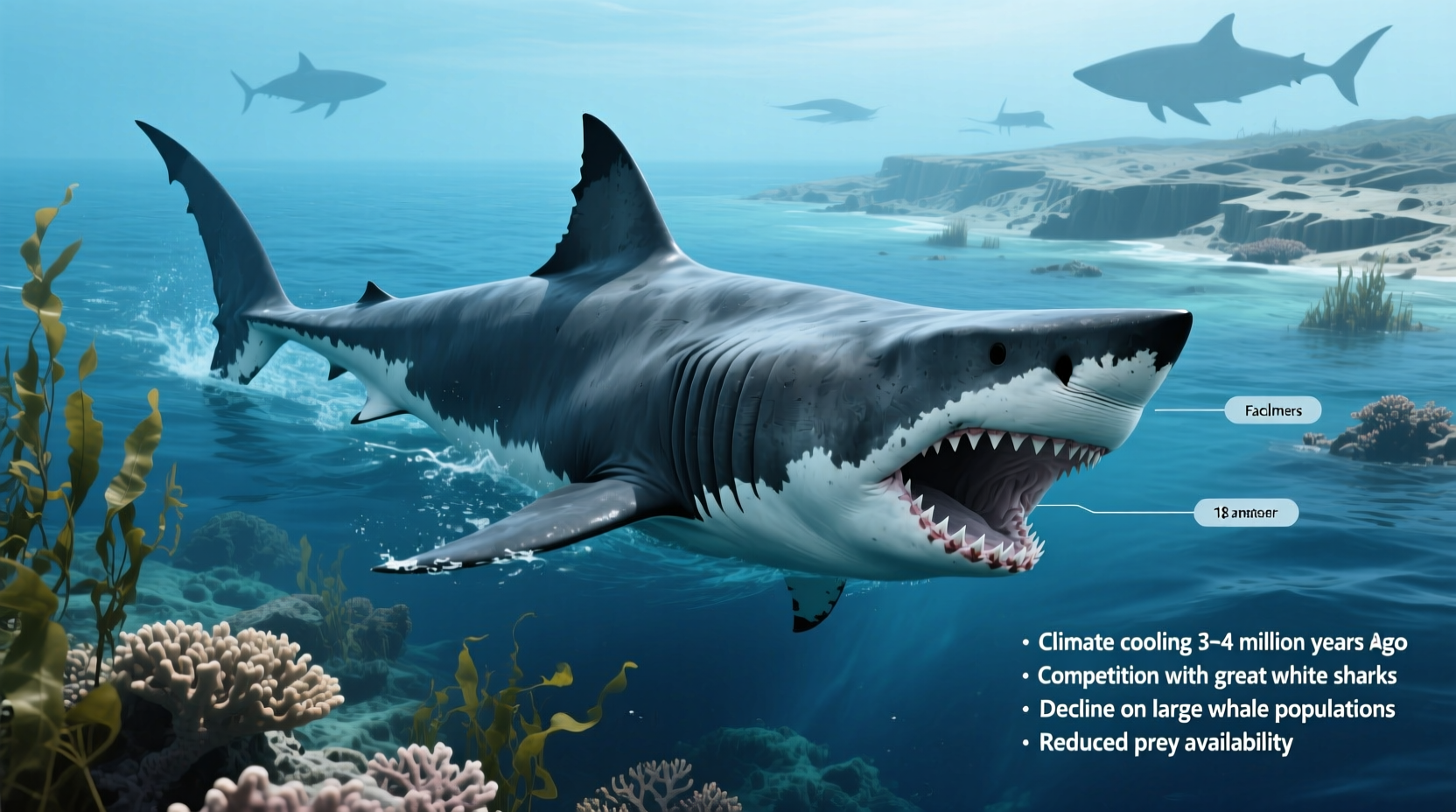
One of the most compelling explanations for the megalodon’s extinction lies in dramatic global climate shifts during the late Pliocene. As Earth transitioned toward an ice age cycle, ocean temperatures began to drop significantly. The cooling of tropical and temperate waters directly impacted the megalodon’s physiology and hunting grounds.
Megalodon was likely a regional endotherm—capable of maintaining a higher internal body temperature than surrounding water—which allowed it to remain active in cooler environments. However, this adaptation came at a high metabolic cost. As sea surface temperatures declined, especially near the equator where juvenile megalodons likely nurseries existed, the energy demands of sustaining body heat may have become unsustainable.
Fossil evidence shows a contraction in megalodon distribution during the late Pliocene. Populations retreated from higher latitudes as polar ice caps expanded and ocean currents shifted. With fewer warm-water habitats available for breeding and feeding, reproductive success likely declined.
Decline of Prey Species and Food Scarcity
The megalodon primarily fed on large marine mammals, including ancestral whales, seals, and sea turtles. These prey species were abundant during the early and middle Miocene, providing ample sustenance for growing megalodon populations. However, by the late Pliocene, many of these animals either evolved defensive adaptations or declined due to changing ocean productivity.
Whales, a primary food source, began migrating to colder, deeper waters—regions less favorable for megalodon, which preferred coastal and shallow offshore zones. Additionally, some whale species grew larger and more agile, making them harder to catch. Fossil records show a reduction in medium-sized baleen whales, which would have been ideal targets for juvenile megalodons.
As prey became scarcer and more difficult to capture, younger megalodons—already vulnerable during their first few years—may have struggled to survive to adulthood. A decline in juvenile survival rates can rapidly lead to population collapse, even in top predators.
“We’re seeing a mismatch between predator size and prey availability in the late Pliocene. The ocean was producing fewer calorie-rich targets for a giant hunter like megalodon.” — Dr. Robert Boessenecker, Paleontologist, College of Charleston
Rise of Competition: The Great White Shark and Other Predators
While climate and food supply played major roles, biological competition intensified pressure on megalodon populations. One key competitor was *Otodus chubutensis*, a close relative, but more critically, the emergence and diversification of the great white shark (*Carcharodon carcharias*) introduced a new kind of threat.
Though much smaller—averaging 15–20 feet compared to megalodon’s 50+ feet—the great white was faster, more agile, and better adapted to cooler waters. It also shared a similar diet, targeting seals, dolphins, and small whales. Unlike megalodon, the great white could thrive in a broader range of temperatures and required less energy to survive.
Studies comparing tooth morphology and feeding patterns suggest niche overlap between the two species. Juvenile megalodons and adult great whites may have competed directly for the same prey in coastal nurseries. Over time, the more efficient predator gained dominance in these critical habitats.
Other competitors included killer whales (*Orcinus orca*), which appeared in the fossil record around 5 million years ago. Highly social and intelligent, early orcas hunted in packs and could challenge even large sharks for dominance in certain regions.
Key Competitors and Their Advantages
| Species | Size | Adaptation Advantage | Time of Rise |
|---|---|---|---|
| Megalodon | 50–60 ft | Powerful bite, apex dominance | 23–3.6 mya |
| Great White Shark | 15–20 ft | Cool-water tolerance, efficiency | ~6 mya onward |
| Killer Whale | 20–26 ft | Social hunting, intelligence | ~5 mya onward |
| Mako Shark | 10–12 ft | Speed, agility | Long-standing presence |
Loss of Nursery Habitats
Recent paleontological discoveries point to specific coastal sites—such as those in Panama, Spain, and Maryland—as potential megalodon nurseries. These shallow, warm, nutrient-rich areas provided protection for newborns and juveniles from larger predators and strong currents.
During the Pliocene, tectonic activity and falling sea levels caused many of these nursery zones to disappear. The formation of the Isthmus of Panama around 3 million years ago altered global ocean circulation, reducing coastal upwelling and changing salinity and temperature gradients. This disrupted marine productivity and eliminated key breeding grounds.
Without safe spaces to grow, young megalodons faced higher mortality rates. Even if adult sharks survived longer, the failure to successfully reproduce across generations sealed the species’ fate.
Timeline of Megalodon Decline
The extinction of the megalodon was not sudden but occurred over hundreds of thousands of years. Below is a simplified timeline highlighting key environmental and biological events.
- 23–15 million years ago (Early Miocene): Megalodon reaches peak abundance; warm oceans support vast prey populations.
- 15–8 million years ago (Mid Miocene): Global cooling begins; some whale species shift migration patterns.
- 8–5 million years ago: Great white shark evolves and spreads; competition increases in coastal zones.
- 5–4 million years ago: Sea levels fluctuate; nursery habitats begin to shrink.
- 3.9–3.6 million years ago: Last confirmed megalodon fossils appear; species disappears from fossil record.
Common Misconceptions About Megalodon Extinction
Despite widespread public fascination, several myths persist about the megalodon’s disappearance.
- Myth: Megalodons still exist in deep oceans.
Fact: No credible evidence supports this. The deep sea lacks sufficient biomass to sustain a population of giant sharks requiring tons of food weekly. - Myth: A single catastrophic event killed the megalodon.
Fact: Extinction was gradual, driven by multiple overlapping factors rather than a single disaster. - Myth: Humans hunted megalodons to extinction.
Fact: Megalodon died out long before modern humans evolved—by nearly 3 million years.
Frequently Asked Questions
Could megalodon survive today if it hadn’t gone extinct?
It’s unlikely. Modern oceans are cooler and less productive than during the Miocene. Additionally, human activity has reduced large marine mammal populations, limiting potential prey. Even if reintroduced, megalodon would face intense competition and habitat fragmentation.
Are megalodon and great white sharks closely related?
Historically thought to be direct ancestors, recent studies suggest they are evolutionary cousins. Great whites are now believed to descend from the mako shark lineage, while megalodon belongs to the *Otodus* genus. Convergent evolution explains their similar tooth shapes and predatory lifestyles.
How do scientists know when megalodon went extinct?
Through radiometric dating of fossilized teeth found in sediment layers. The youngest reliably dated megalodon fossils are approximately 3.6 million years old. After this point, no verified specimens appear in the geological record.
Actionable Checklist: Evaluating Prehistoric Extinctions
Understanding extinction events involves analyzing multiple lines of evidence. Use this checklist when evaluating any prehistoric species decline:
- ✅ Assess climate data from the period (temperature, sea level, ice volume)
- ✅ Examine fossil distribution over time (range contraction/expansion)
- ✅ Analyze changes in prey availability and food web structure
- ✅ Identify emerging competitors or invasive species
- ✅ Look for habitat loss, especially breeding or nursery zones
- ✅ Rule out human influence if outside the Holocene epoch
Conclusion
The extinction of the megalodon was not the result of one single cause but a convergence of environmental, ecological, and evolutionary forces. Cooling oceans, shrinking prey bases, the rise of efficient competitors like the great white shark, and the loss of critical nursery habitats all contributed to the downfall of the largest predatory shark in history. Its disappearance underscores a fundamental truth in paleobiology: even the most dominant species are vulnerable when the world around them changes too quickly.
Studying the megalodon’s fate isn’t just about understanding the past—it’s a cautionary tale for the present. Today’s marine ecosystems face similar pressures from climate change, overfishing, and habitat destruction. By learning from ancient extinctions, we gain perspective on how to protect the biodiversity of our oceans before irreversible tipping points are reached.




 浙公网安备
33010002000092号
浙公网安备
33010002000092号 浙B2-20120091-4
Comments
No comments yet. Why don't you start the discussion?