
In Western animation, character design often leans toward realism—natural hair colors, subdued palettes, and subtle distinctions between protagonists and antagonists. Anime, however, defies this convention with a striking visual language: characters routinely sport vibrant pink, electric blue, fiery red, or even rainbow-streaked hair. At first glance, these choices may seem like mere stylistic flair or an attempt to stand out. But behind the neon hues lies a deeper narrative function—one rooted in symbolism, identity, and cultural context unique to Japanese animation.
The use of colorful hair in anime is not arbitrary. It serves as a visual shorthand, instantly communicating personality traits, emotional states, allegiances, and even thematic arcs. Unlike live-action film or traditional Western cartoons, where appearance must conform more closely to reality, anime leverages stylization to enhance storytelling efficiency. In a medium where thousands of characters populate expansive universes, distinct hair color becomes a tool for clarity, memorability, and emotional resonance.
Visual Identity and Character Differentiation
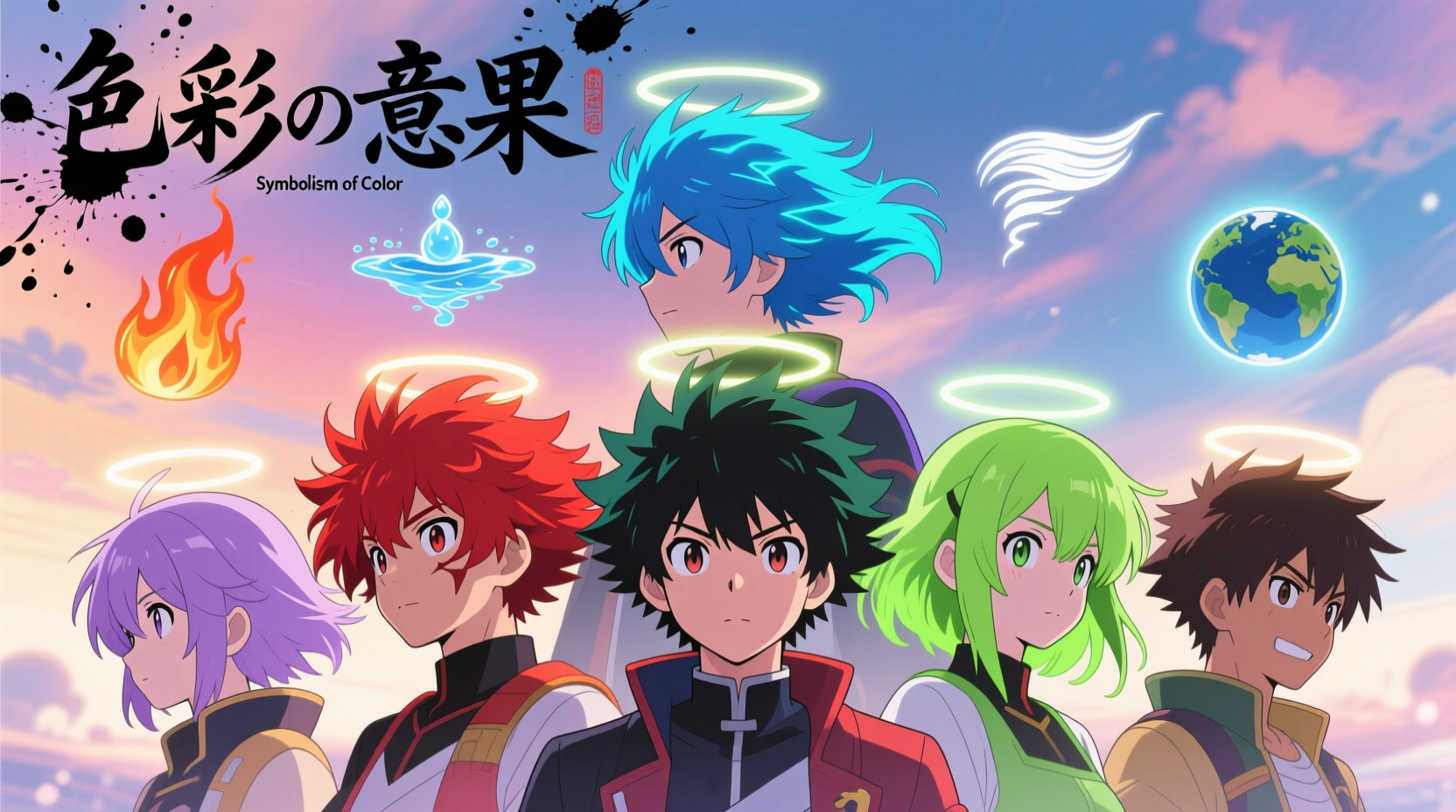
One of the most practical reasons for colorful hair in anime is immediate character recognition. With large ensemble casts—common in series like *Naruto*, *My Hero Academia*, or *Sailor Moon*—designers need a way to ensure viewers can identify characters at a glance, even in fast-paced action sequences or crowded scenes.
Consider *Naruto Uzumaki*, whose bright orange hair makes him visually unmistakable. This isn’t just about standing out—it reinforces his role as an outcast who craves attention and refuses to be ignored. His hair color mirrors his loud, energetic personality and contrasts sharply with the more muted tones of villagers around him, emphasizing his isolation.
Similarly, in *Attack on Titan*, Mikasa Ackerman’s dark green-black hair sets her apart from both the blond Eren and the brown-haired Armin. Her coloration subtly signals her mixed heritage and quiet intensity, distinguishing her not only physically but emotionally within the trio.
Symbolism and Personality Coding
Anime uses color psychology extensively, and hair is one of the primary canvases for this. Specific shades are consistently associated with certain traits across genres and decades, forming a kind of visual lexicon understood by fans worldwide.
- Red/Pink: Passion, energy, aggression (e.g., Sasuke Uchiha), or youthful innocence (e.g., Sakura Haruno).
- Blue: Calmness, intelligence, introspection (e.g., Shikamaru Nara), or melancholy (e.g., Rei Ayanami).
- Green: Nature, balance, or sometimes eccentricity (e.g., Todoroki’s dual-tone hair symbolizing internal conflict).
- White/Silver: Wisdom, agelessness, or otherworldliness (e.g., Kakashi Hatake, Frieza).
- Yellow/Blonde: Optimism, heroism (e.g., Naruto, L from *Death Note*), or naivety.
This coding allows writers and directors to establish character dynamics quickly. A villain with jet-black hair streaked with white might immediately suggest corruption or tragic depth, while a cheerful sidekick with pastel purple hair signals quirkiness and comic relief.
“Color in anime isn’t decoration—it’s dialogue. Hair especially acts as a silent narrator, telling you who someone is before they speak.” — Dr. Akiko Tanaka, Media Studies Professor at Waseda University
Cultural Context and Artistic Freedom
To understand why colorful hair feels natural in anime, one must consider its roots in manga and Japanese illustration traditions. Manga artists historically worked under tight deadlines and limited color palettes. To compensate, they developed exaggerated features—large eyes, expressive mouths, and bold hair colors—that could convey emotion and identity even in black-and-white print.
When anime evolved from manga, these stylistic choices carried over into animation. Even with full-color production, creators retained the vivid hair tones because they had become integral to the aesthetic. Moreover, in Japan, experimenting with non-natural hair colors—especially among youth culture—is far more common than in many Western countries. Dyed hair in real life is often seen as fashionable or rebellious, making its presence in anime less jarring and more relatable.
Thus, anime doesn’t aim for photorealism; it seeks emotional and symbolic truth. The suspension of disbelief required for rainbow-haired warriors is no greater than accepting talking animals in Western cartoons—the rules of the world simply differ.
Comparison of Hair Color Symbolism Across Cultures
| Hair Color | Common Meaning in Anime | Typical Association in Western Media |
|---|---|---|
| Pink | Youthful, sweet, sometimes fierce (e.g., Momo Yaoyorozu) | Softness, femininity, innocence |
| Blue | Introspective, cool, mysterious (e.g., Rei Ayanami) | Rarity, fantasy beings (e.g., elves) |
| Red | Fiery temper, passion, danger (e.g., Erza Scarlet) | Outsider status, sensuality |
| White | Wisdom, age, supernatural power (e.g., Yhwach) | Aging, purity, ghostly figures |
| Purple | Mysticism, eccentricity, royalty (e.g., Hisoka) | Royalty, luxury, uniqueness |
Narrative Function: Hair as a Storytelling Device
Beyond static symbolism, hair color in anime can evolve throughout a story, reflecting transformation, trauma, or growth. Changes in hair color often mark pivotal moments in a character’s arc.
In *Fullmetal Alchemist: Brotherhood*, Edward Elric briefly dyes his hair black during a period of hiding and self-doubt. The shift from his iconic gold locks symbolizes his loss of identity and connection to his past. When he returns to his natural color, it signifies reclamation of purpose.
Likewise, in *Tokyo Ghoul*, Ken Kaneki’s hair gradually turns white as he undergoes physical and psychological metamorphosis into a half-ghoul. The whitening is not magical—it’s presented as a physiological response to extreme stress, mirroring real-world conditions like Marie Antoinette syndrome. Yet symbolically, it underscores his descent into darkness and alienation from humanity.
These transformations aren't just cosmetic—they’re narrative milestones. They allow audiences to see internal change externalized, making abstract emotional journeys tangible.
Mini Case Study: Saitama from *One Punch Man*
Saitama, the protagonist of *One Punch Man*, has completely bald hair—a deliberate contrast to the flamboyant styles of other heroes. While nearly every other character boasts wild colors or gravity-defying spikes, Saitama’s smooth head emphasizes his ordinariness. He isn’t driven by ego, fame, or aesthetics. His lack of hair is a visual metaphor for simplicity, humility, and detachment from superficiality.
Yet, flashbacks reveal he once had thick blonde hair. He lost it due to intense training—a humorous exaggeration that also symbolizes sacrifice. In a world obsessed with image, Saitama’s baldness becomes a statement: true strength lies beneath the surface.
Artistic Evolution and Global Influence
Over time, the use of colorful hair in anime has influenced global pop culture. Western animated shows like *Steven Universe*, *Avatar: The Last Airbender*, and *The Legend of Korra* incorporate similar stylization, borrowing from anime’s visual vocabulary to express character diversity and emotional nuance.
Moreover, modern anime increasingly blends symbolic color use with realism. Series like *Your Lie in April* or *Clannad* feature more naturalistic hair tones, reserving vibrant colors for characters representing fantasy elements or heightened emotions. This selective use amplifies impact—when a character does have unusual hair, it carries greater narrative weight.
At the same time, some contemporary anime subvert expectations. A villain might have soft pink hair (*Johan Liebert* in *Monster*), challenging assumptions that color equals predictability. These reversals keep the visual language dynamic and prevent it from becoming clichéd.
Checklist: How to Interpret Anime Hair Color Like a Pro
- Observe the shade: Is it warm (red, yellow) or cool (blue, silver)? Warm tones often indicate action-oriented personalities; cool ones suggest calm or detachment.
- Note consistency: Does the color remain the same throughout the series? Change suggests evolution.
- Compare with others: How does this character’s hair contrast with allies or rivals?
- Look for patterns: Are certain colors grouped by faction, family, or theme?
- Consider context: Is the setting fantastical or grounded? In realistic worlds, colorful hair stands out more deliberately.
Frequently Asked Questions
Is colorful hair in anime based on real-life trends in Japan?
Yes, to an extent. While naturally occurring blue or pink hair doesn’t exist, hair dyeing is popular among Japanese youth, particularly in urban areas and subcultures like gyaru, punk, or visual kei. Anime exaggerates these trends for dramatic effect, but the inspiration comes from real fashion expressions.
Do voice actors influence hair color decisions?
Not directly. Voice casting usually happens after character design is finalized. However, there are rare cases where promotional synergy leads to matching voice actor hairstyles with their roles—such as when seiyuu dye their hair for events. This blurs fiction and reality in fan culture but doesn’t drive initial design choices.
Are there any rules against using certain colors?
No official rules exist, though creators avoid culturally insensitive associations. For example, yellow skin tones are generally avoided due to historical caricature concerns, but hair color remains largely unrestricted. Creativity reigns, provided it serves the story.
Conclusion: More Than Just Style—It’s Storytelling
The colorful hair of anime characters is far more than a whimsical artistic choice. It is a sophisticated narrative device—part identity marker, part psychological cue, part cultural expression. From signaling personality to charting personal growth, hair color operates as a silent yet powerful storyteller.
Next time you watch an anime, pay attention to how hair functions beyond aesthetics. Notice how a shift in hue coincides with a turning point, or how a character’s vibrant locks set them apart in a crowd—not just visually, but thematically. These details are intentional, layered, and deeply embedded in the craft of anime storytelling.




 浙公网安备
33010002000092号
浙公网安备
33010002000092号 浙B2-20120091-4
Comments
No comments yet. Why don't you start the discussion?