
It’s a familiar scene: the lights are dimmed, the kids are asleep, and what starts as a calm conversation about household chores spirals into a heated argument. Many couples and families notice that disagreements tend to intensify after dark. But why do arguments escalate at night? The answer lies not in fate or bad timing, but in the intricate interplay of biological rhythms, cognitive fatigue, and emotional regulation. Understanding the psychological mechanisms behind nighttime conflict can help individuals manage their responses and foster healthier communication—even when tensions rise after sunset.
The Role of Cognitive Fatigue in Late-Night Disputes
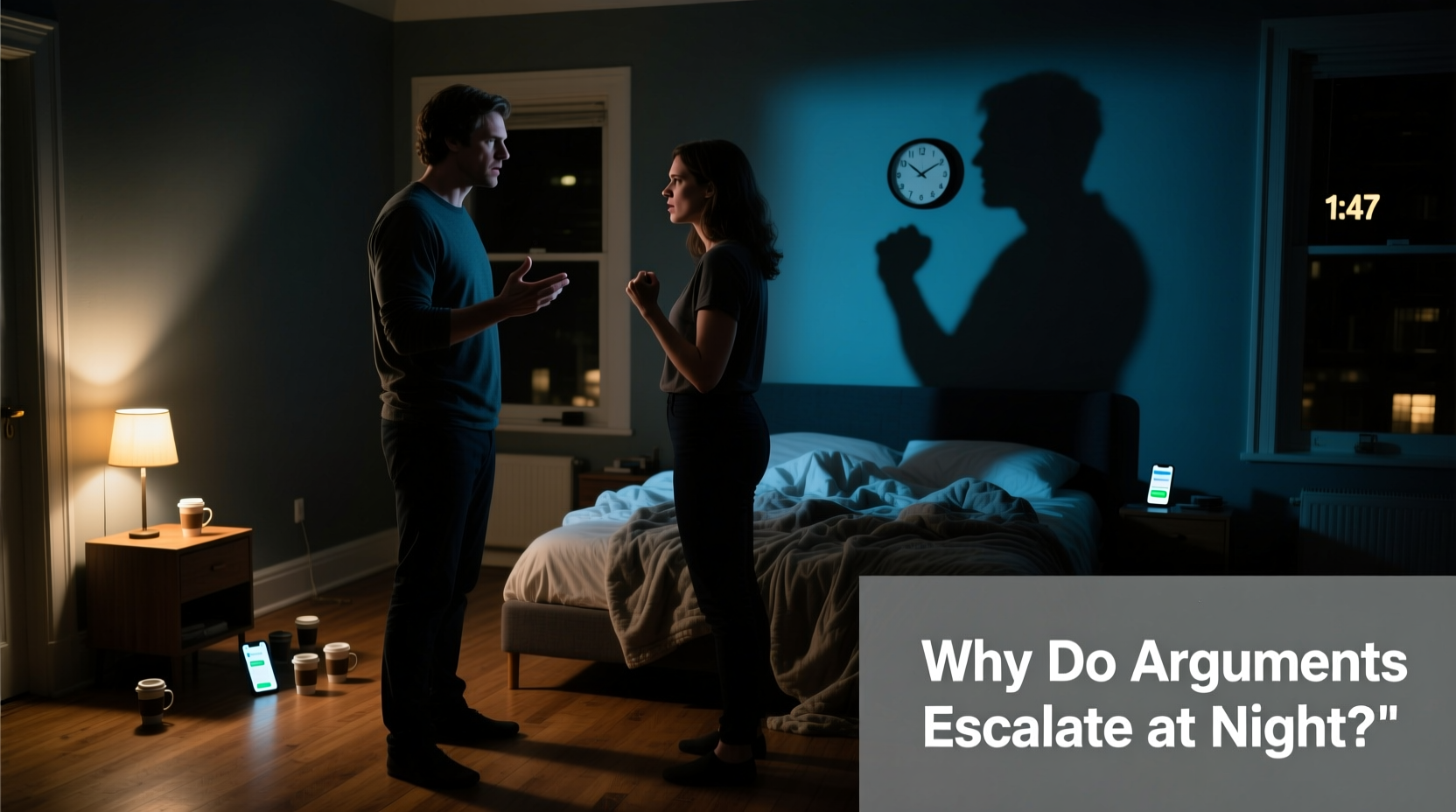
By evening, most people have spent hours processing decisions, managing stress, and navigating social interactions. This prolonged mental effort leads to cognitive fatigue—a state where the brain's executive functions, such as impulse control, problem-solving, and emotional regulation, become significantly impaired. As psychologist Roy Baumeister's research on \"ego depletion\" suggests, self-control is a finite resource that diminishes with use throughout the day.
When cognitive resources are depleted, individuals are more likely to react impulsively rather than respond thoughtfully. A minor comment about leaving dishes in the sink may be interpreted as a personal attack, triggering defensiveness instead of dialogue. This lowered threshold for frustration makes it easier for small issues to escalate into full-blown arguments.
Circadian Rhythms and Emotional Sensitivity
Human physiology follows a 24-hour circadian rhythm regulated by the suprachiasmatic nucleus in the brain. This internal clock influences hormone production, alertness, and mood. In the evening, cortisol levels—which peak in the morning to promote wakefulness—begin to decline, while melatonin rises to prepare the body for sleep. However, this transition doesn’t always bring calm.
Studies show that emotional reactivity increases during the evening hours, particularly in individuals who are already stressed or sleep-deprived. The amygdala, the brain region responsible for processing emotions like fear and anger, becomes more active at night, especially under low-energy conditions. Meanwhile, the prefrontal cortex—the area responsible for rational thinking and emotional regulation—slows down due to fatigue. This neurological imbalance creates a perfect storm: heightened emotional sensitivity paired with reduced capacity to manage those emotions.
“Evening arguments often feel more intense because the brain is biologically primed for emotional reactivity while simultaneously losing its ability to regulate it.” — Dr. Lisa Feldman Barrett, Neuroscientist and author of *How Emotions Are Made*
Environmental and Behavioral Triggers After Dark
Beyond biology, environmental factors contribute to the escalation of nighttime conflicts. Homes are typically quieter at night, amplifying the emotional weight of conversations. There are fewer distractions, meaning both parties are fully present—and sometimes overly focused—on each other’s words. Additionally, many people unwind with alcohol or screen time in the evening, both of which can impair judgment and increase irritability.
Alcohol, despite its reputation as a relaxant, reduces inhibitions and disrupts serotonin pathways, making individuals more prone to aggressive or emotionally charged reactions. Similarly, excessive screen exposure—especially from devices emitting blue light—delays melatonin release, disrupts sleep onset, and heightens anxiety, further reducing emotional resilience.
| Factor | Impact on Nighttime Arguments | Mitigation Strategy |
|---|---|---|
| Cognitive fatigue | Reduces patience and problem-solving ability | Defer non-urgent discussions until morning |
| Blue light exposure | Disrupts sleep and increases irritability | Use night mode or avoid screens 1 hour before bed |
| Alcohol consumption | Lowers inhibition and impairs judgment | Limits drinks before important conversations |
| Quiet environment | Increases focus on conflict, reducing escape options | Introduce brief pauses or walks during tension |
A Real-Life Example: The Johnson Family
The Johnsons, a couple in their mid-30s with two young children, frequently found themselves arguing after bedtime routines. What began as a discussion about weekend plans would quickly devolve into accusations about unequal parenting responsibilities. After tracking their patterns for two weeks, they noticed a clear trend: 80% of their arguments occurred between 8:30 PM and 10:00 PM, almost always following dinner cleanup and screen time.
With guidance from a relationship coach, they implemented changes: no devices after 8 PM, a shared 10-minute debrief before the kids’ bedtime, and a rule to postpone serious talks if either felt tired. Within three weeks, their late-night conflicts decreased by over 70%. Their experience illustrates how recognizing behavioral patterns can lead to meaningful change.
Why Resolutions Are Harder to Reach at Night
Nighttime arguments are not only more frequent but also less likely to result in resolution. Several psychological barriers stand in the way:
- Limited perspective: Fatigue narrows cognitive bandwidth, making it harder to see another’s point of view.
- Negative bias: Tired minds default to negative interpretations. A neutral tone may be perceived as cold or dismissive.
- Reduced empathy: Empathetic reasoning requires mental energy—something in short supply at the end of the day.
- Sleep urgency: The desire to go to bed can pressure individuals into rushed apologies or unresolved compromises.
These factors create a cycle where arguments start easily, escalate quickly, and end inconclusively—leaving resentment to linger into the next day.
Step-by-Step Guide to Managing Nighttime Conflict
While avoiding all evening disagreements may be unrealistic, adopting a structured approach can minimize escalation and preserve emotional well-being. Follow this five-step process when tensions arise after dark:
- Pause and Acknowledge Fatigue
Stop the conversation momentarily. Say, “I’m feeling tired, and I don’t want to say something I’ll regret. Can we take five minutes?” This breaks the momentum of reactivity. - Regulate Physiologically
Use deep breathing (inhale for four counts, hold for four, exhale for six) to calm the nervous system. Even one minute of controlled breathing can reduce heart rate and emotional intensity. - Reframe the Conversation
Return with a reset. Use phrases like, “I care about us, and I want to understand your side,” instead of reopening with blame. - Set Boundaries for Timing
If the issue is complex, agree to revisit it the next morning. “Let’s sleep on this and talk at breakfast” removes pressure and allows clarity to return. - Debrief the Next Day
After rest, reflect on what triggered the argument. Was it the topic, timing, tone, or unmet needs? Use this insight to adjust future interactions.
Prevention Checklist: Reducing Nighttime Conflict
Proactive habits can significantly reduce the likelihood of late-night fights. Use this checklist to build a calmer evening routine:
- ✅ Schedule important conversations earlier in the day when energy levels are higher
- ✅ Limit alcohol and caffeine intake in the evening
- ✅ Establish a digital curfew (e.g., no phones or TV after 9 PM)
- ✅ Practice a brief gratitude or check-in ritual with your partner before bed
- ✅ Avoid multitasking during conversations—give full attention
- ✅ Create a relaxing bedtime environment with soft lighting and minimal noise
- ✅ Identify personal “emotional red flags” (e.g., yawning, sighing, raised voice) and use them as early warning signs
Frequently Asked Questions
Is it normal to argue more at night?
Yes, it’s very common. Research shows that emotional regulation declines in the evening due to cognitive fatigue and circadian shifts. Many couples report increased conflict frequency and intensity at night, even without major underlying relationship issues.
Should I avoid talking about problems at night altogether?
Not necessarily—but be strategic. Minor check-ins are fine, but complex or emotionally charged topics are better reserved for times when both parties are rested and focused. If a nighttime issue arises, acknowledge the timing and agree to continue the discussion the next day.
Can poor sleep cause more arguments?
Absolutely. Chronic sleep deprivation affects mood, impulse control, and perception. One study published in the journal *Social Psychological and Personality Science* found that each hour of lost sleep was associated with nearly 15 minutes of additional marital conflict the following day. Prioritizing sleep is a form of relationship maintenance.
Conclusion: Reclaiming Peace After Dark
Nighttime arguments are not inevitable—they are the result of predictable psychological and physiological patterns. By understanding how fatigue, circadian rhythms, and environmental triggers influence behavior, individuals can take control of their communication habits. Simple strategies like timing conversations wisely, regulating emotions, and creating restful routines can transform evenings from battlegrounds into opportunities for connection.
Change begins with awareness. Start tonight by noticing how you feel during conversations—your energy level, tone of voice, and physical cues. Small adjustments compound over time, leading to deeper understanding and fewer late-night regrets. Healthy relationships aren’t defined by the absence of conflict, but by the wisdom to manage it—with care, timing, and compassion.




 浙公网安备
33010002000092号
浙公网安备
33010002000092号 浙B2-20120091-4
Comments
No comments yet. Why don't you start the discussion?