
When someone says a person “looks British,” what exactly do they mean? It’s not a reference to a single, uniform appearance, but rather a complex blend of physical traits, cultural cues, and historical legacies that shape how people from the United Kingdom are perceived globally. The idea that British people \"look British\" is both a stereotype and a reflection of real patterns in ancestry, geography, and social identity. Understanding this requires looking beyond superficial features and examining the genetic, environmental, and sociocultural forces that have shaped the modern British population.
Genetic Heritage: A Mosaic of Ancestral Influences
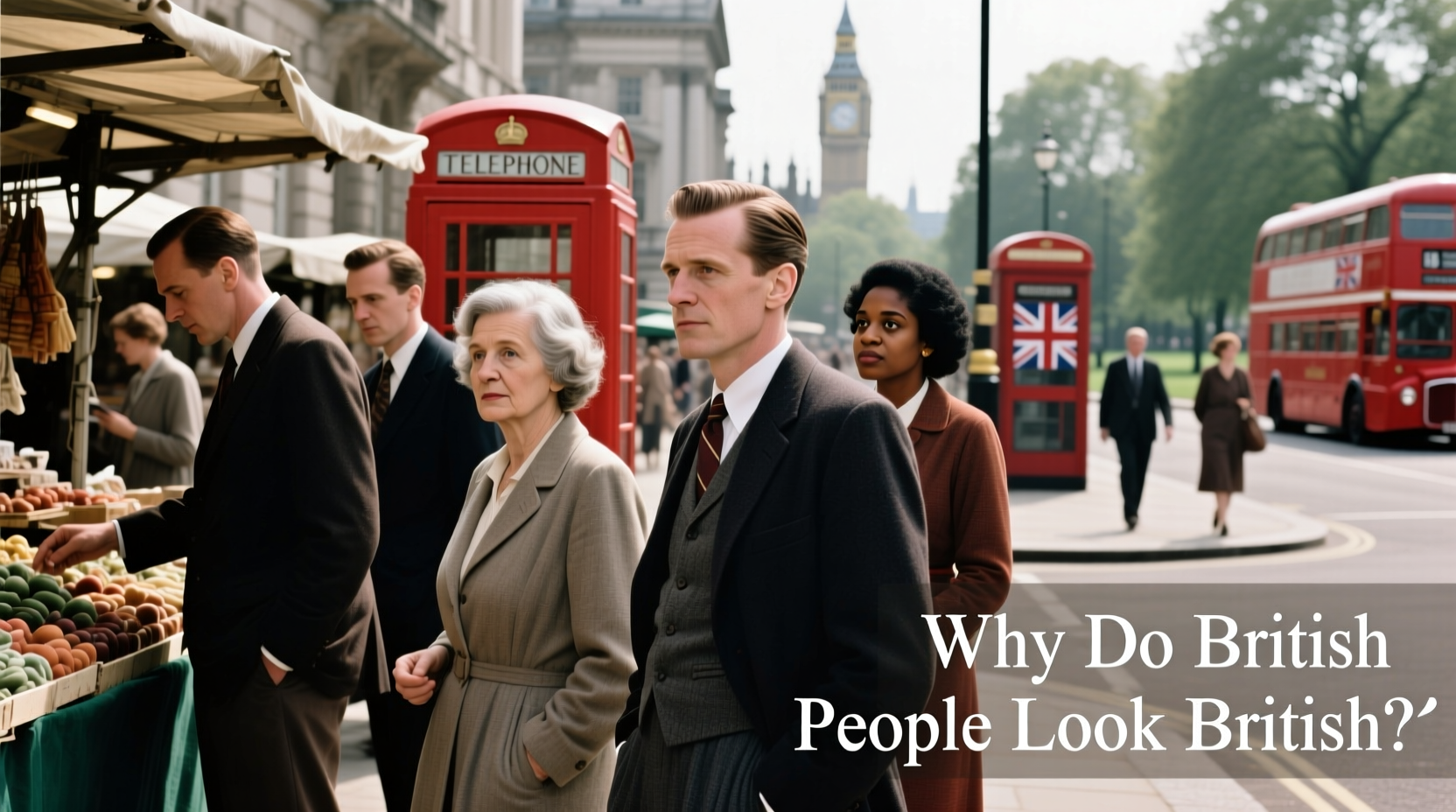
The British Isles have been a crossroads of migration for thousands of years. Long before the concept of a unified “British” identity existed, waves of settlers—from Celts and Romans to Anglo-Saxons, Vikings, and Normans—left lasting imprints on the gene pool. Modern DNA studies reveal that the average person in England, Scotland, Wales, or Northern Ireland carries traces of all these lineages.
For example, research by the Wellcome Trust has shown that people in southern and eastern England often have higher levels of Anglo-Saxon ancestry, while those in western regions like Wales and Cornwall retain stronger Celtic roots. In northern and coastal Scotland, Norse Viking DNA remains detectable. This genetic patchwork means there is no singular “British genome,” but rather regional variations that subtly influence facial structure, hair color, and skin tone.
“Britain’s population is one of the most genetically diverse in Europe due to its layered history of invasions and migrations.” — Dr. Mark Thomas, Professor of Evolutionary Genetics, University College London
Over centuries, isolation and intermarriage within local communities further reinforced certain regional phenotypes. Pale skin adapted to lower sunlight levels, lighter eye and hair colors became more common in the north, while olive complexions persist in parts of southern England with historic Roman and later Mediterranean connections.
Regional Differences Across the UK
One reason people perceive a “British look” is because of recurring traits across the population—but these traits vary significantly depending on region. What may be considered typically “Scottish” (red hair, freckles, fair skin) differs from stereotypical “Welsh” (darker hair, sharper cheekbones) or “Northern English” (robust build, ruddy complexion).
| Region | Common Physical Traits | Historical Influences |
|---|---|---|
| Scotland | Fair skin, red or light brown hair, blue/green eyes | Celtic, Norse Viking |
| Wales | Olive skin, dark hair, defined facial features | Predominantly Celtic |
| Southern England | Mixed tones, varying hair colors, moderate height | Roman, Anglo-Saxon, Norman |
| Northern Ireland | Light to medium complexion, often dark hair | Gaelic Irish, Scottish settler mix |
These regional distinctions contribute to the broader image of Britishness—not as a monolith, but as a spectrum. Yet, when viewed from abroad, subtle differences blur into generalizations. Visitors from non-European countries might group pale-skinned, English-speaking islanders under a single visual category, even if internal UK diversity contradicts that assumption.
Cultural Signifiers That Shape Perception
Beyond biology, cultural behavior plays a major role in how British people are recognized. Clothing choices, posture, accent, and demeanor often signal nationality before a word is spoken. The classic trench coat, tailored suits, or practical outdoor wear like Barbour jackets are internationally associated with British style.
Even grooming habits contribute. British men, particularly in urban areas, often maintain clean-shaven or neatly trimmed facial hair, contrasting with the fuller beards popular in some European countries. Women’s fashion tends toward understated elegance—minimal makeup, natural hair colors, and structured silhouettes—which reinforces a reserved, polished aesthetic.
Body language matters too. The British reputation for stoicism, politeness, and emotional restraint translates into subtle behavioral cues: avoiding direct eye contact, speaking softly, standing upright. These non-verbal signals feed into the global image of what it means to “look” British—even when physical appearance varies widely.
Media Representation and Stereotypes
Hollywood and international media have long perpetuated simplified images of British people: posh aristocrats with clipped accents, working-class Cockneys with rolled-up sleeves, or rugged Highlanders in kilts. While entertaining, these portrayals flatten the UK’s ethnic and cultural diversity.
Television shows like *Downton Abbey*, *The Crown*, or *Sherlock* emphasize certain archetypes—pale skin, precise diction, formal dress—that become synonymous with Britishness abroad. Meanwhile, reality is far more nuanced. Major cities like London, Manchester, and Birmingham are among the most ethnically diverse in Europe, with large populations of South Asian, Black Caribbean, and mixed-heritage residents who are fully British in citizenship and culture.
Yet, when people say someone “looks British,” they often unconsciously default to white, Anglo-Celtic features—a bias rooted in outdated colonial-era thinking. This overlooks millions of British citizens whose appearances reflect global heritage but whose identities are firmly rooted in the UK.
Mini Case Study: A Second-Generation Londoner
Amina Khan, 28, was born in East London to Pakistani immigrant parents. Fluent in English, she works in publishing and wears her hair in a sleek bob, favoring minimalist fashion. Despite being thoroughly British in upbringing and outlook, strangers frequently ask, “Where are you really from?”
Conversely, when she travels to Pakistan, locals see her as foreign—too reserved, not fluent in Urdu, unfamiliar with rural customs. Amina embodies the complexity of modern British identity: she looks neither “typically British” nor “fully Pakistani” to outsiders, yet belongs entirely to both worlds. Her experience highlights how narrow stereotypes fail to capture the evolving face of Britain.
Environmental and Lifestyle Factors
Climate and daily life also shape physical presentation. The UK’s temperate maritime climate—cool, damp, and often overcast—has influenced everything from skin pigmentation to seasonal behaviors. Limited sun exposure contributes to widespread vitamin D deficiency, which can affect energy levels, mood, and even skin pallor.
Diet plays a role too. Traditional British fare—roast meats, potatoes, dairy-heavy dishes—differs from Mediterranean or Asian diets, potentially influencing body composition and complexion over generations. Urban living, high stress levels, and sedentary jobs add further layers, affecting posture, facial tension, and overall vitality.
Consider the contrast between a farmer in the Scottish Highlands and a banker in central London. Their lifestyles differ dramatically, yet both are British. One may have weather-beaten skin and broad shoulders from outdoor labor; the other, paler skin and a more contained demeanor from office work. Both fit within the spectrum of British appearance, shaped not just by genes but by environment.
FAQ
Do all British people have pale skin and light hair?
No. While fair skin and light hair are common, especially in northern regions, the UK is ethnically diverse. Millions of British people have brown or black hair, darker skin tones, and features reflecting African, South Asian, Caribbean, or Middle Eastern ancestry.
Why do some British people look similar to Scandinavians or Germans?
Historical migrations explain this. Anglo-Saxons came from modern-day Germany, and Vikings settled heavily in northern and eastern England. Shared ancestry means some British people resemble Northern Europeans in appearance.
Is there a “typical” British facial structure?
There is no single facial type. Studies show variation in jawlines, nose shapes, and eye placement across regions. However, some anthropologists note a tendency toward longer faces and moderate nasal bridges in Celtic-influenced populations, particularly in Wales and western Scotland.
Checklist: Recognizing the Complexity of British Identity
- Understand that “looking British” is influenced by genetics, region, and culture—not just appearance.
- Recognize regional differences within the UK—Scots, Welsh, English, and Northern Irish each have distinct traits.
- Avoid equating Britishness with whiteness; the UK is multiethnic and increasingly diverse.
- Consider non-physical cues: accent, clothing, manners, and posture all contribute to national perception.
- Challenge stereotypes by learning about migration history and contemporary demographics.
Conclusion
The idea that British people “look British” stems from a mixture of observable patterns and ingrained assumptions. Genetics provide a foundation, shaped by millennia of migration and adaptation. Regional identities add depth, while culture, climate, and media mold the outward expressions of nationality. Yet, reducing an entire population to a visual stereotype ignores the rich diversity that defines modern Britain.
True understanding comes from recognizing that British identity is not worn on the face alone—it’s carried in accent, gesture, history, and belonging. As the UK continues to evolve, so too will its collective appearance. Embracing this complexity allows for a more accurate, respectful view of what it means to look—and be—British.




 浙公网安备
33010002000092号
浙公网安备
33010002000092号 浙B2-20120091-4
Comments
No comments yet. Why don't you start the discussion?