
Candles have long been a symbol of warmth, comfort, and ambiance. Whether used for relaxation, meditation, or simple decoration, their gentle glow holds an almost hypnotic appeal. Yet, anyone who has watched a candle burn has likely noticed its flame dancing unpredictably—flickering now and then, sometimes steadily, other times erratically. While most people assume this behavior is due solely to air currents, the reality is far more complex. The flicker of a candle flame can be influenced by a range of physical, chemical, and environmental factors that go well beyond mere drafts.
Understanding what causes these fluctuations isn’t just a matter of scientific curiosity—it can help improve candle performance, enhance safety, and deepen appreciation for this ancient technology. From wick structure to wax purity and even atmospheric pressure, multiple elements interact dynamically to shape how a flame behaves. Exploring these hidden influences reveals that a flickering candle is not merely reacting to wind but engaging in a delicate balancing act between fuel, oxygen, heat, and combustion chemistry.
The Science Behind Candle Combustion
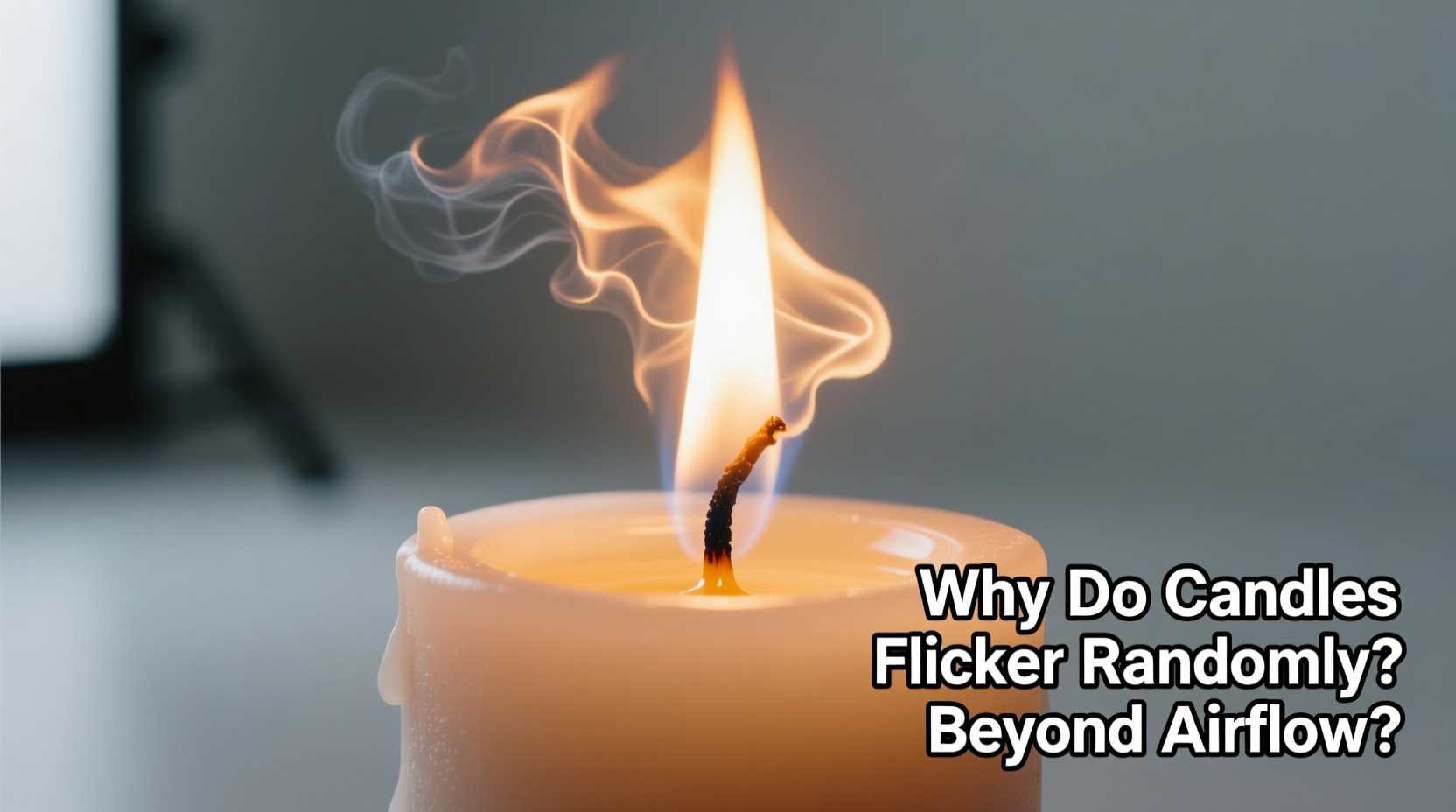
To understand flickering, one must first grasp the basics of how a candle burns. A candle flame is the visible result of a continuous process called capillary action combined with vaporization and combustion. When lit, the heat of the flame melts the wax near the wick. This liquid wax is drawn upward through the wick via capillary action. As it rises, the heat vaporizes the liquid wax into a gaseous state, where it reacts with oxygen in the air to produce light, heat, water vapor, and carbon dioxide.
This self-sustaining cycle relies on three critical components: fuel (wax), oxygen (from the air), and heat (the flame itself). Any disruption in this equilibrium can lead to instability in the flame, manifesting as flickering. While airflow is a common disruptor, it's only one variable in a much larger system. In fact, research from fire scientists at the National Institute of Standards and Technology (NIST) shows that even in perfectly still environments, candles exhibit minor fluctuations due to internal dynamics within the flame zone.
“Even in controlled lab settings with zero airflow, we observe micro-flickers caused by thermal instabilities and uneven fuel delivery.” — Dr. Alan Pierce, Combustion Physicist, NIST
Wick Composition and Structure
The wick plays a central role in determining how consistently a candle burns. It acts as both a fuel conduit and a structural support for the flame. Wick material, thickness, braiding pattern, and rigidity all influence flame stability.
Cotton wicks are common, but some manufacturers use paper-core, zinc-core, or even wood-based wicks. Each type behaves differently under heat. For example, a thick cotton wick may draw up too much wax too quickly, leading to a large, unstable flame prone to sputtering. Conversely, a thin wick might struggle to maintain sufficient capillary flow, resulting in a weak flame that dips and flares intermittently.
Moreover, if the wick is improperly centered or curls during burning—a phenomenon known as “wick mushrooming”—it can create asymmetric combustion. One side of the flame receives more fuel than the other, causing irregular flickering. High-quality candles often feature self-trimming wicks or include additives to reduce carbon buildup, which helps maintain consistent burn patterns.
Wax Quality and Additives
The type and purity of wax significantly affect flame behavior. Common candle waxes include paraffin, soy, beeswax, palm, and gel. Each has distinct melting points, viscosity levels, and combustion characteristics.
Paraffin wax, derived from petroleum, tends to burn brightly but can produce more soot and volatile organic compounds (VOCs). Impurities in lower-grade paraffin—such as residual oils or dyes—can cause inconsistent vaporization, leading to sudden bursts of flame or momentary dimming. Soy wax, while marketed as cleaner, often contains natural impurities unless highly refined, and its softer texture can lead to tunneling or poor wick adhesion, disrupting fuel flow.
Beeswax, though naturally clean-burning and stable, varies in consistency depending on hive conditions and processing methods. Even slight differences in moisture content or pollen load can alter how evenly the wax melts and feeds the wick.
Additionally, fragrance oils and colorants added to scented or decorative candles can destabilize the flame. Some synthetic fragrances release compounds that interfere with combustion efficiency. Essential oils, though natural, may contain terpenes that increase sooting or cause popping sounds as trapped moisture escapes.
| Wax Type | Flicker Risk | Key Influences |
|---|---|---|
| Paraffin | Moderate-High | Impurities, dye load, fragrance concentration |
| Soy | Moderate | Crystal structure, softness, additive compatibility |
| Beeswax | Low | Natural variability, moisture content |
| Gel | High | Trapped bubbles, overheating risk, wick clogging |
Environmental and Atmospheric Factors
Beyond airflow, several ambient conditions influence flame stability. Humidity, altitude, temperature gradients, and even room ventilation systems play subtle yet measurable roles.
In high-humidity environments, moisture in the air can condense on cooler parts of the candle container or wick. When this moisture reaches the flame zone, it rapidly vaporizes, momentarily cooling the flame and disrupting combustion. This effect is especially noticeable in jar candles, where condensation forms on the glass walls and drips down toward the base.
At higher altitudes, reduced atmospheric pressure alters oxygen availability. With less oxygen per cubic inch of air, the flame struggles to maintain complete combustion, often becoming smaller, yellow-tipped, and more prone to fluttering. This is why travelers may notice their favorite candle behaving oddly when used in mountain cabins or airplanes (though open flames are prohibited there).
Temperature differentials also contribute. If one side of the candle is exposed to a cold surface—like a windowsill during winter—the wax melts unevenly. This asymmetry affects capillary action and fuel distribution, leading to localized hot spots and flickering. Similarly, radiant heat from nearby electronics or lighting fixtures can create convection currents invisible to the eye but disruptive to the flame.
Mini Case Study: The Office Desk Candle
A marketing executive in Denver reported that her lavender soy candle flickered violently every afternoon despite no visible drafts. After ruling out HVAC vents and window leaks, she discovered the issue stemmed from her laptop’s exhaust fan, located just six inches away. Though silent and producing no direct breeze, the warm air rising from the device created a micro-convection current strong enough to destabilize the flame. Relocating the candle two feet away eliminated the flickering entirely.
Chemical Instability and Flame Dynamics
At a microscopic level, flickering is often the result of oscillations in the flame’s reaction zone. These occur due to feedback loops between heat production, fuel vaporization, and oxygen diffusion. Scientists refer to this as “thermoacoustic instability.”
When the flame heats the wax pool, it increases vaporization rate, feeding more fuel into the flame. But if too much fuel enters too quickly, incomplete combustion occurs, producing soot and temporarily reducing flame temperature. The cooler flame then draws less wax, slowing vaporization—until heat builds again, restarting the cycle. This loop repeats dozens of times per second, creating the visual effect of flickering.
Some waxes are more susceptible to this than others. For instance, paraffin has a narrow optimal burn range; slight deviations in wick size or room temperature push it into unstable combustion modes. Beeswax, with its higher melting point and slower vaporization, resists such cycles better, explaining its reputation for steady, calm flames.
Furthermore, certain fragrance blends introduce volatile compounds that ignite at different temperatures than the wax. As these compounds burn off in pulses, they create micro-expansions in the flame front—perceived by the human eye as random flickers.
Step-by-Step Guide to Minimizing Unwanted Flickering
If you prefer a calm, steady flame, follow this practical sequence to optimize your candle experience:
- Inspect the Wick: Ensure it’s straight, centered, and trimmed to ¼ inch. Remove any carbon buildup (“mushrooming”) with scissors.
- Check Wax Quality: Opt for reputable brands using refined wax without excessive dyes or synthetic fragrances.
- Allow Full Melt Pool: On first burn, let the candle melt across the entire surface to prevent tunneling and ensure even fuel access.
- Avoid Drafts and Heat Sources: Keep away from open windows, fans, heaters, and electronic devices emitting warm air.
- Monitor Humidity: In damp rooms, allow the candle to acclimate to room temperature before lighting to reduce condensation risks.
- Evaluate Placement: Use on level, non-porous surfaces. Avoid cold countertops or drafty corners.
- Burn in Moderation: Limit burn time to 3–4 hours to prevent overheating and wick deformation.
FAQ
Is flickering dangerous?
Minor flickering is normal and typically harmless. However, persistent violent flickering, spitting, or smoking may indicate poor wick trimming, low-quality materials, or unsafe placement. Extinguish and inspect if accompanied by popping sounds or excessive soot.
Why does my new candle flicker more than my old one?
Differences in wax blend, wick type, or fragrance load could explain the change. Newer candles often contain more additives for scent throw, which can destabilize combustion. Also, manufacturing variances between batches can subtly affect performance.
Can flickering affect air quality?
Yes. An unstable flame produces more particulate matter and incomplete combustion byproducts like benzene and formaldehyde. Consistent, blue-tipped flames are cleaner. To minimize indoor pollution, choose well-made candles and ensure proper ventilation.
Final Thoughts and Call to Action
A flickering candle may seem like a small mystery, but beneath its wavering light lies a complex interplay of physics, chemistry, and environment. While airflow remains a primary factor, it’s far from the only culprit. By paying attention to wick maintenance, wax quality, and surrounding conditions, you can transform an erratic flame into a serene, steady glow.
Next time you light a candle, take a moment to observe—not just its beauty, but its behavior. Notice how it responds to your space, your habits, and the unseen forces around it. Small adjustments can make a meaningful difference in both ambiance and safety.




 浙公网安备
33010002000092号
浙公网安备
33010002000092号 浙B2-20120091-4
Comments
No comments yet. Why don't you start the discussion?