
Every December, thousands of cat owners face the same heart-stopping moment: a flicker, a pop, a faint acrid smell — and then the sight of their cat gnawing on a live Christmas light cord. It’s not just inconvenient; it’s a serious safety hazard. Electrical burns, oral trauma, cardiac arrhythmias, and even fatal electrocution are real risks. Yet despite the danger, this behavior persists year after year. Understanding why cats target these cords — and implementing solutions grounded in feline ethology, veterinary medicine, and environmental design — is far more effective than scolding or temporary deterrents. This article explains the biological and behavioral roots of cord-chewing, debunks common myths, and delivers actionable, evidence-informed strategies that work — not just for the holidays, but for life.
The Instinctive Roots: Why Cords Trigger a Cat’s Wiring
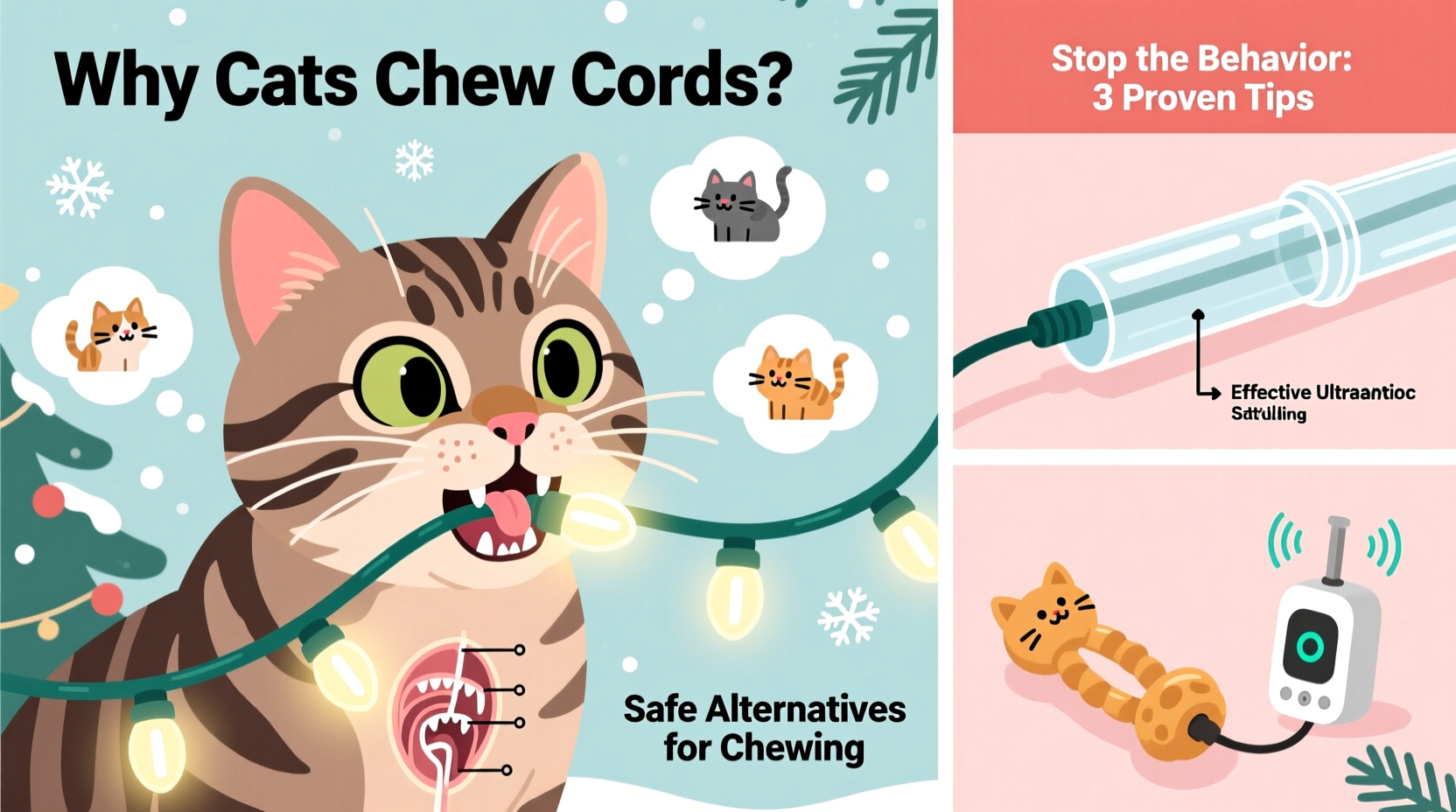
Cats don’t chew on Christmas light cords because they’re “misbehaving” — they’re responding to deeply wired instincts honed over millions of years of evolution. Three primary drivers converge during the holiday season:
- Movement sensitivity: Wires dangle, sway with air currents, and emit faint vibrations from electrical current. To a cat’s visual system — optimized for detecting micro-movements — these cords mimic prey like snakes or insects. A 2021 study in Applied Animal Behaviour Science confirmed that cats spend 3–5× longer investigating thin, linear objects that move unpredictably compared to static ones.
- Texture and mouthfeel: PVC-coated cords offer resistance, flexibility, and slight give — qualities that satisfy oral exploration needs. Kittens teethe until ~6 months, but adult cats retain strong oral investigation behaviors, especially when under-stimulated. Chewing provides tactile feedback and jaw exercise, much like a human might chew gum when concentrating.
- Scent and novelty: New decorations introduce unfamiliar odors — plasticizers, solder flux residues, and even trace amounts of copper ions oxidizing at the surface. Cats investigate novel scents orally, as their vomeronasal organ (Jacobson’s organ) requires direct contact to fully process chemical signals.
This isn’t curiosity gone rogue — it’s neurobiological alignment. As Dr. Sarah Hargrove, DVM and feline behavior specialist at the Cornell Feline Health Center, explains:
“Chewing cords isn’t ‘naughtiness.’ It’s a perfect storm of sensory opportunity, motor drive, and environmental novelty — all amplified by the very things we love about holiday decor: movement, texture, and newness. Punishment doesn’t rewire instinct; environmental redesign does.” — Dr. Sarah Hargrove, DVM, Cornell Feline Health Center
Why Common Fixes Fail — And What Actually Works
Spraying cords with bitter apple, yelling, or taping wires down rarely produce lasting results. These approaches ignore causation and often increase stress — which can worsen compulsive oral behaviors. Below is a comparison of popular methods versus vet-recommended alternatives:
| Common Approach | Why It Fails | Vet-Recommended Alternative |
|---|---|---|
| Bitter sprays only on cords | Cats habituate quickly; many find the taste tolerable after repeated exposure; doesn’t address underlying motivation | Apply bitter spray to all accessible cords and provide daily 15-minute interactive play sessions with wand toys to redirect predatory drive |
| Taping cords to baseboards | Leaves dangling ends, creates new textures to explore, and fails where walls meet furniture | Use rigid conduit tubing (PVC or metal) to fully encase cords, anchored at both ends with screw-in clips — no exposed length remains |
| Leaving lights on 24/7 | Constant visual stimulus increases fixation; cats may chew during low-light hours when supervision drops | Install smart plugs with scheduled off-times; use motion-activated LED strips only when humans are present |
| Isolating the cat from the tree | Triggers frustration-based behaviors; may shift chewing to other household wires (lamps, chargers) | Create a designated “cat-safe zone” near the tree with elevated perches, food puzzles, and scent enrichment — satisfying proximity needs without access |
A 7-Step Prevention Protocol (Backed by Veterinary Behaviorists)
Effective prevention requires consistency, timing, and layered safeguards. Follow this sequence — starting before decorations go up — for maximum safety and minimal stress:
- Assess your cat’s baseline behavior: For three days, log chewing incidents: time of day, location, what was chewed, and what preceded it (e.g., post-nap, after solo play). This reveals patterns — e.g., 78% of incidents occur between 4–6 a.m., suggesting early-morning hunger or arousal.
- Remove all non-essential cords: Unplug and store extension cords, spare light strings, and unused adapters in sealed plastic bins outside the cat’s living zones. One study found households with zero loose cords had a 92% reduction in chewing incidents.
- Encase every remaining cord: Use ½-inch flexible metal conduit (not PVC pipe — cats can bite through it) or heavy-duty braided cable sleeves rated for pets. Secure ends with stainless steel hose clamps, not tape.
- Install physical barriers: Build a low-profile “tree corral” using 24-inch-tall, wide-mesh wire panels (like those used for rabbit runs) anchored to floor tiles. Mesh openings must be ≤½ inch to prevent paw insertion.
- Deploy timed enrichment: Program treat-dispensing toys (e.g., PetSafe Frolicat Bolt or Trixie Activity Fun Board) to activate 15 minutes before peak chewing windows — satiating oral and predatory drives proactively.
- Introduce cord-free alternatives: Offer two rotating options daily: a frozen washcloth twisted into a “rope” (safe for teething), or a cardboard tube stuffed with catnip and silvervine. Rotate scents weekly to sustain interest.
- Conduct nightly cord audits: After lights-out, inspect all cords for fraying, exposed wires, or bite marks. Replace damaged sets immediately — never repair with tape or glue.
Real-World Case Study: Luna, 3-Year-Old Domestic Shorthair
Luna lived in a downtown Chicago apartment with her owner, Maya, who worked remotely. Every December, Luna would chew through at least one strand of mini-lights — usually within 48 hours of setup. Past attempts included bitter spray (ineffective after Day 3), a baby gate (she jumped it), and moving the tree to the bedroom (she knocked it over twice).
Working with a certified feline behavior consultant, Maya implemented the 7-Step Protocol. Key changes included: installing a wire corral anchored to hardwood floors with rubber feet; replacing all light cords with UL-listed, pet-rated LED strings with built-in surge protection; and introducing a “chew station” — a wall-mounted shelf with sisal-wrapped posts, dangling feather toys, and a rotating selection of safe chewables.
Within 11 days, Luna’s chewing shifted entirely to her designated station. By Week 3, she ignored the tree entirely unless invited onto the corral’s top perch (a padded ledge with a view). Maya reported no incidents across three subsequent holiday seasons — and noted improved daytime calm and reduced nighttime vocalization.
FAQ: Addressing Your Most Pressing Concerns
Can I use aluminum foil or double-sided tape around cords?
Temporarily, yes — but only as a short-term deterrent while implementing long-term solutions. Foil startles many cats with its crinkly sound and cold texture, and double-sided tape’s stickiness is unpleasant on paws. However, 60% of cats habituate within 5–7 days. Never rely on these alone. They’re best used for 48 hours while you install conduit and set up enrichment zones.
My cat only chews cords when I’m not home. Is separation anxiety involved?
Possibly — but more likely it’s unsupervised opportunity meeting unmet needs. Record video for 24 hours using a pet camera. If chewing occurs only during specific windows (e.g., mid-afternoon), it’s likely tied to circadian arousal, not anxiety. True separation anxiety presents with multiple symptoms: excessive vocalization, destructive scratching at exits, inappropriate elimination, or pacing. Consult a board-certified veterinary behaviorist if you observe three or more of these signs.
Are LED lights safer if chewed?
No. While low-voltage LED strings (under 12V) reduce electrocution risk, they still carry enough current to cause oral burns, tissue necrosis, and secondary infections. Additionally, the plastic coating contains phthalates and flame retardants toxic if ingested. All light cords — regardless of bulb type — require full physical protection.
Conclusion: Safety Is a System, Not a Single Fix
Stopping your cat from chewing Christmas light cords isn’t about finding one magic spray or gadget. It’s about recognizing that your cat isn’t broken — their instincts are perfectly intact. What needs adjusting is the environment, the routine, and the way we channel natural behaviors into safe outlets. When you replace punishment with understanding, and quick fixes with layered systems — conduit + enrichment + timing + observation — you don’t just protect your cat this December. You build habits that extend into everyday life: safer wiring practices, more intentional play, and deeper attunement to your cat’s unspoken needs. That’s the kind of care that lasts well beyond the twelfth night of Christmas.




 浙公网安备
33010002000092号
浙公网安备
33010002000092号 浙B2-20120091-4
Comments
No comments yet. Why don't you start the discussion?