
If you’ve ever settled in for a quiet evening with your cat only to feel rhythmic pressure on your lap as their paws push in and out against your leg or a nearby blanket, you’ve witnessed “kneading” — affectionately known as “making biscuits.” This endearing behavior, where cats rhythmically press their front paws in alternating motions, is common across breeds and ages. While it may seem whimsical, kneading is deeply rooted in biology, emotion, and instinct. Understanding why cats knead blankets — or laps, pillows, and even other animals — reveals much about feline psychology and evolutionary history.
The Origins of Kneading: A Behavior Born in Infancy
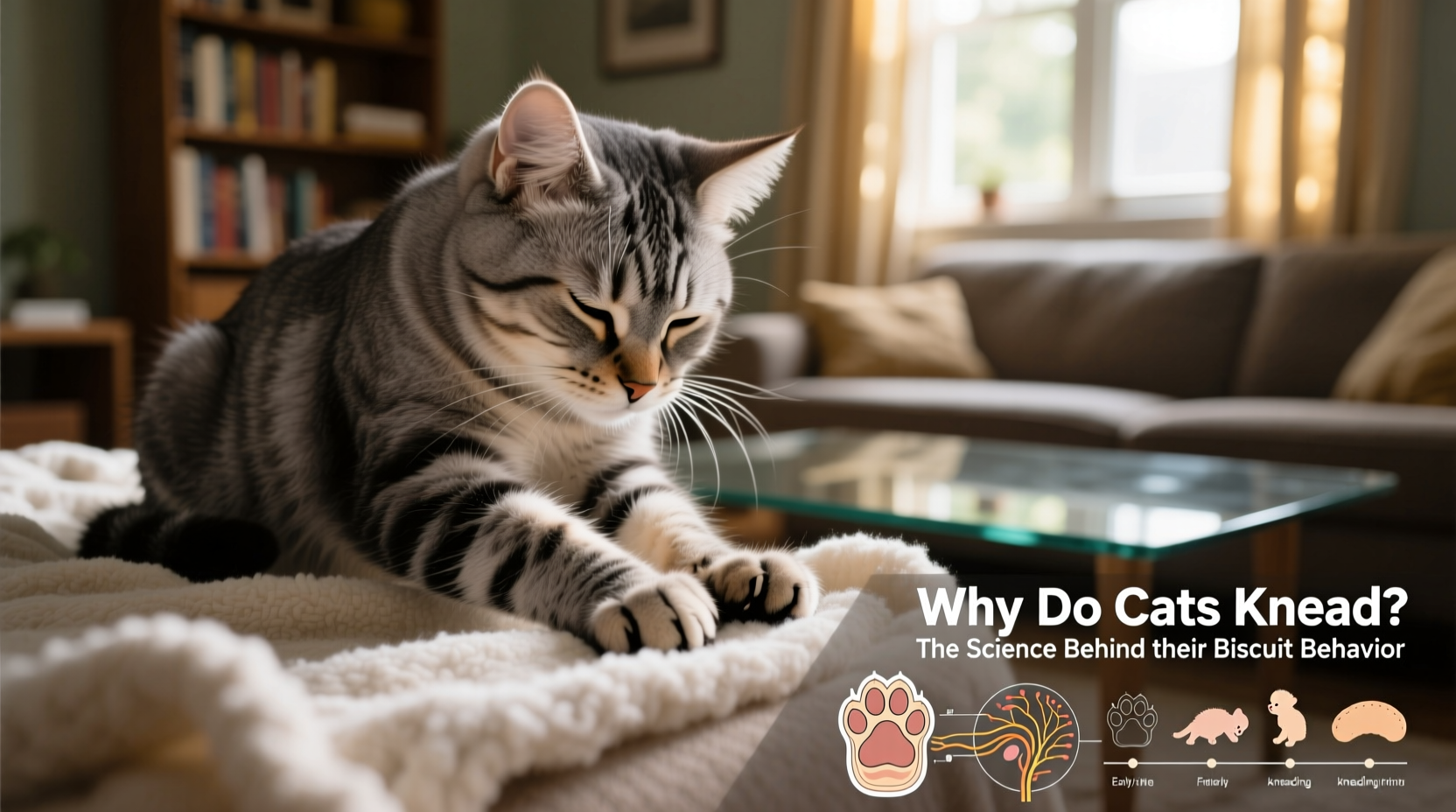
Kneading begins in the earliest days of a cat’s life. Newborn kittens are blind and deaf, relying entirely on touch and smell to locate their mother’s nipples for nursing. To stimulate milk flow, they instinctively use their front paws to press against the mammary glands. This motion triggers the release of oxytocin in the mother, encouraging milk let-down. The behavior is so effective that it becomes hardwired into the kitten’s neural circuitry.
As cats grow, they typically wean and lose the need to nurse. However, many retain the kneading behavior into adulthood. When an adult cat kneads a soft surface like a blanket, cushion, or human lap, it often coincides with feelings of safety, comfort, and contentment — emotional states closely associated with early nursing experiences.
Biological and Emotional Triggers Behind Adult Kneading
While the roots of kneading lie in infancy, adult cats engage in the behavior for multiple overlapping reasons. These include emotional regulation, territorial communication, and physical comfort.
1. Emotional Comfort and Stress Reduction
Kneading often occurs when a cat is relaxed or preparing to sleep. The repetitive motion may have a self-soothing effect, similar to how humans might rock or fidget when anxious or calm. The action releases endorphins — natural \"feel-good\" hormones — which can reduce stress and promote a sense of well-being.
In multi-cat households or environments with frequent changes (e.g., new pets, moving homes), cats may increase kneading as a coping mechanism. It helps them reclaim a sense of control and familiarity.
2. Scent Marking Through Paw Glands
Cats possess scent glands in the soft pads of their paws that secrete pheromones — chemical signals used for communication. When a cat kneads a surface, they are subtly marking it as part of their territory. This is not aggressive; rather, it’s a way of saying, “This space feels safe and belongs to me.”
This explains why cats often knead favorite sleeping spots, blankets, or even their owners. By depositing their scent, they create a familiar olfactory environment, which reduces anxiety and reinforces social bonds.
“Kneading is more than nostalgia — it’s a multisensory behavior involving touch, scent, and memory. It’s one of the clearest signs of emotional security in cats.” — Dr. Lena Torres, Feline Behavioral Scientist, Cornell University College of Veterinary Medicine
3. Nesting and Surface Preparation
In the wild, cats prepare resting areas by patting down grass, leaves, or snow to create a comfortable, level spot. Domestic cats retain this nesting instinct. Kneading a blanket mimics the act of shaping a sleeping area, ensuring it’s just right before lying down. Even in modern homes, this ingrained habit persists.
Why Blankets? The Role of Texture and Warmth
Not all surfaces elicit kneading. Cats tend to favor soft, pliable materials — particularly wool, fleece, knitted fabrics, and plush bedding. These textures most closely resemble the warmth and give of their mother’s belly during nursing.
Additionally, heat enhances the appeal. A warmed blanket, heated pad, or a sunlit spot on the couch may trigger kneading because warmth signals safety and comfort. Some cats even purr while kneading, reinforcing the association with relaxation.
| Surface Type | Likelihood of Kneading | Reason |
|---|---|---|
| Fleece or wool blanket | High | Soft texture mimics fur; retains warmth |
| Cotton sheet | Moderate | Less texture; may still be used if warm |
| Leather sofa | Low | Too firm; lacks “give” for paw motion |
| Human lap | Very High | Warmth, movement, and bonding enhance appeal |
When Kneading Becomes a Problem: Claws and Discomfort
While kneading is generally harmless, it can sometimes cause discomfort, especially if the cat uses extended claws. Untrimmed nails may snag fabric or dig into skin, leading owners to discourage the behavior. However, outright punishment can damage trust and increase anxiety.
Instead, consider humane alternatives that preserve the cat’s emotional outlet while minimizing pain.
Do’s and Don’ts of Managing Kneading Behavior
| Do | Don't |
|---|---|
| Trim your cat’s claws regularly | Yell at or push the cat away mid-knead |
| Use a padded throw blanket as a barrier | Declaw your cat to stop kneading |
| Offer a designated kneading pillow | Ignore signs of stress if the behavior stops suddenly |
| Reinforce calm behavior with gentle praise | Assume kneading always means aggression |
Step-by-Step Guide to Encouraging Healthy Kneading Habits
If you want to support your cat’s natural behaviors while protecting your furniture and skin, follow this simple routine:
- Observe Triggers: Note when and where your cat kneads most often. Is it after meals? During petting? Before naps?
- Provide Alternatives: Offer a soft, washable blanket or cat bed in their favorite spots. Choose materials that mimic warmth and texture they prefer.
- Introduce Nail Care: Gradually get your cat used to having their paws handled. Trim claws every 2–3 weeks using proper clippers.
- Create a Kneading Zone: Designate a specific area — like a heated cat bed or fleece mat — where kneading is encouraged.
- Redirect Gently: If your cat starts kneading an inappropriate surface (e.g., a leather armchair), softly guide them to their designated spot and reward with treats or affection.
- Monitor Changes: Sudden cessation or excessive kneading could signal health issues or stress. Consult a vet if behavior shifts dramatically.
Real-Life Example: Bella and the Heated Blanket
Sarah adopted Bella, a 3-year-old domestic shorthair, from a shelter six months ago. Initially, Bella was hesitant to show affection. But over time, Sarah noticed a pattern: every evening, after dinner, Bella would jump onto the couch, circle twice, then begin kneading the edge of a fleece throw.
At first, Sarah didn’t understand the behavior. She worried Bella was anxious or trying to escape. But her veterinarian explained that kneading was a sign of growing trust. Encouraged, Sarah began placing the same blanket on her lap during movie nights. Within weeks, Bella started kneading while sitting on her legs, often falling asleep mid-motion.
Today, the ritual is a cornerstone of their bond. Sarah says, “It’s like she’s telling me, ‘You’re my safe place.’”
FAQ: Common Questions About Cat Kneading
Is kneading a sign of dominance?
No. Kneading is not a display of dominance. It’s primarily a comfort behavior linked to early nursing and emotional security. While it involves scent marking, it’s meant to claim safety, not assert control over others.
Why does my cat drool while kneading?
Drooling during kneading is common and usually harmless. It’s often a leftover reflex from kittenhood when sucking accompanied kneading. Combined with extreme relaxation, some cats enter such a deep state of contentment that they salivate. As long as there are no dental issues, this is normal.
Do all cats knead?
Most cats knead at some point, but not all. Some may never develop the habit, especially if they were separated from their mother very early or had traumatic early experiences. Others may only knead under specific conditions, such as when extremely relaxed or stressed. Absence of kneading doesn’t indicate unhappiness — just individual variation.
Conclusion: Embracing the Biscuit-Making Ritual
Kneading is more than a quirky habit — it’s a window into a cat’s inner world. Rooted in survival, shaped by emotion, and sustained by comfort, the act of “making biscuits” connects adult cats to their earliest memories of warmth and nourishment. When your cat kneads a blanket — or you — they are expressing trust, marking their territory with invisible scent, and soothing themselves in a language older than words.
Rather than discouraging this natural behavior, consider nurturing it. Provide soft surfaces, maintain claw health, and recognize kneading for what it truly is: a compliment wrapped in instinct. In the quiet rhythm of their paws, your cat is saying, “I am safe here. With you.”




 浙公网安备
33010002000092号
浙公网安备
33010002000092号 浙B2-20120091-4
Comments
No comments yet. Why don't you start the discussion?