
Cats are creatures of habit, and many of their behaviors—while endearing—can seem mysterious to their human companions. One such behavior is kneading: the rhythmic pushing of a cat’s front paws in and out against soft surfaces like blankets, pillows, or even laps. This motion, often referred to as “making biscuits,” is both soothing to watch and deeply rooted in feline biology. Understanding why cats knead goes beyond mere curiosity—it offers insight into their emotional state, evolutionary history, and bond with humans.
Kneading is not random. It’s a hardwired instinct that begins in kittenhood and persists into adulthood for multiple psychological and physiological reasons. From nursing instincts to territorial marking and emotional regulation, the act of paw-kneading serves several essential functions. By exploring these underlying causes, cat owners can better interpret their pet’s needs and strengthen their relationship through informed care.
The Origins of Kneading: A Behavior Rooted in Survival
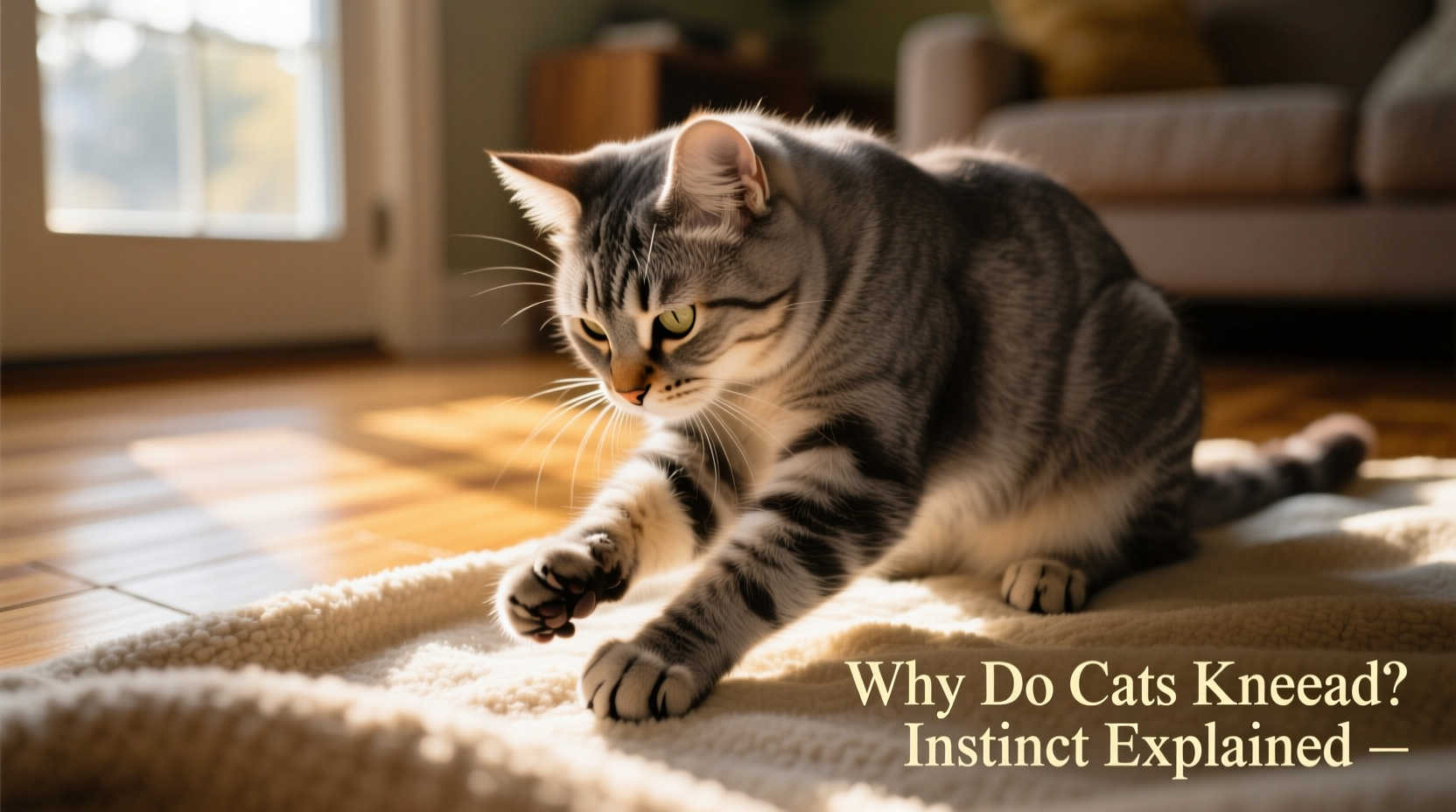
The foundation of kneading behavior lies in a kitten’s earliest days. When nursing, kittens press their tiny paws rhythmically against their mother’s mammary glands to stimulate milk flow. This action is crucial for survival, ensuring they receive adequate nourishment. Over time, the physical sensation of kneading becomes associated with warmth, safety, and sustenance.
Even after weaning, adult cats retain this behavior. When a cat kneads a soft blanket or a human’s lap, it often enters a relaxed, almost trance-like state—sometimes purring, sometimes half-closed eyes, occasionally suckling the fabric. These responses suggest the cat is mentally regressing to a moment of primal comfort. The tactile feedback from the soft material mimics the texture of their mother’s belly, triggering deep-seated feelings of security.
“Kneading is one of the clearest examples of a neonatal behavior that persists into adulthood due to its strong emotional reinforcement.” — Dr. Sarah Hartwell, Feline Behavioral Researcher
This continuity between kittenhood and adulthood highlights how early experiences shape lifelong habits. Unlike some species that outgrow infantile behaviors, cats often maintain them when those actions continue to provide psychological rewards.
Emotional Regulation and Stress Relief
Beyond nostalgia, kneading plays an active role in emotional self-regulation. Cats are highly sensitive to environmental stressors—changes in routine, new pets, loud noises, or unfamiliar people can all trigger anxiety. In response, they may resort to comforting rituals, and kneading is among the most effective.
The repetitive motion has a meditative quality. As the cat presses and releases its paws, muscles relax, breathing slows, and the nervous system shifts toward a parasympathetic (rest-and-digest) state. This calming effect is similar to how humans might rock in a chair or engage in knitting to reduce tension.
Observing when and where your cat kneads can offer clues about their emotional well-being. Frequent kneading in safe spaces suggests contentment, while sudden increases in frequency—especially in new environments—may indicate underlying stress.
Scent Marking and Territorial Behavior
Cats possess scent glands in multiple areas of their body, including the pads of their paws. When a cat kneads, it deposits pheromones onto the surface it's pressing against. These chemical signals are undetectable to humans but serve as olfactory markers to other cats.
In multi-cat households or outdoor territories, scent marking establishes familiarity and reduces conflict. By kneading a blanket—or a person—a cat effectively claims that object or individual as part of its secure zone. This behavior reinforces social bonds and communicates ownership without aggression.
Interestingly, neutered and indoor-only cats still exhibit strong scent-marking tendencies. This persistence underscores how deeply ingrained territorial instincts remain, even in domesticated animals removed from survival pressures.
| Body Area | Purpose of Scent Glands | Associated Behavior |
|---|---|---|
| Paw Pads | Marking territory through walking and kneading | Paw pressing on soft surfaces |
| Chin and Cheeks | Claiming objects and people as familiar | Rubbing against furniture or legs |
| Forehead | Social bonding and group cohesion | Bunting (head-butting) |
This table illustrates how cats use different glandular zones to communicate. Kneading specifically leverages the paw glands, turning everyday items into personalized, emotionally significant spaces.
Preparing a Nest: An Evolutionary Leftover
In the wild, cats prepare sleeping areas by trampling down grass, leaves, or snow to create a comfortable, insulated nest. This nesting behavior ensures protection from predators and temperature extremes. While modern house cats sleep on plush beds and heated cushions, the instinct to “fluff” their resting spot remains.
Kneading before lying down may be a vestigial adaptation—an automatic sequence that once ensured survival but now serves primarily as ritual. Even on perfectly smooth blankets, cats will go through the motions, as if smoothing invisible bedding. This behavior is especially common before naps or bedtime, suggesting it’s tied to pre-sleep routines.
Some researchers believe this nesting impulse is more pronounced in certain breeds, particularly those with stronger ties to wild ancestors, such as Maine Coons or Norwegian Forest Cats. However, it appears across all domestic breeds, indicating its universality in feline psychology.
Mini Case Study: Luna and the Heirloom Quilt
Luna, a 7-year-old tortoiseshell cat, lived with her owner, Maria, in a small apartment. Every evening, without fail, Luna would jump onto a hand-stitched quilt passed down from Maria’s grandmother. She’d circle twice, then begin kneading vigorously—her claws extended, her purr resonating like a motor.
Maria initially worried the quilt would be ruined. But after consulting a veterinarian, she learned that Luna wasn’t being destructive; she was expressing deep affection and claiming the item as part of her safe space. The quilt, always kept on the couch, had absorbed Maria’s scent over years, making it doubly comforting.
Rather than discouraging the behavior, Maria began placing a washable liner beneath the quilt. This protected the fabric while allowing Luna to continue her ritual. Over time, Maria noticed Luna only kneaded the quilt when she felt especially calm or wanted reassurance—such as after Maria returned from travel.
This real-life example shows how kneading is not just habit, but communication. Luna used the act to reaffirm her bond with Maria and her environment.
When Kneading Becomes a Problem: Managing Claws and Comfort
While kneading is natural, it can sometimes cause discomfort—especially when claws are involved. Cats don’t intend to hurt their owners; they simply don’t associate their kneading with pain inflicted on human skin. However, solutions exist that respect both feline instincts and human comfort.
Alternatively, place a thick blanket or cushion between your lap and the cat. Some owners train their cats to knead only on designated “kneading zones”—a soft mat or pillow kept nearby. Consistency and gentle redirection are key.
If a cat kneads excessively to the point of hair loss or skin irritation (on themselves), it may signal anxiety or obsessive-compulsive tendencies. In such cases, consult a veterinarian or feline behaviorist to rule out medical or psychological issues.
Checklist: Healthy Kneading Habits
- Observe when and where your cat kneads to identify emotional triggers
- Provide soft, washable surfaces for safe kneading
- Trim claws every 2–3 weeks to prevent injury
- Avoid punishing the behavior—it’s instinctual and stress-relieving
- Use positive reinforcement when your cat uses appropriate kneading spots
- Monitor for signs of over-grooming or obsessive repetition
Frequently Asked Questions
Do all cats knead?
No, not all cats knead. While it’s a common behavior, some cats never develop the habit. Factors include early weaning, lack of stimulation during kittenhood, personality, or breed tendencies. Absence of kneading does not indicate unhappiness.
Why does my cat drool when kneading?
Drooling during kneading is typically a sign of extreme relaxation and contentment. It harks back to kittenhood, when sucking and swallowing accompanied nursing. In adult cats, drooling in this context is harmless and indicates deep comfort.
Can I stop my cat from kneading?
You shouldn’t try to stop kneading unless it causes harm. It’s a natural, beneficial behavior. Instead, manage it by providing alternatives and protecting furniture or skin. Forcing suppression may increase stress.
Conclusion: Embracing the Biscuit-Making Ritual
Kneading is far more than a quirky feline habit—it’s a window into a cat’s inner world. Rooted in survival, reinforced by comfort, and expressed through scent and rhythm, this behavior connects past and present, instinct and emotion. When your cat makes biscuits on your lap, they’re not just pushing paws into fabric—they’re weaving trust, memory, and belonging into every press.
Understanding the instinct behind kneading allows owners to respond with empathy rather than frustration. It transforms a simple gesture into a meaningful exchange between species. Whether your cat kneads daily or rarely, recognizing its significance deepens the bond you share.




 浙公网安备
33010002000092号
浙公网安备
33010002000092号 浙B2-20120091-4
Comments
No comments yet. Why don't you start the discussion?