
Cats and Christmas often don’t mix as smoothly as we’d like. One moment, your tree stands proudly adorned with lights, ornaments, and tinsel; the next, a single paw swipe sends a cascade of baubles crashing to the floor. While this behavior can be frustrating—especially after hours of decorating—it’s rarely malicious. Instead, it’s rooted in instinct, curiosity, and the natural way cats interact with their environment. Understanding why cats knock down Christmas decorations isn’t just about preventing broken ornaments—it’s about respecting their nature while creating a safe, enjoyable space for both pets and people.
The Instinct Behind the Knock: Hunting and Exploration
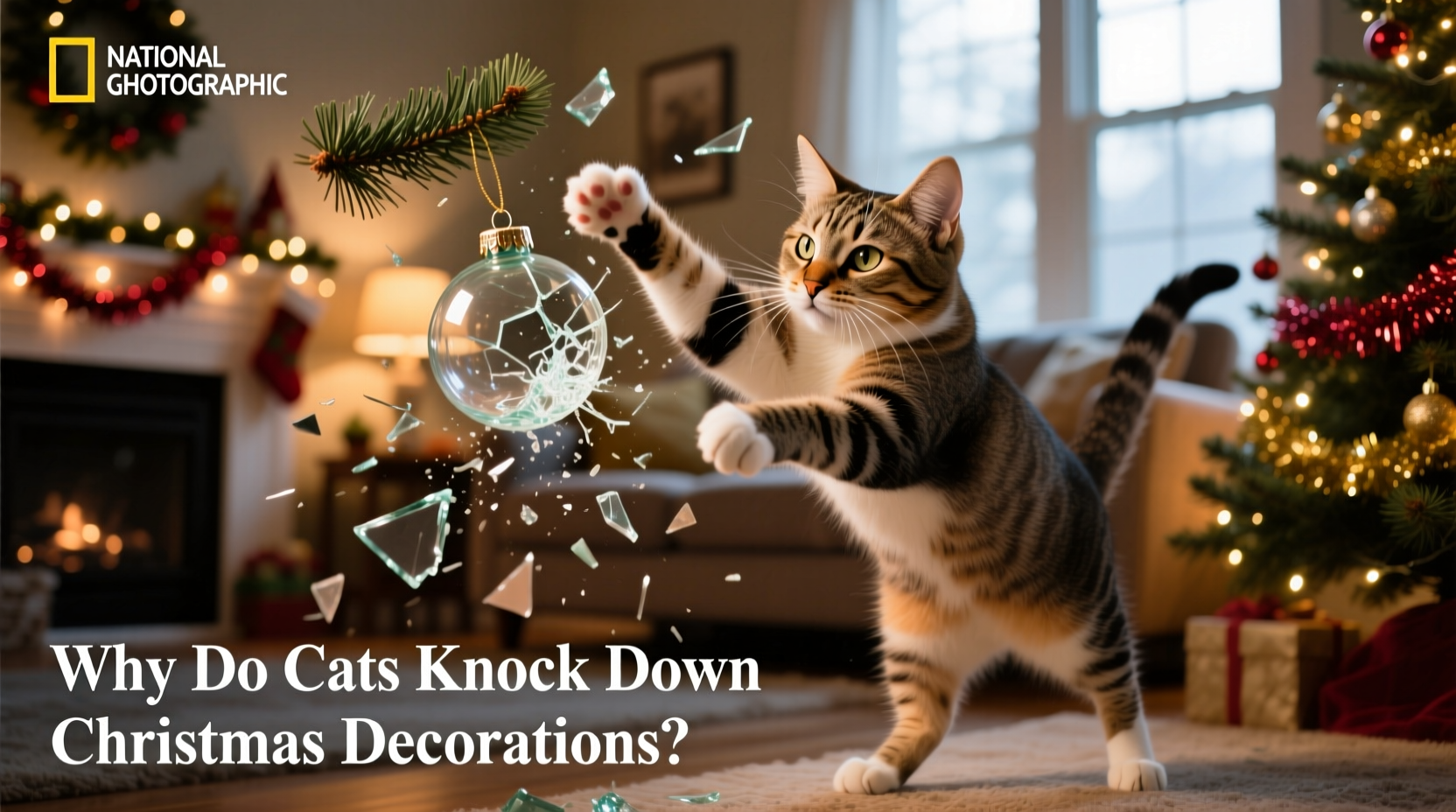
Cats are hardwired predators. Even well-fed indoor cats retain the instincts of their wild ancestors. When a cat sees a dangling ornament or a flickering light on a Christmas tree, their brain registers movement and novelty—two key triggers for predatory behavior. A shiny ball swinging gently from a branch mimics the motion of prey, activating the cat’s hunting sequence: stalk, pounce, and bat.
This isn’t mischief. It’s practice. In the wild, kittens learn survival skills by playing with objects that simulate real prey. Domestic cats still rely on play to fulfill these deep-seated needs. The tree becomes an interactive toy, and each ornament a potential target. What looks like destruction to us is actually cognitive engagement to them.
“Cats don’t knock things over to annoy you—they’re exploring cause and effect, refining motor skills, and satisfying natural instincts.” — Dr. Sarah Thompson, Feline Behavior Specialist
Additionally, cats use their paws to investigate objects because their vision up close is relatively poor. They rely on touch and movement to understand what something is. Pushing an object off a surface provides sensory feedback: sound, motion, texture. This helps them map their environment and determine whether something is threatening, edible, or worth further attention.
Environmental Enrichment vs. Holiday Hazards
The arrival of a Christmas tree and new decorations dramatically alters a cat’s familiar territory. For a creature that thrives on routine and scent-marked spaces, this sudden change can be both exciting and stressful. Some cats respond by investigating intensely, while others may feel anxious and attempt to reassert control—often through physical interaction like batting at ornaments.
From a feline perspective, the tree is not sacred. It’s a large, novel structure placed in the middle of their domain, covered in strange-smelling items and blinking lights. To a cat, it might as well be a jungle gym delivered overnight. Their response—climbing, swatting, chewing—is simply adaptation.
Moreover, many traditional decorations pose real dangers. Tinsel can cause intestinal blockages if ingested. Broken glass ornaments create sharp hazards. Electrical cords risk electrocution. These risks make understanding and managing your cat’s behavior not just about preserving decor, but ensuring safety.
Common Triggers That Encourage Knocking Behavior
Not all decorations are equally tempting to cats. Certain features increase the likelihood of feline interference:
- Movement: Ornaments that dangle, spin, or reflect light are especially enticing.
- Texture: Crinkly tinsel, soft ribbons, and fuzzy materials appeal to tactile exploration.
- Scent: Natural trees emit strong pine odors that may attract or repel cats depending on individual sensitivity.
- Height and Accessibility: Low-hanging ornaments within paw’s reach are prime targets.
- Sound: Jingle bells or rattling decorations stimulate auditory curiosity.
Even the act of decorating itself can encourage unwanted behavior. If your cat watches you place shiny objects on the tree, they may interpret this as you “playing” with toys—and want to join in.
Do’s and Don’ts for Cat-Safe Holiday Decorating
| Do’s | Don’ts |
|---|---|
| Use lightweight, unbreakable ornaments on lower branches | Hang fragile glass or ceramic ornaments low |
| Secure the tree to a wall or ceiling to prevent tipping | Leave the tree unanchored, especially with active climbers |
| Keep tinsel, ribbons, and small edible decorations out of reach | Use tinsel or string-like materials accessible to cats |
| Offer alternative climbing structures nearby (cat trees, shelves) | Remove all vertical spaces, forcing focus onto the Christmas tree |
| Use pet-safe, non-toxic plants like rosemary or spider plants as accents | Place lilies, poinsettias, or mistletoe within reach (all toxic to cats) |
Step-by-Step Guide to Cat-Proofing Your Christmas Decor
Preventing decoration disasters requires planning, patience, and a bit of feline psychology. Follow this timeline to minimize risk and stress for both you and your cat.
- Week 1: Assess Risk Areas
Walk through your home from a cat’s eye level. Identify where decorations will go and how accessible they’ll be. Note any cords, unstable surfaces, or tempting textures. - Week 2: Introduce the Tree (Unadorned)
Set up the tree without lights or ornaments. Let your cat sniff, inspect, and adjust. Use this time to discourage climbing with double-sided tape or aluminum foil around the base. - Week 3: Add Lights and Secure Cords
Install lights and cover cords with cord protectors or run them behind furniture. Test for warmth—some bulbs get hot enough to burn sensitive paws. - Week 4: Decorate Strategically
Place only durable, lightweight ornaments on lower branches. Keep high-value or breakable items up top. Avoid anything that resembles prey (feathers, dangling strings). - Ongoing: Provide Alternatives
Set up a “cat zone” near the tree with a cozy bed, toys, and a small holiday-themed cat tree. Rotate toys daily to maintain interest.
Real-Life Example: The Thompson Family’s Trial by Tinsel
The Thompsons loved Christmas, but every year, their tabby, Milo, turned their living room into a post-battlefield scene. On December 1st, they’d decorate the tree together. By December 2nd, half the ornaments were on the floor, the tinsel was shredded, and one bulb had been swallowed (thankfully retrieved by their vet).
Determined to change the pattern, they consulted a veterinary behaviorist. Following a four-week plan, they introduced the tree early, secured it to the wall, replaced glass ornaments with felt ones, and installed a cat tree beside the Christmas tree. They also gave Milo daily puzzle feeders and wand toys to satisfy his hunting drive.
The result? A mostly intact tree, fewer stress signs from Milo, and a more peaceful holiday. “We realized he wasn’t being ‘bad,’” said Lisa Thompson. “He just needed appropriate outlets. Now he bats at his own toys instead of our decorations.”
FAQ: Common Questions About Cats and Holiday Decor
Can I train my cat not to knock things over?
Yes, but not through punishment. Positive reinforcement works best. Reward your cat for staying near designated areas or playing with approved toys. Use deterrents like citrus scents or motion-activated air sprays sparingly and consistently. Redirect, don’t reprimand.
Are some cat breeds more likely to knock things down?
Breeds known for high intelligence and activity—such as Siamese, Bengals, and Abyssinians—tend to be more curious and physically engaged with their surroundings. However, individual personality plays a bigger role than breed. Even laid-back cats may explore a new object like a Christmas tree.
Is it okay to use a spray bottle to stop the behavior?
Veterinary behaviorists generally advise against it. Startling your cat may suppress the behavior temporarily but can increase anxiety and damage trust. Instead, focus on environmental management and enrichment. A cat that’s mentally and physically satisfied is less likely to seek stimulation from decorations.
Long-Term Solutions: Enrichment Beyond the Holidays
The impulse to knock things over doesn’t disappear after New Year’s. It’s part of a broader need for mental stimulation. Cats left alone for long periods with limited play opportunities are more likely to develop destructive habits—not just during holidays, but year-round.
Investing in daily enrichment pays dividends. Schedule two 10–15 minute play sessions daily using wand toys that mimic prey movement. Rotate toys weekly to maintain novelty. Consider food puzzles or treat-dispensing balls to turn feeding into an engaging activity.
Vertical space is also critical. Cats feel secure when they can observe their territory from above. Wall-mounted shelves, perches near windows, or multi-level cat trees give them alternatives to the Christmas tree.
“Enrichment isn’t a luxury—it’s a necessity. A stimulated cat is a well-behaved cat.” — Dr. Elena Ruiz, Veterinary Ethologist
Conclusion: Harmony Over Perfection
Accepting that cats will be cats is the first step toward a joyful, low-stress holiday season. You don’t need a flawless tree to have a meaningful celebration. In fact, some of the most memorable moments come from watching your cat bat at a jingle bell or curl up under the lights.
The goal isn’t to eliminate feline behavior, but to guide it safely. With thoughtful preparation, strategic decorating, and plenty of alternative outlets, you can enjoy your holiday traditions without sacrificing your cat’s well-being—or your sanity.




 浙公网安备
33010002000092号
浙公网安备
33010002000092号 浙B2-20120091-4
Comments
No comments yet. Why don't you start the discussion?