
Cats are enigmatic creatures whose behaviors often leave their human companions puzzled—especially when a cherished mug or phone suddenly meets the floor thanks to a swift paw. This seemingly mischievous act of knocking objects off tables is common across households with feline residents. While some interpret it as deliberate defiance, the truth lies deeper in evolutionary biology, cognitive function, and emotional needs. Understanding why cats engage in this behavior requires examining both their hardwired predatory instincts and the psychological impact of modern indoor living, particularly boredom.
This article explores the dual forces driving this widespread feline habit: instinctual hunting patterns rooted in survival and the mental stagnation that arises from under-stimulating environments. By dissecting scientific research, expert insights, and real-life observations, we provide practical solutions to help cat owners respond appropriately—not with punishment, but with empathy and enrichment.
The Evolutionary Roots of Object-Knocking Behavior
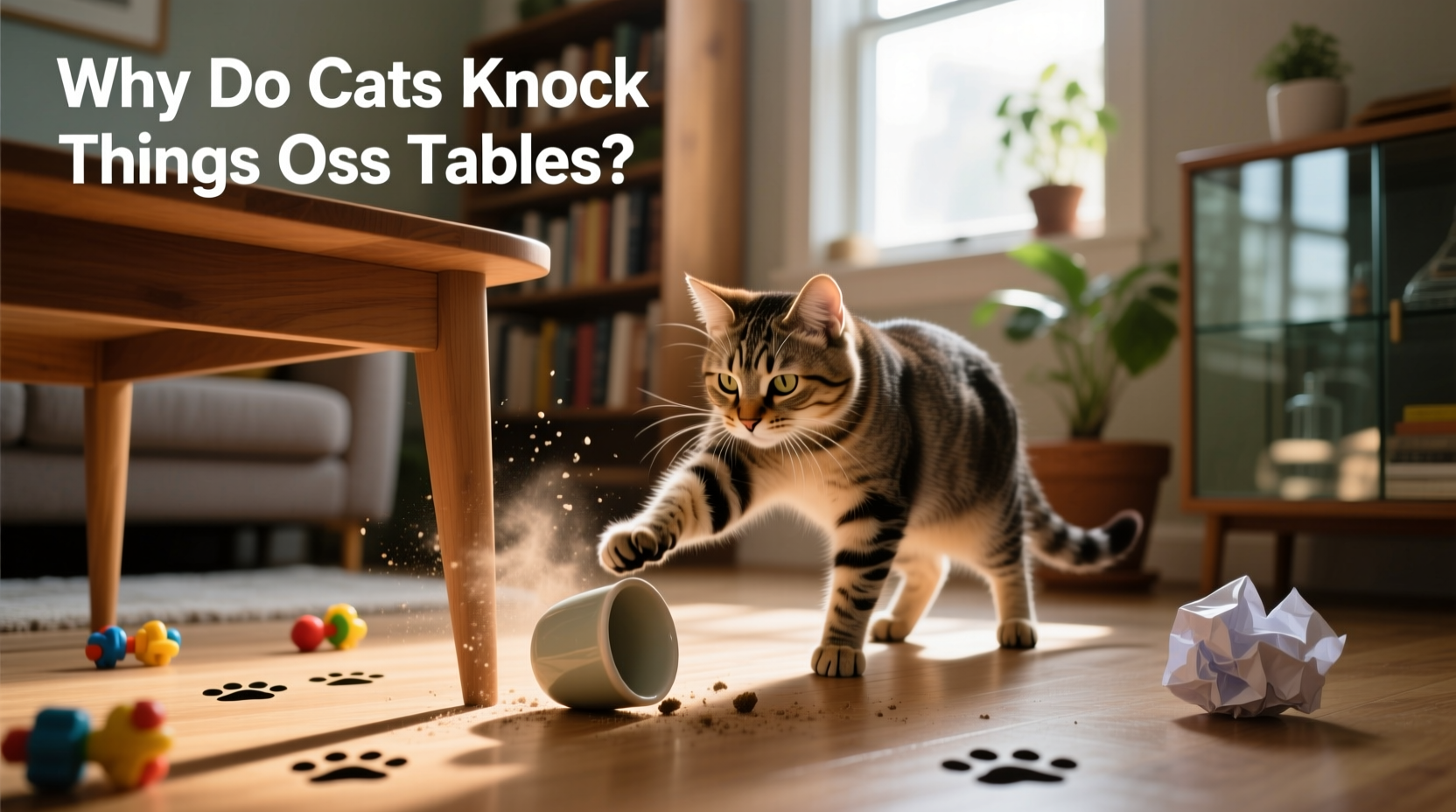
Cats are apex predators by design, even if today’s domesticated versions spend most of their time napping on couches. Their ancestors relied on stealth, precision, and environmental awareness to survive. One critical skill was testing the movement and stability of potential prey or obstacles. A rustling leaf, a shifting stone, or an unfamiliar object could signal danger—or dinner.
When a cat bats at an item on a table, it isn’t merely playing; it’s assessing. The motion, sound, and fall of the object mimic elements of prey behavior. A pen rolling off a desk produces noise and movement—stimuli that trigger neural pathways associated with hunting. Even non-living objects become proxies for live targets when the right sensory cues are present.
“Cats don’t distinguish between ‘toy’ and ‘non-toy’ the way humans do. Any moving or potentially movable object can activate their predatory sequence.” — Dr. Sarah Ellis, Feline Behavior Scientist, University of Lincoln
This predatory sequence consists of four stages: orientation, stalking, pouncing, and biting/killing. Knocking something over often falls within the “pounce” phase—an exploratory attack meant to elicit a reaction. If the object moves or makes noise, the brain registers success, reinforcing the behavior.
Boredom and Environmental Deficiency in Indoor Cats
While instinct explains the *capacity* for knocking things over, boredom often explains the *frequency*. Most house cats live in environments far removed from the complex landscapes their wild counterparts navigate. Without adequate mental stimulation, cats resort to self-generated entertainment—often involving your coffee cup.
A 2020 study published in *Applied Animal Behaviour Science* found that indoor cats exposed to enriched environments (vertical spaces, puzzle feeders, interactive play) exhibited significantly fewer attention-seeking or destructive behaviors than those in minimal setups. Object-knocking ranked among the top redirected behaviors in under-stimulated cats.
Boredom doesn’t mean laziness. It reflects unmet biological needs. Cats require daily cognitive challenges, physical exertion, and sensory variety. When these aren’t met, they create their own stimuli—even if it means sending your keys flying just to hear them clatter.
Signs Your Cat Might Be Bored
- Excessive grooming or licking
- Overeating or food obsession
- Aggression toward people or other pets
- Repetitive actions like tail chasing or paw swatting at air
- Frequent knocking over of objects without apparent cause
Predatory Instinct vs. Boredom: Key Differences
Understanding whether your cat acts out of instinct or boredom helps determine the best response. While both can result in similar actions, their triggers and solutions differ.
| Factor | Predatory Instinct | Boredom |
|---|---|---|
| Motivation | Hunting simulation, sensory feedback | Need for stimulation, lack of engagement |
| Timing | Often during active periods (dawn/dusk) | Anytime, especially when owner is absent |
| Target Selection | Objects that move, reflect light, or make noise | Any accessible object, regardless of interest value |
| Behavior After Knocking | May stalk or pounce on fallen item | Walks away indifferently |
| Solution Focus | Redirect to appropriate outlets (toys) | Increase environmental enrichment |
For example, a cat that knocks over a water glass only when someone walks past may be seeking interaction. In contrast, one that taps a spoon repeatedly before it falls is likely engaged in prey simulation. Recognizing these nuances allows for targeted interventions.
Effective Strategies to Reduce Unwanted Knocking
Punishment is ineffective and damaging. Instead, focus on redirection, enrichment, and environmental management. Below is a step-by-step guide to minimizing object-knocking while supporting your cat’s natural needs.
Step-by-Step Guide: Reducing Table-Topping Tendencies
- Assess your cat’s daily routine. Track activity levels, play frequency, and access to resources. Note when knocking occurs.
- Introduce interactive play sessions. Use wand toys for 10–15 minutes twice daily to simulate hunting—from chase to capture.
- Provide puzzle feeders. Replace 25% of meals with food-dispensing puzzles to stimulate problem-solving.
- Create vertical space. Install shelves or cat trees near windows to expand territory and observation points.
- Use deterrents strategically. Place double-sided tape or aluminum foil on surfaces you want to protect—cats dislike the texture.
- Rotate toys regularly. Introduce new ones every few days and retire others to maintain curiosity.
- Secure fragile items. Keep breakables out of reach without restricting your cat’s exploration zones.
Mini Case Study: Luna the Apartment Cat
Luna, a three-year-old tuxedo cat living in a downtown studio apartment, developed a reputation for knocking over her owner’s work supplies. Pens, phones, and even a small lamp were casualties. Her owner, frustrated, considered rehoming her until consulting a certified feline behaviorist.
The assessment revealed two issues: Luna had no climbing structures, and her owner worked long hours, leaving her alone for up to 10 hours a day. Play consisted of five minutes with a crumpled paper ball each evening. The behaviorist recommended installing wall-mounted perches, introducing a timed treat dispenser, and scheduling two 12-minute play sessions using a feather wand.
Within three weeks, object-knocking incidents dropped by 80%. Luna began using her catio shelf for sunbathing and showed increased interest in her new mouse-shaped puzzle toy. Her owner reported she seemed “more relaxed and less demanding.”
Luna’s case illustrates how environmental limitations—not malice—drive many problematic behaviors. With minor adjustments, her natural instincts found healthier outlets.
Checklist: Creating a Cat-Friendly Environment
Use this checklist to evaluate and improve your home environment:
- ✅ At least one interactive play session per day (10+ minutes)
- ✅ Multiple vertical spaces (shelves, cat trees, window perches)
- ✅ Safe access to natural light and outdoor views
- ✅ Rotating toy selection (at least 5 different types)
- ✅ Food puzzles or slow feeders used regularly
- ✅ Designated scratching posts in high-traffic areas
- ✅ Secure storage for fragile or hazardous items
- ✅ Consistent daily routine (feeding, play, quiet time)
Completing this checklist doesn’t guarantee zero knocking—but it dramatically reduces the likelihood by addressing root causes rather than symptoms.
Frequently Asked Questions
Is my cat knocking things over to get attention?
Yes, sometimes. If your cat learns that knocking over an object results in you entering the room, scolding, or interacting—even negatively—it may repeat the behavior for engagement. Positive attention through scheduled play is a better alternative.
Should I punish my cat for knocking things down?
No. Punishment creates fear and erodes trust. Cats don’t connect delayed consequences with past actions. Instead, redirect the behavior and enrich the environment. Yelling or spraying water may stop the act temporarily but increases stress, potentially worsening behavioral issues.
Are certain breeds more prone to this behavior?
Some breeds, like Bengals, Siamese, and Abyssinians, are more energetic and curious, which can increase the frequency of exploratory knocking. However, any cat can develop the habit if under-stimulated. Breed tendencies should inform enrichment levels, not justify resignation.
Expert Insight: The Cognitive Need Behind the Paw
Dr. Tony Buffington, a veterinary researcher at Ohio State University, emphasizes that indoor cats often suffer from what he calls “barren environment syndrome”—a condition where lack of control over their surroundings leads to stress and abnormal behaviors.
“When cats can’t hunt, explore, or make meaningful choices, they create chaos to regain a sense of agency. Knocking things over gives them predictable outcomes in an otherwise static world.” — Dr. Tony Buffington, DVM, PhD, Diplomate ACVN
This perspective shifts the narrative from mischief to adaptation. The cat isn’t being “bad”; it’s trying to meet innate needs within a constrained lifestyle. Solutions must therefore focus on empowerment, not suppression.
Conclusion: Rethinking the Swat, Embracing Understanding
The next time your cat sends a water bottle tumbling to the floor, resist the urge to react with frustration. That simple act is a window into a complex mind shaped by millennia of evolution and filtered through the realities of modern pet life. Whether driven by predatory rehearsal or a cry for engagement, the behavior signals a need—not defiance.
By embracing environmental enrichment, structured play, and compassionate observation, you transform conflict into connection. You don’t just prevent broken objects; you support a happier, more balanced cat. Start today: pick up a wand toy, rearrange a shelf into a perch, or simply sit and observe your cat’s movements. Small changes yield profound results.




 浙公网安备
33010002000092号
浙公网安备
33010002000092号 浙B2-20120091-4
Comments
No comments yet. Why don't you start the discussion?