
Cats are enigmatic creatures whose behaviors often leave their owners puzzled—and charmed. One of the most intimate yet perplexing habits is when a cat climbs onto your back while you're lying down, sitting, or even doing yoga on the floor. It’s not just random; it’s deeply rooted in feline instincts, social dynamics, and emotional attachment. Understanding why your cat chooses your back as its personal perch reveals more about your bond than you might think.
The Warmth Factor: A Living Heating Pad
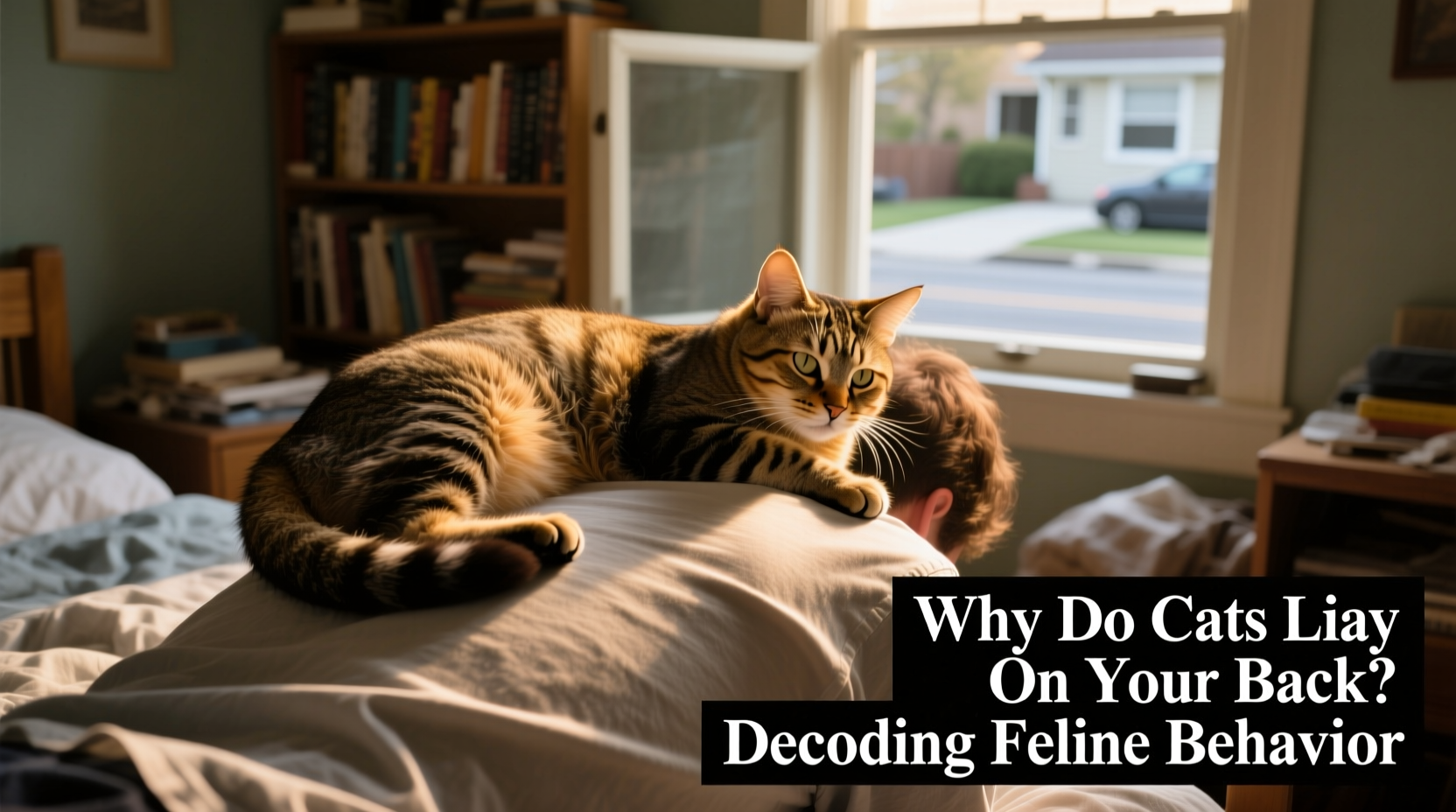
Cats are naturally drawn to warmth. Their ideal body temperature sits between 100.5°F and 102.5°F—slightly higher than humans—and they instinctively seek out warm spots to conserve energy and stay comfortable. When you lie down, your back becomes a prime heat source, especially if you’ve been active or are under a blanket.
Your body radiates heat through your spine and upper torso, making your back an efficient thermal hotspot. For a cat, curling up on your back is like claiming a premium seat on a heated sunbeam. This behavior is especially common in colder months or in homes with drafty floors.
Scent Marking and Territory: You’re Part of Their Clan
Cats are territorial animals that use scent to define their world. They have scent glands on their cheeks, paws, flanks, and tail base. When a cat lies on your back, it's not just relaxing—it's marking you.
By pressing against you, rolling, or kneading, your cat deposits its pheromones onto your skin and clothing. This act signals to other animals (and to itself) that you are part of its inner circle. In feline society, shared scent equals trust and belonging. So when your cat chooses your back over the plush cat bed you bought, it’s a compliment—it sees you as family.
“Cats don’t just coexist with humans—they integrate us into their social structure. Physical contact, especially in vulnerable positions, is a profound sign of acceptance.” — Dr. Sarah Thompson, Feline Behavior Specialist
A Secure High Ground: Safety and Surveillance
Elevation matters to cats. In the wild, high vantage points offer safety from predators and a clear view of the environment. Your back, when you're lying prone, becomes a mobile observation deck. From this position, your cat can monitor the room, listen for sounds, and feel secure knowing it can retreat quickly if needed.
This behavior is particularly common in multi-pet households or homes with frequent visitors. The cat isn’t just lounging—it’s strategically positioned. Being on your back also means it’s close to you, benefiting from both physical warmth and emotional reassurance.
Why the Back and Not the Chest?
You might wonder why your cat prefers your back over your chest. While the chest is closer to your face and heartbeat, it can feel restrictive. Lying on your chest may pressure your breathing, which can make some cats uneasy. The back offers a flat, stable surface without the rhythmic rise and fall of breathing directly beneath them. It’s less intrusive for both parties—giving the cat freedom to stretch out while allowing you to move slightly without disturbing them.
Emotional Bonding: The Ultimate Sign of Trust
Lying on your back requires vulnerability—for both of you. Your cat must trust that you won’t suddenly move and dislodge it. Likewise, you tolerate the weight and occasional claw pricks because you value the connection.
This behavior is a form of allogrooming by proxy. In cat colonies, individuals groom each other to strengthen social bonds. Since cats can’t literally groom you, lying on you serves a similar purpose: reinforcing intimacy and mutual care. The rhythmic purring often heard during these moments is a self-soothing mechanism that also communicates contentment.
Kneading, a behavior carried over from kittenhood, frequently accompanies back-lounging. This motion, originally used to stimulate milk flow from the mother, signifies deep comfort and security. When your cat performs it on your back, it’s regressing to a state of pure trust.
Behavioral Checklist: Is Your Cat’s Back-Laying Normal?
Not all instances of back-laying are equal. Use this checklist to assess whether the behavior is healthy or if it might signal an underlying issue:
- ✅ The cat appears relaxed, with slow blinking and soft body posture
- ✅ It moves away when asked or when you shift positions
- ✅ No signs of aggression or possessiveness toward others approaching
- ✅ Occurs intermittently, not obsessively
- ⚠️ If the cat becomes aggressive when removed, it may be displaying resource guarding—consult a behaviorist
- ⚠️ Sudden increase in clinginess could indicate anxiety or health issues
Mini Case Study: Luna and the Midnight Back Nap
Sophia, a graphic designer from Portland, noticed her rescue cat Luna started sleeping on her back every night after she began working from home. Initially, Sophia found it uncomfortable, but she soon realized the pattern: Luna only did it when the house was quiet and dark.
After consulting a vet, Sophia learned Luna had been abandoned as a kitten and likely craved consistent physical contact. The back-laying wasn’t just about warmth—it was a coping mechanism for past insecurity. By adjusting her routine to include evening petting sessions and providing a heated pad nearby, Sophia gave Luna alternative comfort options. Over time, the back-sleeping decreased, but Luna still visits occasionally—now as a choice, not a need.
Do’s and Don’ts of Handling Back-Laying Behavior
| Do’s | Don’ts |
|---|---|
| Respect the bond—this is a sign of trust | Don’t forcibly remove your cat abruptly |
| Provide warm alternatives like heated beds | Don’t punish or scold for natural behavior |
| Gently encourage movement if discomfort arises | Don’t ignore signs of anxiety or obsession |
| Use positive reinforcement for using their own bed | Don’t isolate your cat for seeking closeness |
Frequently Asked Questions
Is it normal for my cat to lay on my back every day?
Yes, if your cat is otherwise healthy and well-adjusted. Daily back-laying is typically a sign of strong attachment and comfort. However, if it interferes with your sleep or mobility, gently redirect the behavior with a cozy alternative nearby.
Could this behavior indicate a health problem?
Generally, no. But if your cat suddenly becomes overly clingy, vocal, or exhibits changes in appetite or grooming, it could signal pain or anxiety. Senior cats, in particular, may seek more warmth due to arthritis. Always consult a veterinarian if behavioral shifts occur rapidly.
How can I discourage my cat from laying on my back without hurting its feelings?
You don’t need to discourage it entirely—but if needed, place a soft, warm blanket or heated pet mat right next to you. Reward your cat with treats or affection when it uses the alternative spot. Patience and consistency work better than correction.
Understanding the Language of Touch
Cats communicate primarily through body language, and physical contact is one of their most nuanced dialects. Laying on your back isn’t just a quirky habit—it’s a composite message: “I trust you, I’m warm, I belong here, and you are mine.” It blends survival instinct with emotional depth, making it one of the highest forms of feline flattery.
Unlike dogs, who often display affection through overt excitement, cats express love through subtle proximity. The fact that your cat chooses your back—a spot that requires patience and stillness—is a testament to the quality of your relationship.
Conclusion: Cherish the Weight of Love
The next time your cat settles onto your back, resist the urge to shift immediately. Instead, take a moment to appreciate what it represents: trust, warmth, and belonging. These quiet acts of closeness are the foundation of a deep human-feline bond.




 浙公网安备
33010002000092号
浙公网安备
33010002000092号 浙B2-20120091-4
Comments
No comments yet. Why don't you start the discussion?