
Cats sitting in cardboard boxes is one of the most universally recognized quirks of feline behavior. Whether it’s a shipping box, a gift container, or even a tiny square drawn on the floor, cats seem irresistibly drawn to confined spaces. While this habit often elicits amusement, it's far more than just a cute idiosyncrasy—it's rooted deeply in their evolutionary biology and survival instincts. Understanding why cats are so compelled by boxes reveals a fascinating window into their ancestral past, environmental needs, and psychological well-being.
The Evolutionary Roots of Box-Sitting Behavior
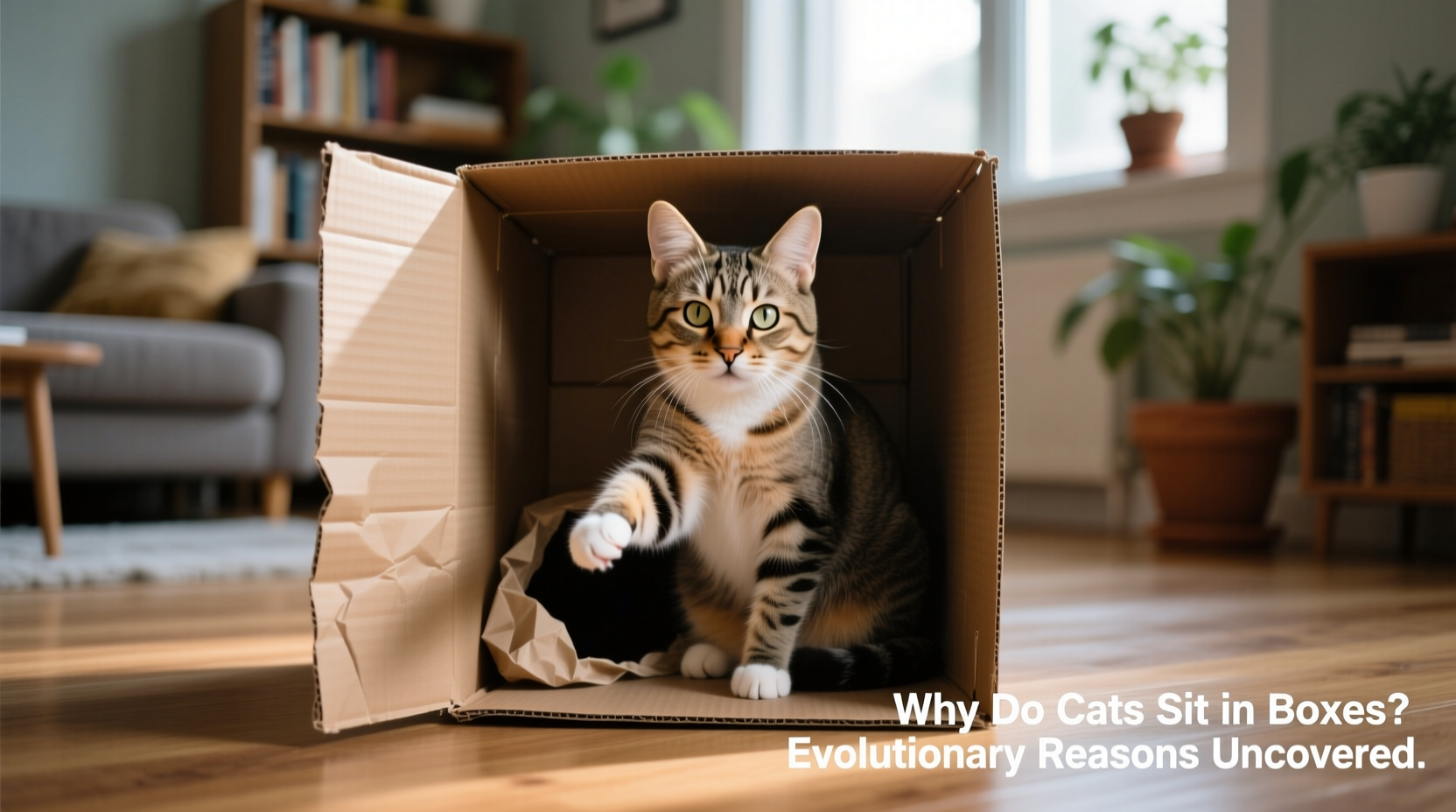
Cats, both domestic and wild, are descendants of solitary hunters that evolved in arid, open environments such as deserts and scrublands. These ancestors relied heavily on stealth, ambush tactics, and energy conservation to survive. One key strategy was minimizing exposure to predators and extreme temperatures by seeking shelter in small, enclosed spaces like rock crevices, hollow logs, or dense brush.
In the wild, finding secure hiding spots wasn’t just about comfort—it was a matter of life and death. A concealed location offered protection from larger predators while allowing the cat to remain hidden until prey came within striking distance. This instinctual drive for enclosure has been preserved through generations, even as modern housecats live in safe, climate-controlled homes.
When a domestic cat climbs into a cardboard box, it’s not merely playing; it’s acting on millennia of evolutionary programming. The box mimics the den-like environment that would have provided safety and thermal regulation in the wild. From an evolutionary standpoint, occupying tight spaces increases survivability—so the preference became hardwired into feline behavior.
Thermoregulation: Warmth and Energy Conservation
One of the most practical reasons cats seek out boxes is temperature control. Cats maintain a higher body temperature than humans—typically between 100.5°F and 102.5°F (38°C–39.2°C). To conserve energy and stay warm, they naturally gravitate toward insulated, snug spaces where heat loss is minimized.
Cardboard, despite being thin, provides surprising insulation. When a cat curls up inside a closed or semi-closed box, its body heat becomes trapped, creating a microclimate that feels significantly warmer than the surrounding room. This is especially important for kittens, older cats, or those with health issues who may struggle to regulate their body temperature.
“Cats are thermoconformers—they adjust their behavior to match optimal thermal conditions. Boxes act as portable shelters that help them maintain ideal body heat with minimal effort.” — Dr. Sarah Ellis, Feline Behavior Scientist, University of Lincoln
Stress Reduction and Environmental Security
Modern homes, while safe, can be overwhelming for cats due to noise, movement, unfamiliar visitors, or other pets. Unlike dogs, which are social pack animals, cats are territorial and easily stressed by changes in their environment. A study published in *Applied Animal Behaviour Science* found that shelter cats given access to hiding boxes adapted to new surroundings significantly faster than those without.
The presence of a box offers what ethologists call a “security zone”—a place where the cat can observe its surroundings without being seen. This vantage point reduces anxiety because it allows the cat to feel in control. Being enclosed on three or more sides gives the sensation of protection, lowering cortisol levels and promoting relaxation.
This need for security explains why cats often choose boxes over plush, open beds. Even in multi-cat households, dominant individuals may claim boxes as territory, reinforcing their role as valuable resources rather than mere playthings.
Camouflage and Predatory Instincts
Beyond defense, boxes also serve an offensive purpose tied to hunting. Wild felids rely on ambush predation—stalking silently and pouncing suddenly. Enclosed spaces allow cats to remain motionless and unseen before launching an attack. Even well-fed domestic cats retain these predatory impulses, which manifest in behaviors like hiding behind furniture before “attacking” a toy or human foot.
A box functions as a perfect staging ground for such simulated hunts. It breaks up the cat’s outline, muffles sound, and limits visibility from outside angles—all enhancing the element of surprise. This isn’t just instinctual; it’s mentally stimulating. Engaging in stalking and hiding behaviors satisfies cognitive needs, preventing boredom and associated behavioral problems like over-grooming or aggression.
Scientific Studies on Feline Enclosure Preference
Research into feline behavior increasingly supports the idea that access to enclosed spaces improves welfare. A landmark 2014 study conducted at Utrecht University observed 19 newly arrived shelter cats over 14 days. Half were given cardboard boxes immediately upon arrival; the other half had to wait one week before receiving boxes.
The results were clear: cats with immediate access to boxes showed lower stress scores throughout the adaptation period. By day three, they were already engaging in normal behaviors like grooming and exploring, while the control group remained withdrawn and anxious.
This demonstrates that enclosures aren't luxuries—they're essential components of a psychologically supportive environment. For indoor cats, especially those living in busy or unpredictable homes, boxes offer a refuge that aligns with their innate behavioral repertoire.
| Factor | Role in Box Preference | Evolutionary Origin |
|---|---|---|
| Thermal Regulation | Boxes trap body heat, helping cats stay warm efficiently | Desert-dwelling ancestors conserved energy in fluctuating climates |
| Predator Avoidance | Enclosed sides reduce visibility and perceived vulnerability | Survival advantage against larger carnivores |
| Hunting Strategy | Provides concealment for ambush-style play or real hunting | Stealth-based predation in open terrain |
| Stress Mitigation | Offers a controlled space to retreat during environmental changes | Adaptation to unpredictable threats in wild habitats |
| Sensory Control | Limits auditory and visual stimuli, reducing overstimulation | Highly sensitive senses required filtering mechanisms |
Practical Implications for Cat Owners
Recognizing the evolutionary basis of box-sitting empowers owners to create better living environments for their pets. Instead of viewing this behavior as odd or frivolous, it should be encouraged as a sign of healthy, species-appropriate expression.
Providing accessible hiding spots doesn’t require expensive equipment. Simple solutions like repurposed cardboard boxes, fabric tunnels, or covered cat beds can make a significant difference in a cat’s emotional well-being. The key is ensuring these spaces are available in multiple areas of the home, particularly near feeding zones, litter boxes, and resting areas.
Step-by-Step Guide: Creating an Enriched Environment for Your Cat
- Assess your home layout: Identify high-traffic and quiet zones. Place hiding options in both, so your cat can choose based on mood.
- Introduce multiple enclosures: Use cardboard boxes, plastic bins with cutouts, or commercially available cat caves. Rotate them weekly to maintain novelty.
- Enhance comfort: Line boxes with soft towels or blankets. Replace regularly to maintain hygiene.
- Respect boundaries: Never force a cat out of a box. Allow them autonomy over their safe space.
- Monitor usage patterns: Note when and how often your cat uses enclosures. Increased hiding may signal illness or stress.
- Add vertical elements: Combine boxes with shelves or perches to give layered security options—elevated views plus ground-level hideaways.
Mini Case Study: Reducing Anxiety in a Multi-Cat Household
Julia, a pet owner in Portland, adopted a second cat to keep her shy tabby, Milo, company. However, instead of bonding, Milo began retreating under beds and avoiding common areas. After consulting a veterinary behaviorist, she introduced several cardboard boxes in low-traffic corners, each lined with fleece and treated with synthetic feline facial pheromones (Feliway).
Within days, Milo began using the boxes regularly, often napping in full view but still enclosed. Over time, his interactions with the new cat increased, and aggressive posturing decreased. The boxes acted as transitional zones—safe bases from which he could re-engage with his environment on his own terms.
This case illustrates how simple, evolutionarily aligned interventions can resolve complex behavioral challenges. By meeting basic instinctual needs, owners can foster confidence and reduce conflict.
Frequently Asked Questions
Is it normal for my cat to prefer boxes over expensive cat beds?
Yes, it’s completely normal. Many commercial cat beds are too open or lack sufficient sides to provide the sense of enclosure cats instinctively seek. A box often fulfills this need more effectively than plush but exposed alternatives.
Should I be concerned if my cat hides in boxes all day?
Occasional hiding is typical, but sudden or prolonged isolation may indicate illness or distress. If accompanied by reduced appetite, lethargy, or avoidance of social contact, consult a veterinarian. Otherwise, regular use of boxes as rest spots is healthy behavior.
Can I use any type of box for my cat?
Most standard cardboard boxes work well, provided they’re clean and free of staples, tape residue, or strong odors. Avoid plastic containers unless ventilated, as they can trap moisture and heat. Always supervise initial use to ensure your cat can enter and exit freely.
Actionable Checklist: Supporting Your Cat’s Natural Instincts
- ✅ Provide at least one enclosed space per cat in your home
- ✅ Position hiding spots away from loud appliances or foot traffic
- ✅ Rotate boxes every few weeks to maintain interest
- ✅ Use non-toxic liners or blankets for added comfort
- ✅ Observe your cat’s preferences—some like dark interiors, others prefer partially open designs
- ✅ Combine boxes with scratching posts or toys nearby to encourage exploration
- ✅ Never remove a box abruptly—allow gradual transition if replacement is needed
“The best enrichment for cats isn’t always flashy. Sometimes, it’s literally a cardboard box. What looks like simplicity to us meets profound biological needs.” — Dr. Mikel Delgado, Cat Behavior Researcher, UC Davis School of Veterinary Medicine
Conclusion: Honoring the Wild Within the Domestic
The sight of a cat curled up in a box might seem whimsical, but it reflects a deep-seated connection to survival strategies honed over thousands of years. Far from being random or silly, this behavior serves vital functions related to warmth, safety, mental stimulation, and emotional balance. As caretakers, we honor our cats not by overriding their instincts, but by understanding and accommodating them.
You don’t need to buy elaborate cat furniture to support your pet’s well-being. Start with something as simple as a clean cardboard box—place it quietly in a corner, let your cat discover it, and observe the transformation. In doing so, you’re not just providing shelter; you’re bridging the gap between ancient lineage and modern companionship.




 浙公网安备
33010002000092号
浙公网安备
33010002000092号 浙B2-20120091-4
Comments
No comments yet. Why don't you start the discussion?