
Cats are enigmatic creatures. One moment they're sprinting across the room for no apparent reason; the next, they're curled up inside a cardboard box that’s clearly too big for them. You’ve likely seen it: your cat steps into a shipping container twice their size, turns in circles, and settles down as if it were a custom-made throne. But why? What drives a cat to claim a space far larger than necessary? The answer lies deep within their evolutionary psychology, sensory preferences, and innate survival strategies. This behavior isn’t random—it’s rooted in instinct, comfort, and control.
The Evolutionary Need for Enclosed Spaces
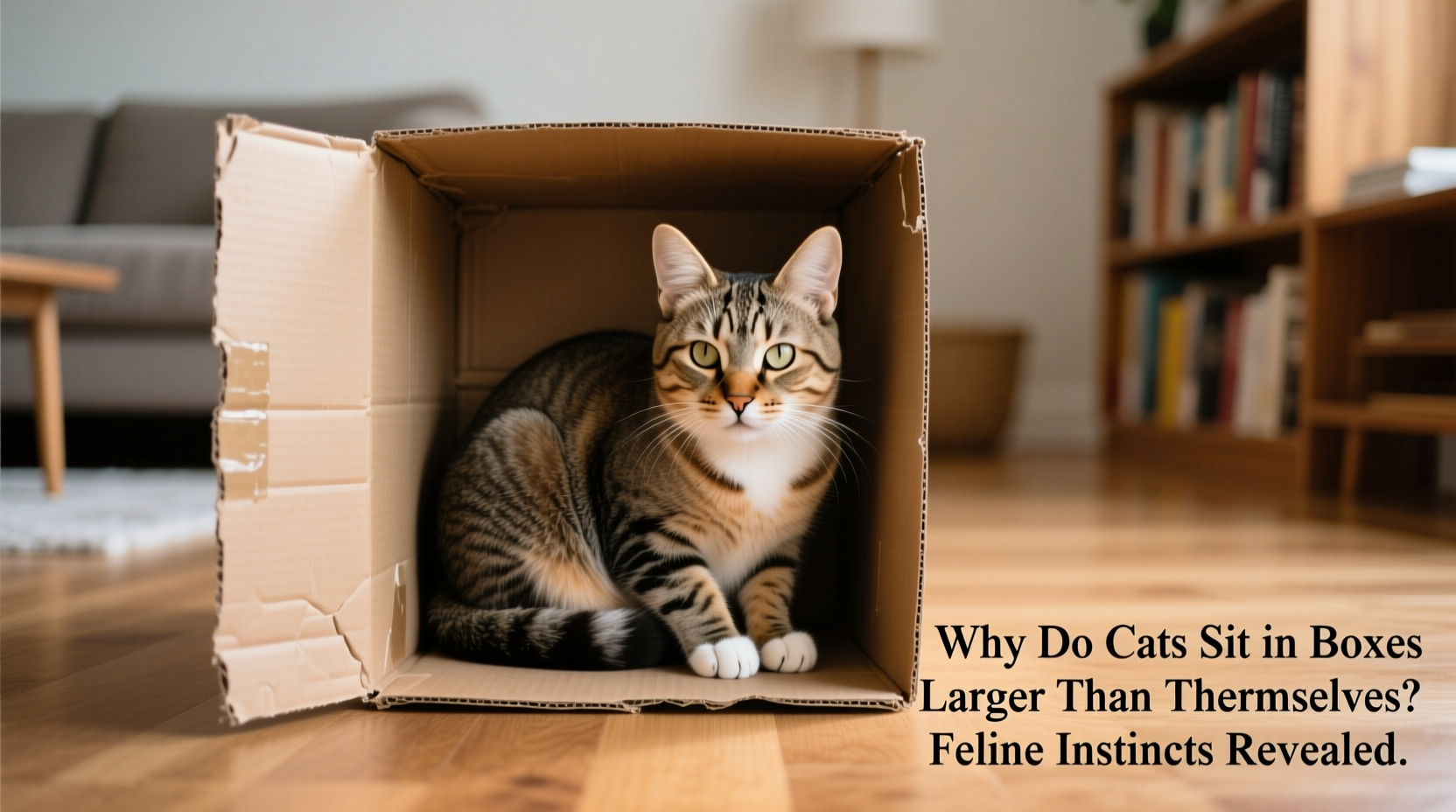
In the wild, felines are both predators and potential prey. Even though domestic cats have been living alongside humans for over 9,000 years, their instincts remain largely unchanged. Small, enclosed spaces provide protection from threats above and around. A box—even one significantly larger than the cat—creates psychological boundaries. The walls signal containment, which reduces exposure and increases perceived safety.
Dr. Sarah Ellis, a feline behavior expert at the University of Lincoln, explains:
“Enclosures offer cats a sense of security because they limit visibility from multiple angles. It doesn't matter if the box is oversized—the mere presence of barriers fulfills an instinctual need for concealment.” — Dr. Sarah Ellis, Feline Behavior Researcher
This need for secure zones is especially pronounced in multi-cat households or high-traffic homes where stress levels can rise. A box becomes a refuge, not just physically but mentally. Studies show that shelter cats given access to hiding boxes acclimate faster and display fewer signs of stress than those without.
Thermoregulation and Warmth Retention
Cats prefer warmer environments than humans do. Their ideal ambient temperature ranges between 86°F and 97°F (30°C–36°C), well above typical room temperatures. Cardboard, despite its flimsy appearance, is an excellent insulator. When a cat sits in a box, even a large one, body heat gets trapped against the inner surfaces, creating a cozy microclimate.
The act of curling up maximizes heat retention, but so does being surrounded by material that absorbs warmth. Larger boxes still function effectively because once the cat chooses a corner or center spot, the unused space doesn’t diminish insulation benefits—it may even enhance airflow regulation while preserving warmth near the cat’s core.
Sensory Control and Environmental Mastery
Cats are highly sensitive to visual and auditory stimuli. A sudden movement, loud noise, or unfamiliar scent can trigger alertness or anxiety. Boxes give cats control over their sensory input. By sitting inside—even loosely—they can observe their surroundings from a vantage point with limited blind spots.
A large box allows for repositioning based on changing conditions. For example, morning sunlight might warm one side, prompting the cat to shift position. Later, when foot traffic increases, the cat may turn its back to the opening, using the depth of the box as a buffer zone. This flexibility makes oversized containers more functional than snug ones.
Moreover, elevated edges (even low ones) allow cats to rest their paws and chin comfortably while maintaining vigilance—a posture often seen in outdoor cats perched on fences or rocks.
Psychological Security vs. Physical Fit
Contrary to human logic, physical fit does not equate to comfort for cats. Humans associate comfort with snugness—think of a fitted sweater or a close hug. Cats, however, prioritize environmental control over tactile tightness. A larger box offers options: lie flat, stretch out, turn around, or tuck in tightly—all within the same protected area.
This versatility supports different emotional states throughout the day. A playful kitten might dart in and out of a big box like a tunnel. An older cat might use the same space for long naps, appreciating the ability to stretch legs without leaving the safe perimeter.
The key factor isn’t size—it’s ownership. Once a cat enters a box, it marks it with facial pheromones, essentially claiming it as “theirs.” This territorial behavior reinforces the sense of control and belonging, regardless of spatial efficiency.
Do’s and Don’ts When Providing Boxes for Cats
| Do’s | Don’ts |
|---|---|
| Use clean, untreated cardboard boxes with open tops | Use tape-heavy or chemically treated packaging |
| Place boxes in quiet, low-traffic areas | Put boxes directly in busy hallways or near loud appliances |
| Rotate boxes weekly to maintain novelty | Leave damaged or soiled boxes unattended |
| Add soft bedding or old towels for extra comfort | Force a cat into a box—they must choose it freely |
| Provide multiple sizes to observe preference | Assume all cats will like boxes—some prefer tunnels or covered beds |
The Role of Play, Predation, and Mental Stimulation
Beyond safety and warmth, boxes serve as dynamic tools for mental engagement. A large box can become a hunting blind. From inside, a cat watches for “prey”—a dangling shoelace, a moving shadow, or a passing pet. The element of surprise is critical in feline play, and oversized boxes allow stealthy positioning before launching mock attacks.
Kittens raised with regular access to boxes and similar structures develop better spatial awareness and confidence. In behavioral studies, kittens allowed exploratory freedom in varied enclosures showed reduced fear responses later in life compared to those in barren environments.
Even adult cats benefit from cognitive enrichment through simple objects. A large box turned on its side becomes a cave. Flattened and crumpled, it transforms into a crackling terrain to stalk across. The adaptability of cardboard makes it uniquely stimulating.
Mini Case Study: Leo the Apartment Cat
Leo, a three-year-old domestic shorthair, lives in a bustling downtown apartment with two humans and frequent guests. His owners noticed he consistently avoided his expensive plush cat bed but spent hours each day in a delivery box from an online furniture order—nearly three times his length.
After consulting a veterinary behaviorist, they learned that Leo used the large box as a multifunctional space: a nap station during the day, a lookout post in the evening, and a den during social gatherings. They began rotating similar-sized boxes every few days, cutting entry points on different sides to increase exploration value. Within weeks, Leo’s nighttime vocalizations decreased, and he became more approachable during visits.
The takeaway? Size wasn’t the issue—predictability and control were. The large box gave him choices, and choice reduced stress.
Step-by-Step Guide to Creating the Ideal Box Environment
If you want to encourage healthy, instinct-driven behaviors in your cat, follow this simple process to optimize box usage:
- Select the right box: Choose a sturdy cardboard container with at least one open side or removable flap. Avoid plastic bins unless ventilated.
- Remove hazards: Take off all tape, labels, and staples. These can be ingested or cause injury during scratching.
- Enhance comfort: Line the bottom with a soft towel or fleece blanket. Avoid synthetic materials that trap moisture.
- Position strategically: Place the box in a calm area with partial visibility—near a window or beside a favorite chair works well.
- Introduce gradually: Let the cat investigate on their own. Do not place them inside.
- Rotate regularly: Swap boxes every 5–7 days to prevent boredom and maintain interest.
- Observe behavior: Note how your cat uses the space—is it for sleeping, watching, playing? Adjust placement accordingly.
Frequently Asked Questions
Why does my cat sit in boxes larger than themselves instead of smaller ones?
Larger boxes offer more versatility. Cats can stretch, reposition, and regulate body temperature more effectively. While small boxes provide tight security, oversized ones balance openness with enclosure, giving cats greater environmental control.
Is it normal for cats to prefer boxes over expensive cat beds?
Yes, and it’s extremely common. Many commercial cat beds lack the structural definition cats seek. Boxes provide clear boundaries, absorb body heat, and carry no strong scents—making them more appealing than padded but exposed alternatives.
Should I be concerned if my cat suddenly starts hiding in boxes more often?
Occasional box use is normal. However, a sudden increase in hiding—especially in previously social cats—can indicate pain, illness, or stress. Monitor for other changes like appetite loss, litter box avoidance, or vocalization, and consult a veterinarian if concerns arise.
Expert Insight: The Science Behind the Squat
Research conducted at the Utrecht University Faculty of Veterinary Medicine found that access to hiding places significantly lowers cortisol levels in cats. In one experiment, newly adopted shelter cats were divided into two groups: one with immediate access to cardboard boxes, and one without. After two weeks, the “box group” showed markedly lower stress scores and faster socialization rates.
“The box isn’t just a quirky preference—it’s a coping mechanism. In uncertain environments, having a den-like structure allows cats to process change at their own pace.” — Dr. Daniel Mills, Professor of Veterinary Behavioral Medicine
This underscores that box-sitting isn’t merely whimsical behavior. It’s a biologically supported strategy for emotional regulation.
Checklist: Creating a Cat-Friendly Box Zone
- ✅ Use clean, chemical-free cardboard boxes
- ✅ Remove all tape, stickers, and sharp edges
- ✅ Offer a variety of sizes and shapes
- ✅ Place boxes in quiet yet accessible locations
- ✅ Add soft, washable lining for comfort
- ✅ Rotate boxes weekly to maintain interest
- ✅ Observe your cat’s usage patterns
- ✅ Never force interaction—let the cat initiate
- ✅ Replace boxes when worn or soiled
- ✅ Combine with other enrichments like tunnels or shelves
Conclusion: Embracing the Quirks of Feline Nature
The sight of a cat lounging in a box far too large is more than just internet gold—it’s a window into the feline mind. What seems illogical to us is perfectly rational to them. Boxes fulfill fundamental needs: safety, warmth, control, and stimulation. Understanding this behavior allows us to support our cats not just as pets, but as animals with deep-rooted instincts deserving of respect and accommodation.
Rather than questioning why your cat prefers a cardboard container over a designer bed, celebrate it. Provide thoughtful spaces that honor their natural inclinations. In doing so, you’re not just indulging a cute habit—you’re nurturing a healthier, happier cat.




 浙公网安备
33010002000092号
浙公网安备
33010002000092号 浙B2-20120091-4
Comments
No comments yet. Why don't you start the discussion?