
Cats have long fascinated humans with their mysterious habits, and one of the most endearing—and puzzling—is their tendency to curl up in cardboard boxes. Whether it’s a shipping container, a shoebox, or a repurposed cereal carton, if it has walls and fits a cat, it’s fair game. But why do cats sleep in boxes? It’s not just whimsy; there’s solid behavioral and physiological reasoning behind this instinct. Animal behaviorists, veterinarians, and feline researchers agree: nesting in confined spaces is deeply rooted in a cat’s evolutionary psychology, offering comfort, safety, and warmth.
This article explores the science behind feline nesting behavior, drawing on expert insights, observational studies, and real-world examples to demystify what might seem like a quirky habit—but is, in fact, a natural and beneficial behavior for cats.
The Science of Security: Why Enclosed Spaces Calm Cats
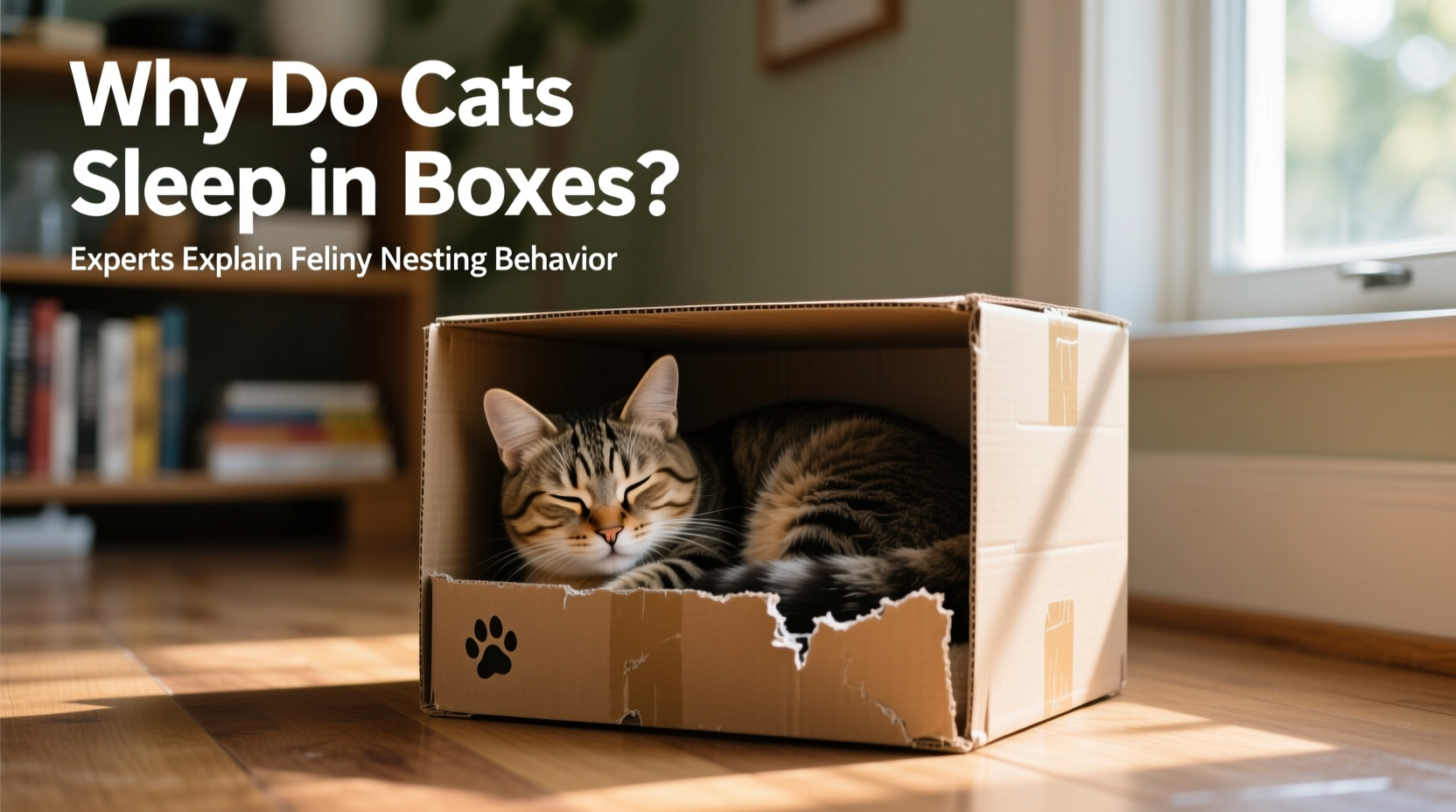
Cats are predators, but they are also prey animals in the wild. Even domesticated cats retain survival instincts from their ancestors, who needed to avoid larger predators. An enclosed space—like a box—provides a sense of security because it limits exposure. With walls on multiple sides, a cat can monitor its surroundings while remaining hidden, reducing anxiety and perceived threats.
Dr. Sarah Ellis, a feline behavior specialist at the University of Lincoln, explains:
“Enclosed spaces provide cats with a feeling of control over their environment. In the wild, cats seek out burrows, hollow logs, or dense brush to rest. Boxes mimic these natural shelters, giving cats a psychological edge when navigating unfamiliar or stimulating environments.”
This need for environmental control is especially pronounced in high-stress settings such as animal shelters. A 2015 study published in *Applied Animal Behaviour Science* found that shelter cats given access to cardboard boxes showed significantly lower stress levels than those without. The researchers concluded that even simple cardboard enclosures could serve as effective enrichment tools.
Thermoregulation: How Boxes Help Cats Stay Warm
Cats prefer warmer ambient temperatures than humans—typically between 86°F and 97°F (30–36°C). This is due to their evolutionary origins in arid regions like the Middle East, where conserving body heat was crucial. Cardboard is an excellent insulator, trapping body heat and creating a microclimate that helps cats maintain optimal temperature.
When a cat curls into a tight loaf position inside a box, it minimizes surface area exposed to cooler air, further enhancing heat retention. This behavior is particularly common in kittens and older cats, whose thermoregulatory systems are less efficient.
A 2020 thermal imaging study conducted by the American Veterinary Medical Association (AVMA) demonstrated that cats in boxes had core body temperatures approximately 1.5°F higher than those resting on open surfaces under the same room conditions. While seemingly minor, this difference can significantly impact comfort and energy conservation.
How Box Size Affects Thermal Efficiency
| Box Size Relative to Cat | Heat Retention | Comfort Level |
|---|---|---|
| Slightly larger than cat | High – minimal air circulation | Optimal – enough room to turn |
| Same size as cat | Very High – snug fit traps heat | Good – may limit movement |
| Much larger than cat | Moderate – more air flow | Fair – less secure feeling |
| Too small | Low – restricted posture causes discomfort | Poor – stress-inducing |
The ideal nesting box allows the cat to enter, turn around, and settle comfortably while still maintaining close contact with the walls. This balance maximizes both insulation and psychological security.
Feline Enrichment: Boxes as Mental Stimulation Tools
Beyond physical comfort, boxes play a role in cognitive health. Cats are naturally curious and benefit from environmental enrichment—stimuli that encourage exploration, problem-solving, and play. A simple box becomes a dynamic object: a hiding spot, a hunting blind, or a launchpad for ambush games.
In multi-cat households, boxes can reduce social tension by providing personal territory. One observational case study from a Portland-based veterinary clinic followed two sibling cats, Luna and Milo, who began fighting after a home renovation disrupted their usual routines. The owners introduced several cardboard boxes labeled with each cat’s name and placed them in separate quiet zones. Within a week, aggressive interactions dropped by 70%, and both cats were observed napping peacefully in their designated boxes.
The clinic’s lead veterinarian noted: “The boxes didn’t solve all the issues, but they gave each cat a predictable, controllable space. That sense of ownership reduced competition and restored a sense of stability.”
- Boxes encourage exploratory behavior, which reduces boredom.
- They can be rotated or modified (e.g., cut into tunnels) to maintain novelty.
- Used in training, boxes help desensitize cats to new environments.
Step-by-Step Guide: Creating the Ideal Feline Nesting Space
If you want to support your cat’s natural nesting instincts, follow this practical guide to set up safe and enriching box habitats.
- Select the Right Box: Choose clean, undamaged cardboard with no tape residue or staples. Avoid plastic or styrofoam containers, which lack breathability.
- Size Appropriately: The interior should allow your cat to sit, stretch, and turn around comfortably. For smaller cats, shoeboxes work well; larger breeds need storage-sized boxes.
- Modify for Access: Cut one side out completely or create a large opening for easy entry. Some cats prefer top-entry boxes, but side access is generally safer.
- Add Soft Lining (Optional): Place a removable fleece blanket or towel inside. Avoid thick padding that could trap moisture or encourage chewing.
- Position Strategically: Place boxes in quiet areas away from foot traffic but near family activity (e.g., living room corner, bedroom closet). Cats like to observe without being disturbed.
- Rotate and Refresh: Replace boxes every 2–3 weeks or sooner if soiled. Introduce new shapes (rectangular, triangular) to maintain interest.
Common Misconceptions About Box Sleeping
Despite how common box-sleeping is, several myths persist among pet owners:
- Myth: Cats only use boxes because they’re cold or neglected.
Reality: Even well-cared-for cats in warm homes choose boxes. It’s instinctual, not a sign of unmet needs. - Myth: Only indoor cats do this.
Reality: Outdoor and feral cats seek similar enclosures—abandoned furniture, hollow trees, or crawl spaces. - Myth: Boxes are unsafe due to suffocation risks.
Reality: There are no documented cases of healthy cats suffocating in open-top boxes. Ensure ventilation by avoiding sealed containers.
It’s also important to distinguish between nesting and obsessive enclosure-seeking. If a cat suddenly begins hiding constantly—even in boxes—it may signal illness or anxiety. Monitor for other symptoms like appetite loss, litter box avoidance, or vocalization changes.
Expert Checklist: Supporting Healthy Nesting Behavior
To ensure your cat’s box habit remains a positive one, follow this checklist based on recommendations from veterinary behaviorists:
- ✅ Provide at least one box per cat in multi-cat homes
- Reduces competition and territorial stress.
- ✅ Use non-toxic, plain cardboard
- Avoid colored inks, wax coatings, or chemical treatments.
- ✅ Keep boxes clean and dry
- Damp cardboard can harbor mold and deter use.
- ✅ Supervise kittens with boxes
- Prevent ingestion of cardboard fragments or entrapment in flaps.
- ✅ Combine with other hiding options
- Include covered beds, cat caves, or DIY paper bag tunnels for variety.
FAQ: Common Questions About Cats and Boxes
Do all cats like boxes?
Most cats show some interest in enclosed spaces, but individual preferences vary. Shy or anxious cats are more likely to seek them out, while bold, outgoing cats may use them occasionally for play or short naps. Age and past experiences also influence behavior—rescued cats often form strong attachments to boxes as safe zones.
Can I use plastic containers instead of cardboard?
Plastic bins are less ideal. They don’t breathe well, can become slippery, and lack the comforting texture of cardboard. If used, ensure ample ventilation and line the bottom with absorbent material. Cardboard remains the safest, most natural option.
Is it okay to take away a box once it’s worn out?
Yes, but replace it immediately with a fresh one. Sudden removal of a favored nesting site can cause stress. Gradually phase out old boxes by placing the new one nearby first, allowing your cat to transfer its scent and claim the new space.
Conclusion: Embrace the Box Habit as Natural Cat Care
The sight of a cat curled up in a box is more than just internet gold—it’s a window into feline psychology. From reducing stress to regulating body temperature, the act of nesting in confined spaces serves vital biological and emotional functions. Rather than discouraging this behavior, cat owners should embrace it as a low-cost, high-impact way to improve their pet’s well-being.
Understanding why cats sleep in boxes empowers us to create better living environments—one cardboard corner at a time. By providing safe, accessible hiding spots, we honor our cats’ instincts and strengthen the trust between species.




 浙公网安备
33010002000092号
浙公网安备
33010002000092号 浙B2-20120091-4
Comments
No comments yet. Why don't you start the discussion?