
As the holiday season approaches, homes across neighborhoods come alive with twinkling Christmas lights. While these luminous displays bring joy and festive cheer, they also come with an unexpected side effect: swarms of bugs circling the bulbs. If you've ever noticed moths, flies, or beetles hovering around your outdoor string lights, you're not imagining things—there’s a scientific reason behind this phenomenon. Understanding why insects are drawn to holiday lighting is the first step in minimizing their presence and enjoying your decorations without turning your porch into an impromptu insect gathering.
Bugs aren't attracted to light for the same reasons humans enjoy it. For many nocturnal insects, artificial light disrupts their natural navigation systems, leading them into a disoriented spiral around bright sources. This behavior not only diminishes the aesthetic appeal of your holiday setup but can also create messes, attract predators like spiders, and even become a nuisance indoors if lights are near open windows. The good news? With informed choices and a few strategic adjustments, you can significantly reduce bug attraction while keeping your home beautifully lit.
The Science Behind Bug Attraction to Light
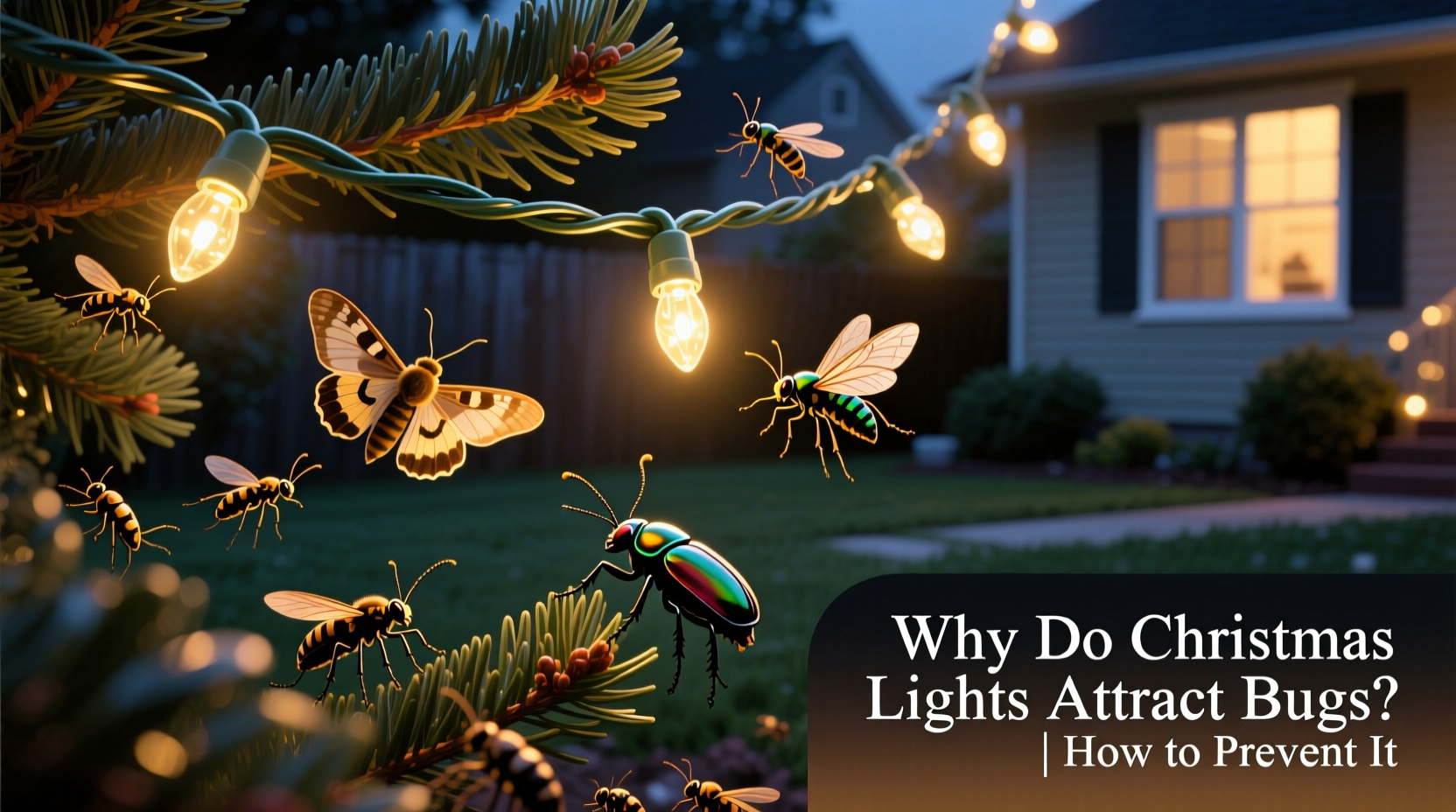
Insects don’t \"like\" light in the way we might enjoy sunlight on a winter day. Instead, their attraction stems from a biological miswiring caused by artificial illumination. Many flying insects, such as moths, beetles, and midges, use natural light sources like the moon and stars for orientation—a method known as transverse orientation. By maintaining a constant angle relative to a distant light source, they can fly in straight lines over long distances.
Artificial lights, however, are close-range and intense, which throws off this navigation system. When an insect tries to maintain a fixed angle to a nearby bulb, it ends up flying in circles, unable to escape the light's pull. This explains why bugs appear to “hover” around Christmas lights rather than simply landing on them.
Additionally, ultraviolet (UV) and blue-spectrum light wavelengths are especially problematic. These wavelengths closely resemble the light reflected by flowers during daylight hours—cues that pollinators like moths have evolved to follow. Outdoor LED and incandescent Christmas lights often emit significant amounts of UV and blue light, making them unintentional beacons for night-flying insects.
“Many insects perceive short-wavelength light as a signal for open space or food sources. Artificial lighting essentially hijacks their sensory systems.” — Dr. Lena Torres, Entomologist at the National Institute of Insect Behavior
Types of Lights That Attract the Most Bugs
Not all Christmas lights are equal when it comes to attracting insects. The type of bulb, its color temperature, and the spectrum of light emitted play crucial roles in determining how much attention your display will get from local bugs.
Traditional incandescent mini lights, while warm and nostalgic, produce a broad spectrum of light, including infrared and some UV emissions. Their yellow-white glow still contains enough blue light to attract insects. Similarly, cool white LEDs—often marketed for their brightness and energy efficiency—emit high levels of blue light, making them among the worst offenders for bug attraction.
On the other hand, warmer-colored LEDs with a color temperature of 2700K or lower (amber, gold, or red-tinted lights) are far less attractive to insects. These emit longer wavelengths that most bugs cannot detect as easily. Red lights, in particular, are nearly invisible to many nocturnal insects, making them an excellent choice for minimizing unwanted visitors.
Effective Strategies to Prevent Bugs Around Christmas Lights
Reducing insect activity around your holiday lights doesn’t mean sacrificing beauty or brightness. A combination of smart lighting choices, physical barriers, and environmental management can keep bugs at bay without dimming your festive spirit.
1. Switch to Bug-Friendly Bulbs
The most effective long-term solution is selecting lights that naturally deter insects. Opt for LEDs labeled as “warm white,” “soft white,” or “amber.” Avoid cool white, daylight, or blue-tinted lights, especially for outdoor installations. Some manufacturers now offer “bug-resistant” or “insect-repellent” LEDs designed specifically to minimize UV and blue spectrum output.
2. Use Yellow or Red Filters
If replacing your existing lights isn’t feasible, consider using colored sleeves or filters. Red cellophane wraps or amber clips can be placed over individual bulbs to shift the emitted light into less attractive wavelengths. While not as efficient as built-in solutions, this low-cost modification can make a noticeable difference.
3. Install Physical Barriers
Strategic placement of mesh screens, porch curtains, or fine netting around patios and entryways can block insects from reaching the lights altogether. Even decorative elements like garlands or foliage can serve as partial shields, reducing direct access to illuminated areas.
4. Reduce Ambient Lighting Elsewhere
Minimize competing light sources near your Christmas display. Turn off unnecessary porch lights, floodlights, or indoor lamps visible from outside during peak insect hours (dusk to midnight). The fewer bright spots there are, the less likely bugs are to swarm any single area.
5. Time Your Lighting
Use timers to limit when your Christmas lights are on. Running them only during peak viewing hours—say, from 5 PM to 11 PM—reduces exposure time and limits opportunities for insects to discover and congregate around them. Many modern light sets come with programmable remotes or smartphone integration for easy scheduling.
Comparison Table: Light Types and Bug Attraction Levels
| Light Type | Color Temperature | UV/Blue Emission | Bug Attraction Level | Recommendation |
|---|---|---|---|---|
| Cool White LED | 5000K–6500K | High | Very High | Avoid for outdoor use |
| Warm White LED | 2700K–3000K | Low | Moderate to Low | Recommended |
| Amber/Red LED | Below 2200K | Negligible | Very Low | Best choice for bug-prone areas |
| Incandescent (Mini) | 2500K–3000K | Moderate | High | Limited outdoor use |
| Colored Filters (Red/Yellow) | Varies | Reduced with filter | Low to Moderate | Budget-friendly upgrade |
Step-by-Step Guide to Bug-Proofing Your Holiday Display
- Assess your current lighting setup. Identify which strings are cool white, blue-tinted, or high-output LEDs.
- Replace or supplement with warm or amber LEDs. Prioritize outdoor areas and locations near doors and windows.
- Install a timer or smart plug. Program lights to turn on after dusk and off before midnight.
- Add physical barriers where possible. Use netting, screens, or dense greenery to block insect access.
- Reduce surrounding light pollution. Turn off adjacent lights and draw curtains to minimize indoor glow.
- Inspect weekly for signs of pests. Look for accumulating dead bugs, webs, or residue that may require cleaning.
- Store lights properly after the season. Clean and coil each strand carefully to extend lifespan and prevent moisture damage.
Real Example: A Homeowner’s Experience in Austin, Texas
Sarah M., a homeowner in Austin, struggled for years with her front porch becoming a nightly hotspot for moths and beetles during the holiday season. Her original setup included multiple strands of cool white LED icicle lights along the eaves and railings. Each evening, within minutes of turning the lights on, dozens of insects would gather, drawing spiders and creating a sticky, unsightly mess by morning.
Determined to find a solution, Sarah replaced all her cool white strings with warm amber LEDs the following November. She also installed a simple timer to limit operation to 6 PM–10 PM and added a sheer mesh curtain along her porch railing. The results were immediate: bug activity dropped by over 80%. By the second week, she noticed no new webs forming, and neighbors commented on how clean and inviting her display looked. “I didn’t think changing the color of the lights would make such a big difference,” she said. “Now I enjoy my porch instead of dreading the cleanup.”
Checklist: How to Minimize Bugs Around Christmas Lights
- ☐ Replace cool white or blue-tinted lights with warm white or amber LEDs
- ☐ Use timers to limit lighting hours (e.g., dusk to bedtime)
- ☐ Install mesh screens or netting near high-traffic light zones
- ☐ Turn off nearby outdoor lights during display hours
- ☐ Apply red or yellow filters to existing bulbs if replacement isn’t possible
- ☐ Position lights away from doors, windows, and seating areas
- ☐ Clean light strands before storage to prevent mold and residue buildup
- ☐ Monitor for insect activity weekly and adjust strategy as needed
Frequently Asked Questions
Do all bugs hate red or amber light?
Most nocturnal flying insects are less sensitive to longer wavelengths like red and amber. While not completely “invisible,” these colors fall outside the peak detection range of many species, making them far less attractive than blue or white light. However, some exceptions exist—certain beetles and flies may still respond weakly, but overall activity is drastically reduced.
Can citronella candles or bug zappers help?
Citronella candles may provide mild repellent effects in small areas but are generally ineffective against light-attracted insects, which are driven more by vision than scent. Bug zappers, while tempting, often do more harm than good—they kill beneficial insects and can actually increase annoyance by drawing more bugs to the area. Focus on eliminating the attractant (the light spectrum) rather than trying to kill the symptoms.
Will switching to solar-powered lights solve the problem?
Not necessarily. Solar-powered Christmas lights still rely on LED technology, so their bug attraction depends on color temperature and spectrum, not power source. Many solar lights default to cool white for perceived brightness, which can worsen the issue. Always check the specifications for warmth (2700K or lower) regardless of how the lights are powered.
Conclusion: Enjoy a Brighter, Bug-Free Holiday Season
Christmas lights should illuminate your home with warmth and celebration—not serve as a magnet for unwelcome insect guests. By understanding the science behind bug attraction and making informed choices about lighting, timing, and placement, you can preserve the magic of the season without the mess and frustration.
The shift to warmer, amber, or red-hued LEDs isn’t just a minor tweak—it’s a strategic upgrade that aligns holiday aesthetics with practical pest management. Combine this with smart scheduling and simple physical barriers, and you’ll create a display that delights people, not pests.




 浙公网安备
33010002000092号
浙公网安备
33010002000092号 浙B2-20120091-4
Comments
No comments yet. Why don't you start the discussion?