
Every holiday season, millions of homes light up with strings of festive Christmas lights. Yet, one common frustration unites many: a strand that suddenly stops working. Often, the culprit isn’t a burnt bulb or damaged wire—it’s a blown fuse. But why do these small decorative lights even have fuses? And more importantly, how can you replace them correctly without risking safety or damaging your lights?
Understanding the role of fuses in Christmas lights is key to maintaining both the longevity of your decorations and the safety of your home. From explaining the science behind miniature fuses to offering a detailed guide on replacement, this article breaks down everything you need to know—so you can keep your holiday display glowing bright.
The Role of Fuses in Christmas Lights
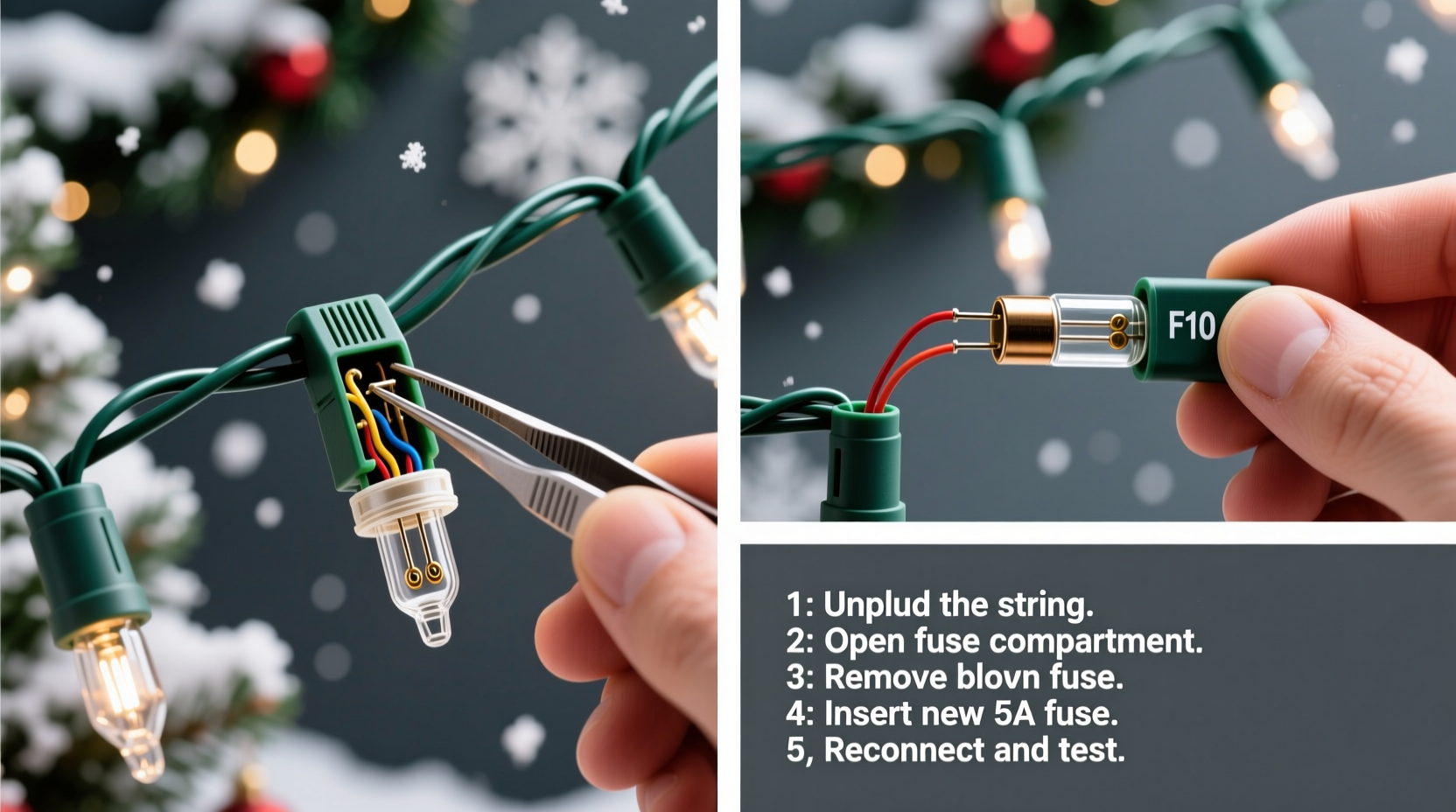
Fuses are tiny but critical safety components embedded in most plug-in incandescent Christmas light strands. Their primary function is to protect the wiring and bulbs from electrical overloads. When too much current flows through the circuit—due to power surges, short circuits, or manufacturing defects—the fuse “blows” (melts internally) to break the circuit and prevent overheating, which could otherwise lead to melted wires, fire hazards, or damage to other connected strands.
Modern mini Christmas lights are typically wired in series, meaning electricity passes through each bulb sequentially. If one bulb fails or the current spikes, the entire string can be affected. The fuse acts as the weakest link by design, sacrificing itself to stop excessive current before it causes harm.
Most standard light sets contain two fuses housed inside the female plug (the end that receives the male plug). These are often labeled “FUSE” and accessible via a small sliding compartment. One fuse serves as the primary protector; the second is usually a spare, included for convenience.
“Miniature fuses in Christmas lights are not just a formality—they’re a crucial layer of protection against household electrical risks.” — James L. Reed, Electrical Safety Engineer, National Fire Protection Association (NFPA)
How to Identify a Blown Fuse
When a section or an entire string of lights goes dark, a blown fuse is a likely cause—especially if no bulbs appear visibly broken and the strand is plugged into a working outlet. Here’s how to confirm:
- Unplug the light set immediately for safety.
- Locate the fuse compartment on the female plug. Slide open the cover carefully—some require a coin or flathead screwdriver.
- Inspect both fuses visually. A clear glass fuse will show a fine wire inside. If the wire is broken, blackened, or visibly severed, the fuse is blown.
- If the fuse looks intact but you're unsure, use a multimeter set to continuity mode. Touch the probes to each metal end. No beep means the fuse is dead.
Step-by-Step Guide to Replacing a Fuse in Christmas Lights
Replacing a fuse is straightforward when done carefully. Follow this timeline to restore your lights safely:
- Unplug the lights – Never work on live electrical devices. Unplugging eliminates shock risk.
- Open the fuse compartment – Use a coin or small tool to slide the cover off the female plug.
- Remove the blown fuse – Gently pry it out with tweezers or your fingers. Avoid forcing it.
- Select the correct replacement – Most mini lights use 3-amp, 125-volt fuses. Check the original fuse rating printed on the side or listed in the manual.
- Insert the new fuse – Place it securely into the holder. Ensure full contact with the metal terminals.
- Test the lights – Plug them in briefly. If they light up, the repair was successful. If not, check bulbs, connections, or try the spare fuse slot.
- Close the compartment – Slide the cover back into place to protect the fuse.
Some light sets have dual fuses—one in use, one spare. If only one fuse is blown, replace just that one. However, if both are damaged, replace both simultaneously to ensure balanced protection.
Do’s and Don’ts When Handling Fuses
Mistakes during fuse replacement can compromise safety or render lights unusable. Refer to this comparison table to avoid common errors:
| Do’s | Don’ts |
|---|---|
| Use the correct amperage (usually 3A) | Use a higher-rated fuse (e.g., 5A) to “prevent blowing” |
| Replace fuses with identical specifications | Substitute with foil, wire, or makeshift conductors |
| Inspect wires and plugs for damage before reassembly | Force a fuse into a misshapen holder |
| Keep spare fuses stored with your decorations | Leave the fuse compartment open after replacement |
| Unplug lights before any maintenance | Attempt repairs while lights are plugged in |
Real Example: A Holiday Display Saved in Minutes
Consider Sarah from Portland, who decorates her home annually with over 20 strands of vintage-style incandescent lights. One December evening, she noticed half her porch display had gone dark. After checking outlets and replacing several bulbs to no avail, she remembered reading about fuses.
She unplugged the affected strand, opened the fuse compartment, and found one fuse completely blackened. Using the spare included in the plug, she replaced it within 90 seconds. Upon plugging the lights back in, the entire strand lit up perfectly. Her total troubleshooting time: under five minutes. Without knowing about fuses, she might have discarded a fully repairable set—or worse, attempted a dangerous workaround.
This scenario underscores how basic electrical knowledge can save time, money, and reduce holiday stress.
Frequently Asked Questions
Can LED Christmas lights have fuses too?
Yes, though less commonly. Many plug-in LED light sets still include fuses for surge protection, especially if they’re designed to connect multiple strands. However, battery-operated or low-voltage LEDs may not require them due to inherently safer power levels.
Why did my new Christmas lights blow a fuse immediately?
This usually indicates a short circuit. Possible causes include pinched wires, moisture exposure, or connecting too many strands beyond the manufacturer’s limit (overloading the circuit). Inspect for visible damage and ensure you’re not exceeding the maximum wattage allowed per outlet.
Where can I buy replacement fuses for Christmas lights?
Hardware stores like Home Depot or Lowe’s often carry packs of 3A/125V miniature fuses in the holiday or electrical section. Online retailers such as Amazon offer bulk packs specifically labeled for Christmas lights. Always verify the voltage and amperage match your original fuse.
Checklist: Safely Replace a Christmas Light Fuse
- ✅ Unplug the light strand from the power source
- ✅ Locate and open the fuse compartment on the female plug
- ✅ Remove the blown fuse using tweezers or fingers
- ✅ Confirm the correct replacement specs (typically 3A, 125V)
- ✅ Insert the new fuse securely into the holder
- ✅ Test the lights by plugging them in briefly
- ✅ Close the fuse compartment completely
- ✅ Store spare fuses with your holiday decorations
Safety First: When Not to Replace a Fuse
While fuse replacement is generally safe, certain conditions warrant caution or disposal of the strand:
- Burn marks on the plug or housing – Indicates severe overheating.
- Frayed, cracked, or exposed wires – Increases shock and fire risk.
- Fuses blow repeatedly – Suggests an underlying fault in the wiring or incompatible connections.
- Water damage or mold – Especially in lights previously used outdoors and stored damp.
In these cases, no amount of fuse swapping will make the lights safe. Discard damaged sets responsibly and invest in new, UL-certified replacements.
“Reusing compromised light sets isn’t worth the risk. One faulty strand can overheat an entire circuit.” — NFPA Holiday Safety Bulletin, 2023
Conclusion: Keep Your Lights—and Home—Safe This Season
Christmas lights bring joy, tradition, and warmth to the darkest time of year. Behind their sparkle lies a small but vital safeguard: the humble fuse. By understanding its purpose and learning how to replace it properly, you gain more than a working strand—you gain confidence in managing basic electrical safety at home.
Whether you’re untangling lights for the first time or reviving a favorite set passed down through generations, take a moment to inspect the fuse. It could be the difference between a twinkling display and a darkened eave. With the right knowledge, a spare fuse, and a few careful steps, you can keep your holiday spirit shining brightly—safely and reliably—for seasons to come.




 浙公网安备
33010002000092号
浙公网安备
33010002000092号 浙B2-20120091-4
Comments
No comments yet. Why don't you start the discussion?