
Every year, thousands of pet owners face the same anxious ritual: stringing lights, placing ornaments, and stepping back—only to find their dog gnawing on a live cord or their cat batting at a dangling wire like it’s prey. It’s not just inconvenient; it’s dangerous. Electrical shocks, burns, internal injuries from ingesting insulation, and even fatal electrocution are real risks. Yet many owners respond with punishment—yelling, spraying water, or confining pets—without addressing the underlying causes. That approach rarely works long-term and can damage trust. Understanding *why* pets target those wires—and responding with science-backed, compassionate solutions—is the only sustainable path forward.
The Real Reasons Pets Chew Tree Wires (It’s Not “Naughtiness”)
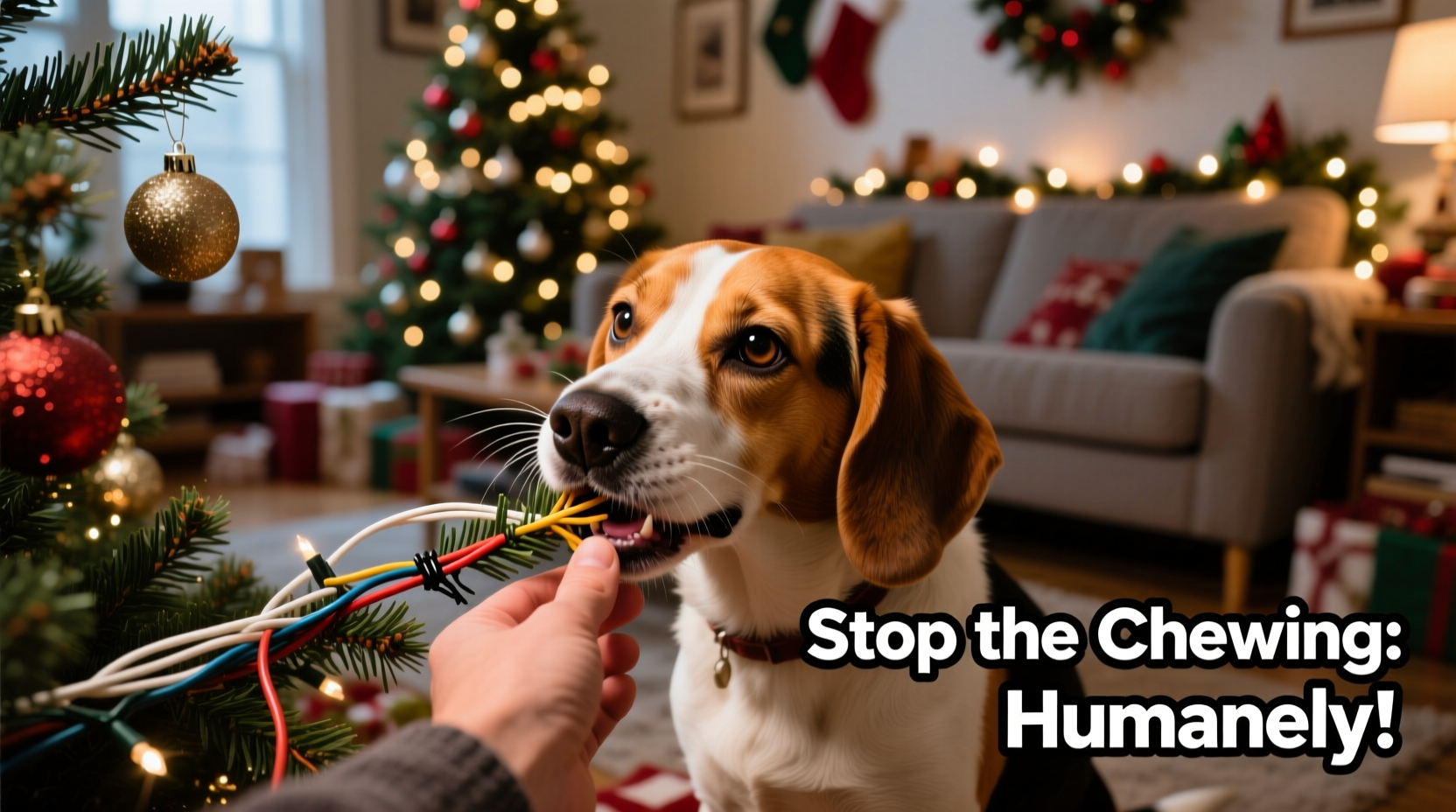
Chewing behavior in pets is rarely about defiance. It’s a functional response rooted in biology, environment, and emotional state. For dogs and cats alike, Christmas tree wiring presents a perfect storm of triggers:
- Sensory novelty: Wires emit faint warmth, subtle vibrations from current flow, and unique textures—especially when insulated in rubber or PVC. To a curious animal, they’re more intriguing than static ornaments.
- Prey drive activation: Cats see dangling cords as moving targets—reminiscent of snakes or insects. Dogs may chase or bite them during play bursts, especially puppies under six months old whose jaws are actively teething.
- Stress and overstimulation: Holiday changes—new scents, visitors, altered routines, loud music—elevate cortisol levels. Chewing releases endorphins, acting as self-soothing behavior. A 2022 study in Applied Animal Behaviour Science found that 68% of dogs exhibiting new chewing behaviors during December showed concurrent signs of environmental anxiety (panting, pacing, hiding).
- Boredom and under-exercise: With shorter daylight hours and colder weather, many pets receive less physical and mental stimulation. Unmet energy needs often redirect toward accessible, high-sensory objects—like low-hanging wires.
- Lack of appropriate alternatives: If a pet has never been taught what *is* acceptable to chew—or hasn’t had consistent access to satisfying outlets—their choices default to whatever is novel, textured, and within reach.
This isn’t misbehavior—it’s communication. Your pet is signaling unmet needs: for safety, stimulation, structure, or relief.
Humane, Evidence-Based Prevention Strategies
Effective prevention doesn’t rely on aversion alone. It combines environmental management, behavioral redirection, and proactive enrichment. The goal is to make wires inaccessible *while* making appropriate alternatives irresistible.
1. Physical Barrier Systems That Work
Barriers must be secure, non-toxic, and visually unobtrusive. Avoid flimsy tape or loosely draped fabric—pets quickly learn to displace them.
- Rigid cord covers: Use split-loom tubing (not flexible plastic sleeves) rated for indoor electrical use. Cut to length, snap shut around grouped wires, and anchor ends with low-tack painter’s tape to baseboard—not the tree stand.
- Tree skirt reinforcement: Place a rigid, weighted barrier beneath the skirt—a 12-inch-diameter ring of smooth, food-grade silicone (like a large baking mat cut into a circle) prevents paw access while allowing airflow. Avoid decorative pinecones or glass ornaments near the base—they invite investigation.
- Vertical containment: Install a freestanding, pet-proof tree enclosure made of clear acrylic panels (minimum 48 inches tall). Unlike mesh or netting, acrylic blocks visual access and eliminates scent trails along wires.
2. Environmental Enrichment That Redirects Focus
Redirecting chewing requires matching the sensory appeal of wires—not just offering “boring” toys. Prioritize items that engage multiple senses simultaneously.
| Chew Trigger | Wire Attribute | Humane Alternative | Why It Works |
|---|---|---|---|
| Cat (prey drive) | Dangling motion + texture | Motorized feather wand with retractable cord + crinkle ball inside fleece pouch | Mimics movement unpredictability; crinkle sound satisfies auditory curiosity without electricity |
| Puppy (teething) | Firm resistance + cool surface | Frozen knotted cotton rope soaked in low-sodium broth, then frozen | Provides jaw pressure relief + cooling sensation + safe, digestible fiber |
| Anxious adult dog | Repetitive motion + tactile feedback | Slow-feeder puzzle toy filled with kibble + lick mat smeared with pumpkin puree (unsweetened) | Triggers calming licking reflex + occupies mouth for 15–25 minutes |
Rotate alternatives weekly. Novelty sustains engagement—just as new decorations do for us.
A Real-World Example: Luna the Rescue Terrier Mix
Luna, a 2-year-old terrier mix adopted in November, began chewing her owner’s pre-lit tree wires within 48 hours of setup. Her family tried citrus sprays, yelling, and crate confinement—but she’d whine, pace, and chew the crate bars instead. A certified veterinary behaviorist assessed Luna’s routine and noted three key gaps: no morning sniff walks (depriving her of olfactory input), zero puzzle feeding (meals served in bowls twice daily), and no designated “chew zone” in the living room.
The plan shifted entirely: • Morning walks now include 10 minutes of “sniff time” off-leash in a fenced yard. • All meals are served in a Kong Wobbler filled with kibble and crushed freeze-dried liver. • A dedicated corner features a washable rug, two durable chew ropes (one frozen nightly), and a cardboard box stuffed with shredded paper and hidden treats. • Wires were fully enclosed in split-loom tubing anchored to baseboard.
Within nine days, Luna ignored the tree entirely. Her owner reported reduced panting, increased napping, and zero chewing incidents. Crucially, Luna’s confidence grew—she began initiating play with toys instead of seeking out forbidden objects.
Step-by-Step: Building a Wire-Safe Holiday Routine (7 Days Before Tree Setup)
- Day 1–2: Audit your pet’s daily routine. Log activity, feeding times, and observed stress cues (yawning, lip licking, avoidance) for 48 hours.
- Day 3: Purchase and install physical barriers (split-loom tubing, acrylic enclosure, or weighted skirt liner). Test stability—no wobbling or easy displacement.
- Day 4: Introduce 2–3 new enrichment items using positive reinforcement. Reward calm interaction—not chewing—with soft praise and tiny treats.
- Day 5: Begin “tree desensitization”: place an empty, unplugged tree stand in its location for 30 minutes daily. Reward relaxed proximity with treats tossed away from the stand.
- Day 6: Add one neutral item to the stand (e.g., plain burlap wrap). Repeat proximity rewards. If your pet investigates, redirect gently to a chew rope—then reward engagement with *that*.
- Day 7: Set up the bare tree (no lights or wires). Let your pet explore freely for 15 minutes. Observe body language—if tail is low or ears back, end session early and try again next day.
- Tree Day: Install wires *inside* barriers first. Then add lights and ornaments. Keep initial supervised sessions under 10 minutes. End on a positive note with a favorite game or chew.
Expert Insight: What Veterinary Behaviorists Emphasize
“Punishment teaches fear—not discrimination. When a dog gets yelled at for biting a cord, they don’t learn ‘don’t chew wires.’ They learn ‘my person becomes unpredictable near the shiny tree.’ That erodes security and often escalates conflict. Humane prevention builds trust *and* safety—simultaneously.” — Dr. Lena Torres, DACVB, Veterinary Behaviorist and Co-Director of the Chicago Animal Behavior Clinic
Dr. Torres stresses that consistency matters more than perfection. One slip-up won’t undo progress—if you return immediately to the plan. She also warns against over-reliance on electronic deterrents (like motion-activated air sprays), noting they increase baseline anxiety in 41% of sensitive dogs, per her 2023 clinical cohort study.
FAQ: Addressing Common Concerns
Can I use aluminum foil or double-sided tape around the base to deter chewing?
No—these create negative associations with the entire tree area. Foil startles with noise and texture; tape leaves sticky residue that frustrates and may cause skin irritation. Both teach avoidance rather than redirection, potentially generalizing fear to other holiday elements (gift wrap, stockings). Use physical barriers and enrichment instead.
My cat climbs the tree—will covering wires stop that?
Not necessarily. Climbing stems from vertical exploration instinct—not wire attraction. Address climbing separately: install a tall, stable cat tree *next to* the tree (with dangling toys at eye level), apply Feliway Classic diffuser in the room 48 hours before tree setup, and gently remove your cat *before* they reach branches—not after. Never punish mid-climb; it creates height-related fear.
Is there a safe “bitter” taste I can use indoors?
Yes—but only on non-electrical surfaces. A dilute solution of unsweetened black coffee (1 part coffee to 3 parts water) sprayed on baseboards near the tree is aversive to most dogs and cats, non-toxic, and dries odorless. Reapply every 2–3 days. Never use essential oils (e.g., citrus, eucalyptus)—they’re toxic to cats and can cause respiratory distress in dogs.
What NOT to Do: A Critical Checklist
- ❌ Don’t leave pets unsupervised near the tree—even for “just five minutes.” Most incidents occur during brief lapses.
- ❌ Don’t use extension cords with exposed copper or frayed insulation anywhere in the home during holidays. Replace them immediately.
- ❌ Don’t punish after the fact. Pets cannot connect delayed correction to past behavior.
- ❌ Don’t assume “outgrowing” will solve it. Untreated anxiety-driven chewing often worsens with age.
- ❌ Don’t rely solely on taste deterrents without environmental management. They’re a supplement—not a solution.
Conclusion: Safety Begins With Understanding
Your pet isn’t sabotaging the holidays. They’re responding—honestly and instinctively—to changes in their world. When you replace judgment with curiosity, and punishment with preparation, you do more than protect wires. You deepen your bond. You teach resilience. You model compassion in action. This season, choose strategies grounded in science—not stress. Install that split-loom tubing. Freeze that broth-soaked rope. Sit quietly beside your pet while they investigate a new puzzle toy. Notice the sigh of relaxation when their nervous system settles. That quiet moment—where safety meets satisfaction—is the truest gift you’ll give them.




 浙公网安备
33010002000092号
浙公网安备
33010002000092号 浙B2-20120091-4
Comments
No comments yet. Why don't you start the discussion?