
That sharp pop, the brief blue flash near the plug—especially when you’re rushing to finish holiday decorating—is enough to make anyone flinch. Most people dismiss it as “just static” or “normal for old lights.” But electricity doesn’t lie: a spark is energy escaping where it shouldn’t. And while some sparks are benign, others signal hidden risks—frayed wires, overloaded circuits, or deteriorated insulation that could escalate into overheating, melted sockets, or even fire. Understanding the physics behind the spark, recognizing the subtle differences between nuisance and danger, and knowing precisely what to inspect (and what to discard) separates seasonal convenience from genuine safety. This isn’t about fear—it’s about informed confidence.
The Physics of the Spark: Why It Happens (and Why It’s Not Always Bad)
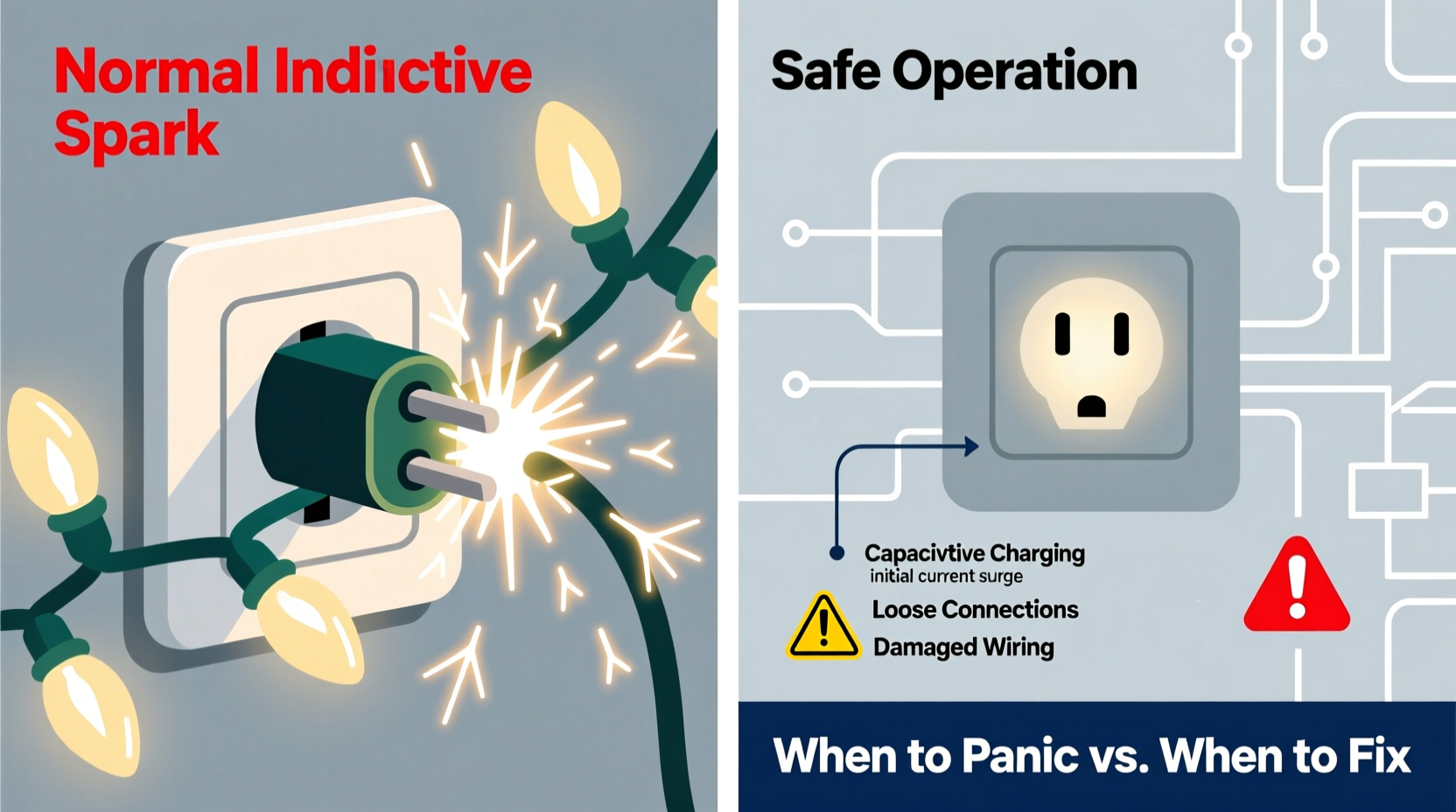
A spark occurs when electricity jumps across a small air gap between two conductors—most commonly between the metal prongs of the plug and the live contacts inside the outlet. This happens because, at the exact moment of insertion, the gap is narrow enough and the voltage high enough to ionize the air molecules, creating a temporary conductive path. In standard 120V household circuits, this is called an arc.
Small, brief, single sparks—often accompanied by a soft tick or faint blue flash visible only in low light—are frequently caused by capacitive inrush current. Modern LED light strings contain internal driver circuits with capacitors that briefly draw a surge of current to charge up. That surge can arc across the tiny remaining gap just before full contact is made. It’s similar to the tiny shock you feel touching a doorknob after walking on carpet—but controlled, momentary, and self-limiting.
However, if the spark is loud, sustained, bright white or yellow, repeats multiple times during one plug-in, or occurs *after* the lights are fully seated and powered on, it points to something more serious: compromised connections, damaged insulation, or excessive resistance generating heat at the point of contact.
When to Fix: Common Causes You Can Safely Address
Many sparking incidents stem from preventable, correctable issues—especially with older or heavily used light sets. Addressing these extends product life and eliminates avoidable hazards.
1. Dirty or Corroded Plug Prongs and Outlet Contacts
Dust, oxidation, or minor corrosion on brass prongs creates resistance. When current flows through that resistance, heat builds—and heat encourages arcing. Wipe prongs gently with a dry microfiber cloth. For stubborn tarnish, use a pencil eraser (not sandpaper, which removes metal). Never use steel wool or abrasive cleaners.
2. Bent or Misaligned Prongs
If one prong is slightly bent, it may make contact with the hot slot *before* the neutral prong seats fully. This forces current to jump across an incomplete path—creating a louder, more visible spark. Gently straighten prongs using needle-nose pliers, ensuring both are parallel and flush.
3. Loose or Worn-Out Outlet Receptacles
Outlets degrade over time. Contacts loosen, reducing grip on plugs. A loose connection increases resistance and heat, making arcing more likely—even with undamaged lights. If plugs wobble or fall out easily, or if the outlet feels warm to the touch, replace it. This is a DIY task only for licensed homeowners comfortable with turning off the circuit breaker and verifying zero voltage with a multimeter.
4. Overloaded Extension Cords or Daisy-Chained Strings
Most LED light strings draw 0.05–0.2 amps; incandescent sets can pull 0.5–1.5+ amps per 100 bulbs. Exceeding an extension cord’s rated capacity (e.g., using a 16-gauge cord for 10+ incandescent strands) causes voltage drop and heat buildup at connections—prime conditions for sparking. Always check cord ratings (printed on the jacket) and manufacturer string limits.
When to Panic: Red Flags That Demand Immediate Action
These signs indicate active failure, not just aging. Do not attempt to “fix” them with tape or temporary workarounds. Unplug immediately and discard or consult a professional.
- Burning smell (plastic, ozone, or acrid smoke) — Indicates insulation melting or component failure.
- Discoloration or melting on the plug, socket, or wire insulation — Visual proof of extreme heat exposure.
- Sparking that persists or worsens after lights are fully plugged in and operating — Suggests internal shorting or ground fault.
- Flickering or dimming in other lights on the same circuit when plugging in — Points to a significant load imbalance or failing neutral connection.
- Circuit breaker tripping or GFCI outlet resetting repeatedly — Clear evidence of a dangerous fault condition.
“Any spark accompanied by heat, odor, or physical damage means the device has exceeded its safe operating envelope. Continuing to use it is gambling with ignition risk.” — Dr. Lena Torres, Electrical Safety Researcher, National Fire Protection Association
Step-by-Step: The Safe Diagnostic & Decision Workflow
Follow this sequence methodically—no skipping steps. Rushing leads to misdiagnosis and unnecessary risk.
- Unplug everything. Turn off power at the outlet or circuit breaker if you suspect outlet issues.
- Inspect visually. Examine every inch of the light cord, especially near the plug and first 12 inches. Look for cuts, abrasions, kinks, chew marks (pets), or exposed copper.
- Check the plug. Are prongs bent? Discolored? Is the plastic cracked or warped? Does the strain relief (rubber collar where cord meets plug) feel brittle or detached?
- Test the outlet. Plug in a different, known-working device using the same motion. Observe. If it sparks, label the outlet “Do Not Use” and contact an electrician.
- Test the lights elsewhere. Try plugging the string into a different, verified-good outlet on another circuit. If sparking stops, the original outlet or circuit is the culprit.
- Assess age and type. Incandescent lights over 10 years old, or LED strings past 5–7 seasons (especially those stored in attics or garages), have significantly higher failure rates. Check for UL/ETL certification labels—if missing, treat as non-compliant.
- Make the call. If any red flag from the previous section appears—or if visual inspection reveals damage—discard the set. If all checks pass but sparking persists, replace the string. Do not repair damaged cords with tape or wire nuts.
Do’s and Don’ts: A Holiday Lighting Safety Table
| Action | Do | Don’t |
|---|---|---|
| Storage | Coil loosely in original box or use a dedicated light reel; store in cool, dry place away from sunlight | Wrap tightly around cardboard tubes or shove into plastic bins causing kinks and insulation stress |
| Outdoor Use | Use only lights rated “For Outdoor Use” and plug into GFCI-protected outlets | Use indoor-rated lights outside—even under eaves—or daisy-chain outdoor cords without checking weatherproof ratings |
| Connection | Plug lights directly into outlets whenever possible; use heavy-duty, 12- or 14-gauge extension cords rated for outdoor use if needed | Plug multiple extension cords together or use lightweight 16-gauge cords for long runs or multiple strings |
| Maintenance | Wipe plugs clean annually; replace sets showing discoloration, brittleness, or fraying | Ignore minor cracks in plug housing or assume “it still works fine” means it’s safe |
| Inspection | Test one strand at a time before connecting to others; look for darkened bulbs or sockets indicating overheating | Plug in entire connected chain blindly without checking individual segments |
Real-World Example: The Garage Storage Mistake
Mark, a homeowner in Ohio, reused his favorite vintage LED icicle lights for seven consecutive Decembers. He stored them each year coiled tightly inside a plastic storage bin in his uninsulated garage—where summer temperatures regularly hit 110°F and winter dropped below 0°F. By year six, he noticed a faint “buzzing” sound and occasional sparking only when plugging in the *first* string of a multi-string setup. He assumed it was the outlet. Then, while hanging them, he saw a hairline crack in the plug’s plastic housing near the cord entry. Inside, the rubber strain relief had turned chalky white and crumbled when touched. He unplugged immediately. An electrician confirmed the outlet was fine—but the internal wiring insulation had degraded due to thermal cycling and UV exposure (even indoors, garage windows transmit damaging wavelengths). Mark replaced all lights stored that way. His proactive inspection prevented what could have been a smoldering fire in his attic wiring junction box.
FAQ: Your Top Concerns, Answered Clearly
Is it safe to plug in Christmas lights if I see a tiny blue spark only once?
Yes—if it’s truly brief (less than 0.1 second), silent or very soft, occurs only at initial insertion, and is not accompanied by heat, odor, or visible damage to the plug or cord. This is typically capacitive inrush. Still, monitor it closely: if it becomes louder, brighter, or repeats, stop using the set.
Can I repair a frayed cord with electrical tape?
No. Electrical tape is not a structural or insulating repair for damaged lamp cords. It degrades under heat and UV exposure, offers no mechanical protection, and cannot restore dielectric strength. Frayed, cut, or cracked insulation means the cord must be replaced entirely. Cutting off the damaged end and re-terminating requires proper crimping tools and knowledge—most consumers should simply replace the string.
Why do newer LED lights spark less than old incandescent ones?
LED strings draw far less current (typically 10–20% of equivalent incandescent brightness), reducing inrush surges and resistive heating. They also incorporate better-designed drivers with soft-start circuits and more robust plug housings. However, cheap, uncertified LED lights often skip these protections—so certification (UL, ETL, CSA) matters more than the LED label alone.
Conclusion: Safety Isn’t Seasonal—It’s Systematic
Christmas lights should spark joy—not anxiety. That momentary flash at the outlet isn’t inherently sinister, but it’s a data point. Treat it like a diagnostic alert: pause, observe, investigate, and act decisively. Discarding a $15 light string is cheaper than replacing smoke-damaged drywall. Replacing an aging outlet is simpler than rewiring a burnt junction box. And taking five minutes to inspect your lights before decorating builds habits that protect your home year after year—not just during December. Don’t wait for the spark to get louder, or for the smell to appear. Start tonight: unplug every strand, examine every plug, and retire anything that shows wear, discoloration, or doubt. Your future self—relaxing by the tree, not filling an insurance claim—will thank you.




 浙公网安备
33010002000092号
浙公网安备
33010002000092号 浙B2-20120091-4
Comments
No comments yet. Why don't you start the discussion?