
Dogs are creatures of habit, and many of their behaviors—no matter how odd they seem—have roots in instinct. One such behavior that puzzles countless pet owners is the ritualistic spinning a dog performs before finally settling down to rest. Whether on a plush living room rug or an open patch of grass, most dogs circle once, twice, or even three times before lying down. While it may appear whimsical, this action is far from random. It’s a deeply ingrained survival mechanism passed down through generations, originating long before dogs became domesticated companions.
This circling behavior, sometimes called \"nesting\" or \"bed-making,\" is not just a quirk—it's a window into the evolutionary journey of canines. Understanding why dogs spin before lying down reveals much about their ancestral instincts, environmental awareness, and even their current state of comfort and safety.
The Evolutionary Roots of Spinning Behavior
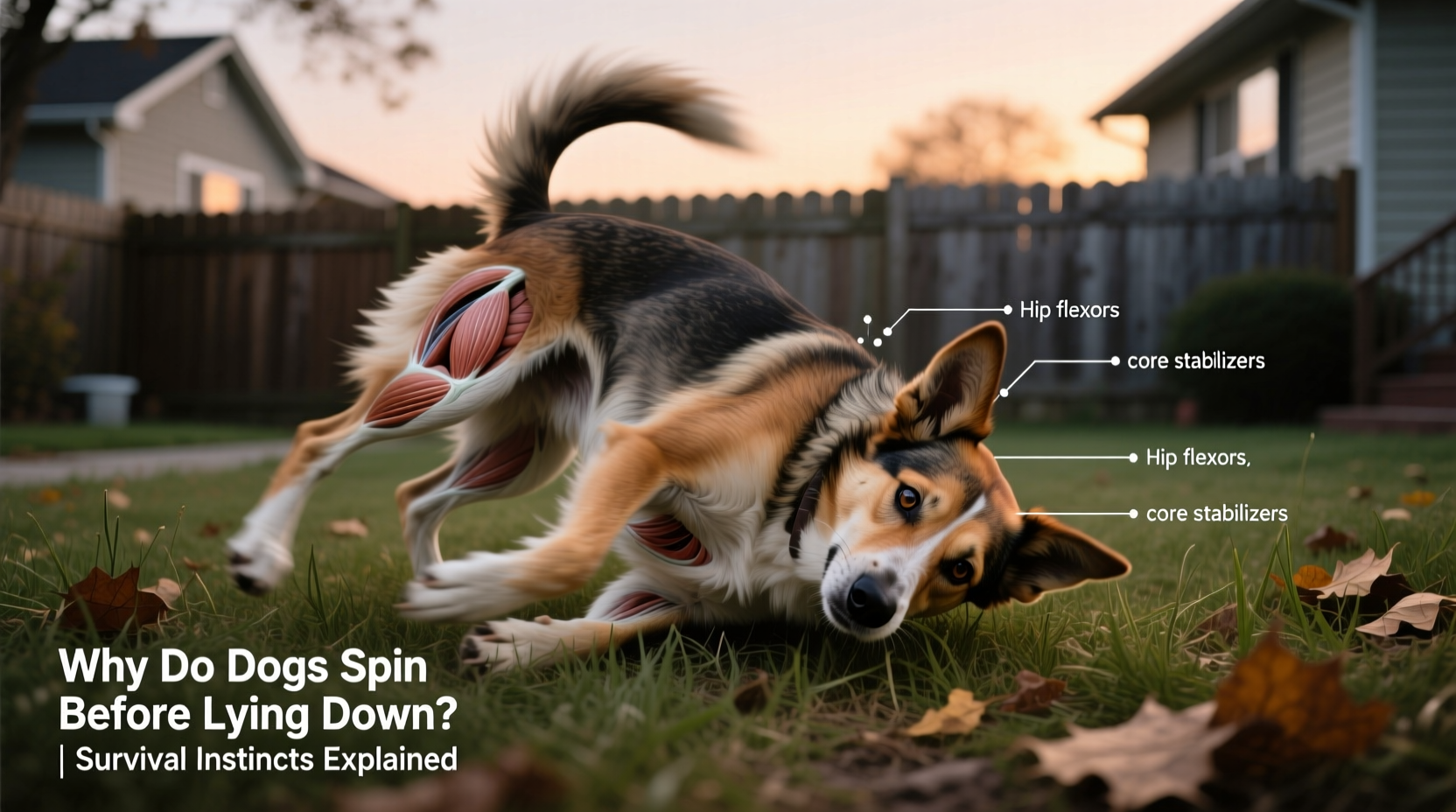
To understand why dogs spin before lying down, we must look back to their wild ancestors: wolves, coyotes, and other wild canids. In the wild, animals don’t have the luxury of climate-controlled homes or orthopedic dog beds. Their resting spots are exposed to the elements and potential threats. Before lying down, wild canids would trample down tall grass, snow, or underbrush to create a flat, safe surface. This act served multiple purposes:
- Clearing debris: Removing sharp objects, insects, or wet vegetation.
- Creating insulation: Packing down grass or snow helps retain body heat.
- Detecting threats: The motion could flush out snakes, rodents, or other hidden dangers.
- Marking territory: Scent glands in the paws release pheromones during movement, subtly marking the area as occupied.
Over time, this behavior became hardwired into canine DNA. Even though modern dogs sleep on memory foam and heated pads, the instinct remains strong. It’s a perfect example of how evolution preserves useful behaviors—even when the original context no longer applies.
“Spinning before lying down is a vestigial behavior, but it’s still functional. It reflects a dog’s innate need to assess and prepare its environment for safety.” — Dr. Karen Becker, Integrative Veterinarian and Canine Behavior Specialist
Survival Instincts Still at Work Today
While today’s dogs aren’t dodging predators or battling the cold, the spinning ritual persists because it satisfies deep-seated psychological needs. Dogs are highly attuned to their surroundings, and the act of circling serves as a final environmental check. Think of it as a built-in safety protocol.
During the spin, a dog uses both physical sensation and scent detection to evaluate the spot. They feel for uneven ground, notice temperature differences, and subconsciously detect lingering smells—like another animal’s presence. This sensory input helps them decide if the location is truly safe for rest.
In the wild, choosing a poor resting site could mean exposure to cold, injury from thorns, or surprise attacks. So, the brain rewards successful nesting with a sense of security. That same neurological reward system operates in domestic dogs today, even if the stakes are lower.
Why Some Dogs Spin More Than Others
Not all dogs exhibit the same degree of spinning behavior. Some turn once and lie down; others rotate multiple times, stop, get up, and repeat. Several factors influence this variation:
- Breed lineage: Breeds closer to wild ancestors—such as Siberian Huskies, Alaskan Malamutes, or Basenjis—often display more pronounced nesting behaviors.
- Environment: Dogs who spend time outdoors or on varied terrain may spin more, as their instincts are more actively engaged.
- Age: Older dogs might spin less due to joint pain or reduced mobility, while puppies often spin more as they learn what feels comfortable.
- Personality: Anxious or high-vigilance dogs may perform more rotations as part of compulsive checking.
In some cases, excessive spinning can indicate underlying issues. For example, neurological conditions like vestibular disease or cognitive dysfunction in senior dogs can cause disorientation that mimics nesting behavior. Similarly, obsessive-compulsive disorders (OCD) in dogs may manifest as repetitive actions, including over-grooming or endless circling.
When Spinning Might Signal a Problem
Occasional spinning is normal. But if your dog displays any of the following signs, it may be worth consulting a veterinarian:
- Spins 10+ times without lying down
- Appears dizzy, wobbly, or uncoordinated
- Shows signs of pain when moving or lying down
- Has sudden changes in sleeping habits or restlessness
A veterinary evaluation can rule out medical causes such as inner ear infections, arthritis, or canine cognitive dysfunction syndrome (CCDS), especially in older dogs.
How Modern Living Affects Instinctual Behaviors
Domestication has softened many of the survival pressures that shaped canine behavior, but instincts don’t disappear—they adapt. The spinning ritual is now less about survival and more about comfort and routine. In fact, many dogs will still “circle” even on elevated or suspended beds where there’s nothing to flatten.
This persistence shows how powerful inherited behaviors can be. Even in environments where every need is met, dogs continue to follow ancient scripts written into their biology. It’s a testament to the strength of evolutionary programming.
Interestingly, some research suggests that dogs may modify their spinning based on surface type. For instance, a dog might spin more on grass than on carpet, possibly because natural surfaces offer more sensory feedback. This subtle adaptation shows that while the behavior is instinctive, it’s also influenced by real-time environmental cues.
Do All Dogs Spin?
No—some dogs skip the spin entirely. This doesn’t mean they’re less intelligent or less connected to their instincts. It simply means individual variation exists, much like humans have different bedtime routines. Some people fluff their pillows three times; others drop straight into bed. Both are normal.
Factors like early socialization, training, and learned behavior can also reduce spinning. A dog raised in a highly controlled indoor environment may never develop a strong nesting instinct. However, introducing such a dog to an outdoor setting might trigger the behavior for the first time.
Practical Tips for Pet Owners
Understanding your dog’s spinning habit isn’t just fascinating—it can help you create a better living environment for them. Here are actionable steps to support your dog’s natural instincts while ensuring their comfort and well-being.
Checklist: Creating a Comfortable Resting Space
- Choose a bed with enough space for turning and stretching
- Use washable, non-slip materials to prevent sliding during rotation
- Position the bed away from loud noises or bright lights
- Add familiar scents (e.g., a piece of your clothing) for reassurance
- Ensure the temperature is comfortable—neither too hot nor too cold
Table: Spinning Behavior – Normal vs. Concerning Signs
| Aspect | Normal Behavior | Potential Concern |
|---|---|---|
| Number of Rotations | 1–5 turns before lying down | Repeated spinning without lying down |
| Body Language | Relaxed posture, smooth movements | Stiffness, hesitation, or limping |
| Frequency | Consistent routine at rest times | Sudden increase or agitation |
| Environmental Response | Adjusts slightly based on surface | Ignores surroundings, appears disoriented |
| After Lying Down | Settles quickly, begins resting | Gets up repeatedly, unable to relax |
Real-Life Example: Max the Rescue Husky
Max, a two-year-old Siberian Husky adopted from a rural shelter, lived most of his early life outdoors. When he moved into an apartment with his new family, they noticed something unusual: every time Max tried to lie down on the hardwood floor, he would spin rapidly—sometimes six or seven times—before finally settling. On carpet, he spun less. On his elevated bed, he often skipped the spin altogether.
His owner initially thought it was anxiety-related. But after consulting a canine behaviorist, they realized Max was responding to sensory feedback. The hardwood felt slippery and unfamiliar. The spinning was his way of “testing” the surface, much like he would have done on uneven forest ground. By adding a textured mat under his bed and allowing him outdoor naps on grass, Max gradually adjusted. His spinning decreased, and he began lying down more confidently indoors.
This case illustrates how environment shapes instinctual expression—and how small changes can ease the transition for dogs adapting to modern life.
FAQ: Common Questions About Dog Spinning
Is spinning before lying down a sign of OCD in dogs?
Not necessarily. Occasional spinning is normal. However, if the behavior becomes relentless, interferes with rest, or is accompanied by other compulsive actions (like tail-chasing or air-licking), it could indicate obsessive-compulsive disorder. A vet or animal behaviorist should evaluate persistent, abnormal patterns.
Do wild dogs and wolves spin too?
Yes. Observational studies of wolves and feral dogs show similar circling behavior before resting. They often paw at the ground or push aside vegetation, reinforcing the theory that this is a universal canid trait linked to safety and comfort.
Can I train my dog to stop spinning?
You can redirect or reduce the behavior, but eliminating it completely isn’t recommended or usually possible. Since it’s instinctive, suppressing it may increase stress. Instead, focus on providing a secure, comfortable environment so the behavior resolves naturally after one or two turns.
Conclusion: Honoring Instinct in Domestic Life
The simple act of a dog spinning before lying down is a quiet echo of a wild past. It’s a reminder that even the most pampered pets carry within them the legacy of survival—shaped by centuries of adaptation, danger, and resilience. Rather than seeing this behavior as odd or unnecessary, we can appreciate it as a window into the canine mind.
By understanding the “why” behind the spin, we become more empathetic caregivers. We learn to read our dogs’ needs, recognize signs of discomfort, and design living spaces that honor both their domestic reality and ancestral instincts.
So the next time your dog turns in tight circles before flopping down, don’t rush them. Let them complete their ritual. In that moment, they’re not just getting comfortable—they’re fulfilling an ancient promise to themselves: make sure the place is safe, then and only then, rest.




 浙公网安备
33010002000092号
浙公网安备
33010002000092号 浙B2-20120091-4
Comments
No comments yet. Why don't you start the discussion?