
In 1998, director Gregory Nava released Why Do Fools Fall in Love, a biographical drama that transcended the typical music biopic formula. Based on the real-life story of 1950s R&B sensation Frankie Lymon, the film delves into the chaotic aftermath of fame, the fragility of identity, and the emotional entanglements that follow when love, money, and legacy collide. More than just a recounting of events, the movie poses a quiet but persistent question: Why do intelligent people make irrational choices in the name of love? The title—borrowed from one of Lymon’s most iconic songs—becomes both a refrain and a philosophical inquiry.
The film doesn’t glorify its subject. Instead, it dissects the myth of the child star, showing how early success can erode personal agency. Through the perspectives of three women claiming to be Lymon’s widow, the narrative unfolds in a non-linear structure, each woman offering her version of truth. This layered storytelling forces viewers to confront uncomfortable realities: memory is subjective, love is often conditional, and public figures are rarely known as they truly are.
The Story Behind the Song and the Scandal
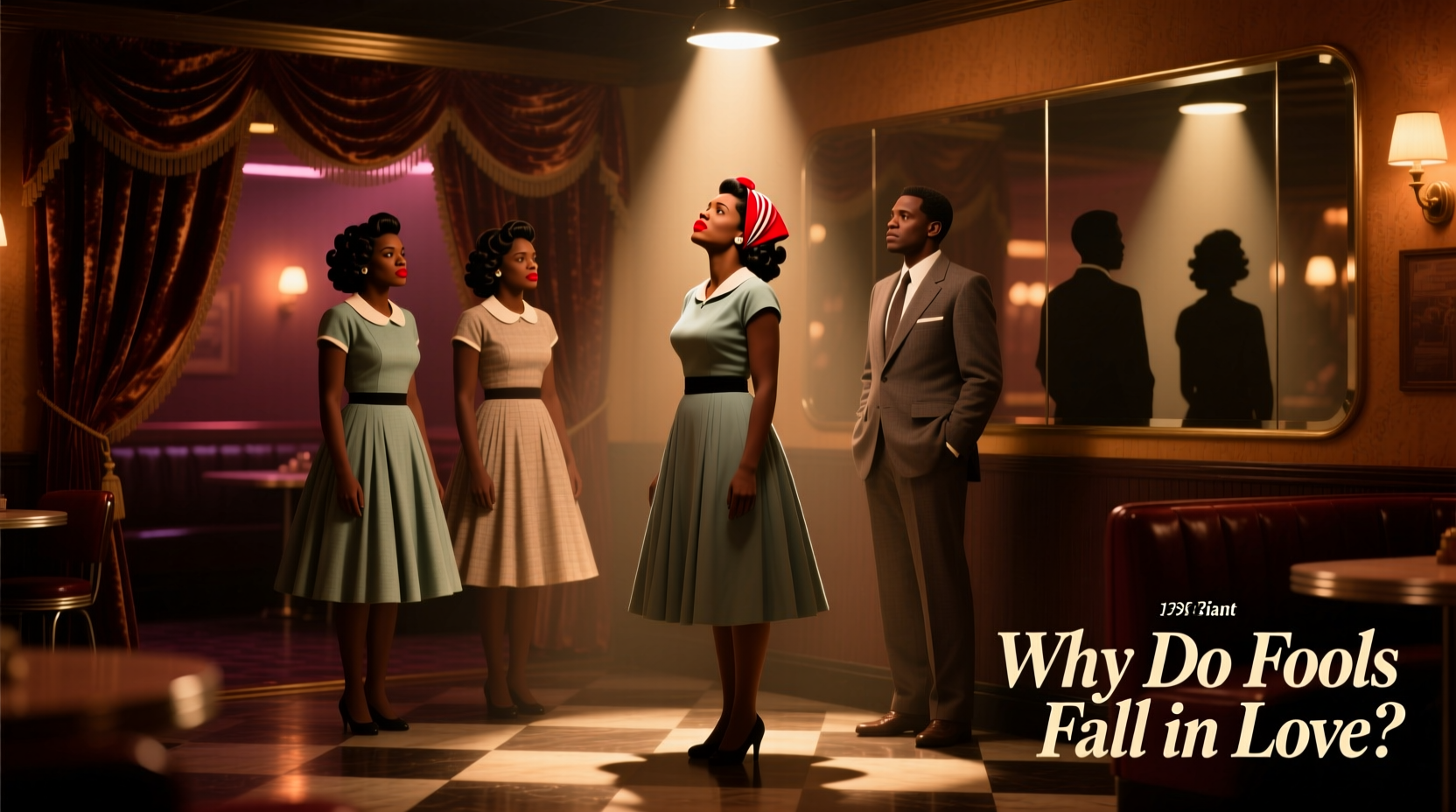
Frankie Lymon was a prodigy—a 13-year-old African American singer who rose to national fame in 1956 with “Why Do Fools Fall in Love,” a doo-wop ballad that captured teenage longing with startling authenticity. But his ascent was meteoric, and his decline equally swift. By his early twenties, Lymon struggled with addiction, legal troubles, and financial ruin. When he died at 25 from a heroin overdose, no official will was found. Three women—Elizabeth Waters, Emira Eagle, and Zola Taylor—stepped forward, each claiming to be his legal wife and rightful heir to his estate.
The film dramatizes this legal battle, using it as a framework to explore Lymon’s relationships. Elizabeth (played by Halle Berry) met him first and believed their marriage was valid. Emira (Vivica A. Fox), a sophisticated writer, presents documentation and a more legally sound claim. Zola (Lela Rochon), a former member of The Platters, brings emotional intensity and a sense of betrayal. Their competing narratives don’t just dispute facts—they reveal how love can be remembered differently based on pain, pride, and need.
Why the Question Still Resonates
The title question isn’t rhetorical; it’s central to the film’s emotional core. People don’t fall in love because they’re foolish—they fall because love bypasses logic. The movie suggests that vulnerability, not stupidity, leads people into complicated relationships. Lymon, despite his flaws, wasn’t malicious—he was lost. The women weren’t gold-diggers—they were seeking validation, closure, or justice.
Psychologist Dr. Naomi Klein once observed:
“Love stories aren’t about perfection. They’re about connection in spite of brokenness. That’s why we keep asking, ‘Why?’—because we want reason where emotion reigns.” — Dr. Naomi Klein, Relationship Psychologist
This sentiment echoes throughout the film. Each woman loved Lymon during different phases of his life. Their attachments weren’t uniform—they evolved with his circumstances. Elizabeth saw the hopeful teen idol. Emira knew the troubled artist trying to rebuild. Zola experienced the wreckage of addiction. Their answers to “Why do fools fall in love?” are implicit in their testimonies: Because hope persists. Because loneliness seeks company. Because fame creates illusions of intimacy.
A Closer Look: The Three Women’s Perspectives
The film’s strength lies in its refusal to anoint a single truth-teller. Instead, it invites viewers to weigh evidence, tone, and motivation. Below is a comparative breakdown of the three women’s claims and portrayals:
| Woman | Claim to Marriage | Evidence Presented | Film’s Portrayal |
|---|---|---|---|
| Elizabeth Waters | Married in 1960 in Georgia | Testimony, anecdotal support | Emotionally invested, seen as sincere but possibly misled |
| Emira Eagle | Legally married in 1964 in New York | Marriage license, joint bank accounts | Calm, articulate, portrayed with credibility |
| Zola Taylor | Common-law marriage in California | Co-habitation, public appearances | Passionate, volatile, emotionally scarred |
The court ultimately rules in favor of Emira, citing legal documentation. Yet the film doesn’t treat this as a moral victory. Instead, it underscores a painful irony: even when law determines truth, emotional truths remain unresolved.
Lessons on Fame, Identity, and Emotional Legacy
Frankie Lymon’s tragedy wasn’t just his early death—it was the erosion of self. Raised in poverty, thrust into stardom without mentorship, and exploited by managers and family alike, he never had the space to grow beyond his image. The film critiques how society consumes young talent and discards them when relevance fades.
Consider this mini case study: In one scene, Lymon (played by Larenz Tate) performs at a small club years after his heyday. He sings “Why Do Fools Fall in Love” to a half-empty room. A fan recognizes him, asks for an autograph, then says, “You used to be somebody.” That line encapsulates the cruelty of fleeting fame. His identity had been reduced to a moment in time.
For the women left behind, the fight over his estate was also a fight over meaning. Who gets to define a man’s legacy? Who inherits not just royalties, but emotional ownership?
- Elizabeth fought for recognition of her early sacrifice.
- Emira sought what she believed was legally due.
- Zola demanded acknowledgment of shared suffering.
Their conflict wasn’t just about money—it was about being seen.
How to Watch the Film: A Step-by-Step Guide to Deeper Understanding
To fully appreciate Why Do Fools Fall in Love, approach it not as a biography but as a psychological mosaic. Follow these steps:
- Watch without preconceptions. Avoid reading up on the real-life outcome beforehand. Let the film build its own tension.
- Note the color grading. Each woman’s storyline uses different lighting—warm tones for Elizabeth, cooler blues for Emira, high contrast for Zola—reflecting their emotional states.
- Listen to the soundtrack. The use of original 1950s music grounds the story in era, while silence in key scenes amplifies emotional weight.
- Pause after each woman’s testimony. Ask: What is she defending—love, dignity, or justice?
- Revisit the final courtroom scene. Observe Lymon’s mother’s reaction. Her silence speaks volumes about parental regret and failed protection.
Frequently Asked Questions
Was Frankie Lymon really married to three women?
Historically, Lymon had relationships with multiple women, and after his death, three filed claims to his estate based on marriage. While Emira Eagle had the strongest legal standing with a documented marriage, the legitimacy of the others remains debated. The film takes creative liberties but stays grounded in documented events.
Is the movie accurate?
The film blends fact and dramatization. Some timelines are compressed, and characters are composite in nature. However, the core legal battle and Lymon’s trajectory from fame to downfall are historically accurate. Director Gregory Nava consulted with Emira Eagle, whose memoir inspired the screenplay.
What message does the film convey about love?
It suggests that love is rarely rational, often asymmetrical, and deeply tied to identity. People don’t fall in love because they’re foolish—they fall because they seek belonging, even when the object of affection is flawed or unavailable. The “fool” isn’t the lover, but the one who expects love to follow rules.
Final Thoughts: Why We Keep Asking the Question
Why Do Fools Fall in Love endures because it doesn’t answer its central question—it expands it. The film challenges the viewer to reconsider what love owes us, what we owe to those we love, and how memory shapes truth. It’s a cautionary tale about fame, yes, but also a meditation on the human need to be remembered.
In an age of curated online personas and disposable celebrity, the story of Frankie Lymon feels eerily relevant. Talent is celebrated, then forgotten. Relationships are scrutinized, then discarded. And yet, people still ask, “Why do fools fall in love?” Perhaps because we all have—knowingly or not—and we’re still searching for meaning in the fall.




 浙公网安备
33010002000092号
浙公网安备
33010002000092号 浙B2-20120091-4
Comments
No comments yet. Why don't you start the discussion?