
Guinea pigs are among the most expressive small pets, relying heavily on vocalizations to communicate their emotions and needs. Unlike cats or dogs, they don’t bark or meow in ways we instinctively understand, but their repertoire of sounds—especially loud squeaking—can reveal a great deal about their state of mind. For owners, interpreting these noises is essential to providing proper care, preventing stress, and strengthening the human-pet bond. While some squeaks signal joy or anticipation, others can indicate fear, pain, or discomfort. Understanding the context, pitch, frequency, and accompanying body language helps decode what your guinea pig is trying to tell you.
The Science Behind Guinea Pig Vocalizations
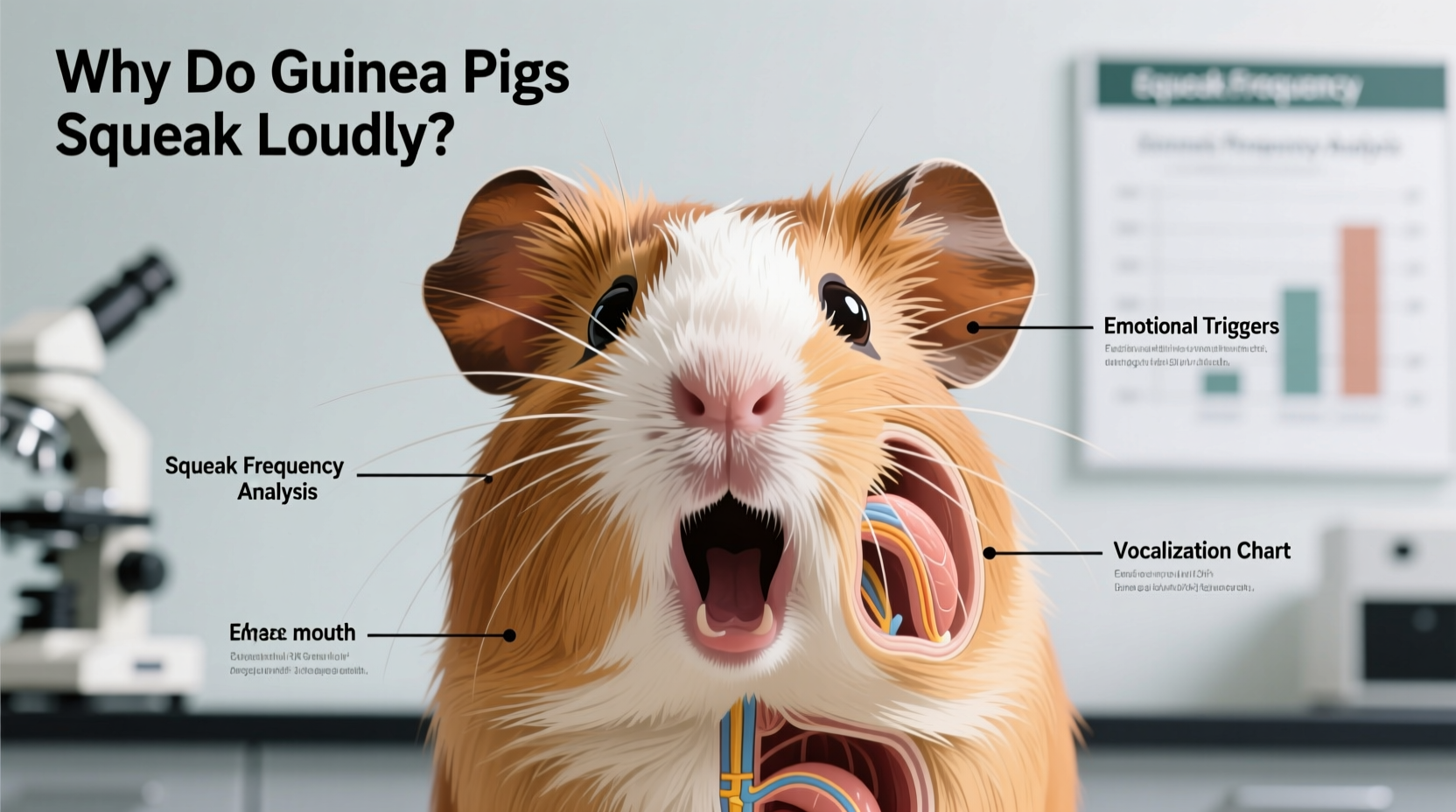
Guinea pigs (Cavia porcellus) are social rodents that evolved to live in groups in the wild, primarily in the Andean regions of South America. In such environments, communication is vital for survival. Without the ability to hide easily from predators, early warning signals and group coordination through sound became crucial. This evolutionary background explains why modern domesticated guinea pigs remain highly vocal.
Research has identified at least five distinct types of guinea pig vocalizations: purring, chutting, wheeking, rumbling, and screaming. Among these, the most noticeable—and often misunderstood—is the high-pitched squeak, commonly referred to as \"wheeking.\" This sound is produced by forcing air through the larynx, creating a sharp, piercing noise that can carry across rooms. The volume and intensity vary depending on the emotional state behind it.
Neurological studies suggest that guinea pigs process sound similarly to humans in terms of emotional recognition. They not only produce meaningful vocalizations but also respond differently to the calls of familiar versus unfamiliar individuals. This sensitivity underscores the importance of paying attention to their squeaks—not just as noise, but as intentional communication.
Common Reasons for Loud Squeaking
Loud squeaking in guinea pigs isn’t a single-purpose sound; its meaning depends heavily on context. Below are the most common causes and what they typically signify.
1. Excitement or Anticipation (Positive Wheeking)
One of the most frequent reasons guinea pigs squeak loudly is excitement—especially around feeding time. If your pet begins shrieking the moment you walk into the kitchen or rattle a food container, this is known as “wheeking.” It’s a learned behavior, often reinforced when owners respond by giving treats. Over time, guinea pigs associate certain sounds with food and use loud vocalizations to express eagerness.
This type of squeak is usually repetitive, high-pitched, and consistent in tone. The animal may stand on its hind legs, dart toward the cage door, or follow you around the enclosure. While not harmful, excessive wheeking can become disruptive if unintentionally encouraged.
2. Fear or Alarm
A sudden, sharp squeal—often louder and more abrupt than wheeking—can signal fear. This occurs when a guinea pig is startled by a loud noise, unexpected movement, or perceived threat. Unlike the rhythmic pattern of excited wheeking, alarm squeals are isolated and intense.
In multi-pet households, this might happen during interactions with other animals. Even household activities like vacuuming or dropping a pan can trigger panic. When frightened, guinea pigs may freeze, bolt to a hiding spot, or attempt to climb the cage walls.
3. Pain or Discomfort
Persistent or unusually harsh squeaking, especially when accompanied by lethargy, hunched posture, or reduced appetite, may indicate physical pain. Common health issues such as urinary tract infections, dental problems, bloating, or injuries can cause vocal distress.
Veterinarians note that guinea pigs are prey animals and naturally inclined to hide signs of illness. Therefore, audible expressions of discomfort should never be ignored. A single squeak after handling could suggest soreness, while continuous whining may point to chronic pain.
“Any change in vocal behavior—especially new or prolonged squeaking—should prompt a wellness check. Guinea pigs rarely vocalize in pain unless it’s significant.” — Dr. Lena Torres, Exotic Animal Veterinarian
4. Social Communication and Dominance
In pairs or groups, guinea pigs use squeaks during social interactions. A dominant individual may emit short, sharp chirps to assert control over food or space. Subordinate pigs often respond with softer cries or retreat silently.
Rumbling—a low, vibrating sound—often accompanies dominance displays, but high-pitched squeals can erupt during disputes. These are typically brief and cease once hierarchy is reestablished. However, ongoing aggressive squeaking, biting, or chasing warrants intervention to prevent injury.
5. Mating Behavior
Unneutered males (boars) frequently produce loud, warbling squeaks when courting females (sows). This behavior, known as “chutting” or “rumble-strutting,” combines vocalization with a side-to-side dance. While not exactly a squeak, it can escalate into sharper calls if the female resists.
Females in heat may also become more vocal, signaling receptiveness. Owners housing mixed-sex pairs should monitor these behaviors closely to prevent unintended breeding.
Decoding the Sounds: A Practical Guide
Understanding the nuances between different squeaks requires observation over time. Here’s a step-by-step method to accurately interpret your guinea pig’s vocalizations.
Step 1: Note the Timing and Trigger
- Does the squeaking occur at feeding time?
- Is it triggered by loud noises or handling?
- Does it happen during interaction with another guinea pig?
Step 2: Observe the Sound Pattern
- Repetitive and rhythmic → Likely excitement or demand.
- Sudden and isolated → Possibly fear or surprise.
- Continuous and strained → Could indicate pain or distress.
- Accompanied by rumbling or teeth-chattering → Social or mating behavior.
Step 3: Assess Body Language
Pair auditory cues with visual signals:
- Erect ears, darting movements → Excitement or alertness.
- Flattened ears, crouched stance → Fear or submission.
- Teeth grinding (bruxing), hunched back → Pain or discomfort.
- Vibrating body, swaying gait → Mating display.
Step 4: Monitor Frequency and Duration
Occasional squeaking is normal. But if your guinea pig squeals repeatedly throughout the day without clear triggers, it may be stressed or unwell. Keep a log for 2–3 days to identify patterns.
Step 5: Respond Appropriately
Adjust your response based on the likely cause:
- Reward calm behavior, not persistent squeaking.
- Minimize environmental stressors (noise, drafts, predators).
- Consult a vet if pain is suspected.
- Ensure companionship if housed alone—loneliness can increase vocalization.
Do’s and Don’ts of Responding to Squeaking
| Do’s | Don’ts |
|---|---|
| Observe context before reacting | Immediately pick up a scared guinea pig |
| Use quiet reassurance (soft voice) | Yell or make sudden movements |
| Check for signs of illness | Ignore prolonged or pained squealing |
| Provide enrichment to reduce boredom | Overfeed in response to wheeking |
| Ensure proper social pairing | House opposite sexes together without neutering |
Mini Case Study: Bella the Over-Vocal Guinea Pig
Sarah adopted Bella, a young female guinea pig, who lived alone. Within days, she noticed Bella would squeak loudly every evening, especially when Sarah entered the room. At first, Sarah assumed it was excitement and responded by giving extra treats. But the behavior worsened—Bella began squeaking even when no one was nearby.
After consulting a veterinarian and reviewing her setup, Sarah realized Bella was lonely. As a social species, guinea pigs thrive with companions. Sarah introduced a gentle male named Milo after a careful quarantine and gradual introduction. Within a week, Bella’s constant squeaking decreased significantly. She still wheeked at mealtime, but the distressed cries stopped. The case highlighted how misinterpreted vocalizations can lead to improper responses—and how addressing root causes brings real improvement.
Tips for Reducing Unwanted Squeaking
- Establish a routine: Predictable feeding and interaction times reduce anxiety-driven vocalizations.
- Provide mental stimulation: Tunnels, chew toys, and foraging opportunities keep them engaged.
- Ensure proper housing: A spacious cage (at least 7.5 sq ft for two pigs), soft bedding, and hiding spots promote security.
- Avoid over-handling: Respect their need for downtime. Excessive picking up can lead to stress squeaks.
- Introduce companions carefully: Loneliness is a major cause of excessive noise. A bonded pair will often communicate quietly with each other instead of demanding human attention.
FAQ: Common Questions About Guinea Pig Squeaking
Why does my guinea pig squeak when I pet him?
Your guinea pig may be expressing enjoyment, especially if the squeak is soft and accompanied by purring. However, if the squeak is sharp or the animal pulls away, it may be uncomfortable. Pay attention to body language—some guinea pigs enjoy head scratches but dislike being touched on the back or feet.
Is it normal for guinea pigs to squeak at night?
Guinea pigs are crepuscular—most active at dawn and dusk—so occasional nighttime sounds are normal. However, frequent or loud squeaking at night could indicate hunger, cold, fear, or conflict if housed with another pig. Ensure they have enough hay, a quiet environment, and compatible cage mates.
Can loud squeaking damage a guinea pig’s hearing?
No evidence suggests that their own vocalizations harm their hearing. Guinea pigs are adapted to produce and hear high-frequency sounds. However, exposure to loud external noises (e.g., music, shouting) can cause stress and should be minimized.
Conclusion: Listening with Care
Loud squeaking in guinea pigs is far more than random noise—it’s a window into their emotional and physical world. By learning to distinguish between excitement, fear, pain, and social communication, owners can respond with empathy and precision. These small animals depend entirely on us to interpret their needs, and their voices are often the clearest signal they have.
Start today by spending quiet time observing your guinea pig. Note when and how they vocalize, and pair those moments with their surroundings and behavior. Over time, you’ll develop an intuitive understanding of their unique “language.” That connection doesn’t just reduce noise—it deepens trust, improves well-being, and transforms cohabitation into true companionship.




 浙公网安备
33010002000092号
浙公网安备
33010002000092号 浙B2-20120091-4
Comments
No comments yet. Why don't you start the discussion?