
For millions of people around the world, the soft rustle of paper, a whispered word, or the deliberate tapping of fingernails on wood isn’t just background noise—it’s deeply soothing. Autonomous Sensory Meridian Response (ASMR) has surged in popularity over the past decade, with countless videos amassing billions of views across platforms like YouTube. But what exactly makes these seemingly mundane auditory and visual stimuli so profoundly relaxing? The answer lies not in mysticism, but in the intricate wiring of the human brain.
Neuroscientists and psychologists are beginning to unravel how ASMR engages multiple brain systems related to attention, emotion, and sensory integration. From gentle whispers to methodical hand movements, specific triggers appear to activate neural pathways associated with social bonding, safety, and even mild euphoria. This article explores the science behind ASMR, examining brain activity patterns, the role of personal sensitivity, and the evolutionary roots that may explain why so many of us respond so strongly to quiet, intimate stimuli.
The Brain on ASMR: What Neuroscience Reveals
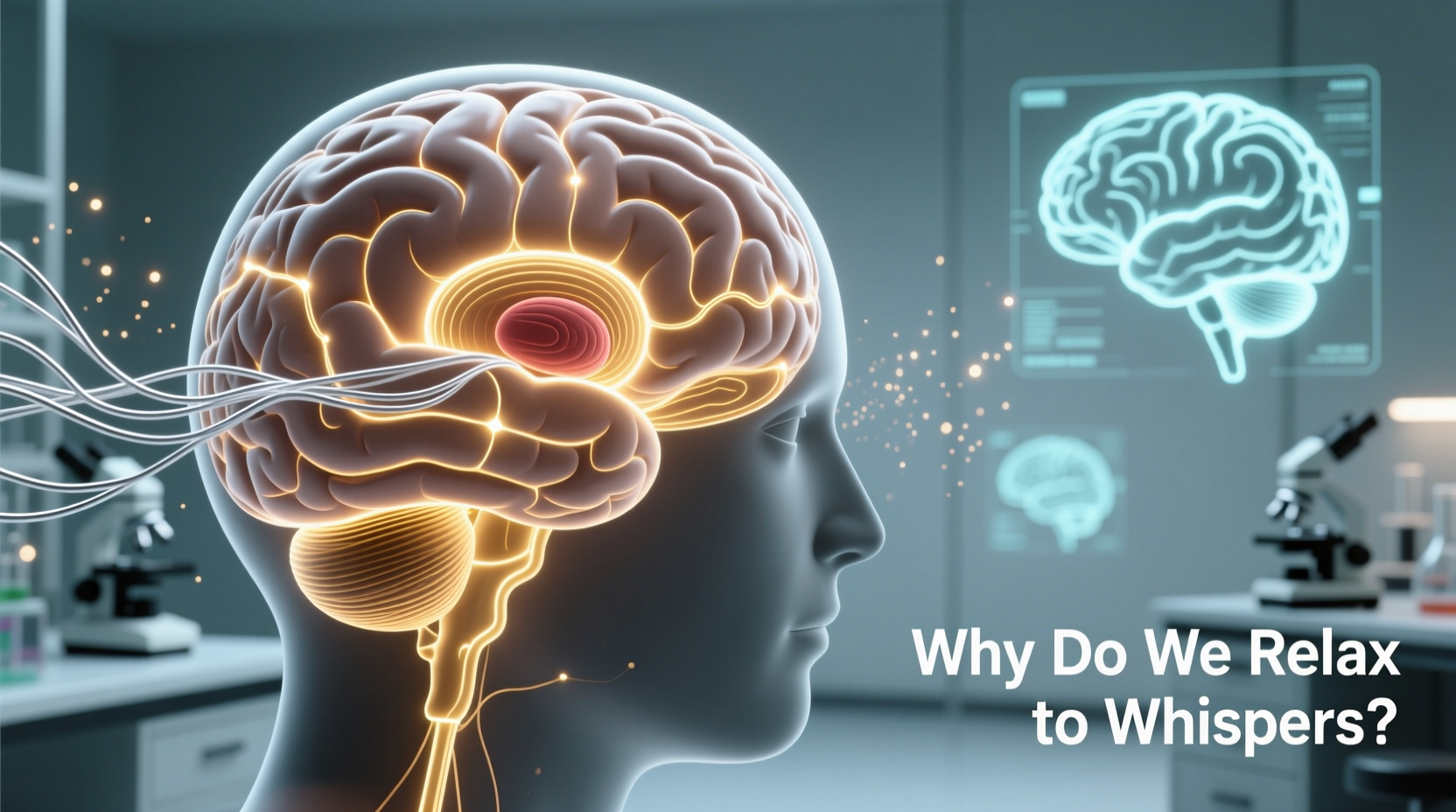
Until recently, ASMR was largely dismissed as anecdotal or placebo-driven. However, functional MRI (fMRI) studies have begun to validate subjective reports by showing measurable changes in brain activity during ASMR experiences.
In a landmark 2018 study conducted at the University of Winnipeg and published in *Social Neuroscience*, researchers compared brain scans of individuals who experience ASMR with those who do not. Participants watched ASMR and non-ASMR videos while undergoing fMRI scans. The results were striking: ASMR experiencers showed significantly increased activation in regions linked to emotional regulation, empathy, and interoception—the sense of internal bodily states.
Key areas involved include:
- Default Mode Network (DMN): Typically active during rest and introspection, the DMN shows heightened connectivity during ASMR, suggesting a state of relaxed self-awareness.
- Medial Prefrontal Cortex (mPFC): Associated with social cognition and emotional processing, this region lights up during nurturing interactions—mirroring the effect of a trusted person speaking softly.
- Insular Cortex: Involved in interoception and emotional awareness, its activation correlates with the \"tingling\" sensation commonly reported in the scalp and spine.
- Nucleus Accumbens: Part of the brain’s reward system, it releases dopamine during pleasurable experiences, which may explain the addictive quality some users describe.
These findings suggest that ASMR is more than just relaxation—it’s a multisensory experience that taps into deep-seated neural circuits tied to trust, care, and emotional safety.
Why Whispering Works: The Power of Personal Attention
Among the most common ASMR triggers, whispering stands out for its near-universal appeal. But why does a quiet voice, especially one directed “just for you,” feel so calming?
Neuroscientist Dr. Giulia Poerio, a leading researcher in ASMR at the University of Essex, explains: “Whispered speech mimics the tone and intimacy of caregiving behaviors we experienced in infancy. It signals safety and focused attention—two powerful psychological anchors.”
“ASMR-inducing whispers often resemble the soothing vocalizations parents use with infants—soft, repetitive, and emotionally warm. Our brains may interpret these sounds as a signal that we are being cared for.” — Dr. Giulia Poerio, Cognitive Neuroscientist
This phenomenon ties into what psychologists call social grooming. In primates, grooming reinforces social bonds and reduces stress hormones like cortisol. Humans lack dense body hair, but we’ve evolved alternative behaviors—like whispering, light touch, or attentive listening—that serve the same purpose.
ASMR videos simulate one-on-one attention in a digital age where genuine connection is increasingly rare. The performer’s slow movements, eye contact, and personalized narration trigger mirror neurons—brain cells that fire both when we perform an action and when we observe someone else doing it. This creates a sense of embodied presence, making viewers feel seen and attended to.
Common ASMR Triggers and Their Neural Impact
Not all triggers work for everyone. Sensitivity varies widely, influenced by personality, past experiences, and even genetics. However, certain stimuli consistently produce strong responses. Below is a breakdown of common ASMR triggers and their likely neurological mechanisms.
| Trigger | Brain Regions Activated | Potential Psychological Effect |
|---|---|---|
| Whispering / Soft-spoken words | mPFC, Insula, Auditory Cortex | Feelings of intimacy and safety |
| Tapping (fingers, wood, glass) | Somatosensory Cortex, Cerebellum | Enhanced tactile imagery and focus |
| Page turning / Crinkling sounds | Auditory Cortex, Hippocampus | Memory recall, nostalgia, calm |
| Personal attention (eye contact, narration) | Mirror Neuron System, DMN | Emotional connection, reduced loneliness |
| Gentle hand movements | Visual Cortex, Premotor Cortex | Anticipatory relaxation, visual entrainment |
The effectiveness of these triggers often depends on consistency and predictability. Sudden loud noises or erratic movements typically break the ASMR state, underscoring the importance of controlled pacing. This aligns with research on mindfulness and meditation, where rhythmic, repetitive stimuli help quiet the mind and reduce anxiety.
Mini Case Study: Sarah’s Sleep Routine Transformation
Sarah, a 34-year-old software developer from Portland, struggled with chronic insomnia for years. Medication caused grogginess; meditation apps failed to engage her. Then she stumbled upon an ASMR video titled “Library Roleplay: Quiet Reading & Page Turning.”
“It started with someone writing in a notebook, then flipping pages slowly,” she recalls. “The whispering wasn’t even in English—just soft sounds. But within ten minutes, I felt my shoulders drop and my breathing slow. I fell asleep halfway through.”
Now, Sarah uses ASMR nightly. She prefers “doctor roleplay” and “haircut simulation” videos, which combine gentle touch sounds with personal attention. Her sleep tracker shows an average increase of 45 minutes of deep sleep per night since starting the practice.
Her experience reflects broader trends: a 2020 survey by Swansea University found that 82% of regular ASMR users report improved sleep, while 70% say it helps manage anxiety.
The Evolutionary Roots of ASMR Sensitivity
While ASMR as a named phenomenon is modern, the sensory responses it elicits may be evolutionarily ancient. Some researchers propose that ASMR sensitivity evolved as part of our social attachment system—a mechanism to reinforce bonds between caregivers and offspring.
Infants are highly attuned to soft vocal tones, rhythmic rocking, and close physical proximity—all of which lower heart rate and promote bonding. These stimuli release oxytocin, the “love hormone,” which enhances trust and reduces stress. ASMR may reactivate this primal circuitry in adulthood, offering a form of self-soothing reminiscent of early nurturing experiences.
Additionally, the tingling sensation—often described as a “static-like wave” moving from the head down the spine—bears resemblance to piloerection (goosebumps), a physiological response linked to awe, beauty, and emotional resonance. Studies show that both ASMR and music-induced frisson activate the nucleus accumbens and anterior insula, suggesting overlapping reward pathways.
This could explain why ASMR feels both relaxing and mildly euphoric. It’s not merely passive relaxation; it’s a low-grade, socially mediated pleasure response—one that may have helped early humans maintain group cohesion and emotional stability.
Checklist: How to Optimize Your ASMR Experience
To get the most out of ASMR, consider the following evidence-based practices:
- Use headphones: Binaural recordings rely on spatial audio cues best experienced with stereo sound.
- Choose familiar triggers: Start with whispers, tapping, or roleplays that match your preferences.
- Create a ritual: Pair ASMR with bedtime or mindfulness routines to strengthen the association.
- Minimize distractions: Dim lights, silence devices, and sit or lie in a comfortable position.
- Experiment gradually: Try one new video type per session to identify what works best.
- Track your response: Note changes in mood, heart rate, or sleep quality over time.
- Be patient: Not everyone responds immediately. Sensitivity can develop with repeated exposure.
FAQ: Common Questions About ASMR and the Brain
Can everyone experience ASMR?
No. Studies estimate that between 50% and 70% of people report feeling ASMR sensations. Non-experiencers often find the sounds irritating or underwhelming. This difference may relate to variations in brain connectivity, particularly in the default mode network and salience network.
Is ASMR the same as frisson or goosebumps?
They share similarities but differ in context. Frisson is typically triggered by music or awe-inspiring moments and feels more intense and fleeting. ASMR is subtler, longer-lasting, and often involves a sense of calm rather than excitement. However, both involve dopamine release and activation of the brain’s reward system.
Can ASMR be used therapeutically?
Preliminary evidence suggests yes. While not a substitute for clinical treatment, ASMR has shown promise in reducing symptoms of anxiety, depression, and insomnia. Researchers are exploring its potential as a complementary tool in mental health care, particularly for individuals who struggle with traditional relaxation methods.
Conclusion: Tuning Into the Mind’s Hidden Frequencies
ASMR is more than a viral internet trend—it’s a window into the brain’s capacity for sensory-emotional integration. The way a whisper, a tap, or a slow hand movement can induce deep relaxation reveals how powerfully our minds respond to cues of safety, attention, and care. Neuroscience is only beginning to map the full scope of this phenomenon, but one thing is clear: the brain treats these subtle stimuli as meaningful, even nourishing.
Whether you're someone who chases the tingles or simply curious about the science behind them, understanding the neural foundations of ASMR adds depth to the experience. It transforms passive viewing into an intentional act of self-care—one rooted in biology, shaped by evolution, and amplified by technology.




 浙公网安备
33010002000092号
浙公网安备
33010002000092号 浙B2-20120091-4
Comments
No comments yet. Why don't you start the discussion?