
It starts casually—a quick scroll through Instagram while waiting for coffee, or a few minutes before bed. But soon, 20 minutes have passed. Your thumb keeps swiping, yet something feels off. A quiet unease settles in. You close the app, but instead of feeling relaxed, you're left with a lingering sense of inadequacy, restlessness, or even dread. If this sounds familiar, you're not alone. Millions experience post-scroll anxiety, a subtle but real emotional toll from passive social media consumption. Understanding why this happens—and how to gently reset your nervous system—is essential for maintaining mental well-being in a hyperconnected world.
The Psychology Behind Post-Scroll Anxiety
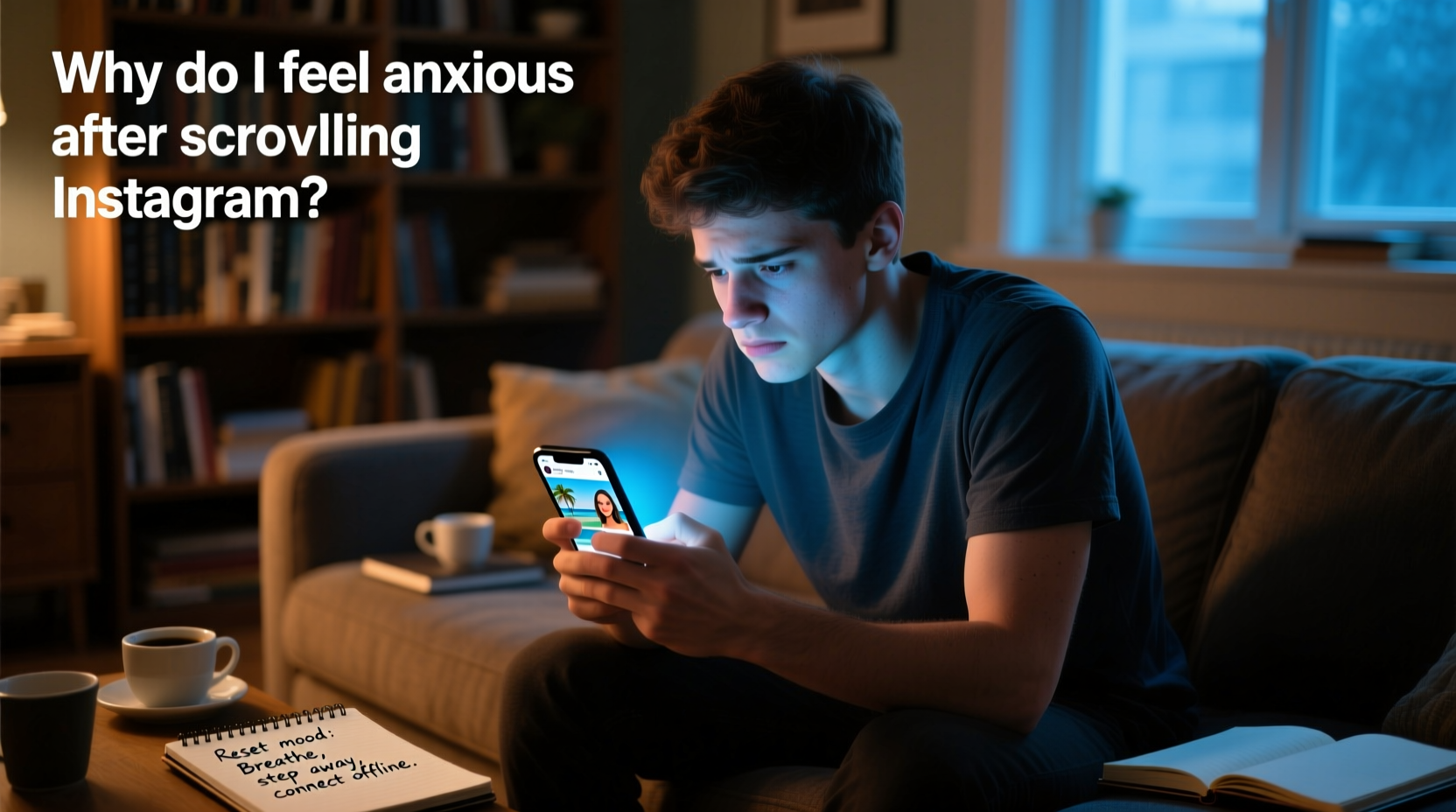
Instagram isn’t just a photo-sharing platform; it’s a curated highlight reel designed to capture attention. Every image, story, and video is filtered, edited, and often strategically timed to maximize engagement. What you’re seeing isn’t raw reality—it’s performance. And your brain knows it, at least on some level. The dissonance between what’s displayed and your own lived experience creates cognitive strain.
Neuroscientists have observed that passive scrolling activates the brain’s reward circuitry—specifically the release of dopamine—each time new content appears. This creates a feedback loop: you keep scrolling because each new post offers a micro-hit of novelty. But unlike meaningful rewards (like completing a task or connecting with someone), this stimulation lacks substance. Over time, the brain begins to associate the activity with fleeting satisfaction and rising tension.
Dr. Anna Lembke, psychiatrist and author of *Dopamine Nation*, explains:
“Social media platforms are engineered to exploit our brain’s natural reward system. The more we engage without receiving genuine fulfillment, the more anxious and dissatisfied we become.”
This mismatch—between expectation (entertainment, connection) and outcome (comparison, fatigue)—is central to post-scroll anxiety.
Social Comparison and Its Emotional Cost
One of the most powerful psychological mechanisms at play is upward social comparison. When you see someone on vacation, landing a dream job, or looking effortlessly radiant, your brain may subconsciously measure your life against theirs. Even if you don’t consciously think, “I should be like them,” the emotional residue lingers. Studies show that frequent social comparison on social media correlates with increased symptoms of anxiety, depression, and low self-esteem—especially among young adults.
A 2021 study published in the *Journal of Social and Clinical Psychology* found that limiting social media use to 30 minutes per day significantly reduced loneliness and depression over three weeks. Participants reported feeling more present and less emotionally reactive after reducing their exposure.
Why Instagram Feels Different Than Other Platforms
While all social media can impact mood, Instagram’s visual nature intensifies its psychological effects. Unlike text-based platforms, Instagram delivers rapid-fire imagery that bypasses rational processing and speaks directly to emotion. A single photo of a flawless face, luxurious lifestyle, or idealized relationship can trigger subconscious narratives about worth, success, and belonging.
Additionally, Instagram’s algorithm prioritizes content that elicits strong reactions—positive or negative. Controversial posts, dramatic transformations, and emotionally charged stories are pushed to the top because they keep users engaged. This means your feed is increasingly populated with extreme examples rather than balanced perspectives.
| Factor | Impact on Mood | Why It Matters |
|---|---|---|
| Visual-Only Content | Triggers immediate emotional response | Images bypass critical thinking, increasing susceptibility to comparison |
| Algorithmic Curation | Prioritizes sensational or aspirational content | Creates distorted perception of normalcy |
| Lack of Context | Encourages assumptions about others’ lives | Leads to inaccurate self-evaluation |
| Endless Scroll Design | Disrupts natural stopping cues | Makes it hard to disengage, increasing mental fatigue |
How to Reset Your Mood After Scrolling
Recognizing the problem is the first step. The next is learning how to recover. Just as your body needs recovery after physical stress, your mind needs recalibration after digital overload. Here’s a science-backed approach to restore emotional equilibrium.
Step-by-Step Guide: The 10-Minute Reset Protocol
- Close the App (and the Device): Physically put your phone down. Turn it face-down or place it in another room. This breaks the visual and tactile association with scrolling.
- Breathe Deeply for 90 Seconds: Inhale for four counts, hold for four, exhale for six. Repeat five times. This signals safety to your nervous system, lowering cortisol levels.
- Ground Yourself with the 5-4-3-2-1 Technique: Name five things you see, four you can touch, three you hear, two you smell, and one you taste. This redirects focus from internal rumination to external reality.
- Move Your Body: Stand up and stretch, walk around the room, or do ten shoulder rolls. Movement interrupts the freeze state often triggered by prolonged screen time.
- Reframe One Thought: Identify one negative belief that surfaced during scrolling (e.g., “My life isn’t exciting enough”) and rephrase it with compassion (“I’m doing my best, and my value isn’t tied to visibility”).
Building Long-Term Resilience Against Digital Anxiety
Occasional anxiety after Instagram use is normal. But if it’s becoming routine, it’s time to build sustainable habits. Think of this as digital hygiene—small, consistent practices that protect your mental space.
Checklist: Daily Habits to Reduce Instagram-Induced Anxiety
- Set a daily time limit for Instagram (use built-in screen time tools).
- Unfollow accounts that consistently make you feel “less than.”
- Curate your feed to include educational, calming, or humorous content.
- Charge your phone outside the bedroom to avoid bedtime scrolling.
- Replace morning scroll with 5 minutes of journaling or stretching.
- Engage actively (comment meaningfully) rather than passively consuming.
- Practice “scroll intention”: Ask yourself why you’re opening the app before you do.
Intentionality changes everything. When you open Instagram to check event details or message a friend, your brain registers purpose. But when you open it out of habit or boredom, you enter a state of cognitive drift—prime conditions for anxiety to creep in.
Mini Case Study: Sarah’s Shift From Scroll Fatigue to Mindful Use
Sarah, a 28-year-old graphic designer, noticed she felt irritable and unmotivated every evening. She assumed it was work stress—until she tracked her phone usage and discovered she spent over two hours daily on Instagram, mostly during lunch and after dinner. Her feed was filled with influencers showcasing luxury travel, fitness routines, and artistic achievements. Though she admired their work, she began feeling creatively blocked and personally inadequate.
She implemented a 7-day reset: unfollowed 150 accounts, set a 30-minute daily limit, and replaced evening scrolling with sketching and tea. Within a week, her mood improved. She started noticing inspiration in real life—the shape of trees, color combinations in fabrics—rather than feeling pressured to emulate online aesthetics. “I didn’t realize how much mental energy I was wasting trying to keep up with a version of life I wasn’t even living,” she said.
When to Seek Additional Support
For some, Instagram-induced anxiety may be a symptom of deeper issues like chronic stress, social anxiety, or depression. If you notice any of the following patterns, consider speaking with a mental health professional:
- Dreading real-life interactions after social media use
- Experiencing panic attacks or insomnia linked to online activity
- Withdrawing from relationships or hobbies in favor of scrolling
- Frequent negative self-talk or feelings of worthlessness
Therapy modalities like Cognitive Behavioral Therapy (CBT) and mindfulness-based stress reduction (MBSR) are highly effective in addressing digital anxiety. As Dr. John Grohol, clinical psychologist and founder of Psych Central, notes:
“The goal isn’t to eliminate technology, but to rebuild a healthy relationship with it—one where you remain in control of your attention and emotions.”
FAQ: Common Questions About Instagram Anxiety
Why do I feel worse after looking at positive content?
Even uplifting content—like fitness transformations or success stories—can trigger comparison. Your brain may interpret someone else’s achievement as evidence of your own shortfall, especially if you’re already feeling vulnerable.
Is it better to delete Instagram completely?
Not necessarily. Complete deletion works for some, but many benefit more from mindful use. The key is awareness. If you can’t regulate your usage or emotional response, a temporary break may help reset your baseline.
Can anxiety from Instagram affect my physical health?
Yes. Chronic digital stress elevates cortisol, which over time can disrupt sleep, weaken immunity, and contribute to digestive issues. Emotional and physical health are deeply interconnected.
Conclusion: Reclaim Your Attention, Restore Your Calm
Feeling anxious after scrolling Instagram isn’t a personal failing—it’s a predictable response to an environment designed to capture and manipulate your attention. The good news is that you have agency. By understanding the psychological mechanics at play, implementing simple reset techniques, and cultivating intentional habits, you can transform your relationship with social media.
Start small. Try the 10-minute reset after your next scroll session. Unfollow one account that drains you. Replace one habitual scroll with a walk, a conversation, or silence. These acts aren’t just resistance—they’re reclamation. You’re not just managing anxiety; you’re rebuilding presence, one mindful choice at a time.




 浙公网安备
33010002000092号
浙公网安备
33010002000092号 浙B2-20120091-4
Comments
No comments yet. Why don't you start the discussion?