
It starts with a smile and a polite “How’s it going?” and ends with a deep sense of fatigue, as if you’ve just run a mental marathon. For many people, even brief social interactions—especially small talk—can leave them emotionally and cognitively drained. You’re not imagining it. This exhaustion is real, rooted in psychology, neurology, and emotional labor. And while small talk is often unavoidable in workplaces, social gatherings, or daily errands, understanding why it depletes you is the first step toward managing its impact and recovering more efficiently.
This isn’t about disliking people. It’s about how your brain processes interaction, regulates emotions, and allocates energy. Whether you're introverted, highly sensitive, autistic, or simply socially fatigued from modern life, this article breaks down the science behind post-small-talk burnout and offers practical recovery strategies that work.
The Hidden Energy Cost of Small Talk
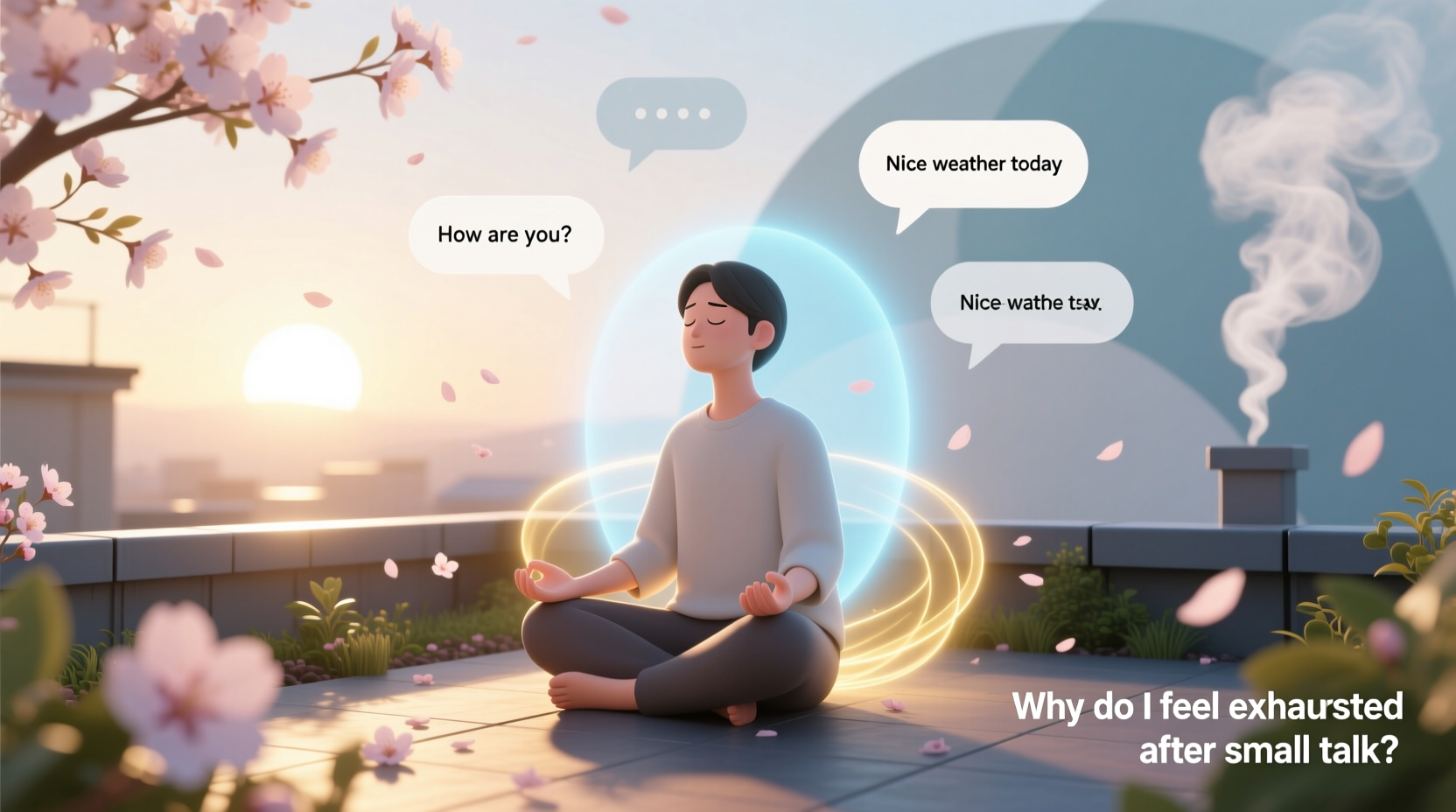
Small talk may seem trivial, but for many, it demands intense cognitive effort. Unlike meaningful conversation, which flows naturally from shared interest or emotion, small talk is often scripted, repetitive, and context-driven. It requires constant monitoring: reading facial cues, adjusting tone, suppressing natural impulses, and performing social scripts—all while appearing relaxed and engaged.
Neuroscientist Dr. Sarah McKay explains:
“The prefrontal cortex, responsible for decision-making and social behavior, works overtime during forced or superficial interactions. This kind of sustained attention and self-regulation consumes glucose and mental bandwidth at a high rate.”
For neurodivergent individuals—such as those with autism or ADHD—this burden is amplified. Social norms aren’t intuitive; they must be learned, memorized, and executed like a second language. Every “Nice weather, huh?” becomes a calculated performance rather than spontaneous expression.
Who Is Most Affected by Small Talk Fatigue?
While anyone can feel worn out after prolonged socializing, certain groups are more vulnerable to rapid depletion from minimal interaction:
- Introverts: Gain energy from solitude and internal processing. External stimulation, even mild, drains their reserves quickly.
- Highly Sensitive People (HSPs): Process sensory and emotional input more deeply, making social noise and emotional subtext overwhelming.
- Autistic individuals: Often experience social interaction as cognitively taxing due to differences in communication styles and sensory sensitivity.
- People with social anxiety: Anticipate judgment, leading to hyper-vigilance and muscle tension even during casual exchanges.
- Empaths: Absorb others’ emotions unconsciously, leaving them emotionally saturated after brief encounters.
A common misconception is that exhaustion means you’re “bad at socializing.” In reality, it often means you’re *overqualified*—you’re noticing nuances others miss, regulating yourself meticulously, and investing disproportionate effort to maintain harmony.
Why Recovery Takes Time—and How to Speed It Up
After a taxing interaction, your nervous system may remain in a state of low-grade alertness. Stress hormones like cortisol linger. Mental loops replay what you said or didn’t say. Your body might carry physical tension in the shoulders, jaw, or chest. This isn’t just psychological—it’s physiological.
Recovery isn’t passive. Left unmanaged, residual stress accumulates, contributing to chronic fatigue, irritability, and social avoidance. But with intentional practices, you can reset your system faster.
Step-by-Step Guide: The 20-Minute Reset Protocol
Use this sequence immediately after a draining interaction to restore equilibrium:
- Disengage Physically (2 min): Excuse yourself to the restroom, step outside, or find a quiet corner. Physical separation signals safety to your nervous system.
- Regulate Breathing (5 min): Practice box breathing—inhale for 4 counts, hold for 4, exhale for 4, hold for 4. Repeat for five cycles. This activates the parasympathetic nervous system.
- Ground Yourself (3 min): Name 5 things you see, 4 you can touch, 3 you hear, 2 you smell, 1 you taste. This brings awareness back to the present.
- Hydrate & Stretch (5 min): Drink water and gently stretch your neck, shoulders, and hands—areas where tension builds during social performance.
- Reframe Mentally (5 min): Write down one sentence: “I did my best in that moment, and that’s enough.” Replace self-criticism with acceptance.
This protocol isn’t about avoiding socialization—it’s about respecting your limits and restoring balance efficiently.
Long-Term Strategies to Reduce Small Talk Drain
While immediate recovery is essential, long-term resilience comes from structural changes in how you approach social energy.
1. Reframe Small Talk as a Skill, Not a Test
Anxiety intensifies exhaustion. When you view small talk as a performance with right and wrong answers, every pause feels like failure. Instead, treat it as a rhythmic exchange, like dancing. Missteps don’t ruin the song. Psychologist Dr. Laura van Dernoot Lipsky notes:
“Social connection isn’t about perfection. It’s about presence—even imperfect presence matters.”
2. Prepare Low-Effort Scripts
Having go-to phrases reduces cognitive load. Examples:
- “That’s interesting—how did you get into that?”
- “I’ve been meaning to ask, what’s keeping you busy lately?”
- “I’m still processing that—can I come back to you on it tomorrow?”
3. Set Micro-Boundaries
You don’t need to engage fully in every interaction. Try:
- Limited eye contact (glancing away is natural, not rude)
- Shorter responses when energy is low
- Excusing yourself politely: “I need to grab some air—catch you in a bit!”
Do’s and Don’ts of Post-Small-Talk Recovery
| Do | Don’t |
|---|---|
| Schedule downtime after social events | Jump into another demanding task immediately |
| Drink water or herbal tea (chamomile, passionflower) | Reach for caffeine or alcohol to “recover” |
| Engage in a sensory-soothing activity (walking, journaling, music) | Scroll through stimulating social media |
| Practice self-compassion: “This is normal for me” | Beat yourself up for feeling tired |
| Use fidget tools or weighted blankets for grounding | Isolate completely if it leads to rumination |
Real Example: Maya’s Workplace Recovery Routine
Maya, a 34-year-old software developer who identifies as autistic, works in an open-office environment. Team check-ins, hallway greetings, and coffee-break chats used to leave her mentally shattered by noon. She noticed she’d make mistakes in code after meetings, struggle to focus, and feel irritable with her partner in the evenings.
She implemented a structured recovery plan:
- After each meeting, she takes a 10-minute walk around the block with noise-canceling headphones.
- She keeps a “recharge kit” at her desk: a textured stone, lavender oil, and a notebook for brain-dumping thoughts.
- She communicates her needs: “I need 15 minutes to reset after our sync—can we schedule follow-ups later?”
Her insight: “I used to think I had to change myself to fit the office culture. Now I realize I just needed better recovery tools. My brain works differently—that’s not a flaw.”
Frequently Asked Questions
Is it normal to feel physically ill after small talk?
Yes, especially if you’re highly sensitive or anxious. The body’s stress response can trigger headaches, nausea, dizziness, or stomach discomfort. These symptoms usually subside with rest and regulation techniques. If they persist, consider consulting a therapist or physician to explore underlying anxiety or sensory processing issues.
Can small talk ever become easier?
With practice and reframing, yes—but ease doesn’t mean enjoying it. For many, small talk remains effortful, much like public speaking. The goal isn’t to love it, but to manage it sustainably. Over time, using scripts and recovery routines can reduce the emotional toll, even if the interaction itself doesn’t become “easy.”
Should I avoid social situations altogether?
Avoidance often increases anxiety over time. Instead of cutting off interaction, aim for strategic engagement. Prioritize quality over quantity. Choose one or two meaningful conversations over ten superficial ones. Protect your energy so you can show up authentically when it matters most.
Checklist: Recover Faster After Small Talk
Use this checklist to build a personalized recovery routine:
- ✅ Step away briefly to a quiet space
- ✅ Practice 5 minutes of slow, deep breathing
- ✅ Hydrate with water or calming tea
- ✅ Release physical tension with gentle stretching
- ✅ Journal one sentence about how you’re feeling
- ✅ Engage in a low-stimulus activity (reading, doodling, walking)
- ✅ Reaffirm: “I am allowed to rest. This is part of being human.”
Conclusion: Honor Your Energy, Not Just Your Obligations
Feeling exhausted after small talk isn’t a personal failing—it’s a signal. Your mind and body are telling you that social performance has a cost, and that cost deserves acknowledgment. In a world that glorifies constant connectivity and extroversion, choosing recovery is an act of self-respect.
You don’t have to become someone who thrives on idle chatter. You just need systems that honor your natural rhythm. By understanding the roots of your fatigue and applying targeted recovery strategies, you reclaim energy, clarity, and peace. Start small: try one tip today, notice what shifts, and build from there.




 浙公网安备
33010002000092号
浙公网安备
33010002000092号 浙B2-20120091-4
Comments
No comments yet. Why don't you start the discussion?