
It’s a sensation many recognize but few discuss openly: standing in a packed room, laughter echoing around you, phones glowing with notifications, yet feeling profoundly isolated. You’re not alone in feeling lonely in a crowd—a phenomenon psychologists call the \"social connection paradox.\" Despite unprecedented access to communication, more people than ever report chronic loneliness. This isn’t about physical solitude; it’s about emotional disconnection in the midst of constant interaction. Understanding why this happens—and how to move beyond it—begins with redefining what true connection really means.
The Illusion of Connection in Modern Life
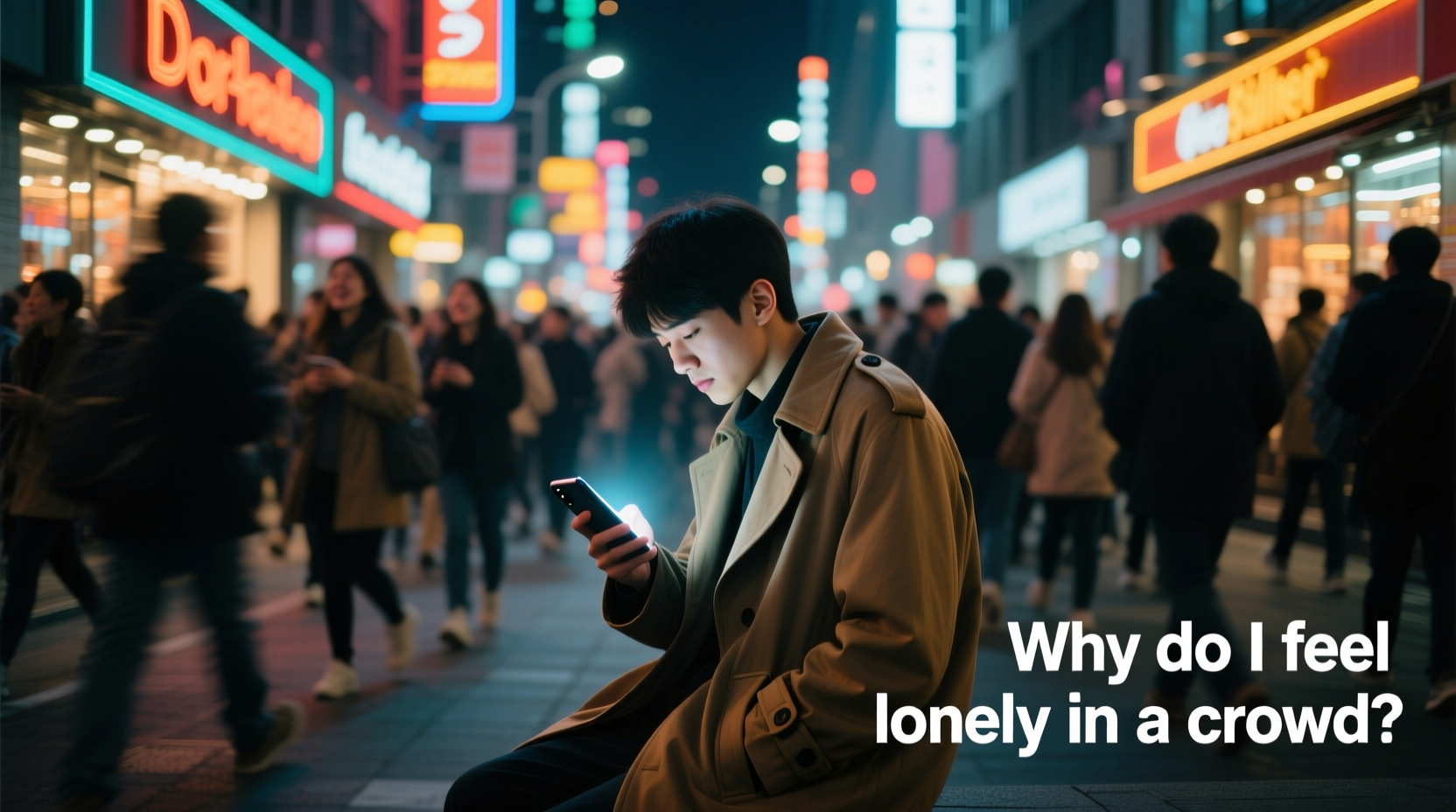
In the digital age, we're more “connected” than at any point in history. Social media platforms promise community, messaging apps deliver instant replies, and group events fill our calendars. Yet, these interactions often lack depth. A like, a comment, or even a brief conversation at a party rarely satisfies our innate human need for emotional resonance. The brain evolved to thrive on sustained, empathetic engagement—eye contact, shared vulnerability, reciprocal listening—not fleeting digital pings.
Psychologist Dr. Sarah Thompson explains:
“We’ve optimized for convenience over intimacy. People mistake frequency of contact for quality of connection. But scrolling through feeds or attending networking mixers doesn’t fulfill the brain’s craving for attunement.”
This mismatch creates a void. You may be surrounded by people, but if no one truly sees or hears you, loneliness persists. The paradox lies in proximity without presence—being physically near others while emotionally distant.
Psychological Roots of the Paradox
Loneliness in a crowd is not a personal failing. It stems from several interwoven psychological mechanisms:
- Social Comparison: In group settings, people often compare their internal state to others’ external appearance. When everyone seems cheerful and connected, it amplifies feelings of being an outsider.
- Performance Anxiety: Many social environments require performative behavior—smiling, nodding, making small talk. This masks authentic emotions, leading to emotional exhaustion rather than relief.
- Hyper-Awareness: Some individuals are neurologically predisposed to heightened social awareness. They notice micro-expressions, shifts in tone, or exclusionary dynamics that go unnoticed by others, deepening their sense of alienation.
- Fear of Rejection: Even when opportunities for connection arise, the fear of vulnerability can prevent meaningful engagement. It’s safer to remain on the periphery than risk being misunderstood or dismissed.
A 2023 study published in *Emotion* found that individuals who reported high levels of situational loneliness in group settings also exhibited increased activity in the anterior cingulate cortex—the brain region associated with social pain—when viewing images of social exclusion, even if they weren’t directly involved.
Quality vs. Quantity: Rethinking Social Metrics
We often measure social success by numbers: followers, friends, event invitations. But research consistently shows that the number of connections matters far less than their emotional depth. A landmark Harvard Study of Adult Development, tracking lives for over 80 years, concluded that close, supportive relationships are the strongest predictor of long-term happiness and health—not popularity or professional achievement.
Consider this comparison:
| Social Metric | Superficial Indicator | Meaningful Indicator |
|---|---|---|
| Connection | Number of social media friends | People you can call at 2 a.m. in crisis |
| Engagement | Comments on posts | Conversations where you felt truly heard |
| Belonging | Attendance at events | Feeling safe to express your true thoughts |
| Support | Group chat activity | Someone who checks in without prompting |
The table reveals a critical insight: modern social structures reward visibility, not vulnerability. True belonging emerges not from inclusion in large groups, but from moments of mutual recognition—when someone responds to your pain with empathy, not advice, or laughs at a joke only you two understand.
Real Example: Maya’s Experience at the Office Retreat
Maya, a 32-year-old project manager, attended her company’s annual team-building retreat. Over two days, she participated in icebreakers, shared meals, and collaborative workshops. Colleagues exchanged compliments and phone numbers. On the surface, it was a success. Yet, driving home, Maya felt heavier than before. She realized she hadn’t said anything about her recent anxiety struggles, nor had anyone asked. Conversations stayed light—sports, travel, weekend plans. No one mentioned burnout, family stress, or doubt.
She later confided in a mentor: “I was with 40 people for 48 hours and never once felt seen. I smiled through everything, but inside, I was screaming for someone to say, ‘You seem tired. How are you really?’”
Maya’s experience illustrates the gap between social presence and emotional presence. Events designed to foster connection often prioritize fun over authenticity, leaving participants feeling more isolated for having pretended to be fine.
Building Authentic Connection: A Step-by-Step Approach
Overcoming the social connection paradox requires intentional effort. Here’s a practical timeline to cultivate deeper bonds:
- Week 1: Audit Your Interactions
Track conversations for seven days. Note how many were transactional (e.g., scheduling, updates) versus relational (e.g., sharing feelings, asking about well-being). Identify patterns. - Week 2: Initiate One Vulnerable Exchange
Choose a low-risk person—a coworker you trust slightly, a neighbor—and share something mildly personal: “I’ve been feeling overwhelmed lately,” or “I didn’t sleep well last night.” Observe their response. - Week 3: Practice Active Listening
In three conversations, focus entirely on the other person. Ask follow-up questions. Avoid redirecting to your own experiences. Reflect back what you hear: “It sounds like you’re really excited about this project.” - Week 4: Create Space for Depth
Invite someone for a walk or coffee with no agenda. Say: “I’d love to catch up—not about work, just life.” Most people crave this but wait for permission to be real. - Ongoing: Cultivate Two Anchor Relationships
Invest in 1–2 people you can be fully honest with. Schedule regular check-ins. These become emotional anchors during times of isolation.
This approach doesn’t eliminate loneliness overnight, but it shifts the trajectory from passive consumption of social stimuli to active creation of meaning.
Checklist: Signs You’re Experiencing the Social Connection Paradox
Use this checklist to assess whether your social life reflects depth or illusion:
- ✅ I attend gatherings but leave feeling drained, not energized.
- ✅ I have many acquaintances but few people I’d call during a personal crisis.
- ✅ I often hide my true feelings to avoid burdening others.
- ✅ I scroll through social media and feel envious of others’ connections.
- ✅ I dread small talk but don’t know how to move beyond it.
- ✅ I feel invisible even when surrounded by people.
If three or more apply, you’re likely experiencing the paradox. The good news? Awareness is the first step toward change.
Expert Insight: The Role of Emotional Availability
Dr. Alan Wu, clinical psychologist and author of *The Presence Principle*, emphasizes emotional availability as the cornerstone of real connection:
“Loneliness isn’t cured by more people. It’s cured by more presence—yours and theirs. You can’t force others to open up, but you can model availability. Share something small, then pause. Let silence invite reciprocity. That’s where connection begins.”
He notes that many people equate vulnerability with weakness, but in relational neuroscience, it’s a signal of strength. When you express uncertainty or emotion, you give others implicit permission to do the same. This creates a feedback loop of trust.
FAQ: Common Questions About Loneliness in Crowds
Is it normal to feel lonely even with friends and family?
Yes. Having relationships doesn’t guarantee emotional fulfillment. Loneliness arises from unmet needs for understanding and validation, not mere companionship. You can love your family deeply and still feel unseen if conversations stay superficial.
Can social media make this worse?
Often, yes. Platforms emphasize curated highlights, fostering comparison and detachment. Passive scrolling replaces dialogue, and constant exposure to idealized lives can distort reality. Limiting use and engaging mindfully—commenting thoughtfully, messaging privately—can mitigate harm.
How do I start deeper conversations without seeming intense?
Begin gently. Instead of “How are you?” try “How are you *really* doing this week?” Or share something modestly personal first: “I’ve been stressed about deadlines—do you ever feel that pressure too?” This invites mutuality without demand.
Conclusion: Reclaiming Connection in a Crowded World
Feeling lonely in a crowd is not a flaw—it’s a signal. It points to a universal human longing for authenticity in a world that often rewards performance. The paradox dissolves not by seeking more people, but by seeking truer ones. Real connection doesn’t require grand gestures. It grows in small moments: a shared silence, a confession met with kindness, a question asked with genuine curiosity.
You don’t need to overhaul your social life overnight. Start by choosing one interaction this week to deepen. Listen more. Speak honestly. Allow yourself to be seen, even if it feels risky. Others are waiting for the same invitation.




 浙公网安备
33010002000092号
浙公网安备
33010002000092号 浙B2-20120091-4
Comments
No comments yet. Why don't you start the discussion?