
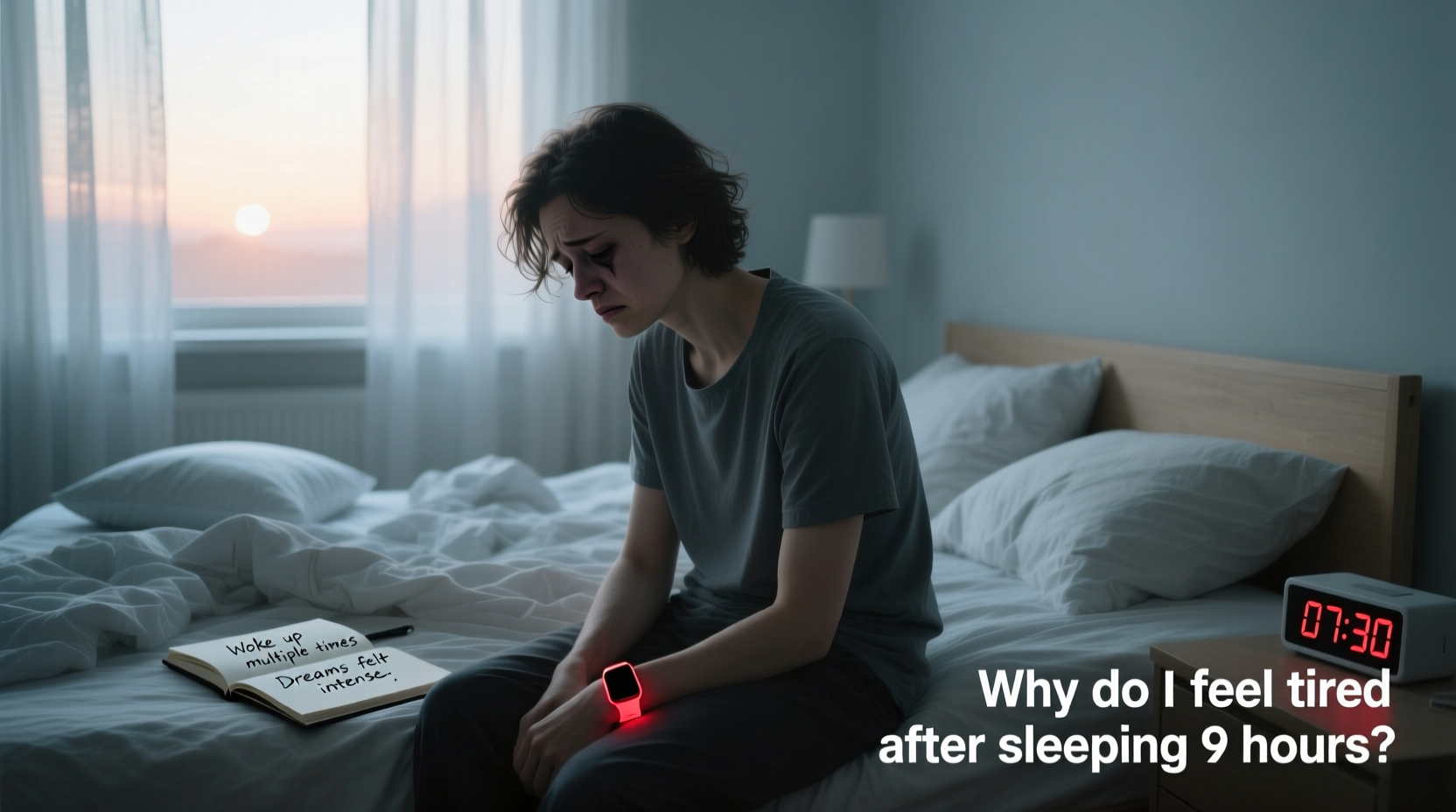
Sleeping nine hours should leave you feeling refreshed and energized. Yet, many people wake up groggy, mentally foggy, or physically drained despite hitting what seems like an ideal duration. The disconnect between sleep quantity and how rested you feel often points to underlying sleep quality issues. While clocking enough hours in bed is important, the quality of those hours matters just as much—if not more. Fragmented, shallow, or poorly timed sleep can sabotage recovery, impair cognitive function, and contribute to chronic fatigue—even with extended rest.
Understanding why you still feel tired after a long night’s sleep requires looking beyond the number on your sleep tracker. It involves examining your sleep architecture, lifestyle habits, medical conditions, and environmental factors that influence how deeply and efficiently you rest.
1. Sleep Architecture: What Happens During Your 9 Hours?
Sleep isn’t a uniform state. It cycles through different stages—light sleep, deep sleep (slow-wave sleep), and REM (rapid eye movement) sleep—each playing a unique role in physical restoration, memory consolidation, and emotional regulation. A full night typically includes four to six 90-minute cycles, with deep sleep dominating the first half of the night and REM increasing toward morning.
If these cycles are disrupted—by noise, stress, breathing issues, or frequent awakenings—you may spend less time in restorative deep and REM stages. As a result, even if you’re in bed for nine hours, your brain and body aren’t getting the full benefits of high-quality sleep.
“Sleep duration alone doesn’t tell the whole story. It’s the continuity and depth of sleep that determine how restored you feel.” — Dr. Rebecca Turner, Clinical Sleep Psychologist
2. Common Sleep Quality Issues That Cause Daytime Fatigue
Several conditions and habits can interfere with restful sleep, leading to unrefreshing rest despite adequate duration. These include:
Sleep Apnea
Obstructive sleep apnea (OSA) causes repeated pauses in breathing during sleep due to airway blockage. Each pause triggers a micro-arousal—briefly waking the brain to resume breathing—often without full consciousness. This fragments sleep and prevents progression into deeper stages. People with OSA may snore loudly, gasp for air at night, or experience excessive daytime sleepiness despite long sleep durations.
Circadian Rhythm Disruption
Your internal body clock regulates when you feel alert or sleepy. If your sleep schedule is inconsistent—going to bed and waking up at vastly different times on weekends versus weekdays—or if you're exposed to bright light late at night (especially blue light from screens), your circadian rhythm can become misaligned. This leads to non-restorative sleep, even if you're spending nine hours in bed.
Poor Sleep Hygiene
Habits that interfere with sleep onset or maintenance fall under “poor sleep hygiene.” Examples include consuming caffeine after 2 p.m., using electronic devices in bed, eating heavy meals before bedtime, or having an uncomfortable sleep environment (e.g., too warm, noisy, or bright). These factors reduce sleep efficiency—the percentage of time in bed actually spent sleeping.
Restless Legs Syndrome (RLS)
RLS causes an irresistible urge to move the legs, often accompanied by uncomfortable sensations, particularly at night. This can delay sleep onset and lead to frequent awakenings, reducing overall sleep quality.
Nocturia (Frequent Nighttime Urination)
Waking multiple times to urinate interrupts sleep continuity. Causes range from excessive fluid intake before bed to medical conditions like diabetes, prostate issues, or certain medications.
Depression and Anxiety
Mental health disorders are strongly linked to non-restorative sleep. Depression often causes early morning awakenings and reduced REM latency, while anxiety can increase nighttime arousals and light sleep. Both disrupt the natural sleep cycle and leave individuals feeling unrested.
3. Environmental and Lifestyle Factors That Undermine Sleep Quality
Even with no diagnosed medical condition, everyday choices and surroundings can degrade sleep quality.
| Factor | Impact on Sleep | What You Can Do |
|---|---|---|
| Screen exposure before bed | Suppresses melatonin, delays sleep onset | Limit screen use 1 hour before bed; use blue light filters |
| Room temperature above 70°F (21°C) | Makes it harder to enter deep sleep | Cool bedroom to 65–68°F (18–20°C) |
| Alcohol consumption at night | Disrupts second-half REM sleep, increases awakenings | Avoid alcohol within 3 hours of bedtime |
| Inconsistent sleep schedule | Desynchronizes circadian rhythm | Set fixed bedtime and wake time, even on weekends |
| Late-night exercise | Elevates core body temperature and alertness | Finish intense workouts at least 3 hours before bed |
4. Real-Life Example: Sarah’s Nine-Hour Mystery
Sarah, a 38-year-old project manager, consistently slept between 8.5 and 9.5 hours each night. Despite this, she struggled with morning fatigue, difficulty concentrating, and afternoon crashes. Her partner mentioned her loud snoring and occasional gasping sounds at night. After tracking her sleep with a wearable, she noticed low deep sleep percentages and multiple awakenings.
She consulted a sleep specialist and underwent a home sleep test, which revealed moderate obstructive sleep apnea. With treatment via a CPAP (continuous positive airway pressure) machine, her sleep became more continuous. Within two weeks, she reported feeling significantly more alert—even after reducing her total sleep time to 7.5 hours.
Sarah’s case illustrates that duration is only one piece of the puzzle. Addressing an undiagnosed condition transformed her sleep quality and daily energy levels.
5. Step-by-Step Guide to Improving Sleep Quality
If you're logging nine hours but still feel tired, follow this structured approach to identify and correct root causes:
- Track Your Sleep Patterns: For one week, record bedtime, wake time, nighttime awakenings, and how you feel upon waking. Note any symptoms like snoring or leg discomfort.
- Assess Sleep Environment: Optimize room temperature, lighting, noise levels, and mattress comfort. Eliminate electronics from the bedroom.
- Review Lifestyle Habits: Cut caffeine after noon, avoid large meals and alcohol close to bedtime, and establish a relaxing pre-sleep routine (e.g., reading, meditation).
- Standardize Your Schedule: Go to bed and wake up at the same time every day, including weekends, to stabilize your circadian rhythm.
- Seek Medical Evaluation: If fatigue persists, consult a healthcare provider. Request screening for sleep apnea, restless legs syndrome, thyroid dysfunction, or mood disorders.
- Consider a Sleep Study: A polysomnogram (in-lab or at-home) can detect breathing disruptions, limb movements, and abnormal brain activity during sleep.
Checklist: Signs Your Long Sleep Isn’t Restorative
- Waking up feeling groggy or disoriented
- Frequent nighttime awakenings (two or more per night)
- Snoring, choking, or gasping during sleep
- Needing multiple alarms to get out of bed
- Daytime sleepiness despite long sleep duration
- Difficulty focusing or memory lapses during the day
- Partner observes unusual breathing patterns at night
- Reliance on naps or caffeine to stay awake
FAQ: Common Questions About Unrefreshing Sleep
Can oversleeping make me more tired?
Yes. Sleeping significantly longer than your body needs—especially beyond 9–10 hours regularly—can lead to \"sleep inertia,\" headaches, and mood disturbances. Oversleeping may also indicate underlying health issues like depression or hypothyroidism.
Is 9 hours of sleep too much for adults?
For most healthy adults, 7–9 hours is recommended. Some individuals naturally require more sleep (long sleepers), but consistently needing over 9 hours to feel rested warrants investigation. If you’re sleeping 9+ hours and still fatigued, the issue is likely quality, not quantity.
Why do I feel worse after sleeping in on weekends?
Extended weekend sleep can shift your circadian rhythm, creating a form of jet lag known as “social jetlag.” Waking up much later than usual delays melatonin release the following night, making it harder to fall asleep and reducing next-day alertness.
Expert Insight: The Role of Deep Sleep in Recovery
“Deep sleep is when the body repairs tissues, strengthens immunity, and clears metabolic waste from the brain. Without sufficient deep sleep, you’ll never feel fully recovered—even after long rest periods.” — Dr. Alan Zhou, Neurologist and Sleep Researcher
This biological process explains why someone might sleep nine hours yet wake up feeling mentally foggy. The brain hasn’t completed its nightly cleanup, and the body hasn’t fully regenerated.
Conclusion: Prioritize Quality Over Quantity
Feeling tired after nine hours of sleep is a clear signal that something is disrupting your rest. Rather than chasing more hours in bed, focus on improving the quality of your sleep. Evaluate your habits, environment, and potential medical conditions. Small changes—like fixing your sleep schedule, treating sleep apnea, or optimizing your bedroom—can dramatically improve how rested you feel.
Sleep isn’t just about time; it’s about transformation. When your sleep is truly restorative, you won’t need to ask whether you’ve had enough—you’ll know by how energized and focused you feel each morning.




 浙公网安备
33010002000092号
浙公网安备
33010002000092号 浙B2-20120091-4
Comments
No comments yet. Why don't you start the discussion?